
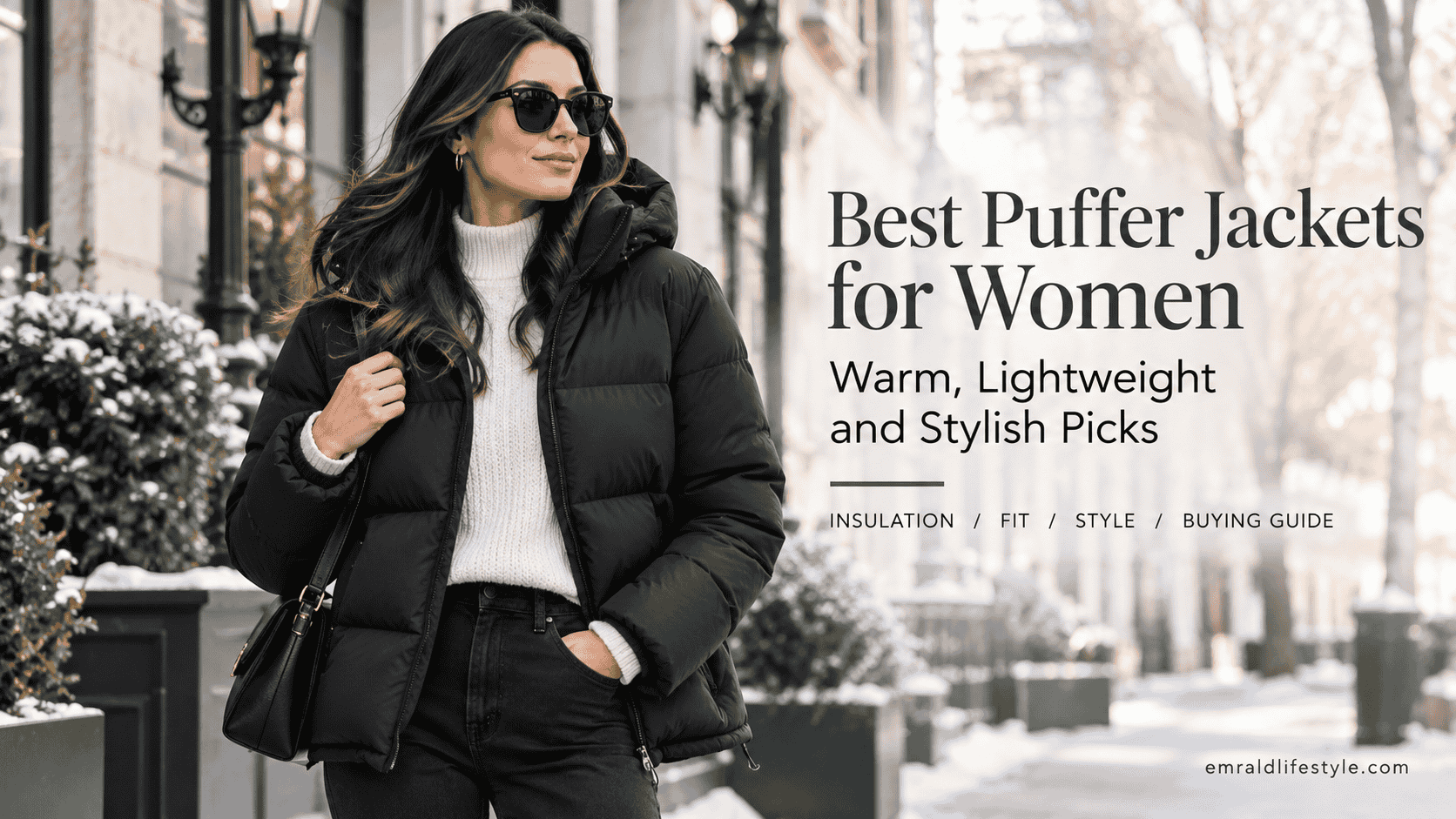
The best puffer jackets for women combine reliable warmth, comfortable fits, and versatile styling. They make cold-weather dressing easier without sacrificing your personal style. However, not every puffer jacket offers the same level of protection. Some work best for everyday errands, while others suit freezing temperatures, outdoor adventures, or winter travel.
The right choice depends on your climate, preferred silhouette, insulation type, and how you plan to wear it. You also need to consider length, weather resistance, and layering space. This guide explores the most useful puffer jacket styles, explains what separates a good jacket from a disappointing purchase, and helps you choose one that fits your lifestyle.
Whether you prefer a sleek cropped jacket or a long, cozy puffer, you will find practical advice to help you make a smarter investment.

What Makes the Best Puffer Jackets for Women Worth Buying?
A puffer jacket gets its characteristic quilted appearance from sections filled with insulating material. This insulation traps air and helps retain body heat. However, a bulky appearance does not automatically mean better warmth. The insulation, construction, outer fabric, and fit all affect how well a jacket performs.
Before choosing a style, pay attention to these five features.
1. Effective Insulation
Insulation is the most important factor when comparing puffer jackets. Down insulation comes from duck or goose plumage. It offers excellent warmth for its weight and usually compresses well for travel.
Synthetic insulation uses manufactured fibers. It often performs better when damp and can be easier to maintain, depending on the jacket’s care instructions. Neither option wins in every situation. Down suits people who prioritize warmth and packability, while synthetic insulation can be a practical choice for changeable, damp weather.
2. Weather-Resistant Outer Fabric
A puffer jacket should help protect you from wind and light precipitation. Many jackets use nylon or polyester shells with a water-repellent finish. These materials can help water bead on the surface during light rain or snow.
However, water-resistant does not mean waterproof. Prolonged rain can eventually penetrate the fabric, seams, or closures. If you regularly face wet winter weather, look for stronger weather protection and a design that suits your conditions.
3. A Comfortable, Functional Fit
Your jacket should leave enough room for the layers you normally wear. Try it over a sweater rather than judging the fit with a thin top. Raise your arms, reach forward, and zip it completely. The shoulders should move comfortably, and the sleeves should cover your wrists. The jacket should also close without pulling across your chest.
A good fit keeps you comfortable while preserving the jacket’s intended silhouette.
4. Useful Construction Details
Small details can make a noticeable difference during everyday wear. Look for secure pockets, smooth zippers, well-finished seams, and cuffs that help limit cold air entering the sleeves. A hood can provide additional coverage when wind or precipitation is common. A two-way zipper may also improve comfort when sitting or walking in a longer coat.
Choose features you will actually use instead of paying for unnecessary extras.
5. Versatile Styling
The best puffer jacket should work with several outfits in your existing wardrobe. Black, navy, charcoal, olive, and neutral beige are easy to coordinate. If you prefer a statement piece, consider a richer color or a glossy finish.
Think about your everyday shoes, trousers, jeans, and bags before choosing a shade. A versatile color can help you wear the jacket more frequently throughout winter.
The Best Puffer Jacket Styles for Women
Different silhouettes serve different purposes. Understanding these options helps you choose a jacket that suits your wardrobe and local weather.
1. Lightweight Packable Puffer Jackets
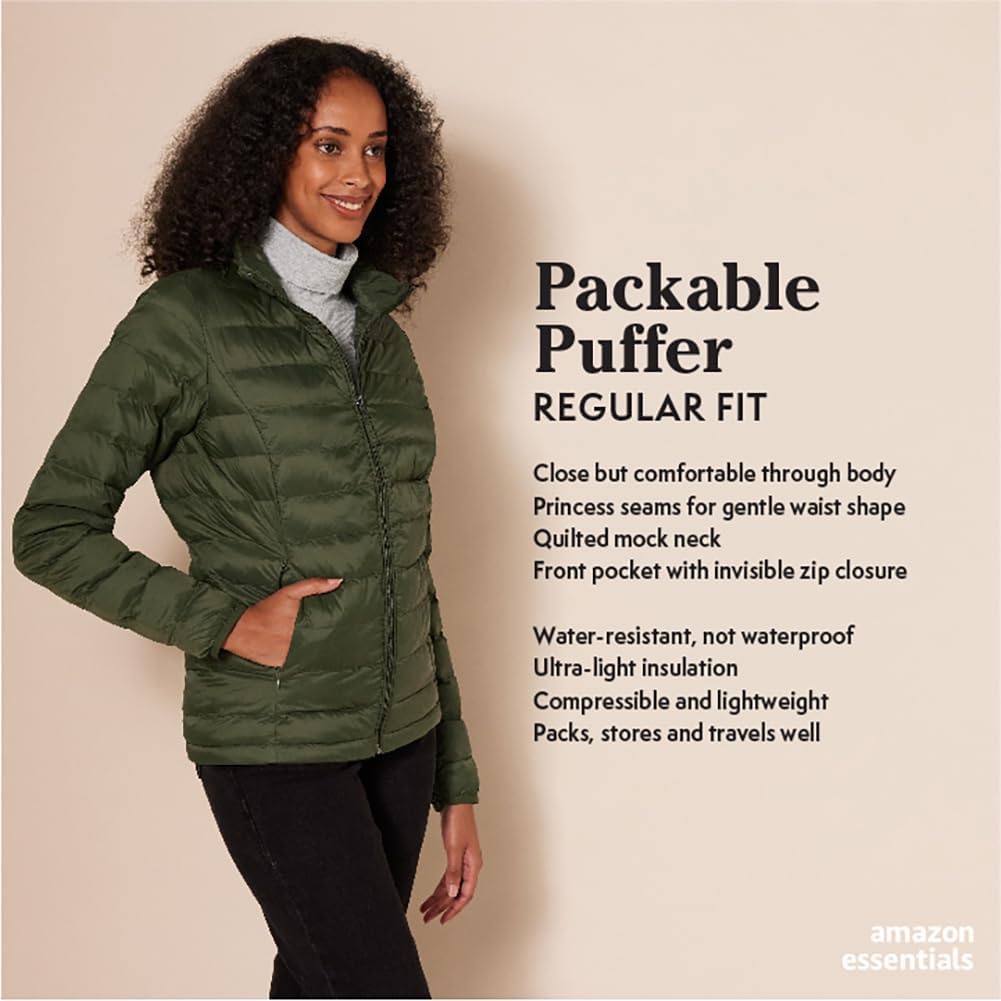
A lightweight puffer is ideal when you want warmth without carrying a bulky coat. These jackets are useful for travel, chilly mornings, autumn walks, and layering under a larger outer shell. Many designs compress into a small bag or storage pouch. Their main advantage is convenience. You can keep one in your luggage or everyday bag when temperatures change throughout the day.
However, lightweight models are not automatically suitable for freezing weather. Check the insulation and intended use before relying on one during a cold spell.
Amazon pick to explore: Amazon Essentials Women’s Lightweight Water-Resistant Packable Puffer Jacket
2. Long Puffer Jackets
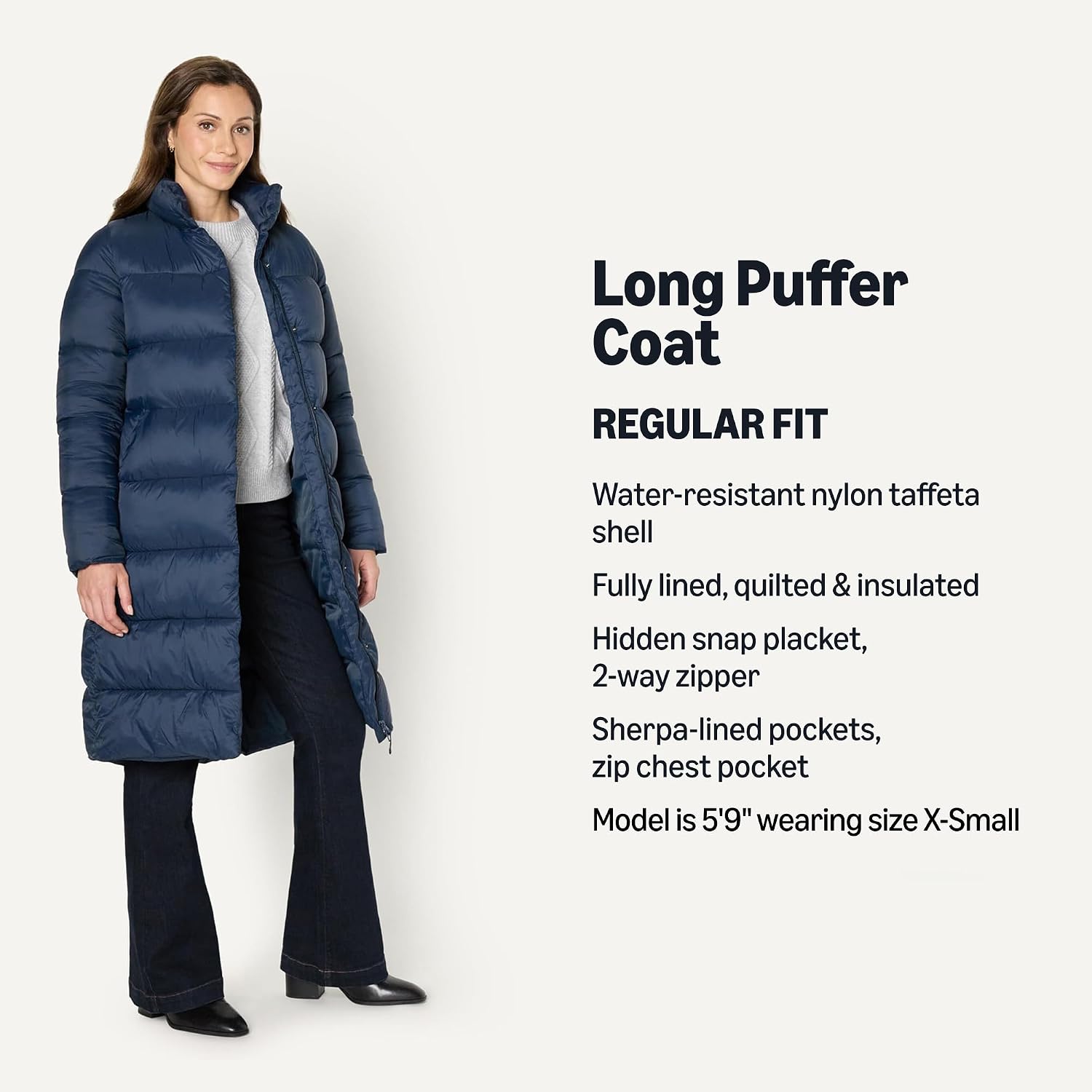
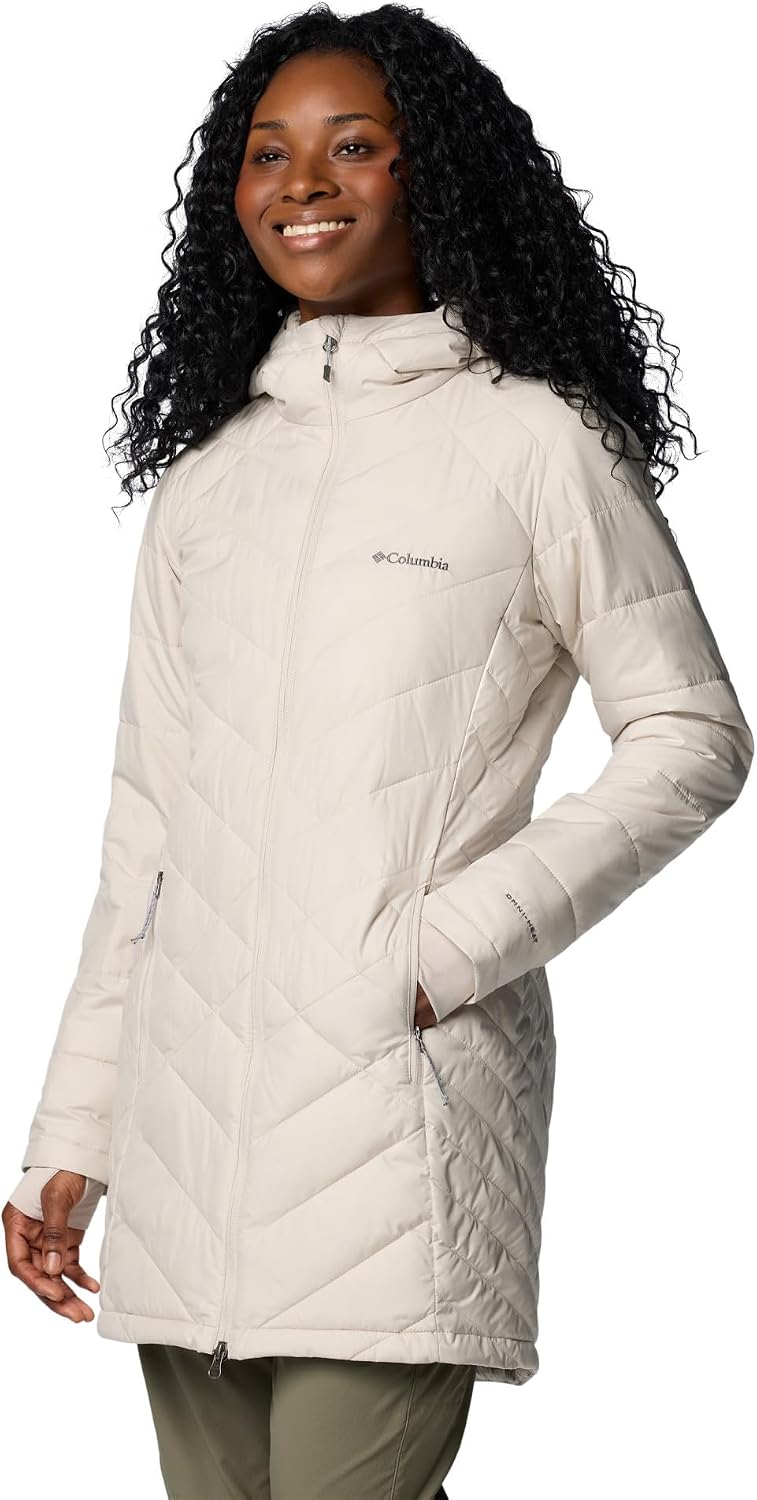
Long puffers provide more coverage than cropped and waist-length designs. Depending on the cut, they can protect your hips, thighs, and sometimes lower legs from cold air. This makes them useful for winter commutes, outdoor walks, and extended periods outside. Look for a design with a comfortable hood, secure closures, and enough room to move freely. A two-way zipper or side opening can improve mobility on longer styles.
Long puffers also create a streamlined outfit when paired with fitted trousers or leggings. Choose a length that works with your height and daily activities.
Amazon picks to explore:
3. Down Puffer Jackets
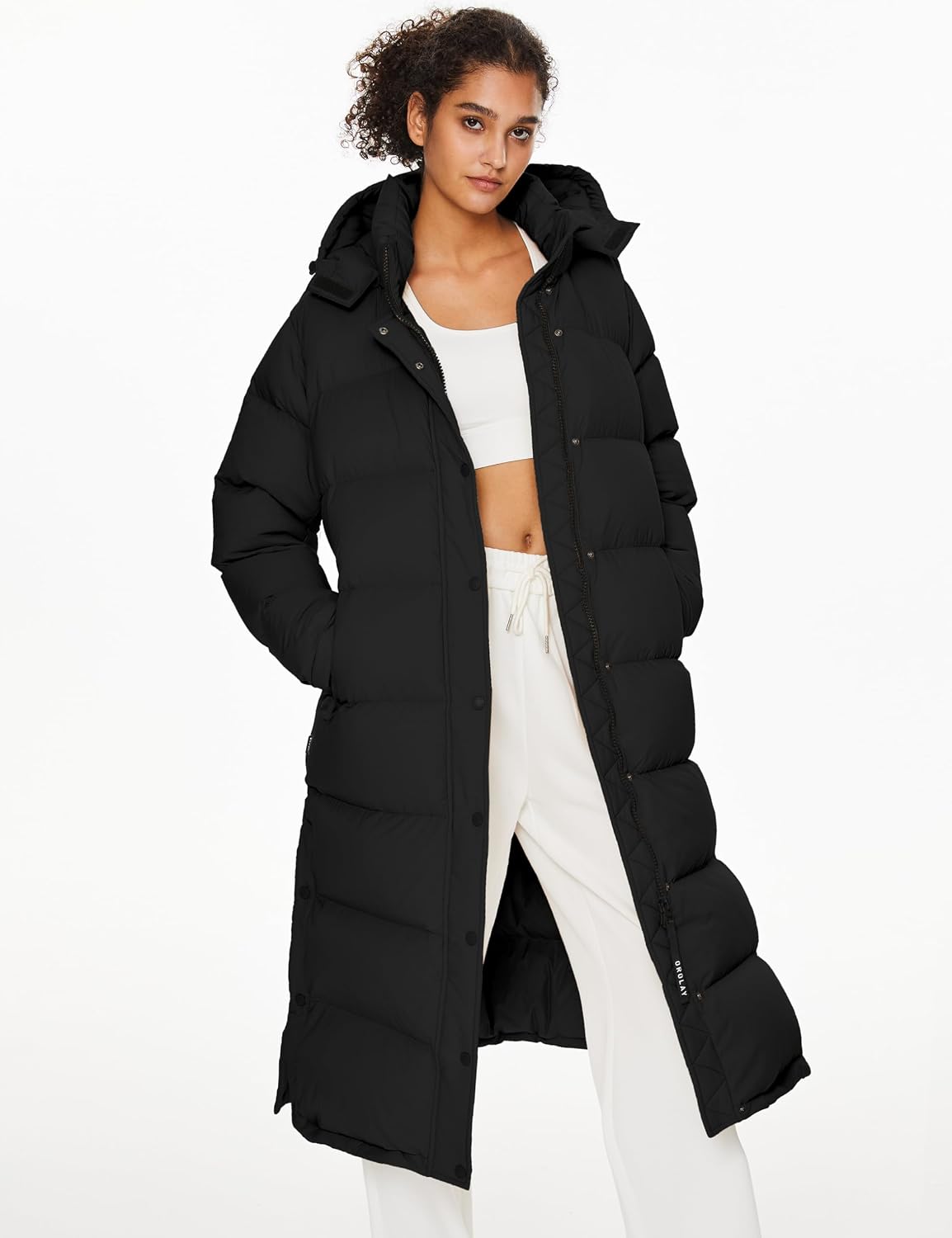
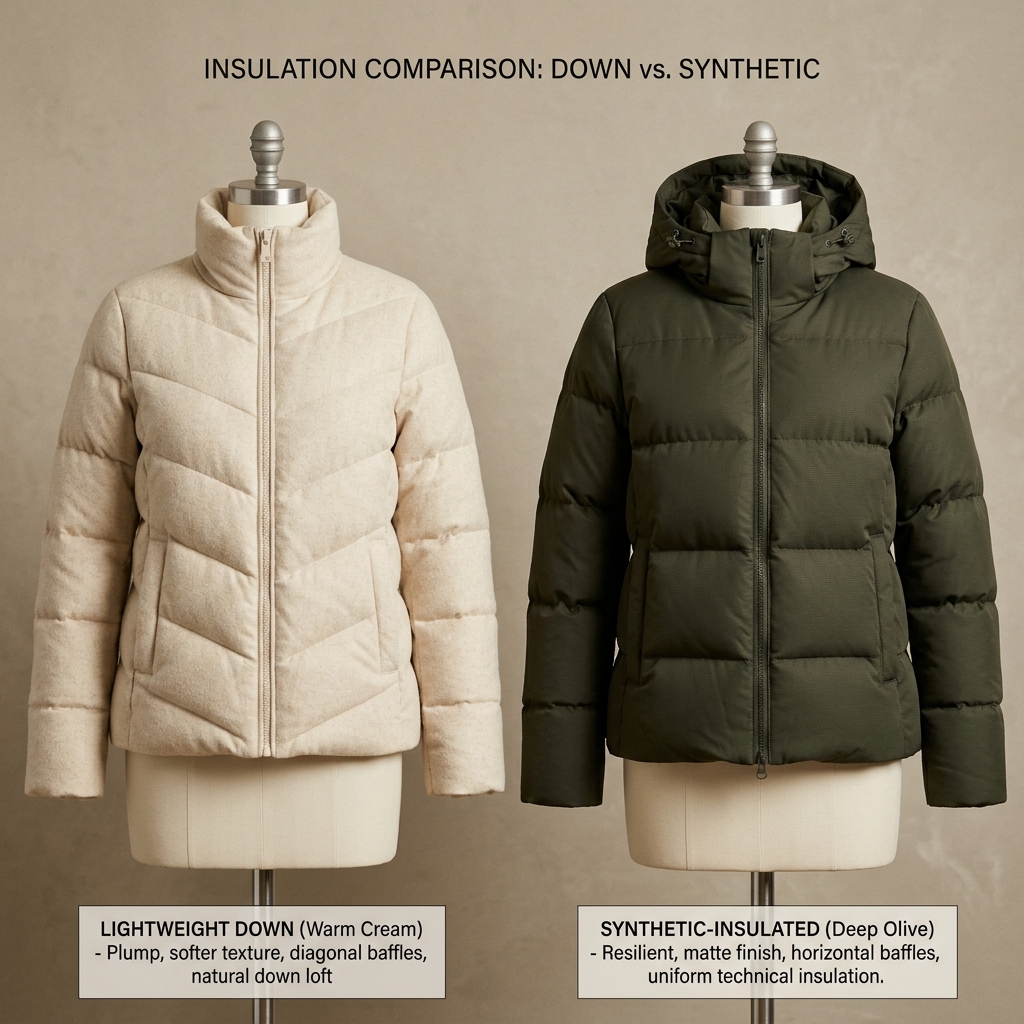
Down puffers are worth considering when warmth and low weight are priorities. Down insulation traps air within its natural structure, providing substantial insulation without necessarily making the jacket heavy. Higher fill power generally indicates greater loft relative to the weight of the down.
However, fill power alone does not tell you how warm an entire jacket will be. The total amount of insulation, construction, fit, and shell design also matter. Down can lose much of its insulating ability when thoroughly wet. For damp climates, consider a water-resistant shell or a suitable waterproof outer layer.
Amazon pick to explore: The North Face Women’s Down Puffer Jackets
4. Synthetic-Insulated Puffer Jackets
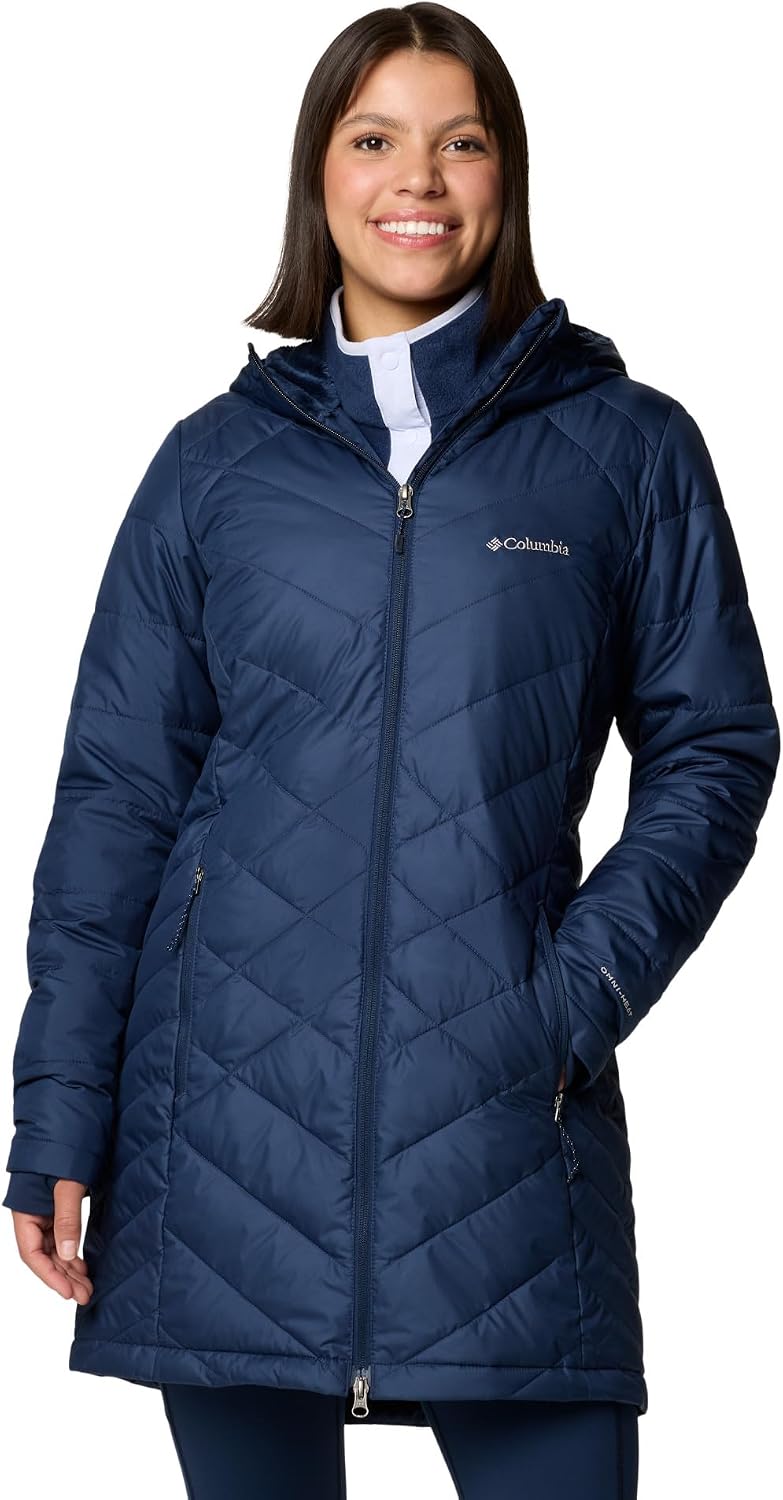
Synthetic puffers offer a practical alternative to down. Their manufactured insulation can retain more useful warmth when damp than untreated down. This makes synthetic options appealing for everyday wear in changeable conditions. They also come in many weights, from thin layering jackets to heavily insulated winter coats.
The trade-off is that some synthetic designs are bulkier than comparable down jackets. Their warmth and packability also vary with the insulation used. Choose synthetic insulation when its weather performance, maintenance needs, or material preference suits your routine.
Amazon pick to explore: Columbia Women’s Synthetic-Insulated Puffer Jackets
5. Cropped Puffer Jackets
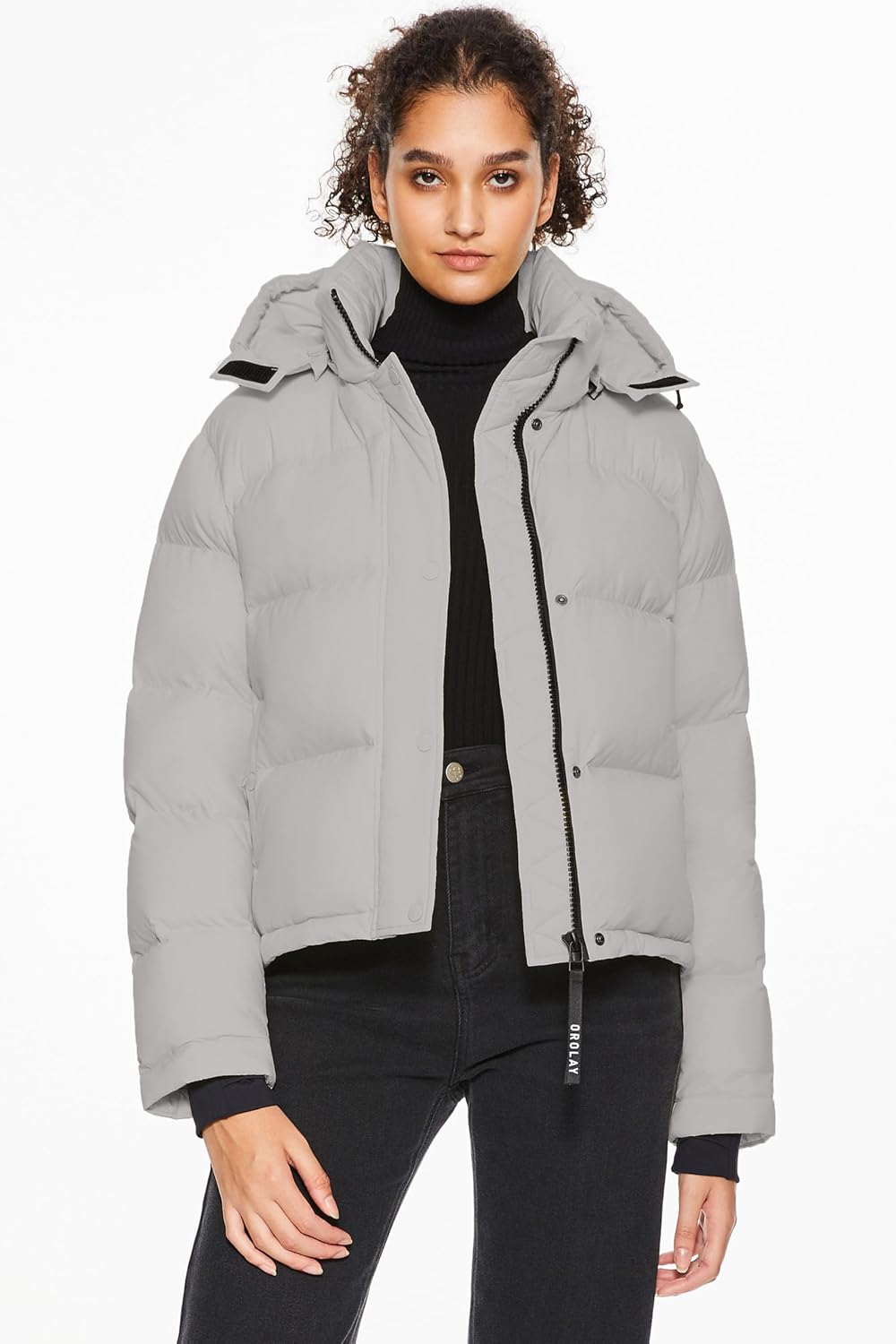
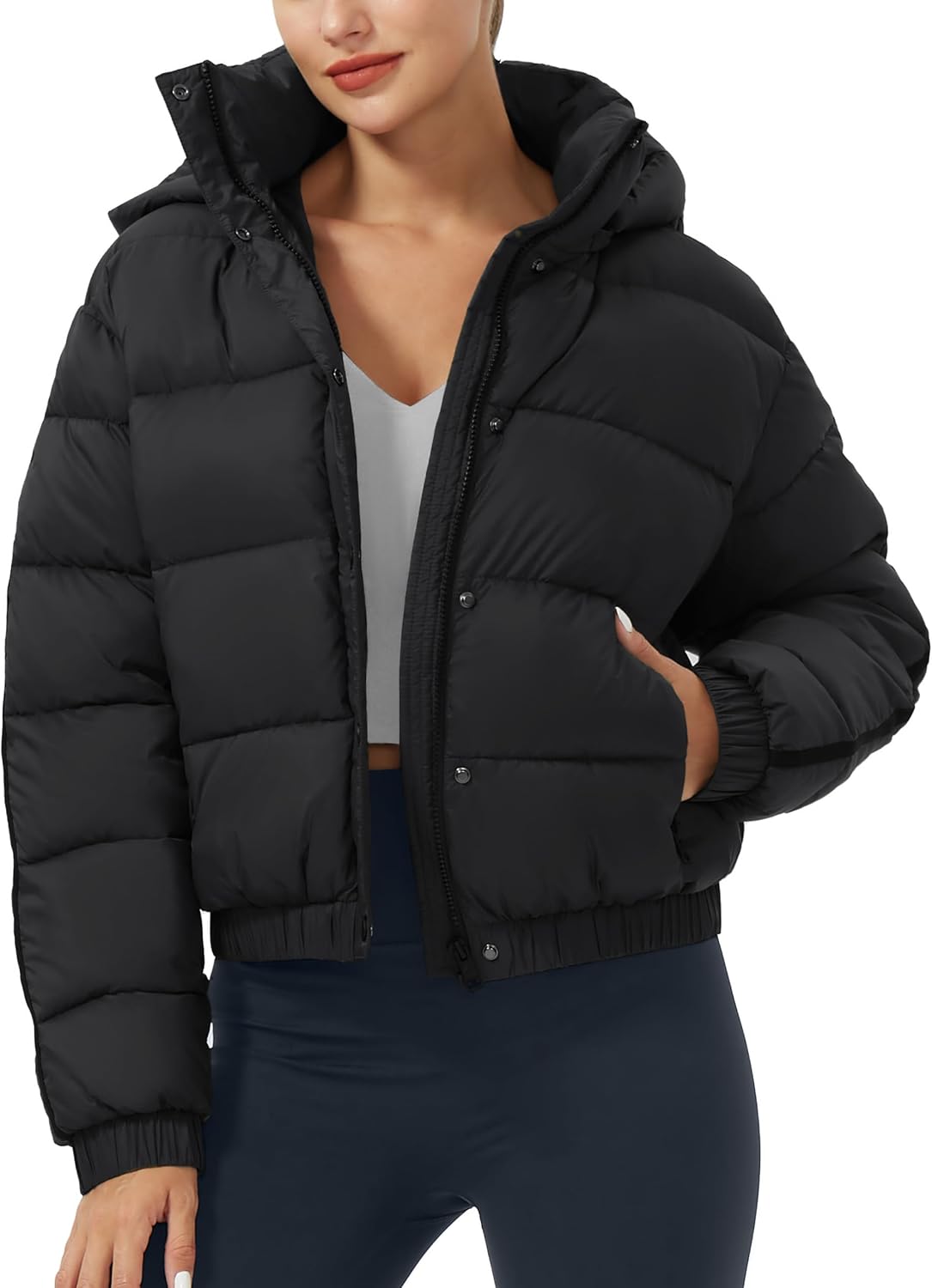
Cropped puffers create a contemporary silhouette and pair naturally with high-waisted jeans, tailored trousers, and leggings. Their shorter length allows greater freedom around the hips, making them convenient for driving and everyday movement. They are particularly useful during cool weather when you want a fashionable outer layer without the coverage of a long coat.
However, cropped jackets leave more of your lower body exposed. They may not be the most practical choice for prolonged exposure to freezing temperatures. For a balanced outfit, combine an oversized cropped puffer with fitted trousers. Alternatively, wear a slimmer cropped jacket over a simple knit and straight-leg jeans.
Amazon picks to explore:
6. Oversized Puffer Jackets
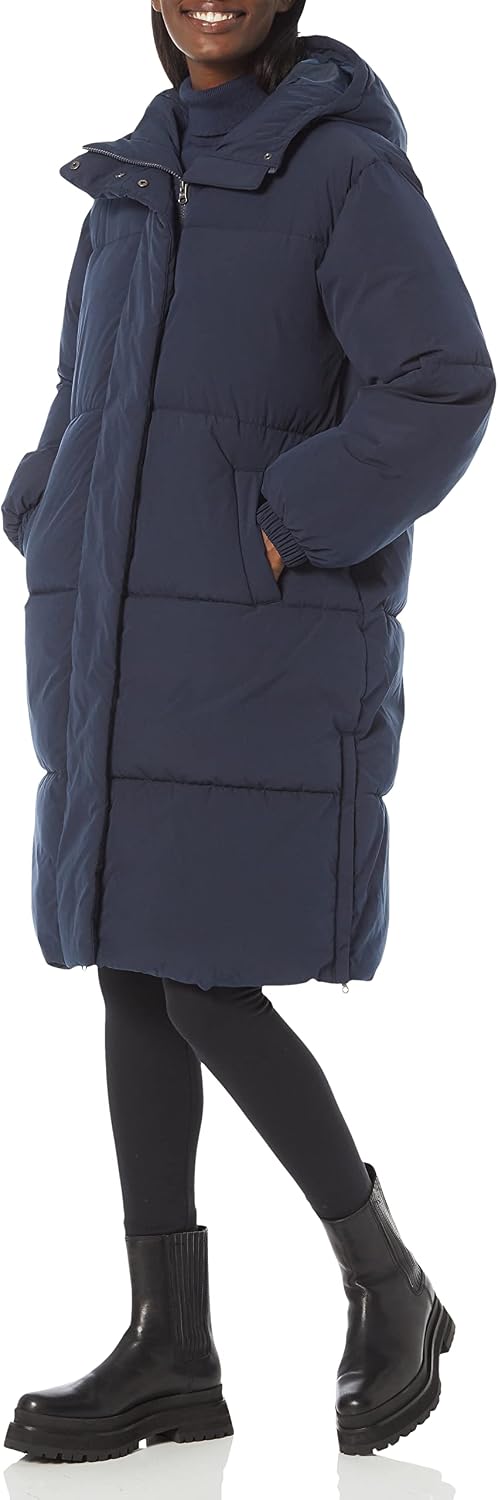
Oversized puffers offer a relaxed fit with plenty of room for layering. They work particularly well with hoodies, chunky sweaters, relaxed denim, and casual winter footwear. Their generous proportions also create a distinctive street-style look.
The key is maintaining balance. If your jacket has a lot of volume, streamlined trousers can help create a more intentional silhouette. Check the shoulder placement and sleeve length before buying. Oversized should feel comfortable, not so large that the jacket restricts movement or constantly slips out of place.
Amazon pick to explore: Women’s Oversized Puffer Jackets
7. Hooded Puffer Jackets
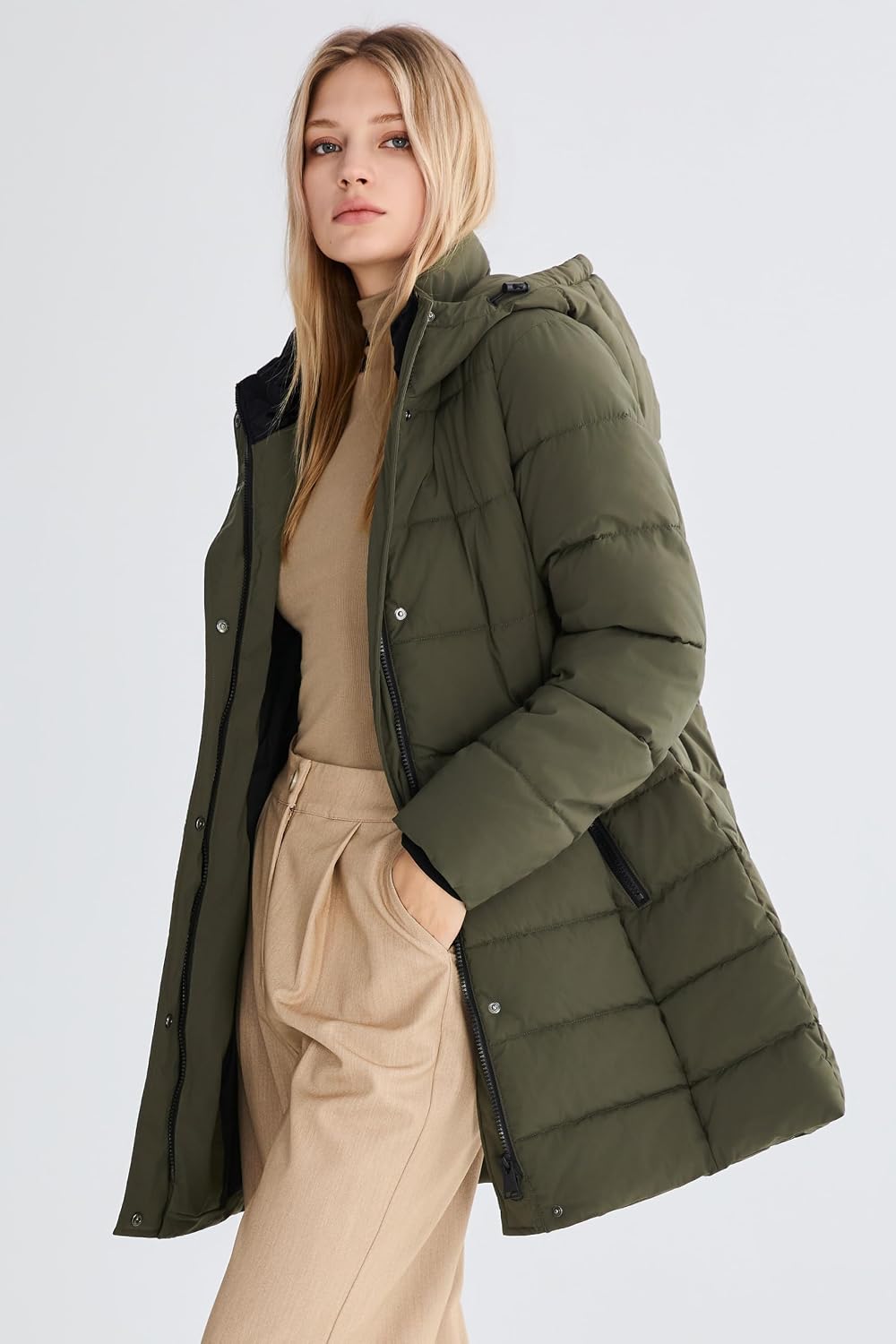
A hooded puffer offers extra coverage without requiring a separate hat in every situation. It can be especially useful when wind, light snow, or sudden showers are common. Adjustable drawstrings help create a closer fit, while a high collar provides additional coverage around your neck.
Some hoods are removable, which adds flexibility when you want a cleaner silhouette. If you live in a particularly wet climate, remember that a hood alone does not make a jacket waterproof. The shell, seams, and closures still matter.
Amazon pick to explore: Women’s Hooded Water-Resistant Puffer Jackets
Down vs. Synthetic Insulation: Which Should You Choose?
The right insulation depends on how you use your jacket and the weather you experience.
| Feature | Down insulation | Synthetic insulation |
|---|---|---|
| Warmth for weight | Generally excellent | Varies by insulation type |
| Packability | Usually compresses well | Can be bulkier |
| Damp conditions | Performance can decline when wet | Often retains more useful warmth when damp |
| Maintenance | May require more careful washing and drying | Depends on the specific construction |
| Animal-free option | No | Yes, when the insulation is fully synthetic |
| Best suited to | Cold, relatively dry conditions and lightweight warmth | Changeable weather and practical everyday wear |
Neither type is universally superior. A well-designed synthetic jacket can be more useful than a poorly suited down jacket, and vice versa. Consider your climate first, then compare construction, coverage, and fit.
How to Choose the Best Puffer Jackets for Women
Before you buy, match the jacket to your everyday needs rather than choosing based on appearance alone.
Consider Your Winter Temperatures
Start by thinking about the coldest conditions you regularly experience. A thin puffer may be sufficient for mild winters and cool evenings. Freezing temperatures generally require more insulation, better coverage, and suitable layers underneath. For prolonged outdoor activities, prioritize warmth and weather protection over a particularly sleek silhouette.
If your climate changes dramatically between seasons, a midweight puffer can provide more flexibility than an extremely heavy coat.
Check the Insulation Specifications
When comparing down jackets, look for the fill power and, when provided, the amount of down insulation. Higher fill power means the down provides more loft per unit of weight. It does not automatically make one jacket warmer than another. For synthetic jackets, review the insulation description and intended conditions. Manufacturers may use different materials and construction methods.
Avoid judging warmth by the jacket’s thickness alone.
Choose the Right Length
Your preferred length affects warmth, mobility, and styling.
- Cropped: Best for contemporary outfits and freedom around the hips.
- Waist-length: Practical for casual daily wear and commuting.
- Hip-length: A versatile middle ground for coverage and movement.
- Mid-thigh: Offers greater coverage for colder days.
- Long: Useful when you want maximum coverage over more of your body.
Your height and proportions also matter. A long puffer should allow comfortable walking without dragging or restricting your stride.
Look for Useful Weather Protection
Water resistance, wind resistance, and waterproofing are different features. A water-resistant jacket can handle light moisture, depending on its finish and construction. Wind-resistant fabric helps reduce the effect of cold air passing through the outer shell.
Waterproof designs provide stronger protection when rain or wet snow is a regular concern. However, the level of protection depends on the complete garment, including seams and closures.
Choose the level of protection that suits your environment instead of assuming every puffer performs equally.
Test the Fit With Winter Layers
A puffer jacket should feel comfortable over your usual cold-weather clothing. Try it with a sweater and check the following:
- You can zip the jacket without pulling across your chest.
- Your shoulders and arms move freely.
- The sleeves cover your wrists when you reach forward.
- The hem provides enough coverage for your routine.
- The collar and hood feel comfortable around your neck and head.
If you regularly wear chunky knits, a slightly roomier fit may be more useful than a sharply fitted design.
Prioritize Practical Details
Features should support the way you live. Zippered pockets help secure small essentials. Adjustable cuffs can reduce gaps around your wrists. A two-way zipper may improve movement in longer jackets. A removable hood offers styling flexibility, while an internal pocket can provide convenient storage.
You do not need every feature. Focus on the details that will make your jacket more comfortable and useful.
How to Style a Puffer Jacket Without Looking Bulky
Puffer jackets naturally add volume, but thoughtful styling keeps your outfit balanced.
Create an Everyday Casual Outfit
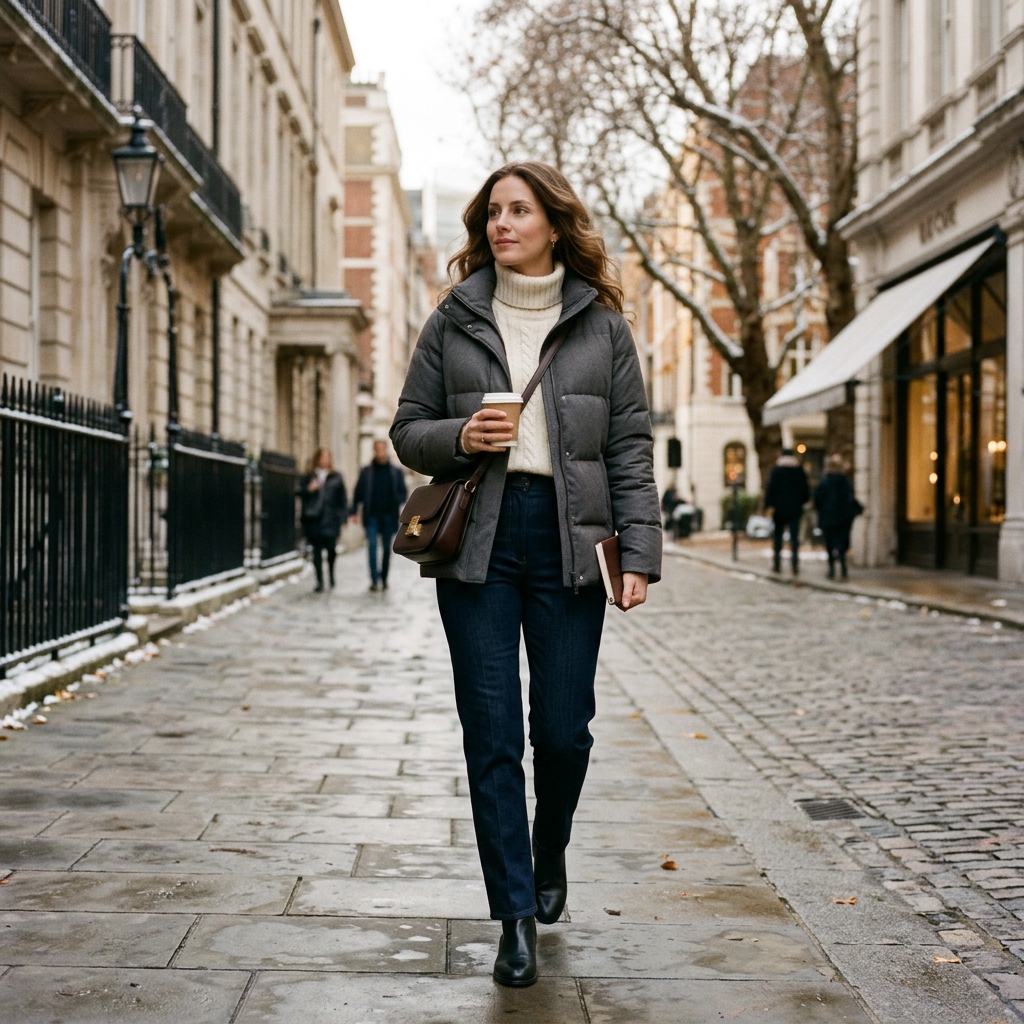
Pair a neutral puffer with straight-leg jeans, a simple knit, and clean sneakers. This combination works for errands, casual lunches, and everyday outings. Add a structured crossbody bag to create a more polished finish.
For a relaxed look, choose an oversized puffer. Keep the other pieces relatively streamlined to avoid overwhelming your proportions.
Build a Smart Casual Winter Outfit
A fitted or waist-length puffer can work with tailored trousers, ankle boots, and a fine-knit sweater. Choose a restrained color palette, such as black, cream, charcoal, and camel. These shades create a cohesive outfit without requiring many accessories.
A clean silhouette and well-maintained shoes can make a casual puffer look more refined.
Style a Long Puffer for Cold Days
Wear a long puffer over leggings or slim trousers with insulated boots. The longer silhouette provides coverage, while the fitted lower half creates visual balance. A knit hat and gloves add practical warmth when needed.
For a coordinated look, match one accessory to your jacket or boots.
Wear a Puffer While Traveling
A lightweight packable puffer is useful when your destination has unpredictable temperatures. Wear it with comfortable trousers, a breathable base layer, and walking shoes. Choose a jacket that fits easily over your other layers without becoming uncomfortable during long periods of sitting.
If space matters, consider a model that compresses into a pouch or its own pocket.
How Much Should You Spend on a Puffer Jacket?
The right budget depends on the insulation, construction, weather protection, and frequency of use. A simple everyday puffer may suit mild winters and occasional wear. A more specialized jacket can make sense if you spend long periods outdoors or travel regularly in cold conditions.
Instead of judging value by the purchase price alone, consider cost per wear.
For example, a jacket costing $120 that you wear 80 times over two winters costs $1.50 per wear. A $70 jacket worn 20 times costs $3.50 per wear. These figures are illustrative, but they show why frequent use and suitable construction matter.
Before spending more, prioritize:
- Insulation suited to your climate.
- Durable stitching and reliable closures.
- Comfortable layering space.
- Useful pockets and weather protection.
- A style you can wear with several outfits.
A higher price does not guarantee better performance. Choose the jacket that meets your actual needs and offers the features you will use.
How to Care for a Puffer Jacket
Proper care helps maintain the jacket’s appearance and insulating performance. Always read the garment’s care label before washing. Down and synthetic jackets can have different cleaning requirements.
Wash It Correctly
Some puffer jackets are machine washable, while others require special care. Close zippers and fasteners before washing, and follow the recommended cycle and detergent instructions. Avoid harsh treatments that could damage the shell or insulation.
Do not assume every jacket can be washed the same way.
Dry It Thoroughly
Down insulation needs thorough drying to restore its loft and prevent moisture from remaining inside the jacket. Follow the manufacturer’s drying instructions carefully. Some garments can be tumble-dried on a suitable low setting, sometimes with dryer balls to help separate clumps.
Never store a jacket while its insulation remains damp.
Store It Properly
Keep your puffer in a clean, dry place between seasons. Avoid leaving it tightly compressed for extended periods unless the manufacturer specifically recommends that storage method. Long-term compression can reduce the loft of some insulating materials.
Check the pockets and allow the jacket to dry completely before putting it away.
Common Puffer Jacket Buying Mistakes to Avoid
A little research can help you avoid buying a jacket that looks appealing but fails to suit your lifestyle.
Choosing thickness over insulation quality. A bulky jacket is not automatically warmer. Consider the insulation and overall construction.
Ignoring the weather. A lightweight water-resistant puffer may not provide enough protection for freezing temperatures or prolonged rain.
Buying the wrong length. A cropped design may look stylish but provide insufficient coverage for your daily commute.
Choosing a restrictive fit. If you cannot comfortably wear a sweater underneath, the jacket may not suit your winter wardrobe.
Overlooking care instructions. Some insulation requires more careful washing and drying than others.
Buying a trendy color you rarely wear. If you want maximum versatility, start with a shade that works with your existing clothes.
Frequently Asked Questions
What are the best puffer jackets for women?
The best puffer jackets for women depend on your climate, preferred fit, and everyday activities. Lightweight packable styles suit travel, while insulated long puffers provide greater coverage. Down jackets offer excellent warmth for their weight, while synthetic options can be practical in damp conditions.
Are down puffer jackets warmer than synthetic ones?
Down generally provides excellent warmth for its weight and compresses well. However, warmth also depends on the amount of insulation, construction, fit, and outer shell. Synthetic insulation often performs better when damp, making it useful in changeable weather.
Are puffer jackets suitable for freezing temperatures?
Yes, some puffer jackets suit freezing temperatures, but not every model provides enough insulation. Choose a jacket designed for the conditions you expect, with suitable coverage and room for layers. Wind protection and the rest of your clothing also affect comfort.
Should I buy a short or long puffer jacket?
A short puffer offers greater freedom around the hips and works well for casual outfits. A long puffer provides more coverage and can be more comfortable during extended periods outside. Choose based on your climate, mobility needs, and preferred silhouette.
Are puffer jackets waterproof?
Not all puffer jackets are waterproof. Many have water-resistant shells that handle light moisture, but prolonged rain can penetrate the fabric or seams. If you regularly experience heavy rain or wet snow, look for a jacket specifically designed for stronger weather protection.
How should a puffer jacket fit?
A puffer jacket should allow comfortable movement and leave enough room for your usual layers. The shoulders should feel natural, the sleeves should cover your wrists, and the zipper should close without pulling. Avoid a fit that compresses the insulation or restricts movement.
Can you wear a puffer jacket with formal clothes?
Yes. A streamlined puffer in black, navy, or another neutral shade can work with tailored trousers, knitwear, and smart boots. For more formal occasions, choose a clean silhouette without excessive bulk or distracting details.
How long should a good puffer jacket last?
Lifespan depends on the materials, construction, frequency of wear, storage, and care. Durable stitching, reliable zippers, and suitable cleaning can help extend its useful life. Regularly inspect the shell and closures, and follow the manufacturer’s care instructions.
Final Thoughts: Finding the Right Puffer Jacket
The best puffer jackets for women balance warmth, comfort, weather protection, and personal style. Start with the conditions you face most often. Then compare insulation, length, fit, and practical details before choosing a design.
A lightweight packable jacket may be ideal for travel, while a long insulated puffer can be a better choice for colder days. The right option is the one that suits your climate and fits naturally into your wardrobe.
If you are comparing different winter outerwear styles, read our guide to the best winter coats and jackets to keep you warm in style. You can also explore our guide to the best wool coats for women for a more tailored, timeless alternative.
Choose thoughtfully, care for your jacket properly, and you can enjoy comfortable, versatile winter outfits season after season.
Affiliate Disclosure
This article contains Amazon product links. As an Amazon Associate, EmraldLifestyle may earn from qualifying purchases at no additional cost to you.