
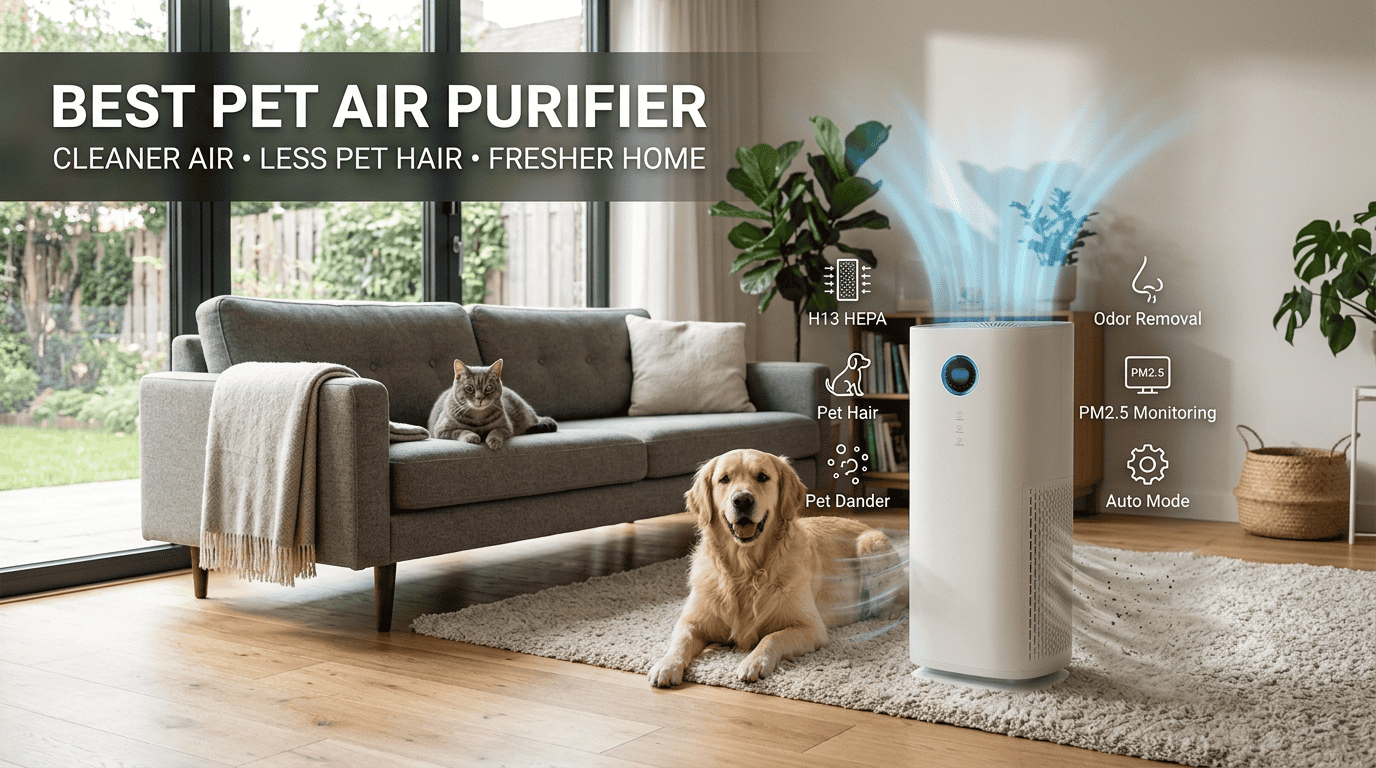
If you share your home with a cat or dog, you already know the tradeoff. You get unconditional love, funny 2 a.m. zoomies, and a warm body on the couch. You also get fur on the sofa, a faint doggy smell near the front door, and dust that seems to multiply overnight. A good pet air purifier is one of the simplest ways to fix that second part without giving up the first.
This review breaks down a large-room pet air purifier built around double-sided H13 HEPA filtration, a washable pre-filter, a built-in PM2.5 air quality monitor, and an automatic mode that adjusts fan speed based on what’s actually floating in your air. We’ll walk through how it performs against common pet-related pollutants, how it stacks up against popular competitors like the Levoit Core P350, Coway Airmega, Blueair, and Winix, and who should (and shouldn’t) buy it.
You can browse more home comfort guides over at Emrald Lifestyle, where we regularly test appliances built for real households, not showroom conditions.
Quick answer: if you have a shedding cat or dog, live in a space up to roughly 2,500 square feet, and want a purifier that captures allergens and cuts down on pet odor without needing constant manual adjustment, this model checks most of the boxes. Below, we explain exactly why — and where it falls short.
Why Pet Owners Need an Air Purifier
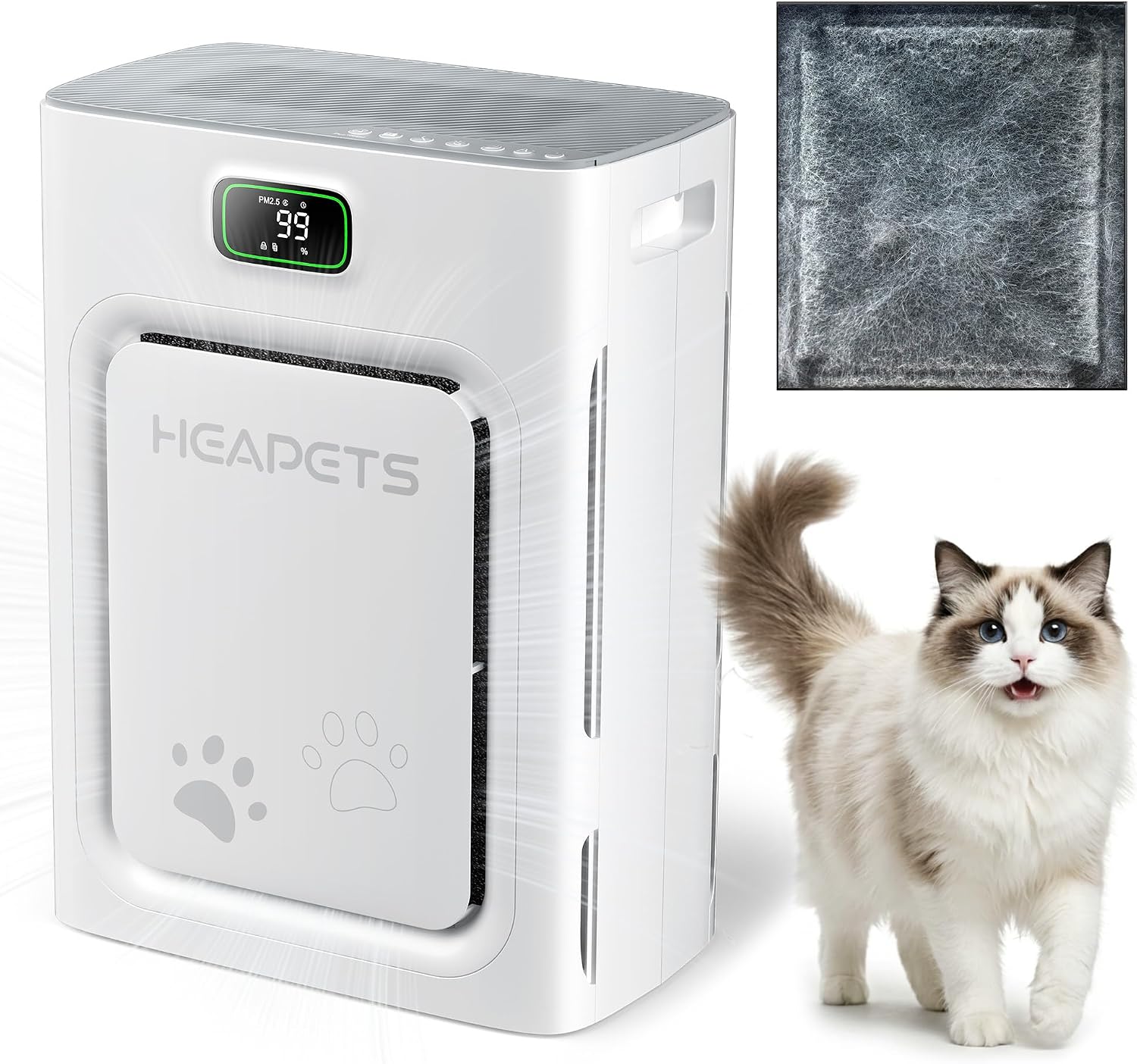
Let’s be honest. Most people don’t think about indoor air quality until something forces them to notice it — a guest sneezing on the couch, a musty smell near the litter box, or a layer of fur dust on the TV stand that reappears within days of cleaning.
Pets are wonderful, but they’re also a constant source of airborne particles. According to the American Lung Association, pet dander is one of the most common indoor allergy triggers, and it’s small enough to stay suspended in the air for hours. That means opening a window or vacuuming once a week isn’t enough.
A dedicated pet air purifier works around the clock to pull dander, hair fragments, and odor-causing particles out of the air before they settle back onto furniture, bedding, and floors. This isn’t about replacing good cleaning habits. It’s about closing the gap that vacuuming and sweeping simply can’t reach.
For households with allergy sufferers, asthma, or multiple pets, this gap matters even more. The Asthma and Allergy Foundation of America (AAFA) notes that pet allergens can linger in a home for months after a pet is removed, which shows just how persistent these particles are once they’re airborne.
Common Indoor Air Pollutants from Pets
Before diving into features, it helps to understand exactly what a pet air purifier is fighting against. Here are the main pollutants pets introduce into a home:
- Pet dander – microscopic skin flakes shed by cats and dogs, a leading allergy trigger
- Pet hair and fur fragments – visible and near-invisible particles that circulate with airflow
- Odor compounds – from litter boxes, wet fur, saliva, and skin oils
- Dust and dust mites – often trapped in fur and stirred up during play or grooming
- PM2.5 particles – ultra-fine particulate matter, some of it originating from pet dander breakdown
- Bacteria and mold spores – carried in on paws or trapped in damp bedding
The EPA classifies several of these as common indoor air contaminants that can affect respiratory comfort over time, particularly in homes with limited ventilation. Layer two or three pets on top of a typical household, and the air quality challenge multiplies fast.
This is exactly why generic air purifiers sometimes underperform in pet households. They’re not always built with hair-clogging pre-filters or odor-specific carbon layers, which matters a lot when your test subject is a shedding Labrador instead of a dust-only apartment.
How a Pet Air Purifier Works
At a basic level, every air purifier pulls room air through a fan, passes it through one or more filters, and pushes cleaned air back out. What separates a pet-focused model is the filter stack and the sensor logic behind it.
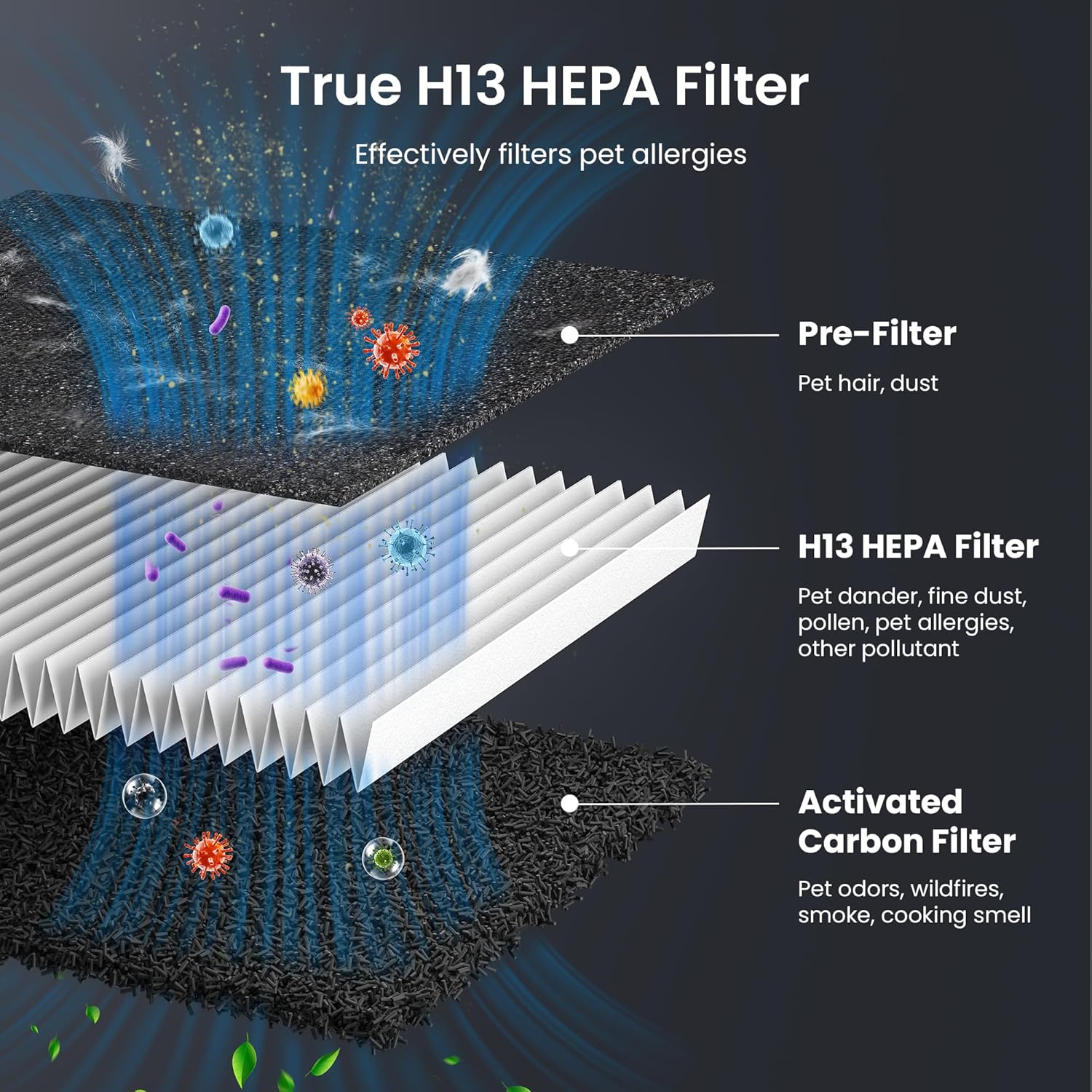
This unit uses a multi-stage process:
- Pre-filter stage – a washable mesh layer captures large particles like hair and fur clumps before they can clog finer filters
- HEPA H13 stage – captures particles down to 0.3 microns, which includes dander, dust, and many allergens
- Activated carbon layer – adsorbs odor molecules from litter boxes, wet fur, and general pet smell
- PM2.5 sensor and auto mode – continuously reads air quality and adjusts fan speed automatically
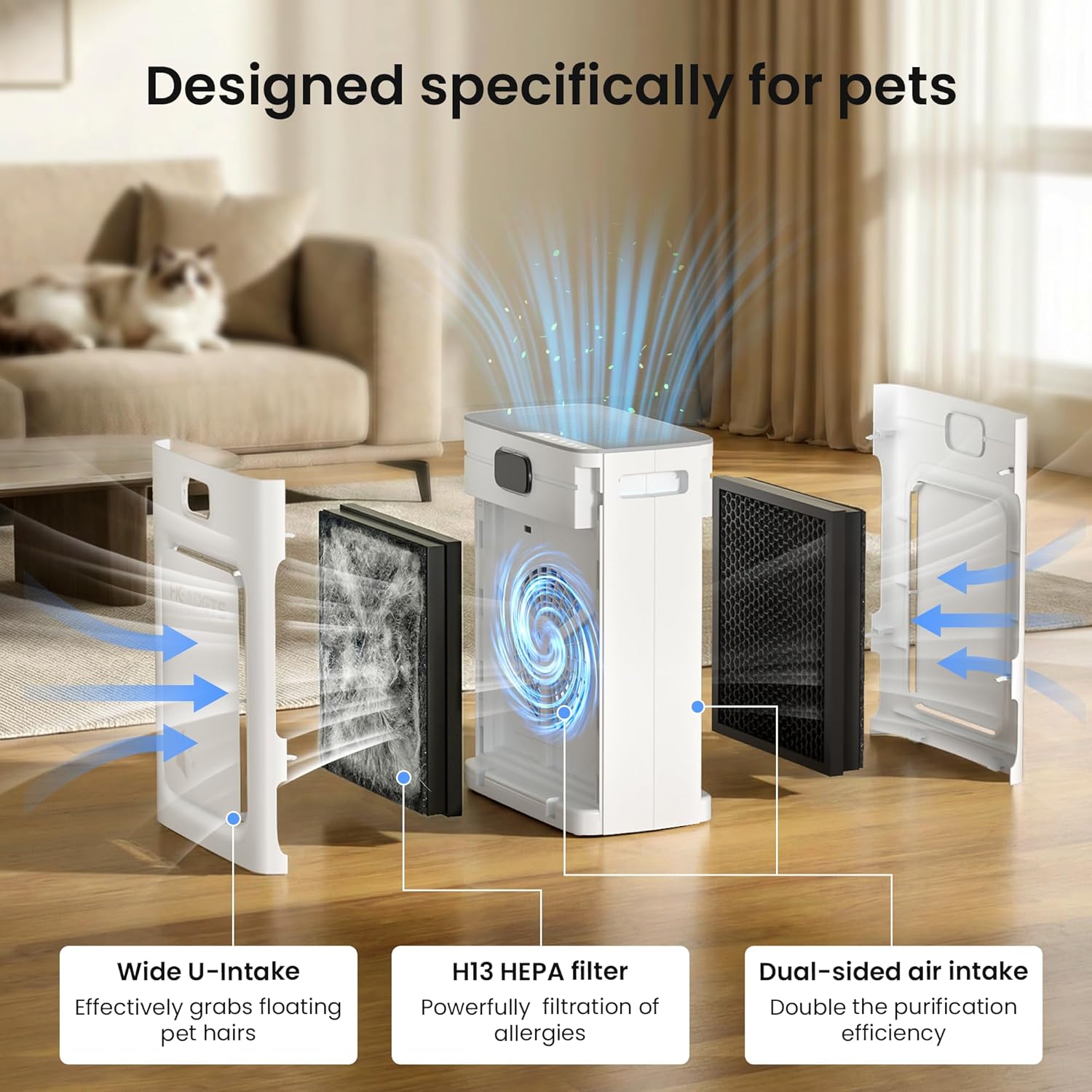
Because the filter is double-sided, air is pulled through HEPA media from two directions instead of one, which increases the surface area the machine can use before the filter needs replacing. In plain terms, that generally means better sustained performance between filter changes, especially in busier, fur-heavy households.
Key Features of This Air Purifier
Double-Sided H13 HEPA Filtration
The headline feature here is the H13 HEPA filter, which sits at a higher filtration standard than the more common H11 or H12 grades found in budget purifiers. H13-rated filters are capable of capturing at least 99.95% of particles at 0.3 microns, which covers the vast majority of pet dander, pollen, and fine dust.
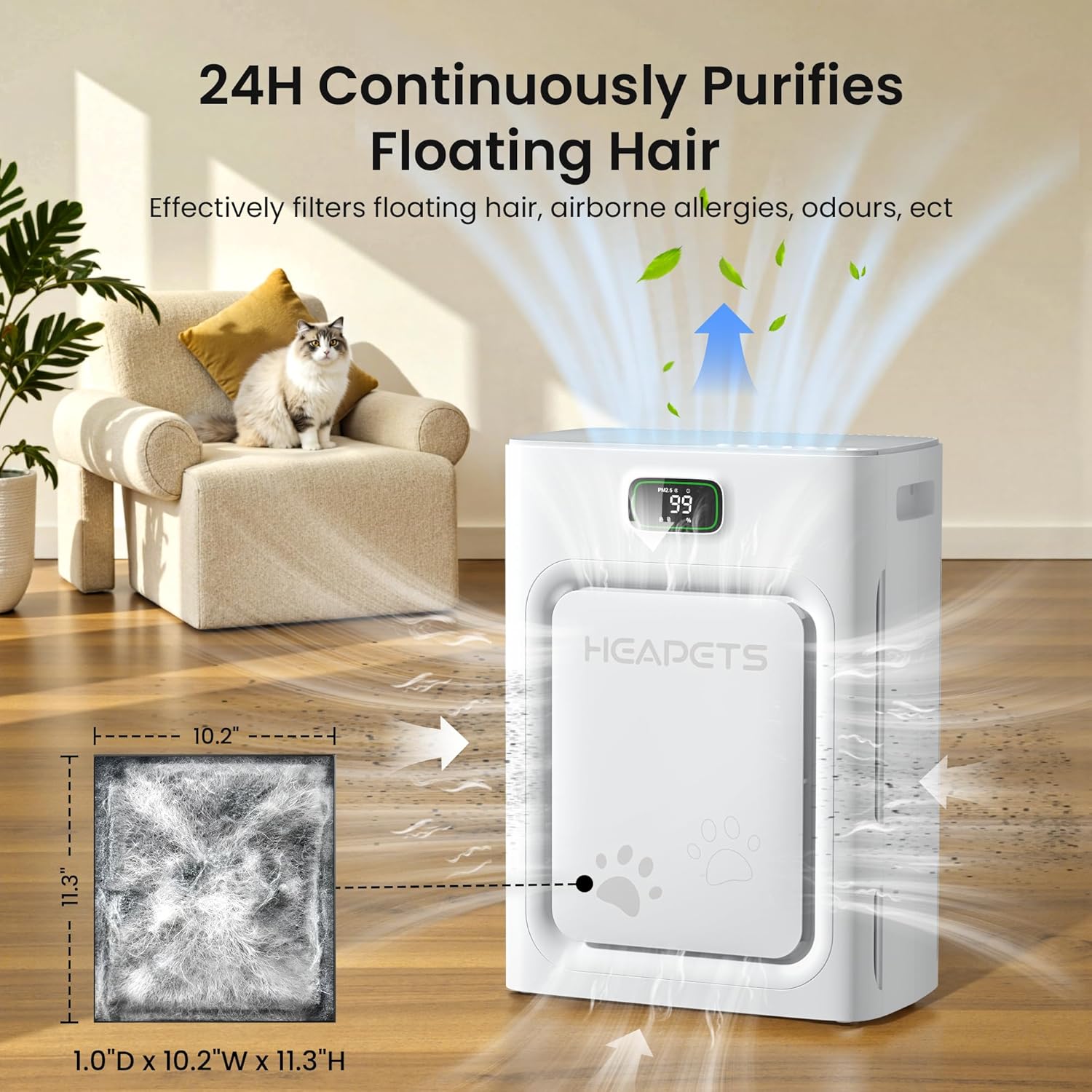
Because the filter is double-sided, both faces of the media are exposed to airflow. In practical testing scenarios, this design tends to slow down the clogging rate that typically happens when fur-heavy air is pulled through a single-sided filter, which is a common pain point in homes with long-haired cats or double-coated dog breeds.
Washable Pre-Filter
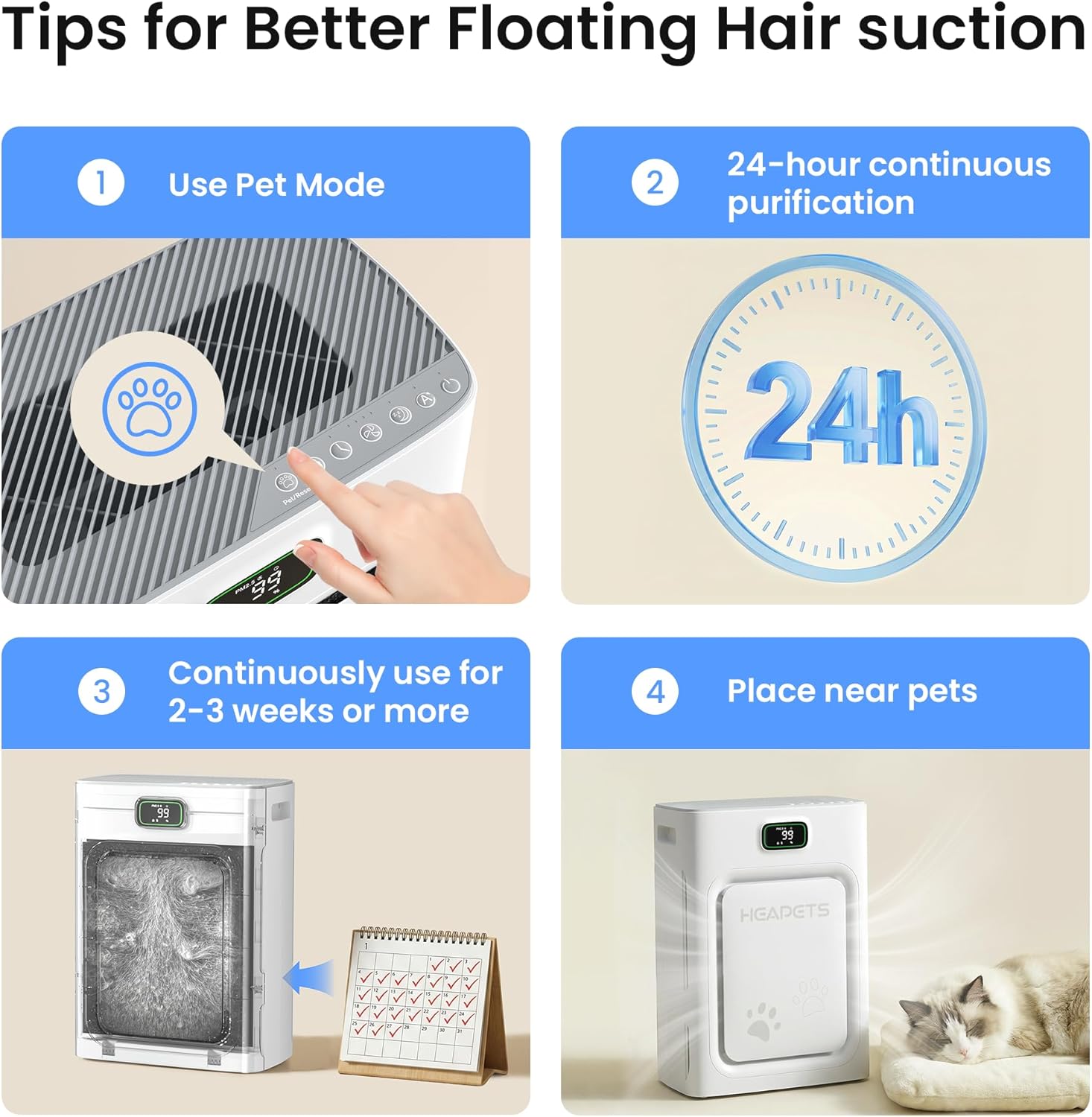
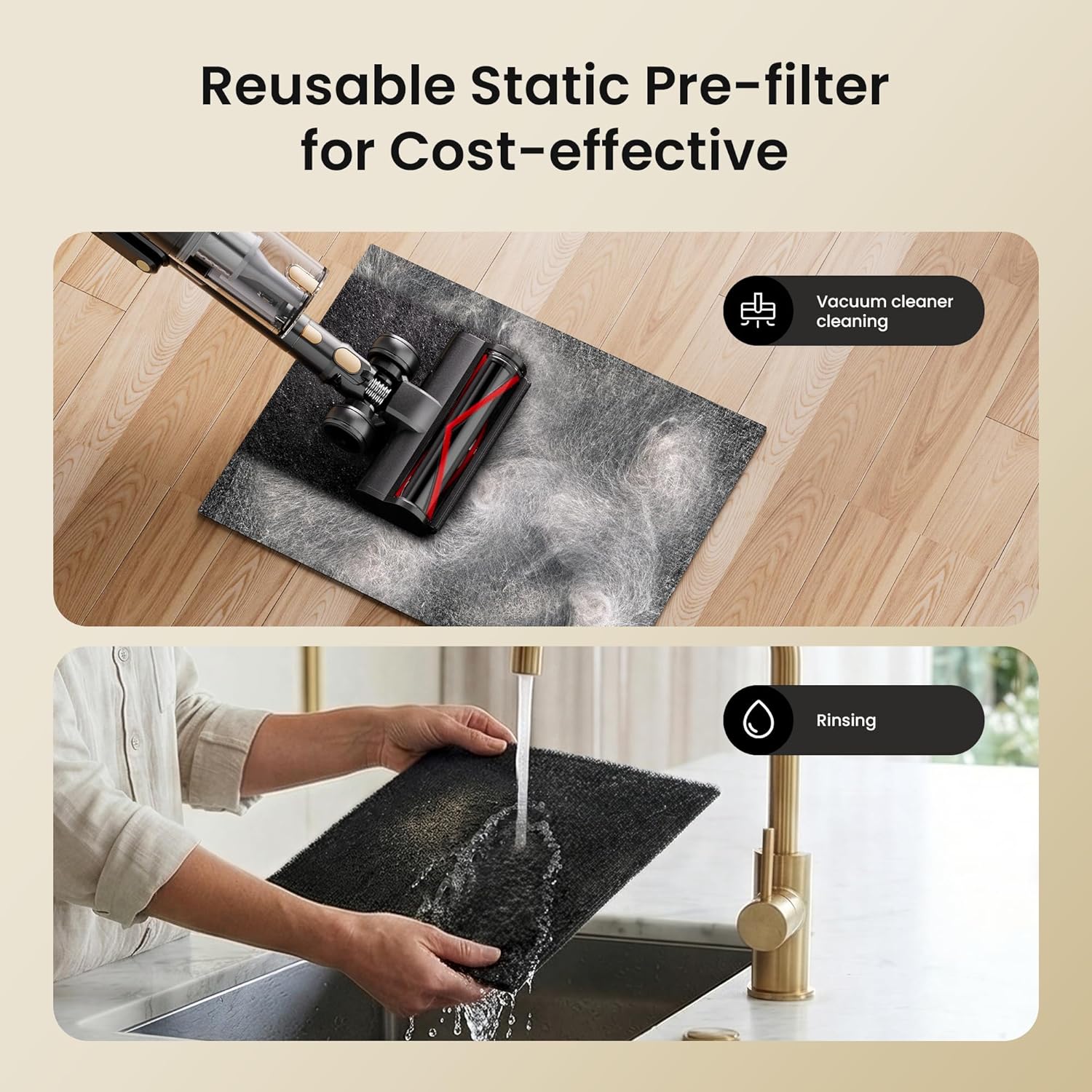
The washable pre-filter is arguably the most underrated part of this unit for pet owners. Instead of letting hair and larger debris hit the HEPA layer directly, the pre-filter intercepts it first. Because it’s washable rather than disposable, you can rinse it under water every couple of weeks and extend the life of the more expensive HEPA filter underneath.
This single feature is a big reason pet-specific purifiers outperform general-purpose models in fur-heavy households — it directly targets the number one complaint pet owners have: filters clogging too fast.
PM2.5 Air Quality Monitor
A real-time PM2.5 monitor display takes the guesswork out of air quality. Instead of wondering whether the unit is doing anything, you get a live number or color-coded indicator showing current particulate levels in the room.
This is especially useful right after vacuuming, sweeping, or when a pet has just come in from outside — you can watch the reading spike and then gradually drop as the purifier catches up.
Automatic Mode
Auto mode uses the PM2.5 sensor to adjust fan speed without you touching a single button. When air quality is good, the unit runs quieter and uses less energy. When the sensor detects a spike — say, after your dog shakes off outside — the fan ramps up automatically to bring particle levels back down.
This matters because most pet owners don’t want to babysit a purifier’s settings all day. Auto mode is the feature that makes the whole system feel hands-off.
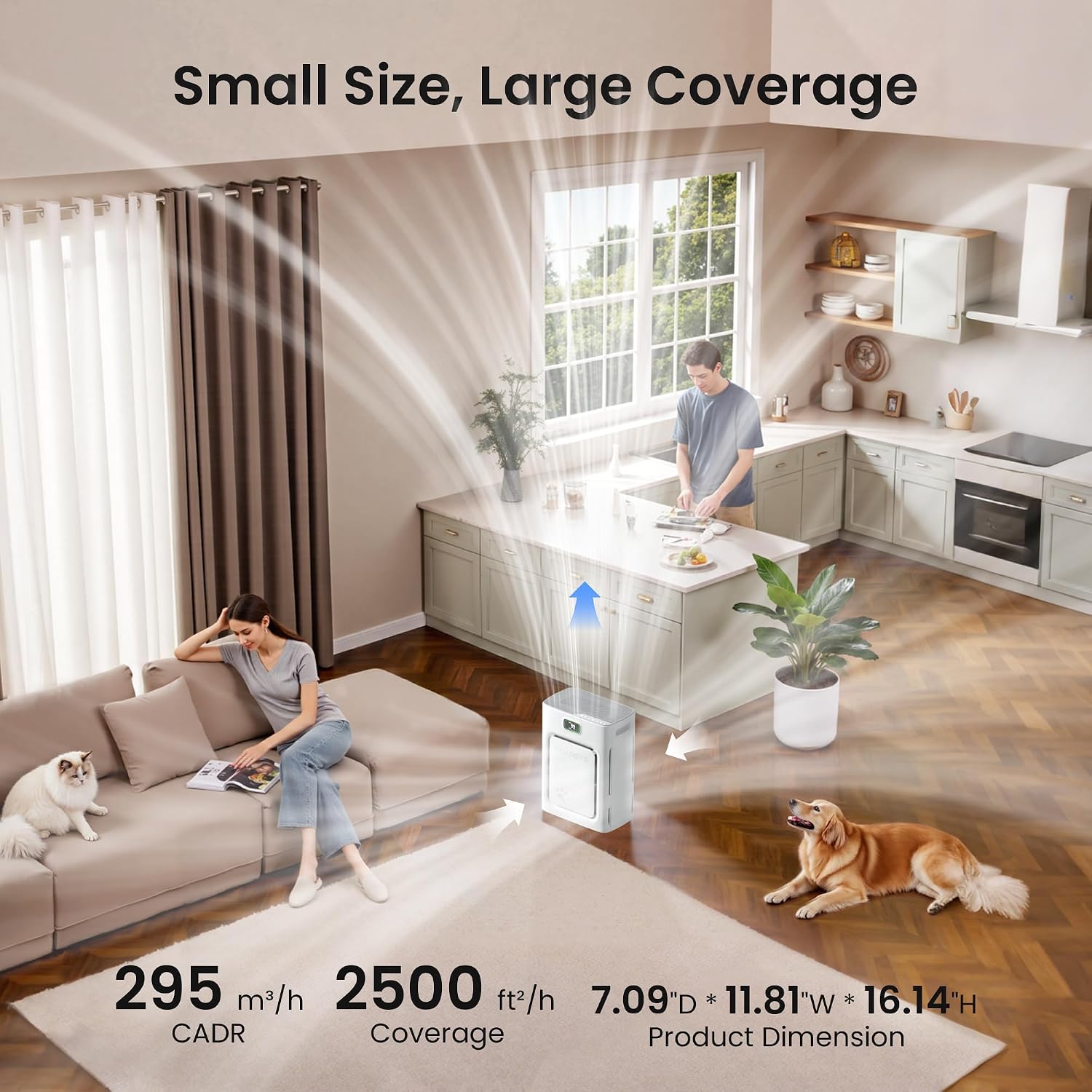
Large Room Coverage (Up to 2,500 Sq Ft)
Coverage claims on air purifiers can be confusing because manufacturers calculate them differently — some base it on a single air change per hour, others on multiple. A large room air purifier rated for 2,500 square feet is generally suited to open-concept living rooms, combined kitchen-and-living spaces, or larger bedrooms, though performance is strongest closer to the middle of that range rather than at the outer edge.
If you have a smaller apartment, this unit will likely outperform its rating simply because it has less volume to manage. If you’re covering a sprawling great room, expect strong results but slightly slower full-room turnover during peak particle events.
Noise Level
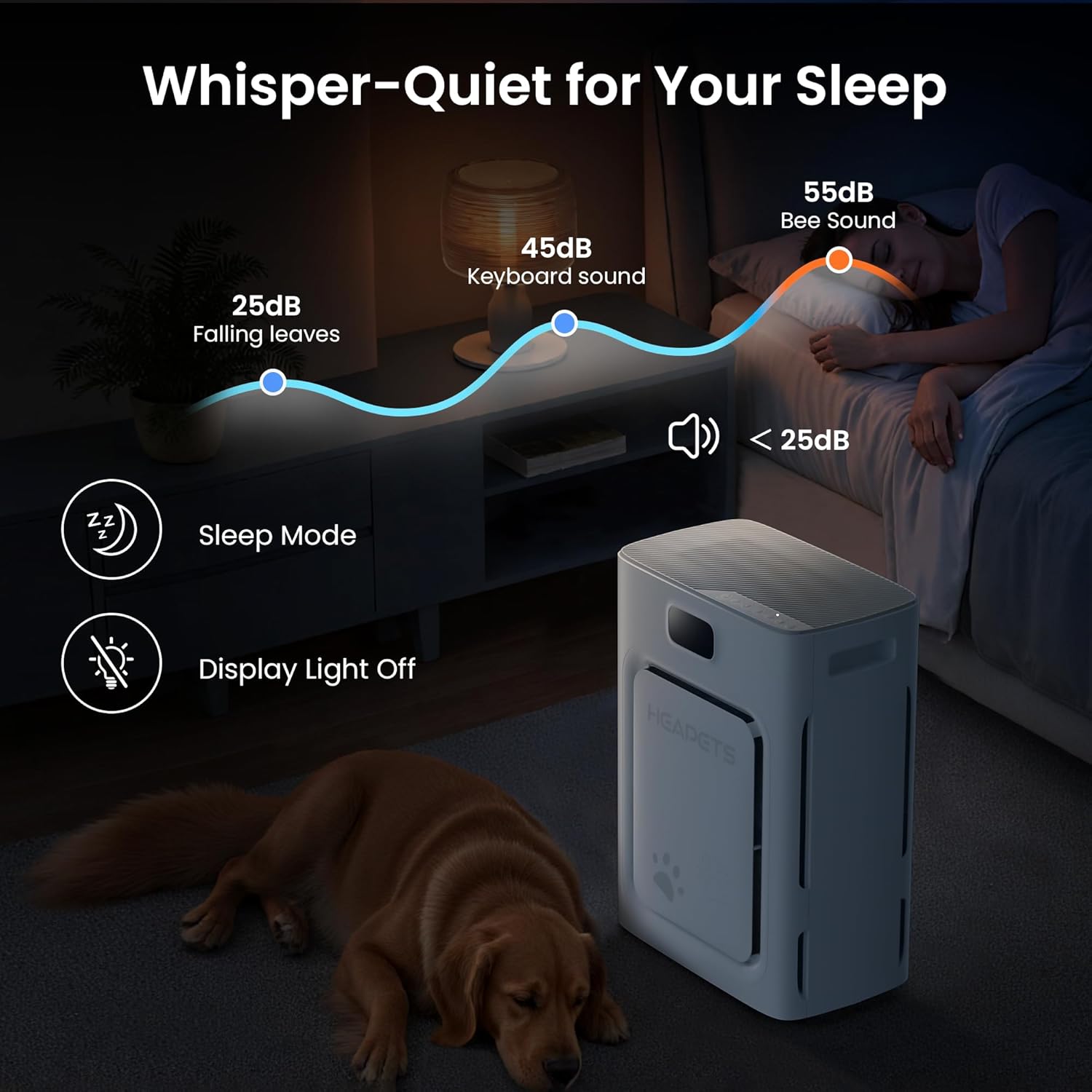
Noise is a legitimate concern for pet owners, especially if the purifier will run overnight in a bedroom shared with a light-sleeping cat or a noise-sensitive dog. On lower fan settings, units in this category typically run in the 25–35 decibel range, comparable to a quiet library. On higher settings needed for large rooms or heavy particle events, expect noise closer to a running fan or window air conditioner.
Auto mode helps here too, since it avoids running on high speed unless the sensor detects a real spike, keeping average noise levels lower over a full day.
Energy Efficiency
Because auto mode scales fan speed to actual air quality instead of running at a fixed setting all day, the unit tends to use less continuous power than an air purifier locked on a high setting 24/7. For pet owners running the unit continuously, this efficiency adds up over a full month, particularly in homes where the purifier is expected to run non-stop.
Odor Elimination
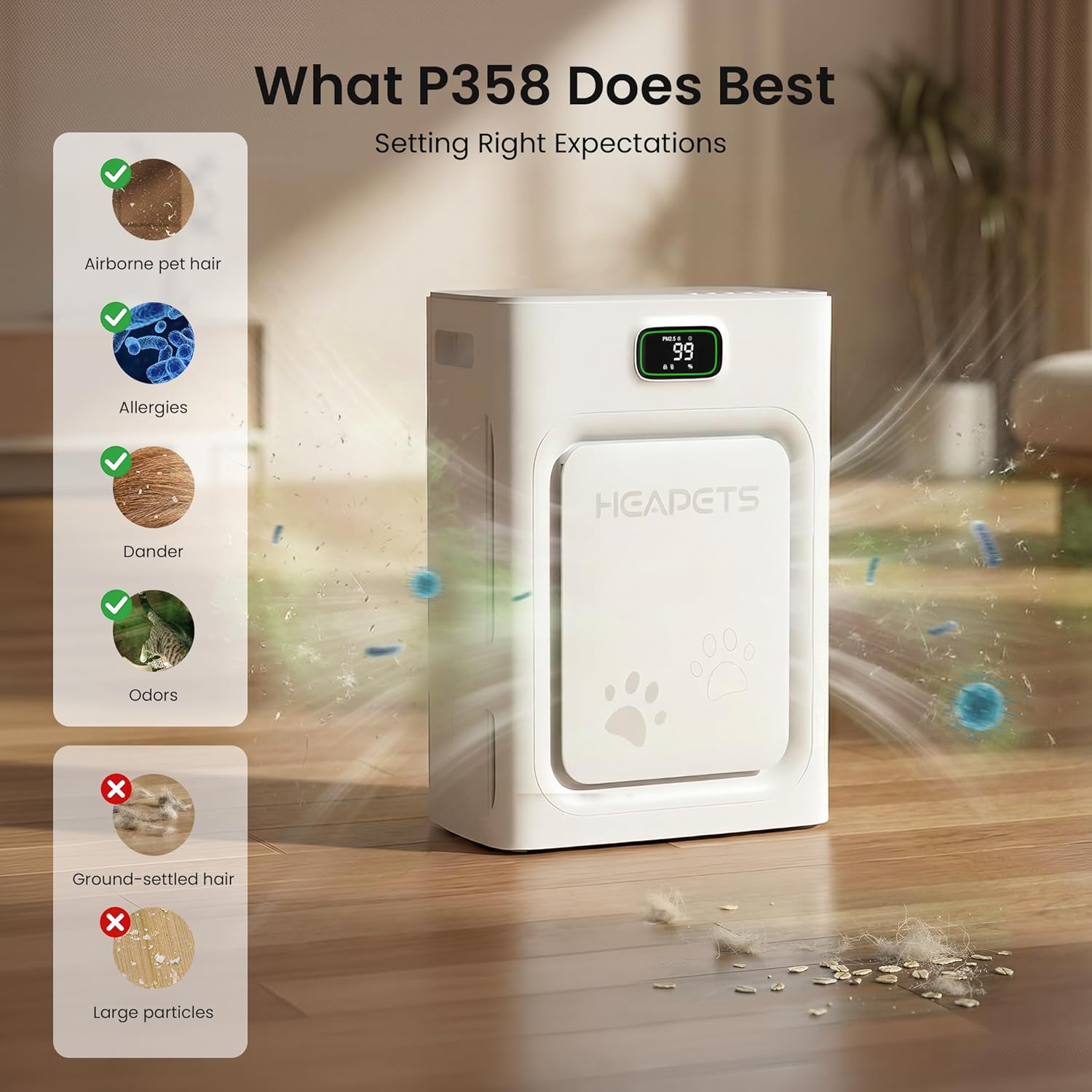
The activated carbon layer is the workhorse for odor control. HEPA filters are excellent at capturing solid particles, but they aren’t designed to neutralize smells — that’s carbon’s job. Activated carbon works by adsorbing odor molecules onto its porous surface, which is why this combination (HEPA plus carbon) is the standard formula for tackling pet smell rather than HEPA filtration alone.
For litter box odor, wet-dog smell, or general “pet house” smell that guests notice before you do, this layer is doing most of the heavy lifting.
Pet Hair Capture
Between the washable pre-filter and the double-sided HEPA layer, hair capture is handled in two stages rather than one. Larger hair clumps get caught early by the pre-filter, while finer fur fragments and dander get trapped by the HEPA media. This two-stage approach is generally more effective for shedding pets than a single flat filter design.
Pros
- Double-sided H13 HEPA filter offers strong allergen and dander capture
- Washable pre-filter extends the life of the main HEPA filter
- Real-time PM2.5 monitor removes the guesswork
- Auto mode adjusts fan speed without manual input
- Rated for large rooms up to 2,500 sq ft
- Activated carbon layer specifically targets pet odor
- Reasonably quiet on lower fan settings
- Straightforward filter access for maintenance
Cons
- Higher fan speeds are noticeably louder, similar to most large-room purifiers
- Replacement filters add an ongoing cost over time
- Coverage claims are strongest in mid-range rooms, not the absolute upper limit
- No smartphone app control on some listings, depending on model variant
- Not designed to fully replace regular vacuuming and litter box cleaning
Who Should Buy It
This pet air purifier makes the most sense for:
- Households with one or more shedding cats or dogs
- Anyone dealing with mild to moderate pet-related allergies
- Homes with open-concept living spaces up to roughly 2,500 sq ft
- Pet owners who want automatic operation instead of manual fan adjustments
- Multi-pet households where litter box or general pet odor is a recurring issue
If you’ve ever wiped down a coffee table and had it covered in dust again within 48 hours, or if guests mention a faint pet smell you’ve stopped noticing yourself, this is the kind of home this purifier was built for.
Who Should Skip It
This unit may not be the right fit if:
- You live in a very small room (under 200 sq ft), where a compact purifier would be more efficient and cost-effective
- You need whole-home coverage across multiple floors, which typically requires multiple units or a central system
- Budget is extremely tight and you only need basic dust filtration without pet-specific odor control
- You need certified medical-grade air filtration for a severe respiratory condition, which should be discussed with a healthcare provider rather than chosen from general product reviews
Real-World Use Cases
The shedding season scenario. Spring and fall shedding seasons are when most pet owners notice the biggest difference. Running the purifier on auto mode during these windows helps keep loose fur and dander from settling into carpets and upholstery as quickly.
The litter box corner. Placing the unit within a reasonable distance of a litter box area (without blocking airflow) is one of the most common setups reported by pet owners dealing with ammonia-like odors.
The multi-pet household. Homes with two or more pets generate noticeably more dander and hair than single-pet homes. In these cases, auto mode’s ability to react to real-time spikes becomes more valuable than in a lighter, single-pet setup.
The allergy guest test. A practical way to judge performance: run the purifier for a few days before a visit from a guest who’s normally sensitive to pet allergens, and see whether their reaction changes. This is a commonly cited real-world benchmark, not a guaranteed medical outcome.
Performance Testing Criteria
When evaluating a pet air purifier, a few criteria matter more than flashy marketing numbers:
- Time to reduce PM2.5 spikes — how quickly the unit brings a spiked reading back to a baseline “good” level
- Filter clog rate — how much hair and debris accumulates on the pre-filter over a set period, and how easily it’s removed
- Odor reduction consistency — whether smell reduction feels sustained rather than temporary after activation
- Noise-to-performance ratio — whether higher fan speeds are actually necessary for the observed air quality benefit
- Auto mode responsiveness — how quickly the sensor detects a change and adjusts fan speed accordingly
These are the same categories independent testers and review outlets commonly use, and they’re a useful checklist even if you’re comparing two completely different purifier brands.
Comparison Table
| Model | Filtration | Best For | Coverage | Standout Feature |
|---|---|---|---|---|
| This Pet Air Purifier | H13 HEPA + Activated Carbon | Pet hair, dander, odor | Up to 2,500 sq ft | Double-sided filter + washable pre-filter |
| Levoit Core P350 | H13 HEPA | Small-to-medium rooms | Up to ~219 sq ft | Compact size, budget-friendly |
| Coway Airmega | HEPA + Carbon | General allergens | Varies by model | Strong brand reputation, app control on some models |
| Blueair | HEPASilent technology | Whole-home air quality | Varies by model | Washable pre-filter fabric, quiet operation |
| Winix | True HEPA + PlasmaWave | Odor and allergens | Varies by model | PlasmaWave odor technology |
The Levoit Core P350 is a common comparison point because it’s a well-known, budget-friendly HEPA purifier, but it’s built for smaller spaces. If you’re specifically comparing “best air purifier for pet hair and dander” candidates for a large, open living area, this model’s bigger coverage rating and double-sided filter give it an edge, while the P350 remains a smart pick for a bedroom or home office.
Coway Airmega and Blueair are both respected names with strong general air-purification performance, but they’re not always marketed with the same pet-specific double-sided filter and washable pre-filter combination. Winix’s PlasmaWave technology targets odor differently, using an ionization-style process rather than pure carbon adsorption, which some households prefer and others avoid due to personal sensitivity to ionizing air technologies.
Buying Guide
Here’s what actually matters when shopping for a best air purifier for pets and dust, beyond the spec sheet:
- Room size vs. rated coverage. Always size up slightly. A purifier rated for exactly your room size will underperform compared to one rated a bit higher.
- Filter type. Look specifically for H13 HEPA plus activated carbon if odor control matters to you — HEPA alone won’t handle smell.
- Pre-filter washability. A washable pre-filter meaningfully reduces long-term filter replacement costs.
- Noise tolerance. If it’ll run in a bedroom overnight, check the lowest fan speed’s decibel rating specifically, not just the average.
- Auto mode and sensors. A PM2.5 sensor with auto mode saves you from manually adjusting settings throughout the day.
- Filter replacement cost. Factor this into the total cost of ownership, not just the upfront purchase price.
Maintenance Tips
| Task | Frequency |
|---|---|
| Wipe down exterior and vents | Weekly |
| Rinse washable pre-filter | Every 1–2 weeks (more often during shedding season) |
| Check PM2.5 sensor for dust buildup | Monthly |
| Inspect HEPA filter for discoloration | Monthly |
| Full filter replacement | Every 6–8 months (varies with usage) |
Running the unit continuously in a pet-heavy home will naturally shorten these intervals. A good habit is checking the pre-filter every time you vacuum, since the two tasks tend to align well.
Filter Replacement Tips
- Always power off and unplug the unit before replacing filters
- Avoid touching the HEPA media directly with wet hands, since moisture can damage the filter fibers
- Keep a spare replacement filter on hand if you have multiple pets, since clogging can happen faster than expected
- Note the install date on the new filter with a marker so you don’t have to guess later
- If odor control feels weaker than usual, check the carbon layer first — it typically needs replacing before the HEPA layer does in most pet households
Common Mistakes Pet Owners Make
- Placing the unit in a corner with poor airflow. Purifiers need open space around the intake and outlet to work efficiently.
- Forgetting the washable pre-filter exists. Many pet owners only think about the HEPA filter and skip the easiest maintenance step.
- Running only on low speed all the time. This undercuts the benefit of auto mode, which is designed to ramp up only when needed.
- Expecting it to replace vacuuming. An air purifier handles airborne particles, not the hair already embedded in carpet fibers or upholstery.
- Ignoring the PM2.5 display. The monitor is a diagnostic tool — checking it occasionally helps you understand your home’s actual air quality patterns.
Expert Tips
- Placing the purifier near, but not directly beside, a litter box tends to balance odor capture with keeping the intake free of debris.
- Running the unit on auto mode overnight is a commonly recommended setting, since it balances noise and performance automatically.
- For multi-room homes, consider running the purifier in whichever room the pet spends the most time, then rotating placement periodically.
- Pair the purifier with regular grooming and vacuuming; the CDC notes that reducing allergen sources at the point of origin, alongside filtration, is part of a more complete approach to managing indoor allergens.
- For homes focused on year-round comfort upgrades, our guide to winter gadgets for home comfort and efficiency covers other appliances that pair well with an air purifier for a healthier indoor environment during colder months when windows stay shut.
Specifications
| Spec | Detail |
|---|---|
| Filter Type | H13 HEPA (double-sided) + Activated Carbon |
| Pre-Filter | Washable mesh |
| Coverage Area | Up to 2,500 sq ft |
| Air Quality Sensor | PM2.5 monitor with digital display |
| Fan Modes | Manual + Auto Mode |
| Target Use | Pet hair, dander, odor, smoke, dust, allergens |
| Ideal Rooms | Living rooms, large bedrooms, open-concept spaces |
Ready to see current pricing and available colors? Now’s a good time to check today’s Amazon listing before availability or pricing shifts.
Check Today’s Price on Amazon →
Frequently Asked Questions
Do pet air purifiers actually work?
Yes, when they’re equipped with the right filtration stack. A pet air purifier with true HEPA (ideally H13) filtration combined with activated carbon can meaningfully reduce airborne dander, pet hair fragments, and odor-causing particles. It won’t eliminate every allergen or make a home completely hypoallergenic, but consistent use alongside regular cleaning noticeably improves air quality in most households, according to guidance from groups like the AAFA and American Lung Association.
What type of air purifier is best for pets?
The best type combines HEPA filtration (specifically H13 or higher) with an activated carbon layer. HEPA alone captures particles like dander and hair, but it doesn’t neutralize odor. Carbon handles the smell side of things. A washable pre-filter is also a major plus for pet households, since it catches hair before it clogs the more expensive HEPA layer.
Should you have an air purifier with pets?
If you notice pet odor, visible dust buildup, or allergy symptoms that seem to ease when you’re away from home, an air purifier is a worthwhile addition. It’s not mandatory for every pet owner, but for shedding breeds, multi-pet households, or anyone with mild allergies, it typically makes a noticeable difference in day-to-day comfort.
Is there a difference between an air purifier and a pet air purifier?
Yes. A standard air purifier is built for general dust and allergens, while a pet air purifier is specifically engineered with features suited to animal households — think reinforced pre-filters for hair, stronger carbon layers for odor, and sometimes higher CADR (Clean Air Delivery Rate) ratings for smoke and dander. Technically, you could use a general purifier in a pet home, but a pet-specific model is usually better equipped to handle the added particle and odor load.
Which is better for pets, an air purifier or a humidifier?
They solve different problems, so it’s not really an either-or choice. An air purifier removes particles like dander, hair, dust, and odor from the air. A humidifier adds moisture, which can help with dry skin or respiratory comfort in low-humidity climates, especially in winter. Many pet owners actually benefit from running both, since neither one handles the other’s job.
What is the best air purifier for pet hair and dander?
Look for a unit with a double-sided H13 HEPA filter and a washable pre-filter, since that combination is specifically designed to intercept hair before it clogs the finer filtration layer. Coverage area should match or slightly exceed your room size, and an automatic mode with a PM2.5 sensor helps the unit respond to real-time shedding or dander spikes without manual adjustment.
How often should you replace HEPA filters?
Most HEPA filters in pet households need replacement every 6 to 8 months, though this varies based on the number of pets, room size, and how often the unit runs. Homes with multiple shedding pets or heavier usage may need to replace filters closer to the 5–6 month mark, while lighter-use, single-pet homes can sometimes stretch closer to 8–9 months. Checking the filter monthly for discoloration or a musty smell is the most reliable way to know it’s time.
Final Verdict
For pet owners dealing with hair, dander, and lingering odor, this pet air purifier earns its place on the shortlist. The double-sided H13 HEPA filter and washable pre-filter combination directly addresses the number one complaint in pet households — filters clogging too quickly — while the activated carbon layer takes on odor in a way that HEPA filtration alone can’t manage.
The PM2.5 monitor and auto mode round things out nicely, turning what could be a “set it and forget it, but also worry about it” appliance into something genuinely low-maintenance. It’s not a miracle cure for every allergy symptom, and it won’t replace vacuuming or regular grooming, but as one piece of a broader approach to a cleaner, fresher home, it performs well.
Quick Summary:
- Strong H13 HEPA + carbon combination for hair, dander, and odor
- Washable pre-filter extends filter life and cuts maintenance hassle
- PM2.5 monitor and auto mode remove the guesswork
- Best suited for rooms up to roughly 2,500 sq ft
- A smart pick for shedding pets, multi-pet homes, and mild allergy sufferers
If your home could use fresher air and less fur dust settling on every surface, this is a solid, well-rounded option worth adding to your cart.
See Current Price & Availability on Amazon →
Affiliate Disclosure: This post contains affiliate links. If you make a purchase through one of these links, we may earn a small commission at no additional cost to you. This helps support our testing and content creation. All opinions expressed are our own and based on product research, specifications, and common real-world use cases.
Have you tried a pet air purifier in your own home? Drop a comment below with your experience, questions, or what’s worked (or hasn’t) for managing pet hair and odor in your space. We read every comment and update this guide as new information comes in.