Key Takeaways
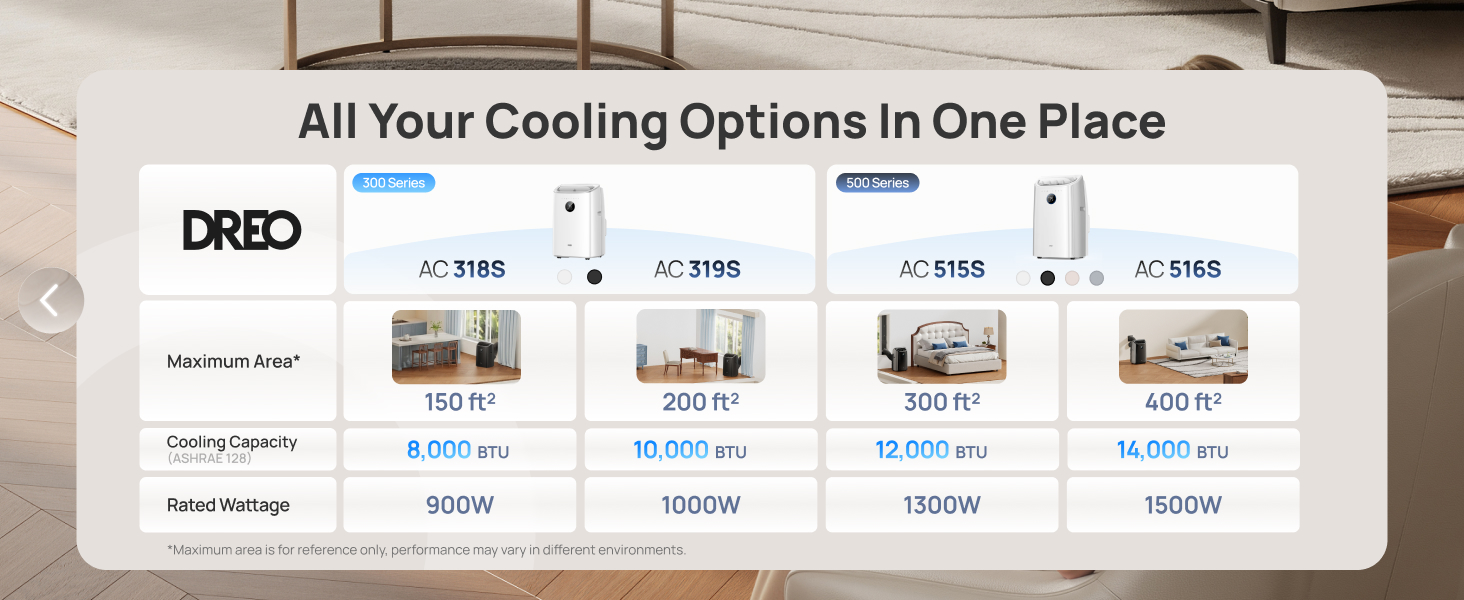
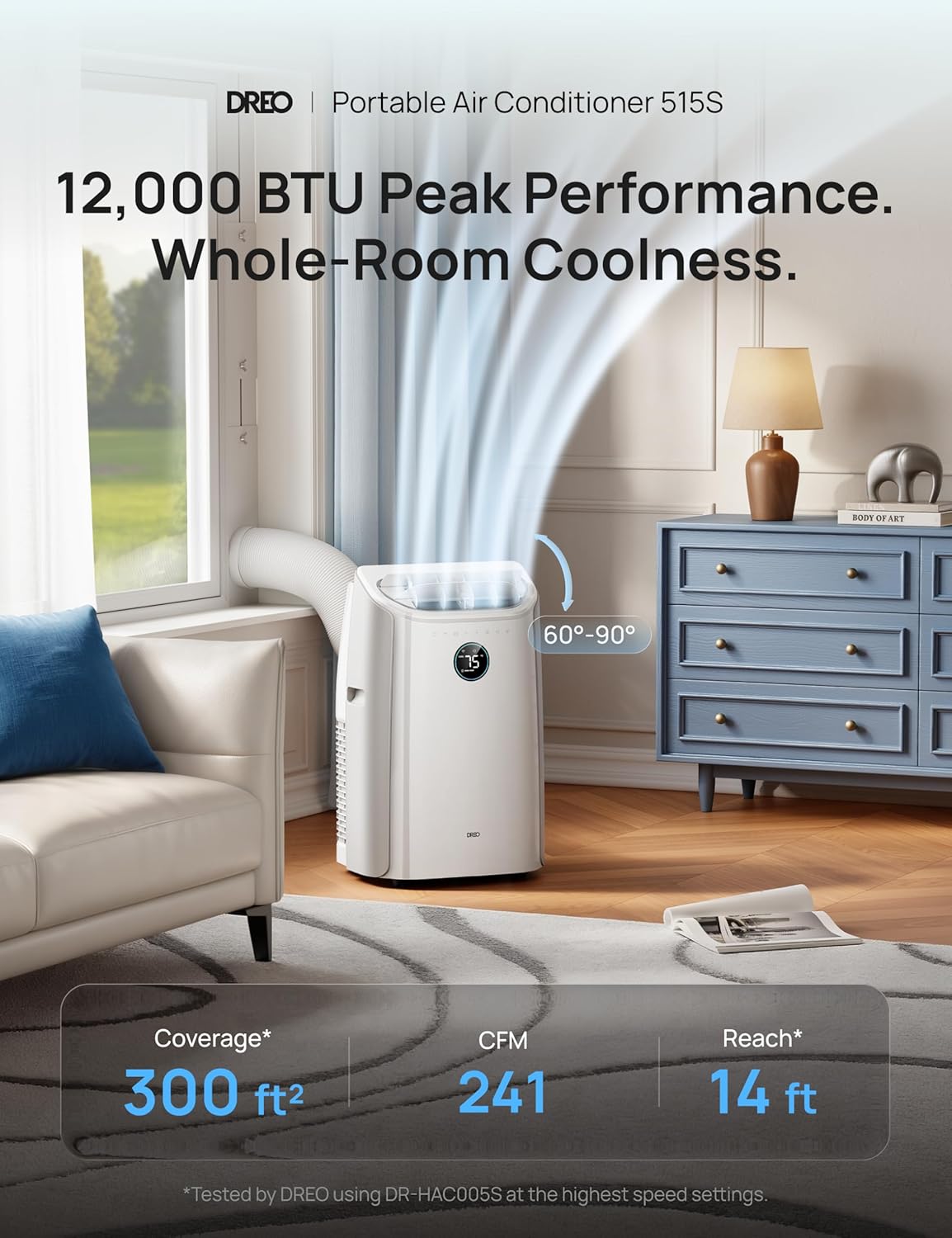
- The DREO 515S is a 12,000 BTU (ASHRAE) / 8,000 BTU (DOE/SACC) single-hose portable air conditioner built for rooms up to roughly 300–350 square feet.
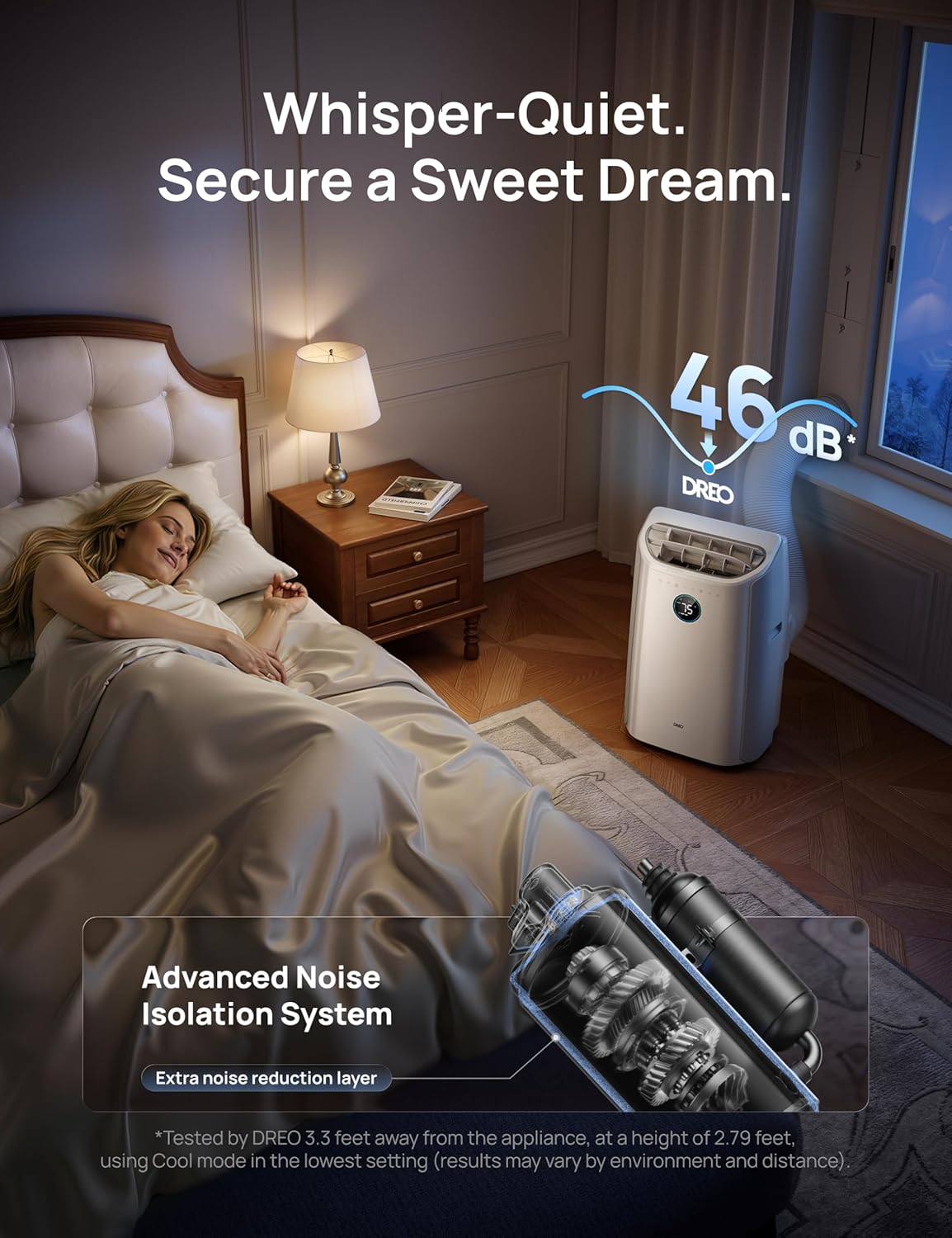
- It runs as quiet as 45–46 dB, which is noticeably quieter than most box-style portable ACs.
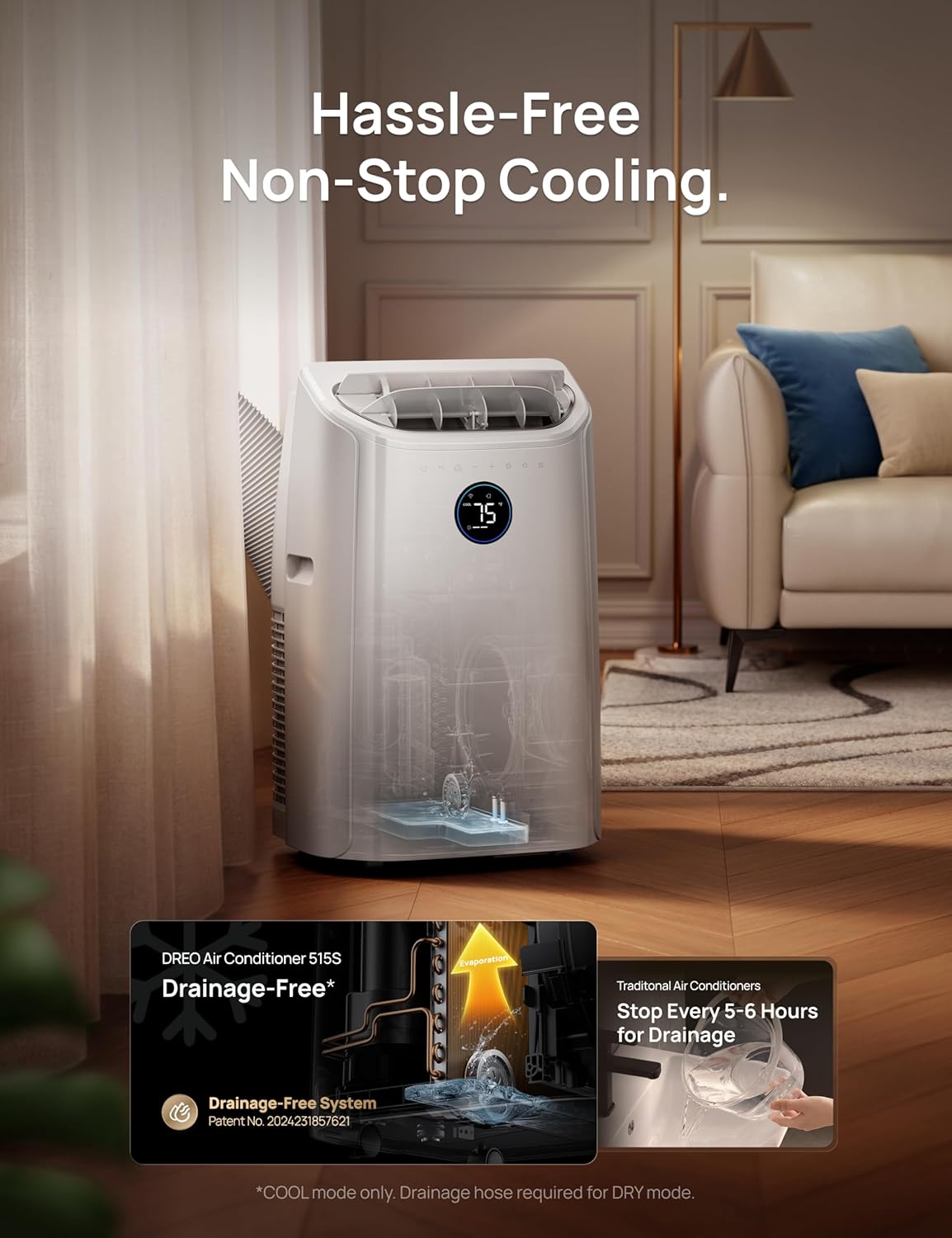
- Its drainage-free, self-evaporating system handles condensation automatically in humidity below 90%, so you rarely need to empty a tank.
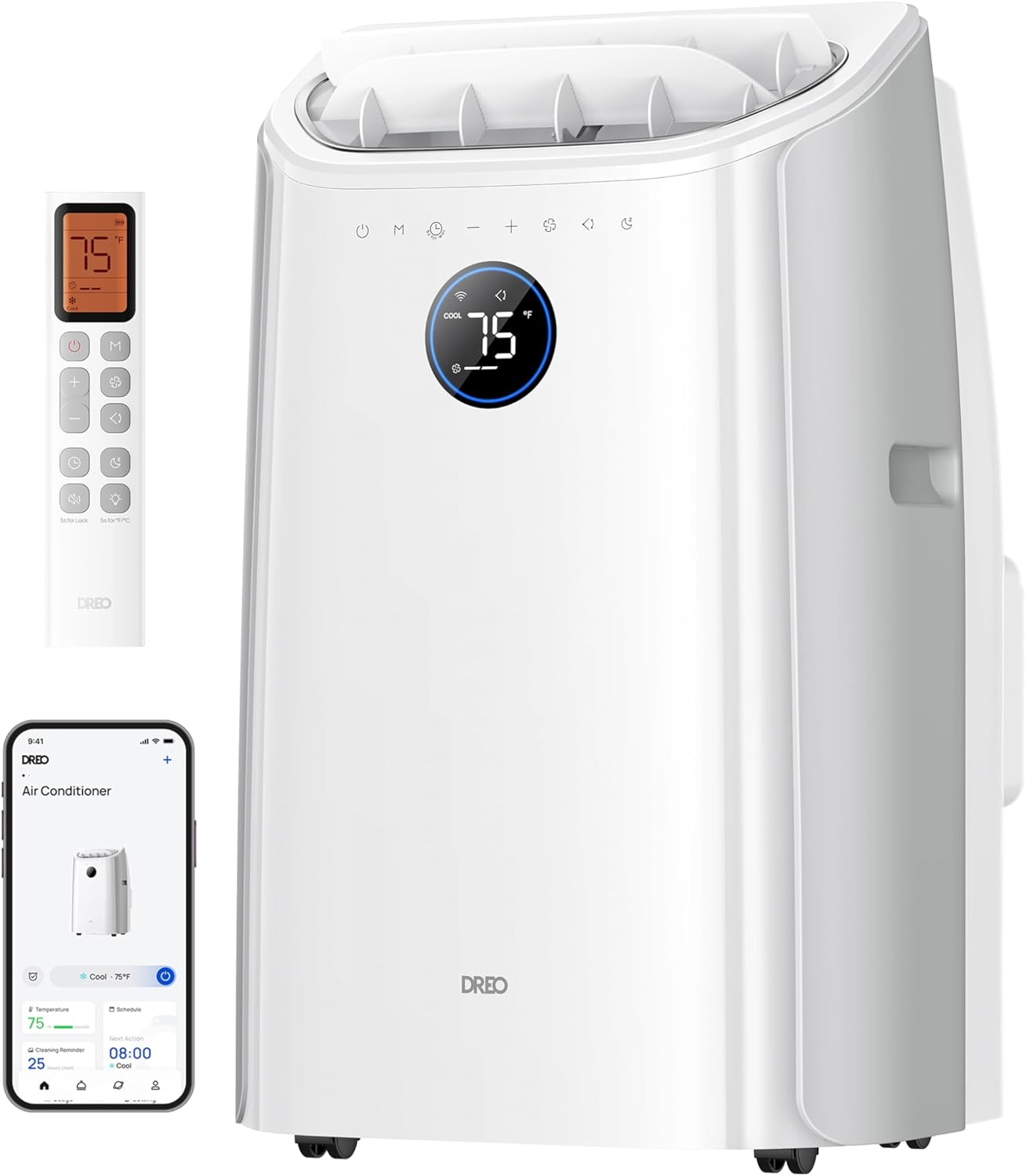
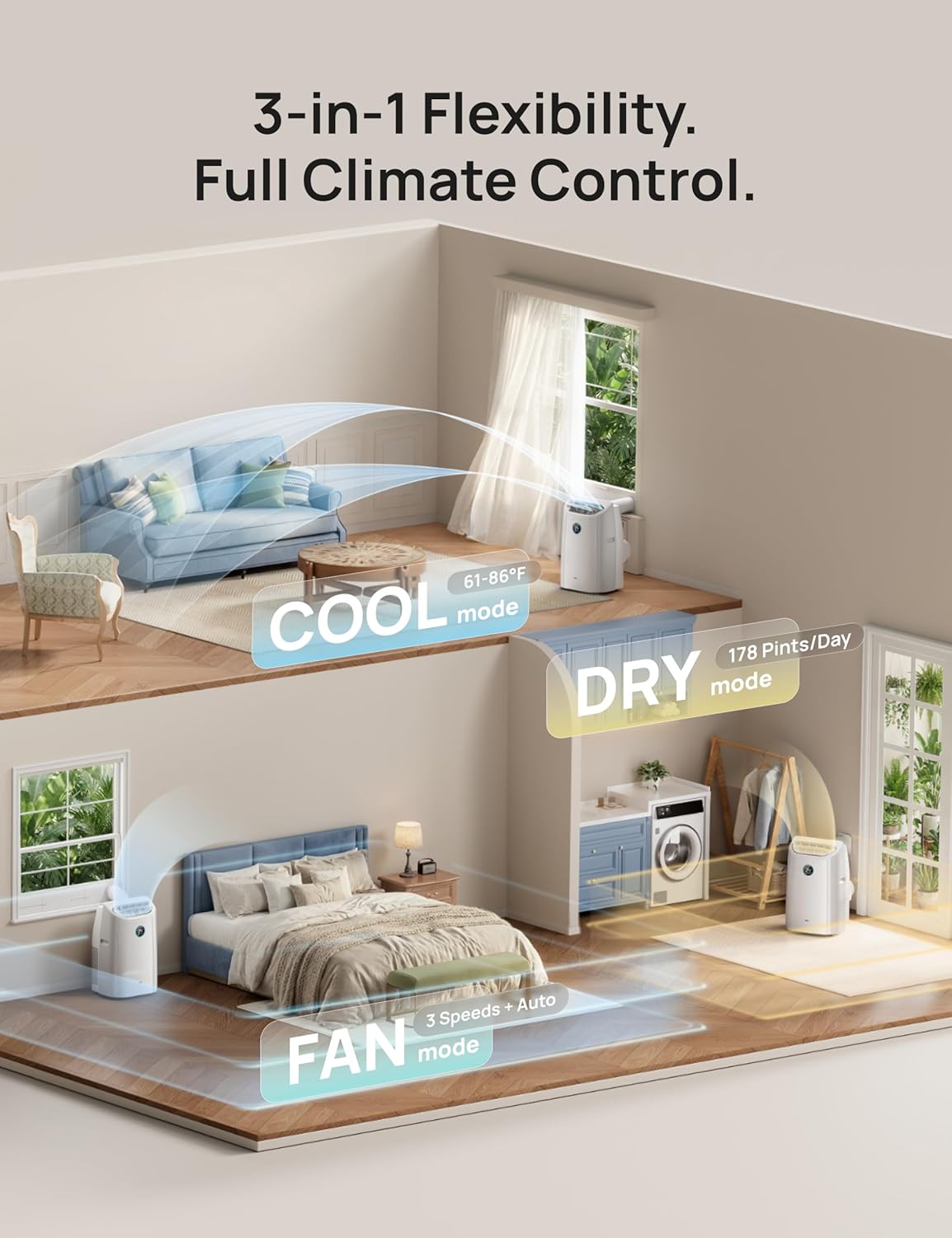
- It works as a 3-in-1 cooler, dehumidifier, and fan, controllable by app, remote, touch panel, or voice (Alexa, Google Assistant).
- At roughly 62.9 lbs, it’s heavier than it looks, so plan your room layout before you commit to moving it often.
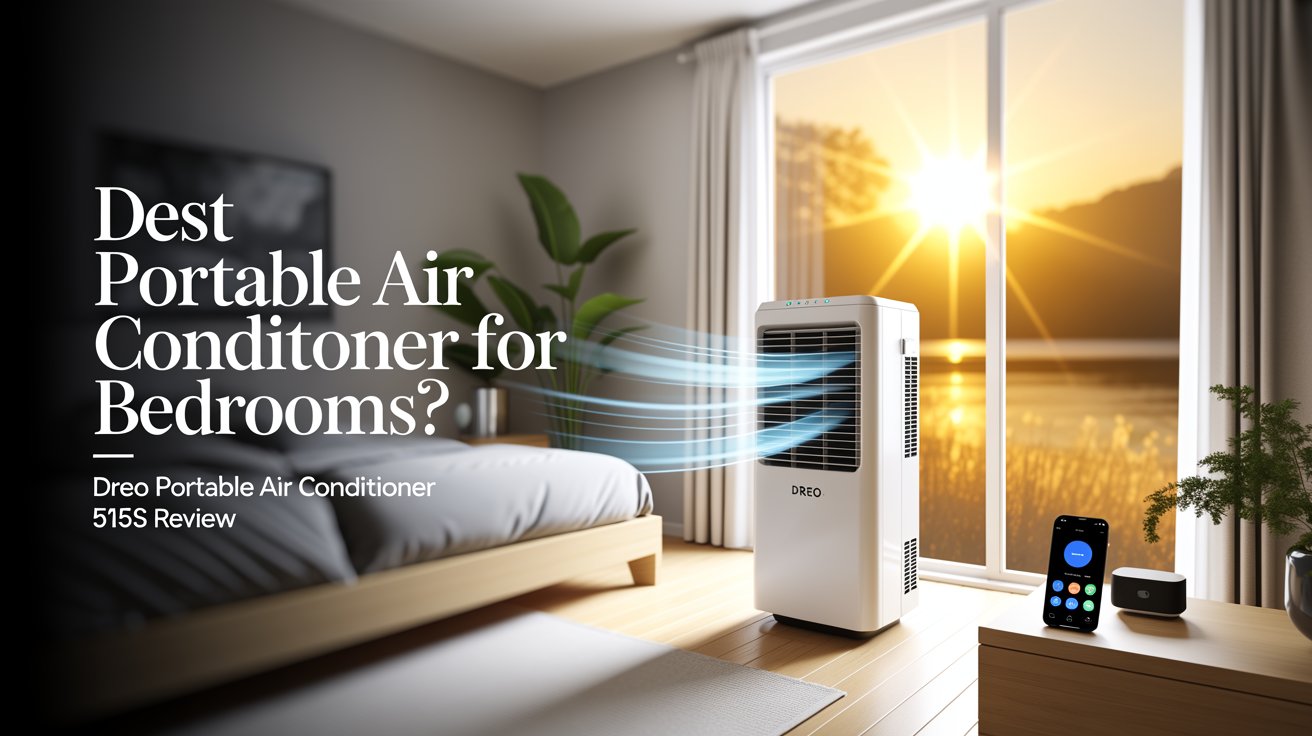
A hot summer with a rising electricity bill is a rough combination. That’s exactly why portable air conditioners have become one of the fastest-growing categories in home cooling this year — you get real cooling power without an installer, a lease violation, or a five-figure HVAC quote. DREO has built a reputation as a trusted name in home comfort, and the 515S is its answer to the “quiet, smart, and easy to live with” portable AC brief. This review breaks down exactly how it performs in a real bedroom, what the specs actually mean for your space, and whether it’s worth your money over the competition.
Quick Verdict
| Category | Details |
|---|---|
| Best For | Bedrooms, apartments, home offices up to ~300 sq ft |
| Cooling Capacity | 12,000 BTU ASHRAE (8,000 BTU DOE/SACC) |
| Smart Features | DREO app, Alexa, Google Assistant, 24-hour timer, sleep curve |
| Noise Level | 45–46 dB on low/sleep settings |
| Coverage | Up to 300–350 sq ft |
| Pros | Quiet operation, drainage-free system, strong app control, single-hose simplicity |
| Cons | Heavy at ~63 lbs, single hose loses some efficiency vs. dual-hose units |
| Rating | 4.6 / 5 |
| Value for Money | Strong — competitive price for the feature set |
✅ Stay Cool This Summer — Check Today’s Amazon Price
Product Overview
The DREO 515S is a smart, single-hose portable air conditioner designed for one job: cooling a bedroom or small living space without the noise and hassle of older portable units. It’s rated at 12,000 BTU under the ASHRAE testing standard, which translates to 8,000 BTU under the newer DOE (SACC) standard most brands now use for real-world accuracy.
Who is it for? Renters who can’t install a window unit, apartment dwellers who need a standing air conditioner instead of central air, and anyone who wants a bedroom air conditioner they can control from their phone without drilling anything into a wall. DREO markets it as a 300 square foot solution, though like most portable ACs, it performs best in the 200–300 sq ft range, especially in rooms with good insulation and few external heat sources.
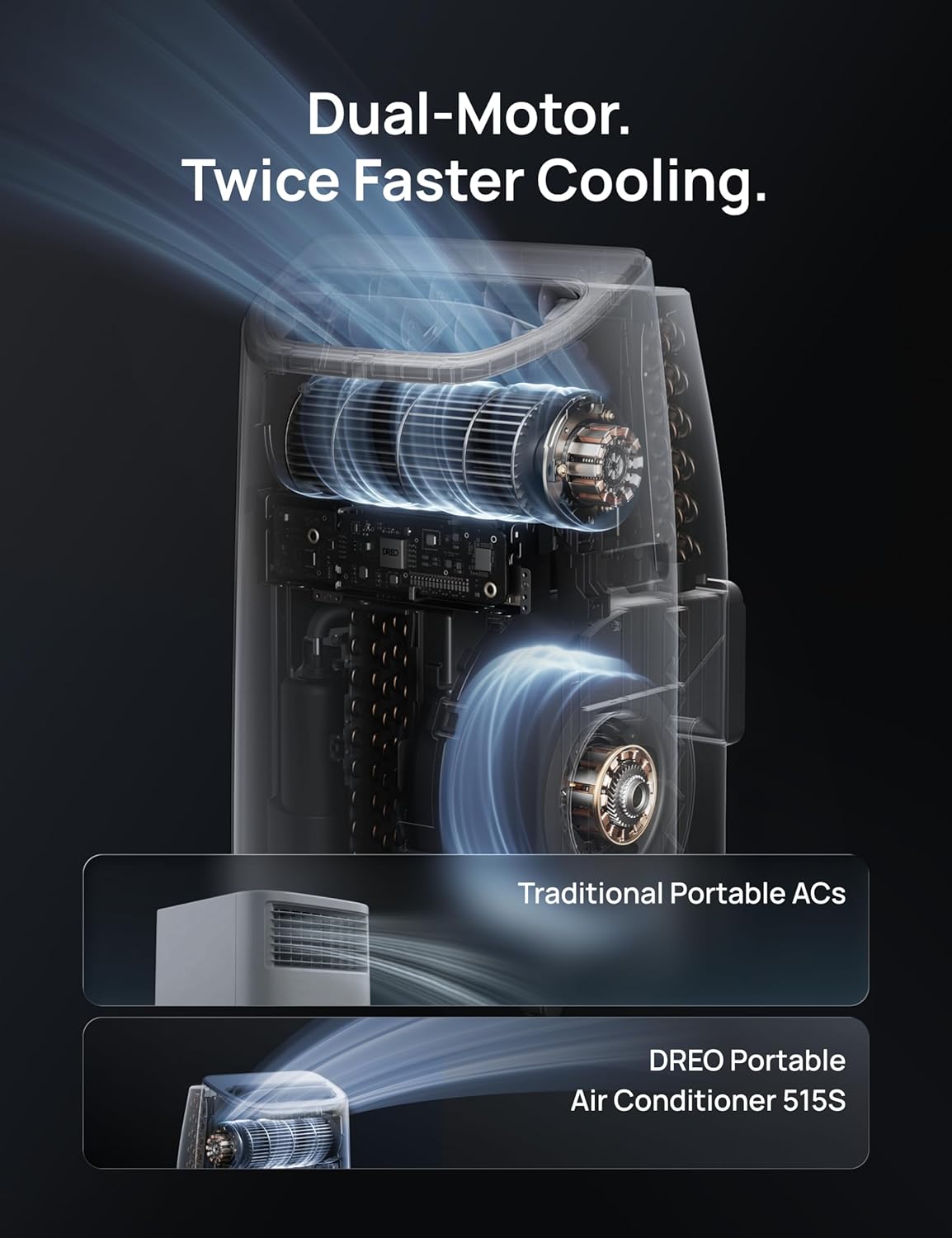
What makes it stand out in a crowded portable cooling unit market is the combination of a genuinely quiet compressor, a self-evaporating drainage-free system, and a smart app that goes beyond a basic on/off toggle.
Specifications
| Spec | Detail |
|---|---|
| Model | DREO AC515S |
| Cooling Power | 12,000 BTU ASHRAE / 8,000 BTU DOE (SACC) |
| Coverage | Up to 300–350 sq ft |
| Cool Wind Distance | Up to 16 ft |
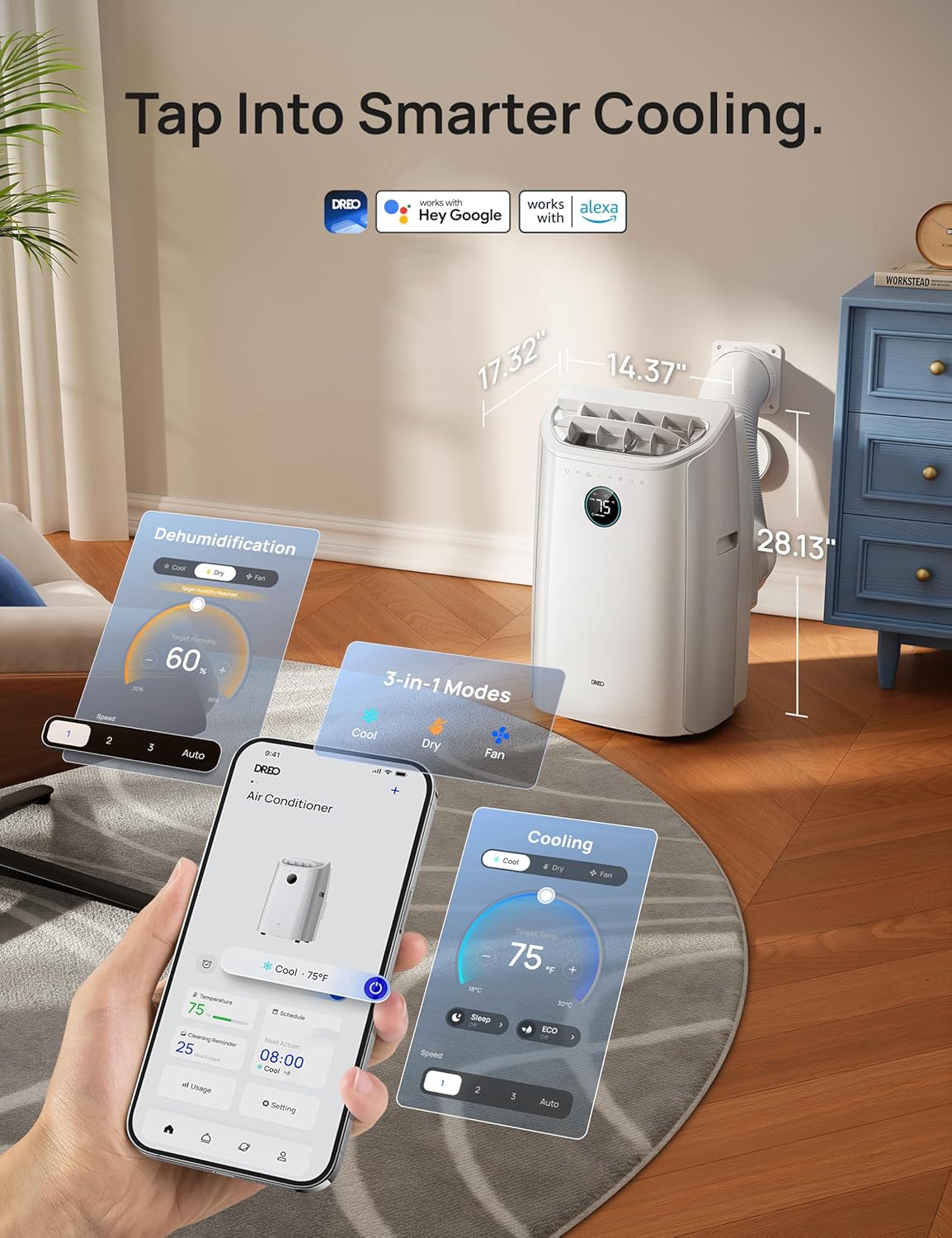
| Cooling Modes | Cool, Dry (Dehumidify), Fan — 3-in-1 |
| Fan Speeds | Multiple, adjustable via app or panel |
| Smart Features | DREO app, sleep curve, 24-hour timer, scheduling |
| Remote | Included, up to 26 ft range |
| Voice Control | Amazon Alexa, Google Assistant |
| Drainage | Drainage-free (self-evaporating up to 90% humidity) |
| Hose Type | Single hose |
| Noise Level | 45–46 dB |
| Refrigerant | R-32 |
| Dimensions | 14.37″D x 17.32″W x 28.13″H |
| Weight | 62.9 lbs |
| Power Cord | 1.8 m (~5.9 ft), 120V |
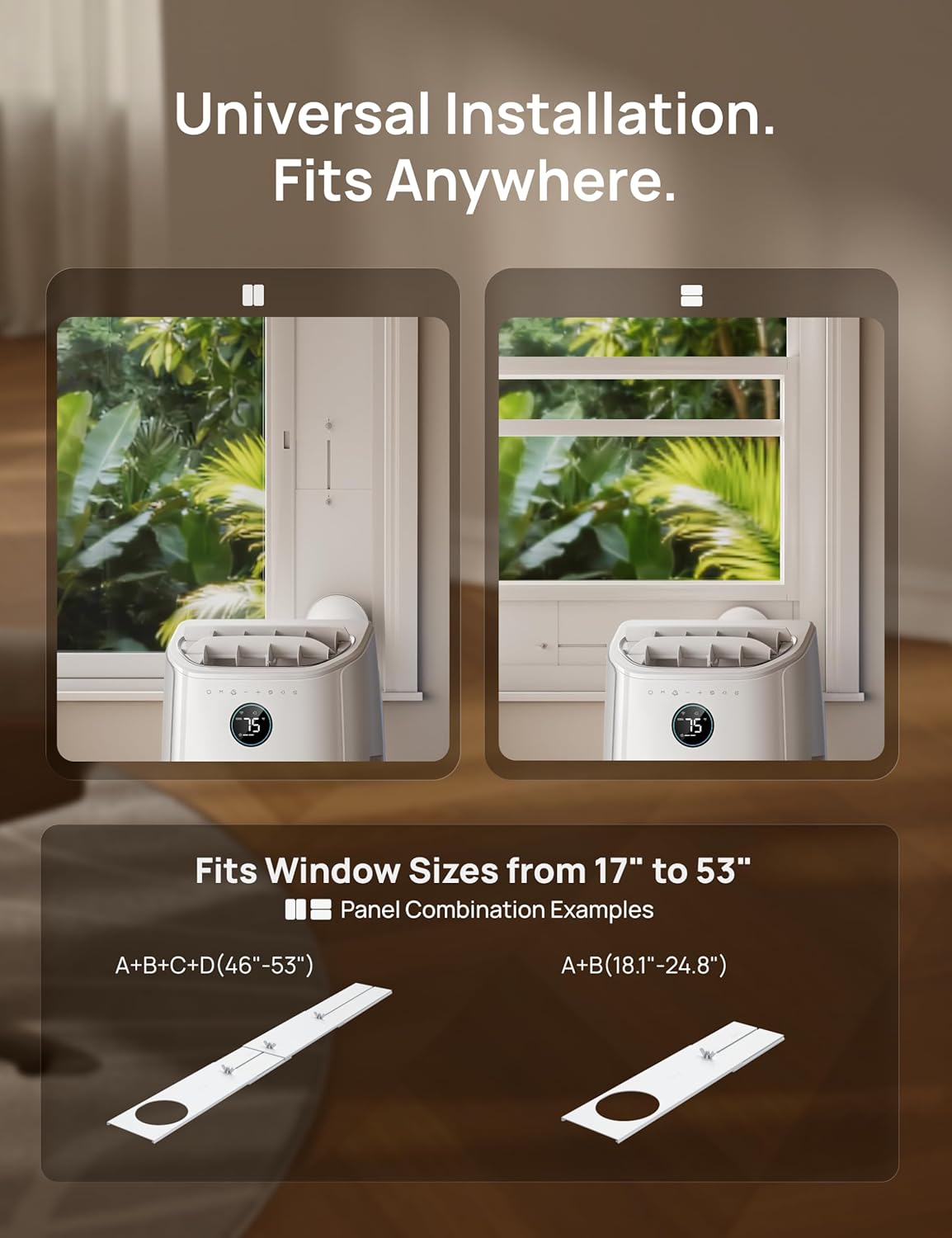
| Window Kit | Universal kit for roughly 18″–53″ windows |
| Warranty | 1-year limited warranty |
Cooling Performance
12,000 BTU ASHRAE sounds impressive, but the number that matters more for real rooms is the 8,000 BTU DOE/SACC rating. DOE testing simulates realistic conditions rather than a lab best-case scenario, so it’s the more honest figure to plan around. In practice, that puts the 515S comfortably in the “bedroom and small living room” category rather than the “open-plan apartment” category.
With a cool wind distance of up to 16 feet, the unit throws air across a standard bedroom without needing to sit right next to the bed. Expect noticeable temperature drops within the first 15–30 minutes in a well-sealed room, with the unit settling into a steady, quieter maintenance mode once it reaches your target temperature. You can set the thermostat anywhere between roughly 65°F and 86°F depending on the season and your personal comfort zone.
Where portable ACs generally struggle — and the 515S is no exception — is in larger, open, or poorly insulated spaces. If your room has high ceilings, large windows facing direct sun, or an open doorway to the rest of the house, expect the effective coverage to shrink below the rated 300 sq ft.
Real-World Bedroom Performance
Bedrooms are the single most common use case for this unit, and it’s clearly designed with that in mind. The noise isolation system, sleep curve feature, and 24-hour timer all point to a machine meant to run quietly overnight without waking anyone up.
In a typical 10×12 ft bedroom with the door closed, the 515S cools quickly and holds temperature well through the night. The sleep curve setting gradually raises the target temperature by a degree or two as the night goes on, which mimics how your body’s temperature naturally drops during sleep — a small feature, but one that noticeably improves comfort compared to running a flat temperature all night.
One thing to plan for: single-hose portable ACs pull some conditioned air from the room to exhaust hot air outside, which slightly reduces efficiency compared to dual-hose designs. In a well-sealed bedroom this is a minor effect, but it’s worth knowing if you’re deciding between this and a dual-hose alternative for a larger space.
Noise Levels
Noise is the number one complaint about older portable AC units, and it’s the area where the 515S has clearly been re-engineered. DREO’s patented noise isolation system wraps the compressor to dampen both motor hum and airflow turbulence, bringing operating noise down to roughly 45–46 dB on lower settings — closer to a quiet conversation than the industrial drone you’d expect from a “standing AC.”
On higher fan speeds during initial cooldown, expect noise to climb, which is normal for any compressor-based unit. Once the room reaches target temperature and the unit shifts into a lower-power maintenance cycle, noise drops back down substantially. For light sleepers, running the unit on a lower fan speed with the sleep curve enabled is the most comfortable combination.
Smart Features
The DREO app is where this unit separates itself from cheaper, remote-only competitors. Inside the app you get:
- Full temperature and mode control (Cool / Dry / Fan)
- Custom scheduling so the room is already cool before you get home
- Sleep Curve mode for gradually adjusted overnight temperatures
- 24-hour timer for auto shut-off or auto start
- Real-time humidity and temperature monitoring
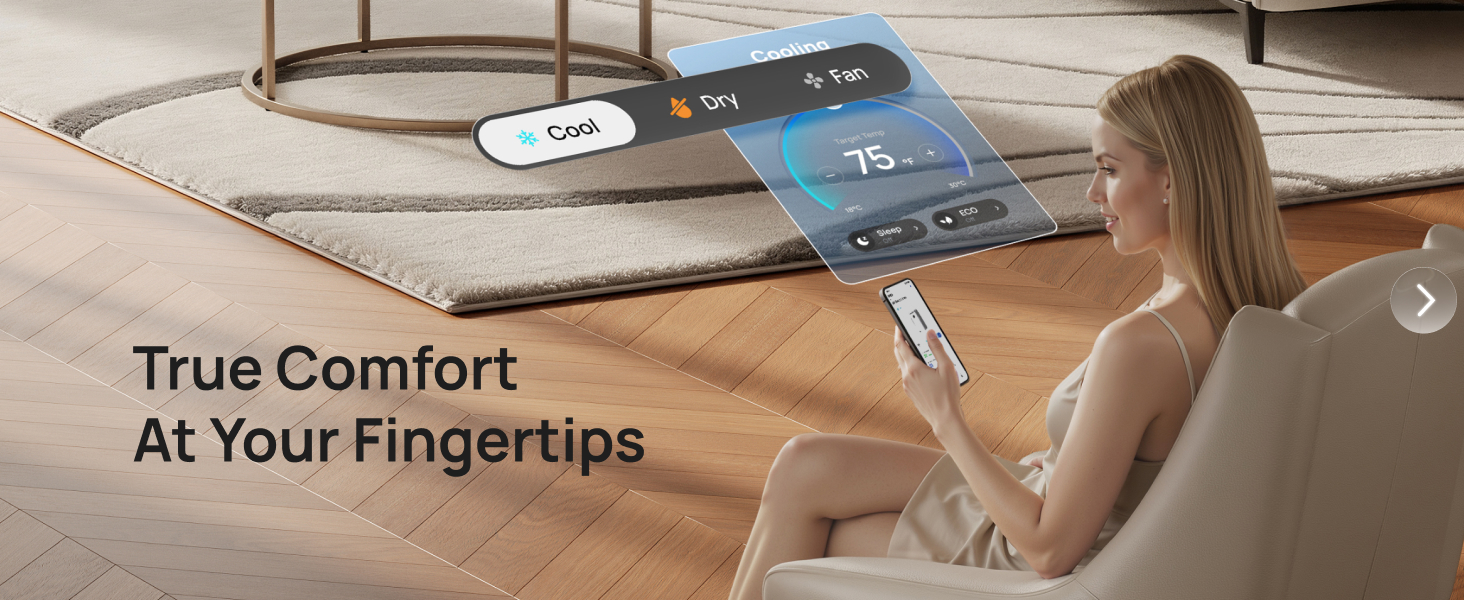
Voice control works through Amazon Alexa and Google Assistant, letting you adjust the unit hands-free — genuinely useful when you’re already in bed and don’t want to reach for your phone. The onboard touch panel and included remote cover the basics if you’d rather skip the app entirely.
Installation
Setup follows the standard portable AC playbook: attach the exhaust hose, slide the included universal window kit into an open window (it adjusts to fit roughly 18″ to 53″ wide openings), and plug in the unit. Most people finish the whole process in 15–20 minutes without tools beyond what’s in the box.
A few practical tips that make the process smoother:
- Measure your window first. Standard double-hung and sliding windows both work, but oddly shaped or crank-style windows may need a separate adapter kit.
- Keep the hose as short and straight as possible. Excess bends reduce exhaust efficiency and can make the unit work harder than it needs to.
- Seal any gaps around the window kit with foam tape if your window frame isn’t perfectly flush — this single step noticeably improves cooling performance.
✅ See Current Discounts on Amazon
Drainage-Free Cooling
Most older portable ACs require you to manually empty a condensation bucket every day or two — a genuinely annoying maintenance task that DREO has engineered around. The 515S uses a self-evaporating system: a pump and sensor array redirect condensation to the hot condenser coil, where it evaporates and exits through the exhaust hose along with the hot air.
This works automatically in environments with humidity below roughly 90%, which covers the vast majority of everyday use cases. In extremely humid climates or during heavy dehumidifying use, the internal water tray can still fill up; if that happens, the unit displays a P1 error code and pauses operation until you manually drain the tray. It’s a rare occurrence rather than a routine task, which is the whole point of drainage-free cooling.
Dehumidifier Performance
Beyond straight cooling, the 515S doubles as a standalone dehumidifier via its Dry mode. This is especially useful in humid climates or during shoulder-season months when you want to pull moisture out of the air without running full cooling power.
In muggy conditions, running Dry mode noticeably improves how a room “feels” even without a big temperature swing — lower humidity makes 78°F feel more like 74°F. It’s not a replacement for a dedicated whole-room dehumidifier if you’re dealing with serious moisture issues, but as a built-in secondary function it adds real value.
Fan Performance
Running the 515S in Fan-only mode turns it into a standard oscillating cooling unit without engaging the compressor — useful on mild days when you want airflow without the electricity draw of full cooling. Airflow is even and directional rather than wide-angle oscillating, since the unit is a fixed-position standing air conditioner rather than a rotating tower fan. Positioning it to face the bed or main seating area matters more here than with a wider-throw tower fan.
Energy Efficiency
Running costs are one of the most-asked questions with any portable AC, and they matter even more given current electricity prices. At 8,000 BTU DOE (the realistic rating to plan around), the 515S draws meaningfully less power than a full-size window unit rated for a similar-sized room, since portable units are generally used for supplemental or single-room cooling rather than whole-home HVAC replacement.
A rough way to estimate your running cost: check your unit’s wattage on the nameplate or manual, multiply by your local electricity rate per kWh, and multiply by expected daily runtime. Running a unit like this for 8 hours overnight typically costs a modest amount per night in most U.S. markets — far less than running central air for an entire home. The U.S. Department of Energy and ENERGY STAR both publish detailed guidance on estimating portable AC running costs if you want to model this more precisely for your electricity rate.
Compared to a window AC of similar BTU rating, portable units are usually a bit less efficient because of the single-hose exhaust design, but they win back the difference in flexibility — no installation, no lease violations, and the ability to move the unit between rooms as needed. If you’re also budgeting for winter heating costs in the same space, our Dr. Infrared Heater review breaks down space heater running costs using the same wattage-times-rate method.
Smart Home Integration
Beyond Alexa and Google Assistant voice commands, the DREO app is the real hub for smart control. You can build automation routines — for example, having the AC power on automatically when you arrive home, or scheduling it to switch to Dry mode overnight during humid weeks. If you already run other DREO devices, the same app ecosystem covers their lineup; our guide to the DREO Space Heater covers how the winter side of that ecosystem works, for households that want smart climate control year-round.
<a name=”design”></a>
Design & Build Quality
The 515S has a clean, minimal design available in white or black, with a large LED display on the top panel showing temperature, mode, and timer status at a glance. Build quality feels solid rather than flimsy — a common weak point in budget portable ACs — with sturdy caster wheels that make repositioning between rooms manageable despite the unit’s near-63-lb weight.
The exhaust hose and window kit have a slightly plasticky feel typical of the category, but they lock securely and don’t feel like they’ll rattle loose during operation. If aesthetics and design matter as much as function in your home comfort purchases, our review of the Uthfy 38 Indoor Heater covers a similarly design-forward option for the colder months.
Pros and Cons
| Pros | Cons |
|---|---|
| Genuinely quiet at 45–46 dB | Single hose is less efficient than dual-hose designs |
| Drainage-free system for most climates | Heavy at ~63 lbs, awkward to move upstairs |
| Strong app control with sleep curve | DOE/SACC rating (8,000 BTU) is the realistic number, not the 12,000 BTU headline figure |
| Works with Alexa and Google Assistant | Best suited to 300 sq ft or smaller rooms |
| Universal window kit fits most windows | P1 error possible in very high humidity without manual drain |
| 3-in-1 cool/dry/fan versatility | — |
What Makes It Different?
Vs. Window AC: A window unit is typically more energy-efficient per BTU since it doesn’t lose cooled air through hose exhaust, but it requires permanent-ish installation and often isn’t allowed in rental leases. The 515S trades a bit of efficiency for total flexibility.
Vs. Tower Fan: A tower fan only moves air — it doesn’t actually lower room temperature. The 515S genuinely cools, dehumidifies, and can still run fan-only mode when you don’t need full cooling power.
Vs. Evaporative Cooler: Evaporative “swamp coolers” work well in dry climates but struggle badly in humid ones, where they can make a room feel muggier. The 515S’s dehumidifying Dry mode does the opposite job, making it the better choice almost anywhere outside very arid regions.
Vs. Traditional Portable AC: Older-generation portable units are typically louder, require manual bucket-draining, and lack meaningful app or voice control. The drainage-free system and DREO app are the two biggest generational upgrades here.
Real-Life Use Cases
- Bedroom: The core use case — quiet operation and sleep curve make this ideal for overnight comfort.
- Apartment: No installation required, easy to store during cooler months, renter-friendly.
- Office: Quiet enough to run during video calls; scheduling means it’s already cool before you arrive.
- Dorm: Compact enough for shared living spaces, though check your dorm’s appliance policy first.
- Studio: A single unit can realistically cover most or all of a small studio layout.
- RV: Portable format works for stationary RV setups with access to standard power and a window or vent.
- Home Office: Pairs well with long work-from-home days where central air isn’t cost-effective to run all day.
If you’re building out a broader home wellness routine — cooling your bedroom for better sleep alongside other recovery tools — our guide to the portable infrared sauna covers a complementary setup for the same space.
Who Should Buy It?
- Renters and apartment dwellers who can’t install a window or split unit
- Light sleepers who need genuinely quiet nighttime cooling
- Anyone who wants app/voice control instead of a basic remote
- Buyers cooling a single bedroom, home office, or studio up to ~300 sq ft
- Households that want a 3-in-1 device (cool, dry, fan) instead of three separate appliances
Who Should Skip It
- Anyone cooling an open-plan space over 350–400 sq ft — look at the 14,000 BTU AC516S or a dual-hose unit instead
- Buyers who move house often and need something lighter than 63 lbs
- Extremely humid climates where you’d rely heavily on manual drainage rather than the self-evaporating system
- Anyone wanting whole-home cooling — a portable AC is a supplemental solution, not a central air replacement
Comparison Table
| DREO 515S | LG LP1022FVSM | Whynter ARC-14S | Midea Duo 12,000 BTU | |
|---|---|---|---|---|
| BTU (SACC/DOE) | 8,000 | 10,000 | 9,500 | 10,000 |
| Coverage | ~300 sq ft | ~450 sq ft | ~500 sq ft | ~450 sq ft |
| Hose Type | Single | Single | Dual | Single |
| Smart Features | App, Alexa, Google | WiFi app | Remote only | Alexa, Google Assistant |
| Noise | 45–46 dB | Ultra quiet (mfr claim) | Moderate | Ultra quiet (mfr claim) |
| Drainage | Drainage-free | Standard | Standard, includes window kit | Standard |
| Best For | Bedrooms, quiet operation | Larger rooms, WiFi control | Larger rooms needing dual-hose efficiency | Larger rooms, inverter efficiency |
The 515S covers less square footage than these three competitors, but it wins on noise level and drainage-free convenience — the trade-off is worth it if your priority is a quiet bedroom rather than covering the largest possible space.
Buying Guide: How to Choose a Portable Air Conditioner
Choosing the right BTU: As a rough guideline, plan for about 20 BTU per square foot in a well-insulated room, and size up if you have high ceilings, lots of direct sun, or poor insulation. Always check the DOE/SACC rating rather than the higher ASHRAE number when comparing units — it’s the more realistic figure.
Room size: Match the manufacturer’s coverage rating to your actual room, not your home’s total square footage. Portable ACs cool the room they’re in, not adjoining spaces with open doors.
Noise: If the unit will run overnight in a bedroom, look specifically for a dB rating under 50 on lower settings.
Energy efficiency: Compare DOE ratings and look for inverter compressors if you plan to run the unit for long stretches each day — inverter units modulate power instead of cycling fully on and off, which usually saves electricity over time.
Smart controls: Decide whether app and voice control genuinely matter to you, or whether a basic remote is enough. Scheduling and sleep curve features are the most useful smart additions for bedroom use specifically.
Drainage: Drainage-free, self-evaporating systems save real day-to-day hassle, but check the humidity threshold (commonly around 85–90%) where manual draining is still occasionally needed.
Portability: Weight and wheel quality matter more than most buyers expect — a 60+ lb unit is not something you’ll want to carry up stairs regularly.
Installation: Confirm your window type is compatible with the included kit before buying, especially for casement, crank, or sliding-door setups.
Maintenance: Filters need regular cleaning regardless of brand — factor this into your buying decision if you tend to skip appliance upkeep.
Warranty: A 1-year limited warranty is standard for this category; read the fine print on what’s covered before you need to file a claim.
✅ Don’t Wait Until Peak Summer — View Today’s Deal
Maintenance Tips
- Clean the filter every 2 weeks during heavy summer use to keep airflow and cooling efficiency at their best.
- Store the unit upright during the off-season, and run Fan-only mode for an hour before storage to dry out any internal moisture and prevent mold.
- Check the exhaust hose periodically for kinks, which reduce cooling efficiency.
- Keep the area around the intake vents clear of curtains, furniture, or clutter.
- Common mistake to avoid: running the unit with the door or windows open, which lets the compressor work overtime without ever reaching your target temperature.
Frequently Asked Questions
Is the DREO 515S good for a bedroom?
Yes. Its 45–46 dB noise level, sleep curve mode, and 24-hour timer are specifically designed for overnight bedroom use.
What room size does the DREO 515S cool?
DREO rates it for up to 300–350 sq ft, though real-world performance is strongest in rooms of 200–300 sq ft with good insulation.
Is the DREO 515S drainage-free?
Yes, in most conditions. Its self-evaporating system handles condensation automatically in humidity below roughly 90%; above that, or if the internal tray fills, it displays a P1 code and needs manual draining.
Does the DREO 515S work with Alexa and Google Assistant?
Yes, it supports voice control through both platforms in addition to the DREO app and included remote.
How heavy is the DREO 515S?
It weighs approximately 62.9 lbs, so plan for two-person moves between floors.
Is a single hose portable AC less efficient than dual hose?
Slightly. Single-hose units pull some already-cooled air from the room to power the exhaust process, while dual-hose units draw exhaust air from outside instead. The difference is minor in small, well-sealed rooms.
What’s the difference between the DREO 515S and 516S?
They’re functionally identical; the 516S simply has a higher 14,000 BTU cooling capacity for larger rooms.
Does the DREO 515S need a special window?
No. The included universal window kit fits standard vertical and horizontal sliding windows in roughly the 18″–53″ width range.
Can the DREO 515S also work as a dehumidifier?
Yes, its Dry mode functions as a standalone dehumidifier without needing to run full cooling.
What is the actual BTU rating I should trust?
Use the DOE/SACC number (8,000 BTU) for realistic room-size planning; the 12,000 BTU ASHRAE figure is a lab-tested maximum, not a real-world expectation.
How loud is the DREO 515S during sleep?
On lower fan settings it runs around 45–46 dB, comparable to a quiet conversation, though it will be louder briefly during initial cooldown.
Does the DREO 515S require professional installation?
No. Most users complete setup in 15–20 minutes using the included window kit and standard household tools.
What’s the warranty on the DREO 515S?
DREO backs the unit with a 1-year limited warranty covering material defects and workmanship.
Can I use the DREO 515S in an RV or dorm room?
Yes, provided you have access to a standard 120V outlet and a compatible window or vent opening — always check your dorm or RV park’s appliance policy first.
Is the DREO 515S worth it compared to a window AC?
If you can install a window unit and prioritize maximum efficiency, a window AC may edge it out. If you need flexibility, a renter-friendly setup, or a quieter night’s sleep, the 515S is the stronger overall pick.
Final Verdict
The DREO 515S earns its spot as one of the better portable air conditioners for bedrooms and small living spaces in 2026. It won’t out-cool a dual-hose unit built for a large open floor plan, and at nearly 63 lbs it’s not the easiest thing to haul between rooms — but for its actual purpose, quiet, smart, drainage-free bedroom cooling, it delivers exactly what it promises.
If your priority list looks like “quiet enough to sleep through, easy enough to set up in an apartment, smart enough to control from my phone,” this is a genuinely strong buy. If you need to cool a larger, open space, step up to the 516S or a dual-hose competitor instead.
Rating: 4.6 / 5
✅ Upgrade Your Bedroom Comfort Today
If you’re setting up year-round home comfort, our guides to the Ballu Convection Heater and tower space heaters cover the winter half of the equation using the same efficiency-first approach.