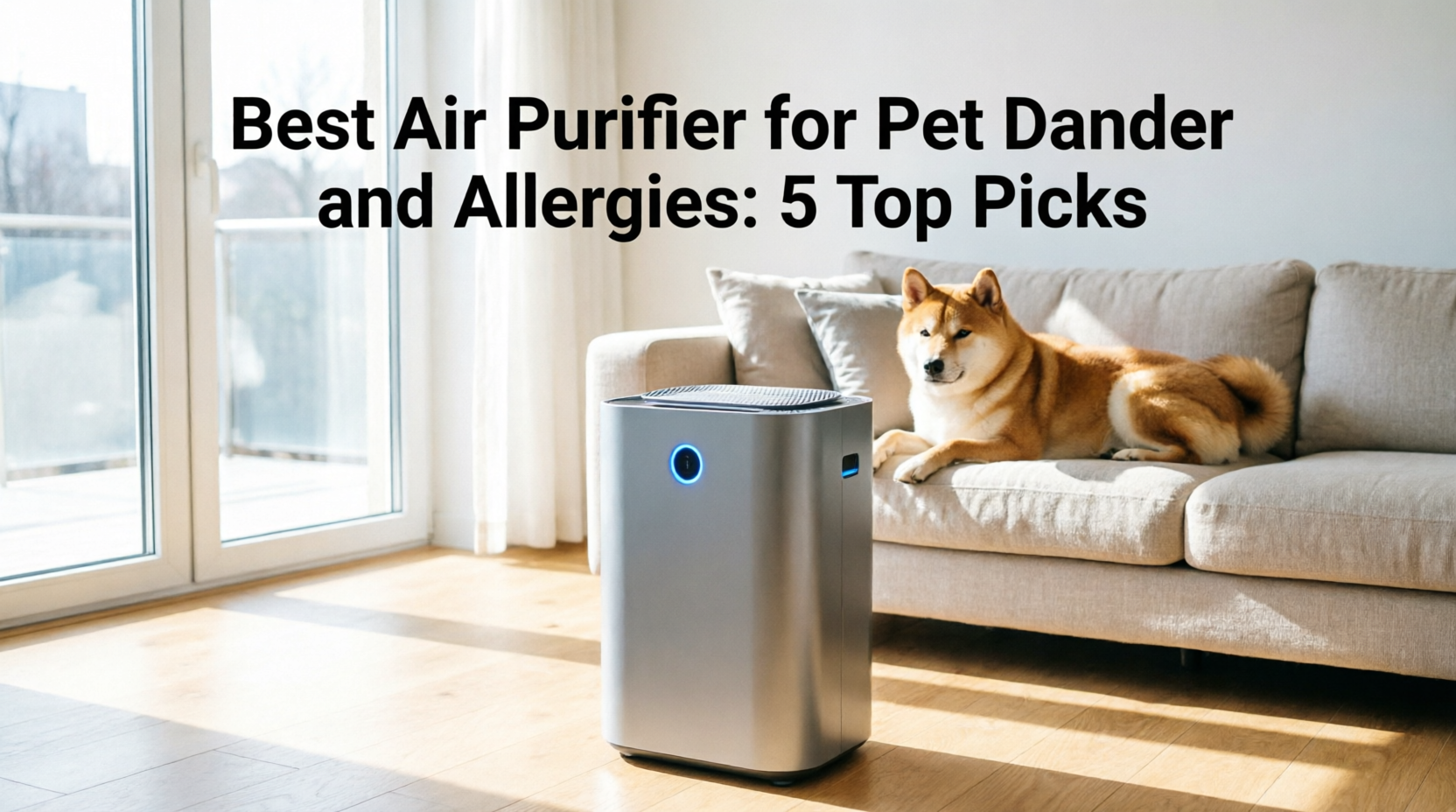
Living with a cat or dog can be wonderful. Dealing with sneezing, itchy eyes, or a stuffy nose at home is less enjoyable. Pet-related allergens can circulate through indoor air, settle on furniture, and collect in bedding and carpets. These particles can make it harder to manage allergy symptoms, especially when your pet spends most of the day indoors. The right air purifier can help reduce airborne particles- best air purifier for pet dander. However, not every model offers the same filtration performance, airflow, or room coverage.
This guide focuses on air purifiers for pet dander and allergies, not simply visible fur or household odors. You’ll learn which features matter, how five different models compare, and how to build a more effective indoor-air routine.
An air purifier is one part of allergy management. It cannot remove every allergen from your home or guarantee symptom relief.
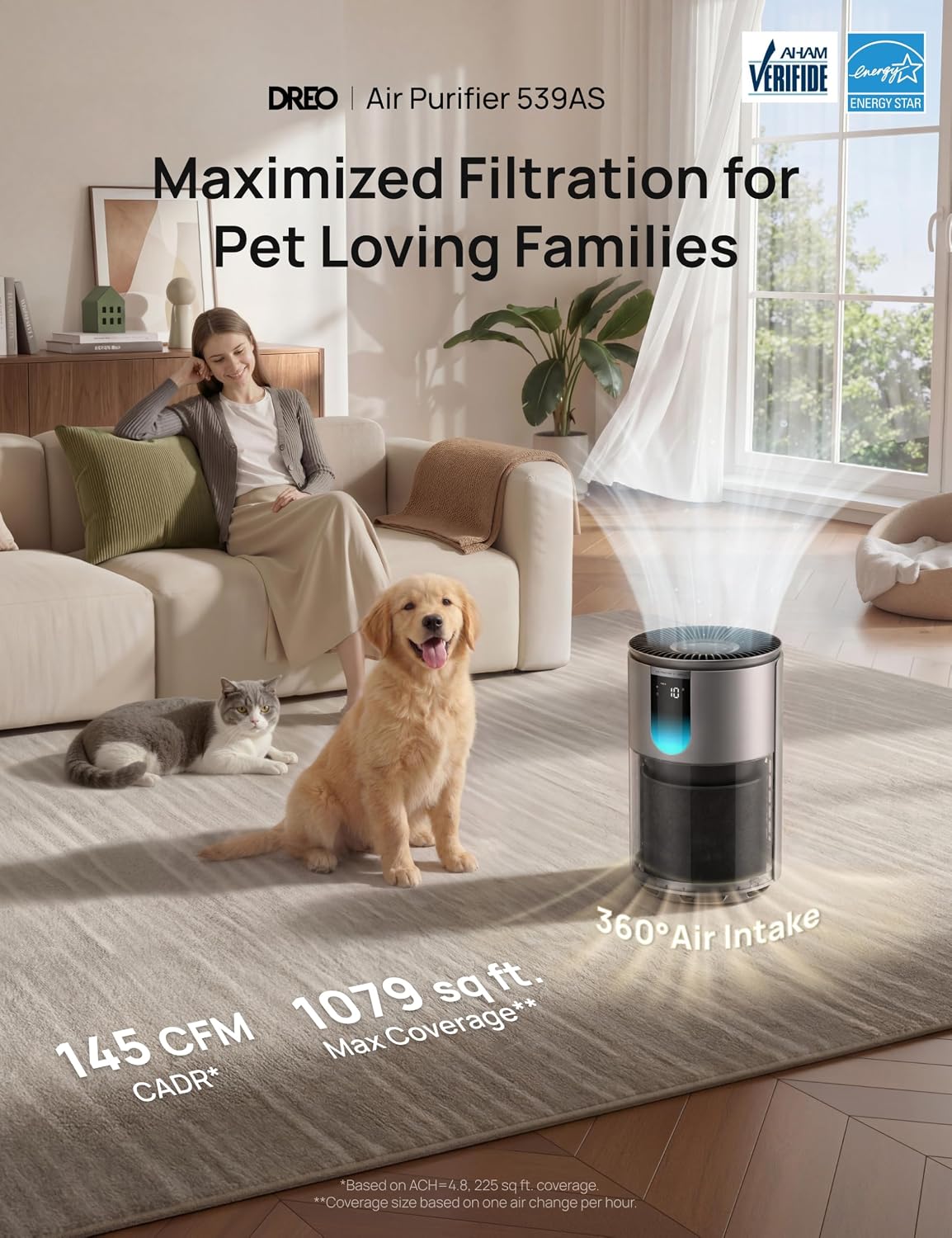
Best air purifier for pet dander and Allergies at a Glance
These five models offer different combinations of particle filtration, room coverage, and everyday convenience.
| Air purifier | Best for | Main reason to consider it |
|---|---|---|
| Levoit Core 400S | Bedrooms and medium-sized living spaces | Smart controls and particle-focused filtration |
| Alen BreatheSmart 45i | Larger rooms | Higher-capacity airflow and filter options |
| Coway Airmega 250 | Everyday home use | Multi-stage filtration and washable pre-filter |
| Blueair Blue Pure 311i+ Max | Bedrooms and shared living spaces | Compact design and high-airflow filtration |
| Levoit Core 600S | Large open-plan spaces | Higher airflow capacity and smart features |
Room coverage depends on the air-change rate used to calculate it. Compare CADR and recommended room size at the same cleaning intensity, rather than choosing by the largest advertised square-foot figure alone.
1. Levoit Core 400S
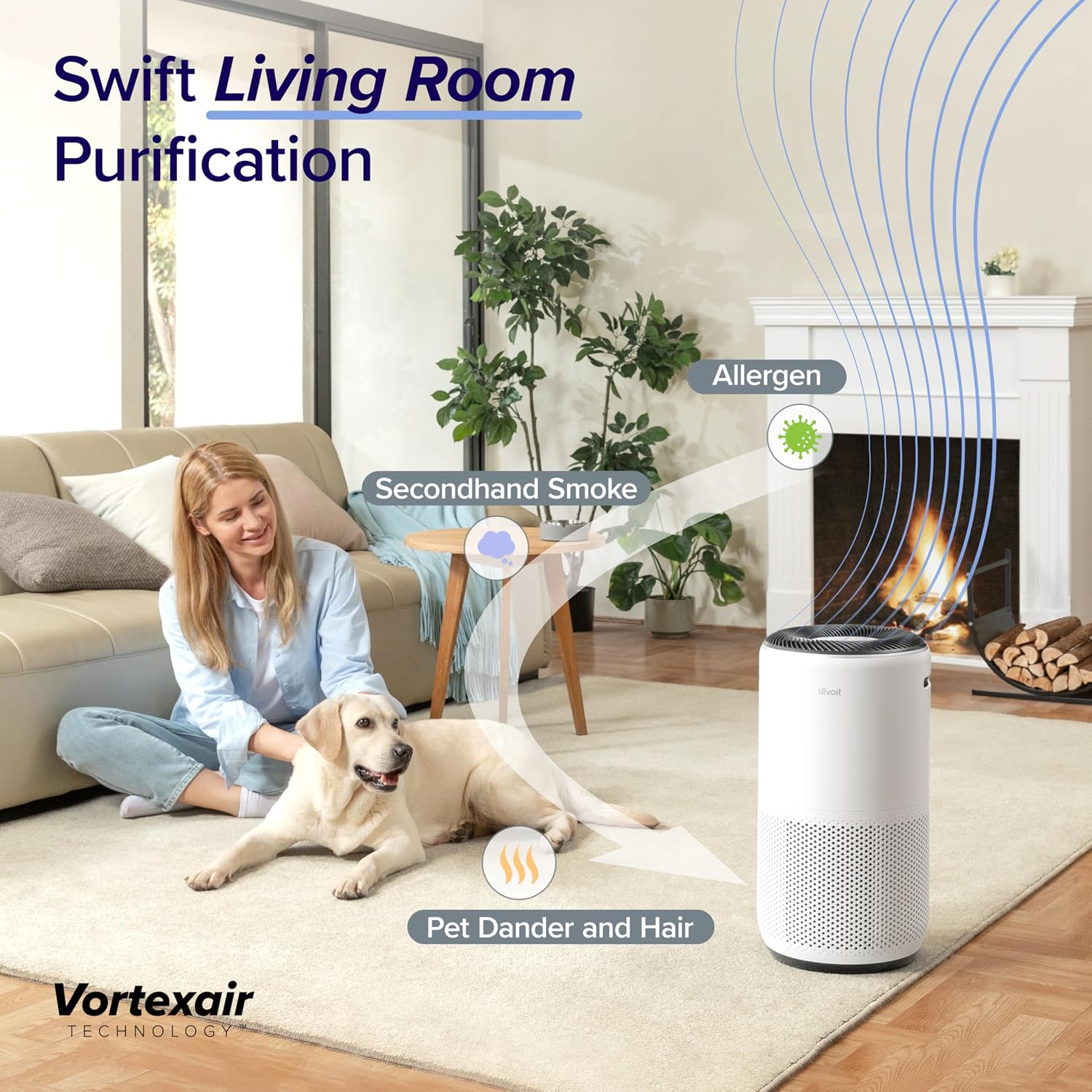
Best for: Bedrooms and medium-sized living spaces
The Levoit Core 400S is a cylindrical air purifier with a multi-layer filter system and smart controls. Its design suits households that want continuous air cleaning without managing a complicated setup.
For pet-related allergies, focus on the unit’s particle filtration and airflow. A purifier must move enough air through its filter to reduce airborne particles effectively in the room where you use it.
The Core 400S also offers app controls and automatic operation. These features can make it easier to maintain a consistent cleaning routine, especially if you prefer to leave the purifier running throughout the day.
Why it suits allergy-conscious pet owners
- Particle-focused filtration for airborne dust and other fine particles.
- Smart controls for convenient operation.
- Automatic mode to adjust operation based on detected air-quality changes.
- A practical format for bedrooms, offices, and living spaces within its rated capacity.
What to consider: Smart features do not automatically mean stronger allergen removal. Prioritize filtration performance and room sizing over app connectivity.
Best fit: A pet owner who wants a manageable everyday purifier for a bedroom or medium-sized room.
2. Alen BreatheSmart 45i
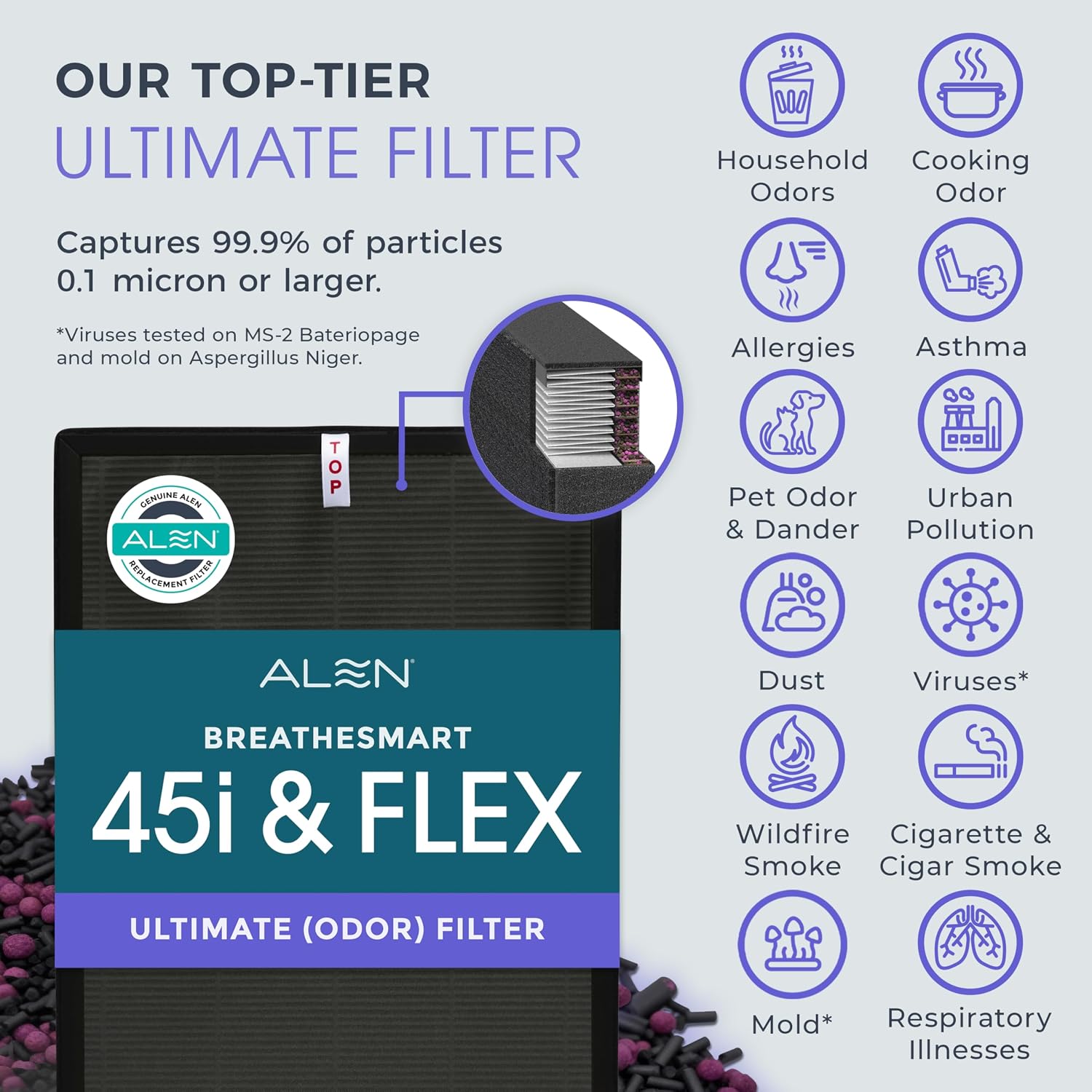
Best for: Larger rooms with persistent indoor allergens
The Alen BreatheSmart 45i is a larger purifier designed for spaces that need substantial air circulation. Its separate pre-filter and main filtration system help manage larger debris and finer airborne particles.
For pet dander, the most important considerations are the selected filter configuration, airflow, and room size. Alen offers different filter options, so choose one that matches your particle-filtration priorities.
A larger unit can be useful when your dog or cat spends time in a spacious living room. It can also offer more flexibility when you want effective circulation without relying on a small purifier at its highest setting.
Why it suits allergy-conscious pet owners
- Higher-capacity design for larger rooms.
- Multiple filter configurations.
- Separate pre-filter stage.
- Suitable for households that want continuous air cleaning in a shared living area.
What to consider: The unit takes up more space than a compact bedroom purifier. Filter replacements also contribute to its ongoing cost.
Best fit: Homes with a large main living area and a need for consistent air circulation.
3. Coway Airmega 250
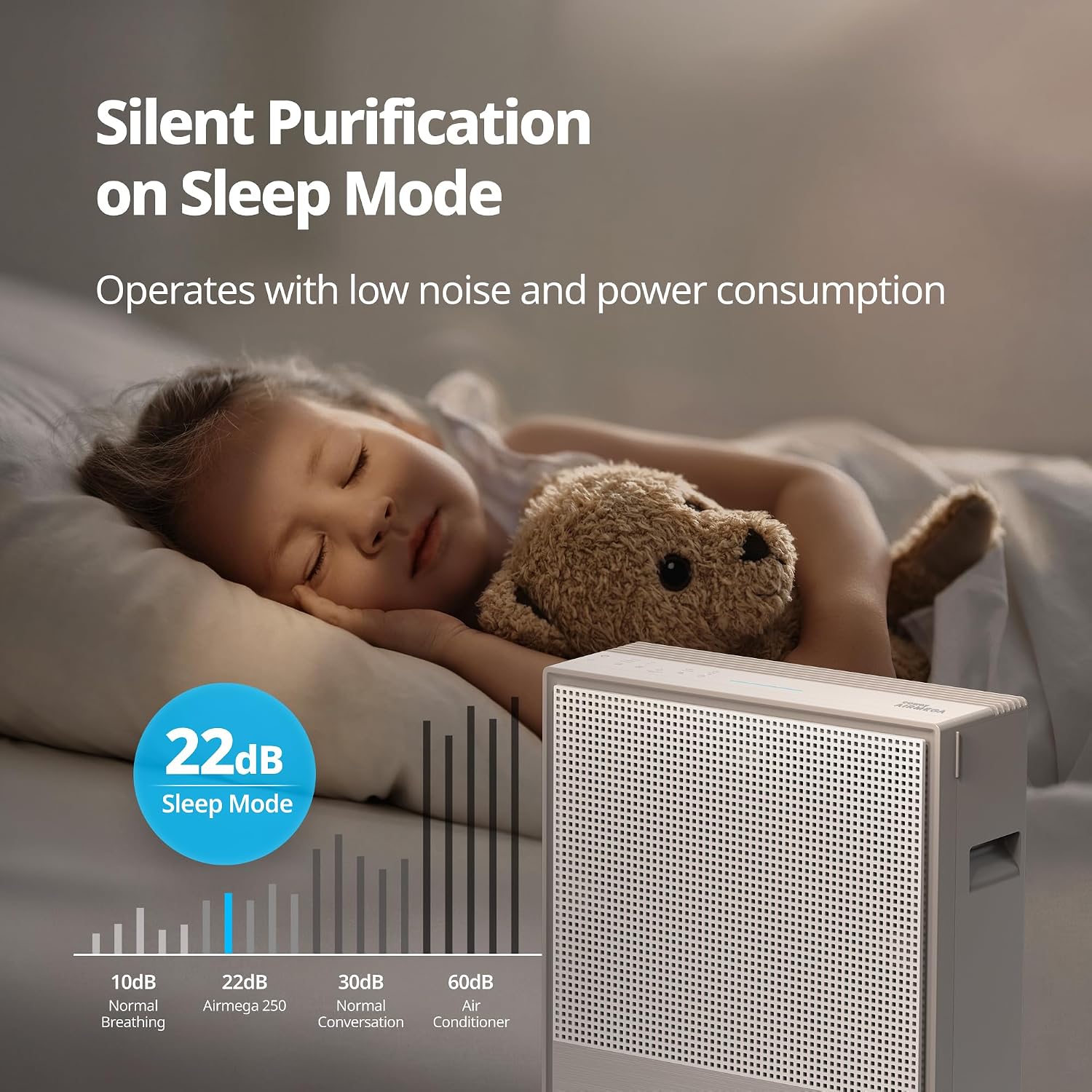
Best for: Balanced filtration and everyday maintenance
The Coway Airmega 250 combines a washable pre-filter with additional filtration stages. This arrangement helps capture larger airborne debris before air passes through the finer filtration layers.
The washable pre-filter is useful in pet households because loose fur and dust can collect before reaching the main filter. For allergy concerns, however, the finer particle-filtration stage remains the more important feature.
The Airmega 250 also has an air-quality indicator and automatic operating features. These help make everyday use more convenient without requiring constant manual adjustments.
Why it suits allergy-conscious pet owners
- Washable pre-filter for larger airborne debris.
- Multi-stage filtration.
- Air-quality indicator.
- Automatic operation for routine use.
What to consider: The pre-filter alone cannot address fine pet dander. Follow the filter-maintenance schedule and assess the unit’s room coverage before choosing it for a large or open-plan space.
Best fit: A household that wants a combination of particle filtration, accessible maintenance, and simple everyday controls.
4. Blueair Blue Pure 311i+ Max
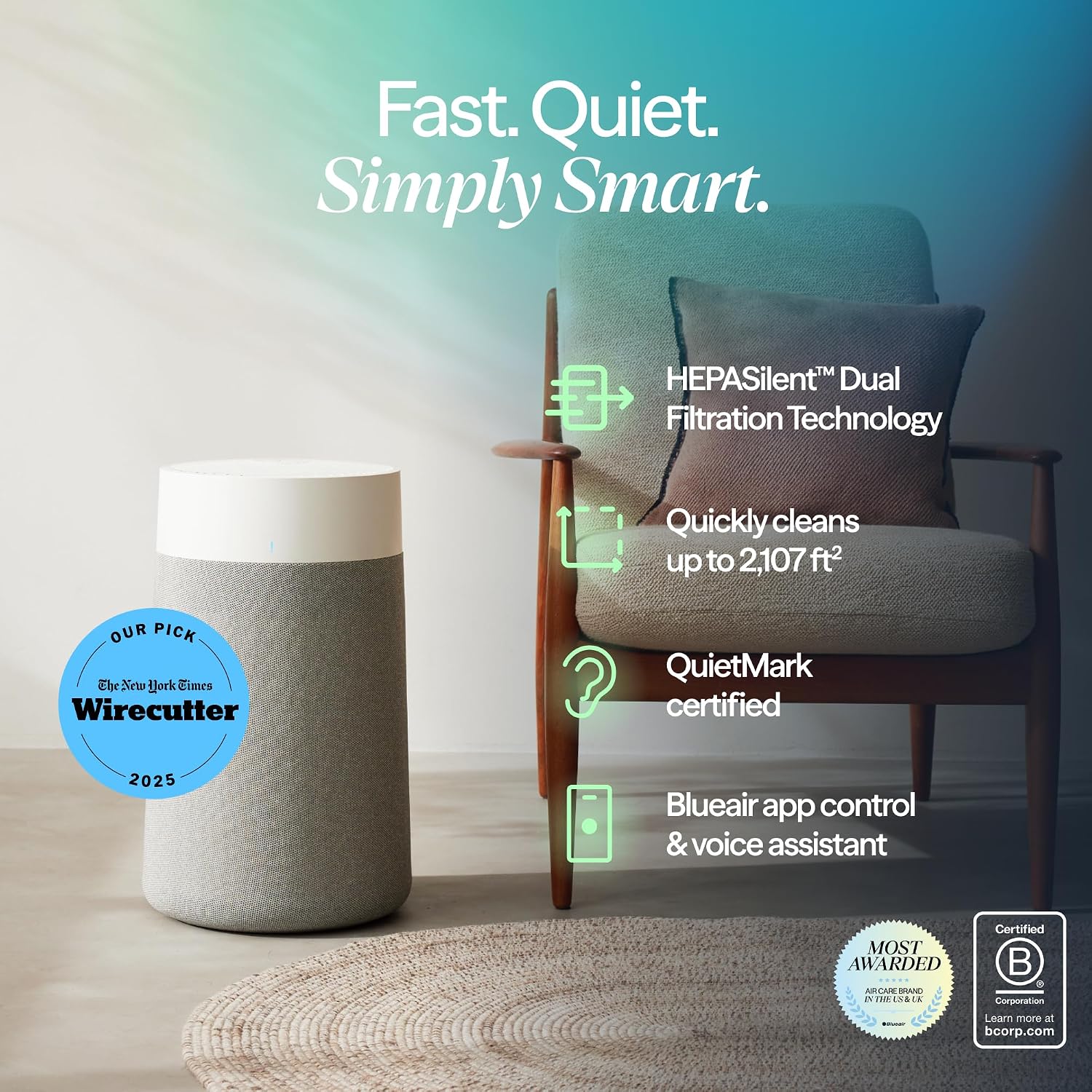
Best for: Compact living spaces and bedrooms
The Blueair Blue Pure 311i+ Max uses a multi-stage filtration design intended to remove airborne particles from indoor air. Its fabric pre-filter catches larger particles, while the main filter handles finer airborne material.
This combination makes it relevant to pet owners who want to address more than visible fur. Fine particles can remain airborne after grooming, vacuuming, and normal household activity.
The model also includes smart features that support convenient daily operation. Choose a suitable fan setting for your room and keep the intake and outlet unobstructed.
Why it suits allergy-conscious pet owners
- Multi-stage particle filtration.
- Fabric pre-filter for larger debris.
- Compact design for everyday living spaces.
- Smart operating features.
What to consider: Confirm that the model’s room coverage suits your desired air-change rate. A purifier rated for a large area at a low cleaning rate may not deliver the same performance in a smaller room at a higher rate.
Best fit: Someone looking for a compact unit for a bedroom or regularly occupied living area.
5. Levoit Core 600S
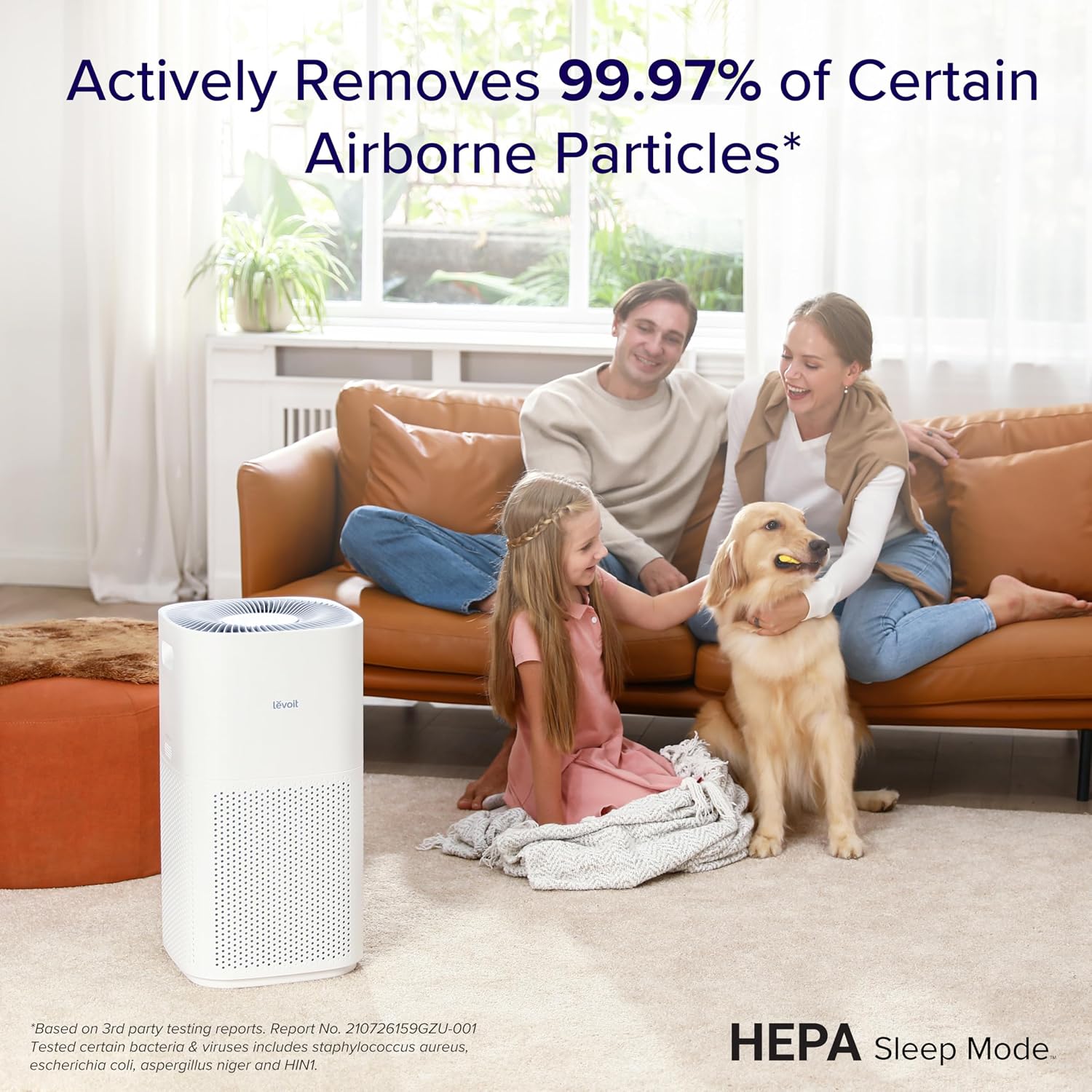
Best for: Large rooms and open-plan spaces
The Levoit Core 600S is designed for higher-capacity air circulation than smaller Core-series models. That makes room size and airflow its main points of difference.
In a pet household, dander can circulate between the places where your pet sleeps, eats, and rests. A purifier with suitable capacity can help filter airborne particles in a larger shared space, provided air can circulate freely around the unit.
The Core 600S also offers smart controls and automatic operation. These features can support a consistent routine, but the purifier still needs an appropriate location and regular filter care.
Why it suits allergy-conscious pet owners
- Higher-capacity design for larger rooms.
- Particle filtration for airborne contaminants.
- Smart controls and automatic operation.
- Useful for households with open living areas.
What to consider: A large purifier may be unnecessary for a small bedroom. Compare the room’s dimensions, the unit’s rated coverage, and its performance at the fan speed you can comfortably tolerate.
Best fit: A pet owner who wants to filter air in a large living room or open-plan area.
What Is Pet Dander, and Why Does It Matter?
Pet dander consists of tiny flakes of skin shed by animals. Proteins found in pet saliva, skin, and urine can also contribute to allergic reactions.
These allergens can attach to dust, fabric, and other particles. Everyday activities may disturb settled material and send some of it back into the air.
Pet hair and pet dander are not the same thing. A strand of fur is visible, while allergen-containing particles can be much smaller and harder to notice.
That difference changes what you should look for in an air purifier.
A pre-filter can catch larger debris. Effective fine-particle filtration is more relevant to airborne dander and other small particles. Even then, an air purifier cannot remove allergens that remain on a sofa, mattress, carpet, or pet bed.
What to Look for in an Air Purifier for Pet Dander
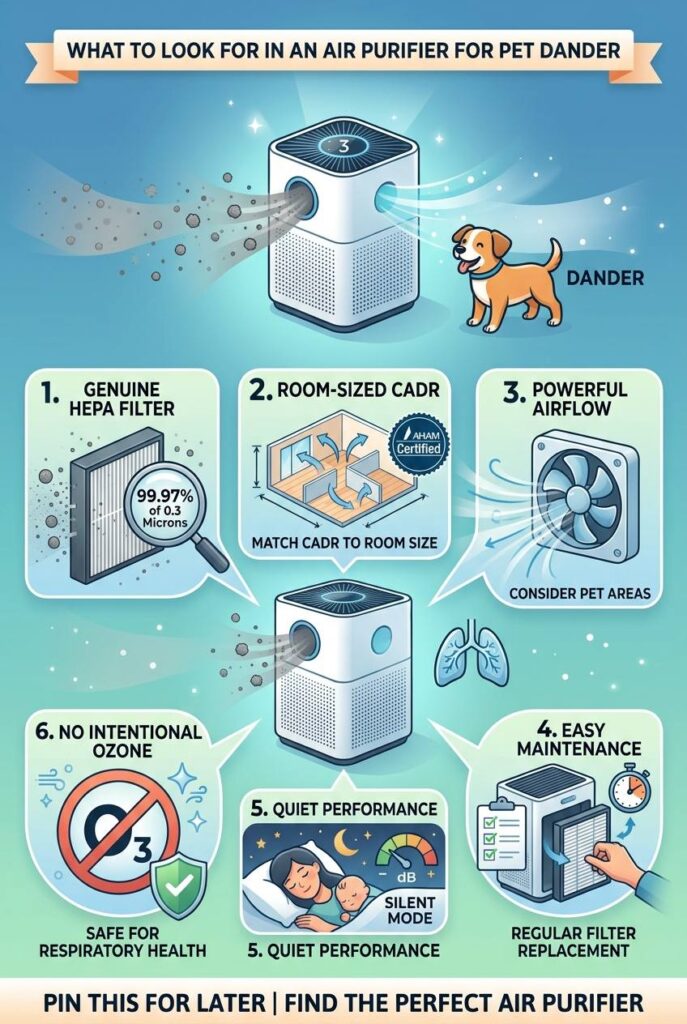
1. Effective HEPA filtration
A genuine HEPA filter is a useful feature to look for when your priority is airborne particles. Standard HEPA filtration is commonly defined as capturing at least 99.97% of particles measuring 0.3 microns under specified test conditions.
That rating does not mean a purifier removes 99.97% of every allergen from an entire room. Real-world performance also depends on airflow, room size, filter sealing, placement, and how long the unit runs.
Look at the complete filtration system rather than relying on a product label alone.
2. CADR suited to your room
Clean air delivery rate, or CADR, measures how quickly an air cleaner delivers filtered air for specific particle categories.
A purifier with an appropriate CADR can clean room air more effectively than an undersized unit. The Association of Home Appliance Manufacturers provides a useful starting point: compare the smoke CADR with your room’s floor area and intended cleaning rate.
Do not compare room-coverage numbers without checking the conditions behind them. Some manufacturers advertise coverage at just one air change per hour, which is less intensive than many allergy-focused buyers may want.
3. Enough airflow for regular use
A highly efficient filter cannot do much for particles that never reach it. Airflow determines how much room air passes through the filtration system over time.
Consider where your pet spends the most time. A purifier in a bedroom may help with airborne particles in that room, but it will not necessarily clean air effectively throughout a closed-off home.
For large homes with separate rooms, multiple appropriately sized units may work better than one purifier placed far away.
4. A sensible filter replacement routine
Filters collect particles as air passes through them. Over time, accumulated debris and the condition of the filter can affect performance.
Choose a model with clearly specified replacement filters and a maintenance routine you can sustain. Check the pre-filter and main filter according to the manufacturer’s guidance.
Avoid running the purifier indefinitely without maintenance. A neglected filter system undermines the benefit of having the device.
5. Low-noise operation at a useful setting
Allergy-conscious users may prefer to run a purifier for long periods, including while sleeping. Noise therefore matters.
Compare noise levels at the fan speeds you expect to use. A very quiet setting may move less air, while a high setting may clean the room faster but become distracting.
The goal is a model you can comfortably operate often enough to make a difference.
6. No intentional ozone generation
Avoid air cleaners that intentionally generate ozone. Ozone can irritate the respiratory system, which is particularly undesirable when someone already has respiratory sensitivities.
If a purifier includes an ionizer or similar feature, understand how it operates and whether the feature can be disabled. Prioritize effective mechanical filtration without intentional ozone generation.
How to Choose the Right Air Purifier for Pet Allergies
Use this practical process to narrow your options.
Step 1: Identify the room that matters most. Start with the bedroom or living area where you spend the most time with your pet.
Step 2: Measure the room. Multiply its length by its width to calculate the floor area. For high ceilings or unusual layouts, account for the additional air volume.
Step 3: Compare CADR and room coverage. Look at the cleaning rate behind the manufacturer’s coverage claim. Choose a model with enough capacity for your intended use.
Step 4: Prioritize particle filtration. For dander, focus on the main particle filter. Do not choose based only on washable fur screens, odor features, or smart controls.
Step 5: Consider noise and maintenance. A model is only practical if you can run it regularly and maintain its filters.
Step 6: Plan for cleaning beyond the purifier. Wash pet bedding, vacuum carpets, and clean upholstery to reduce the allergens that settle on surfaces.
How to Reduce Pet Dander Throughout Your Home
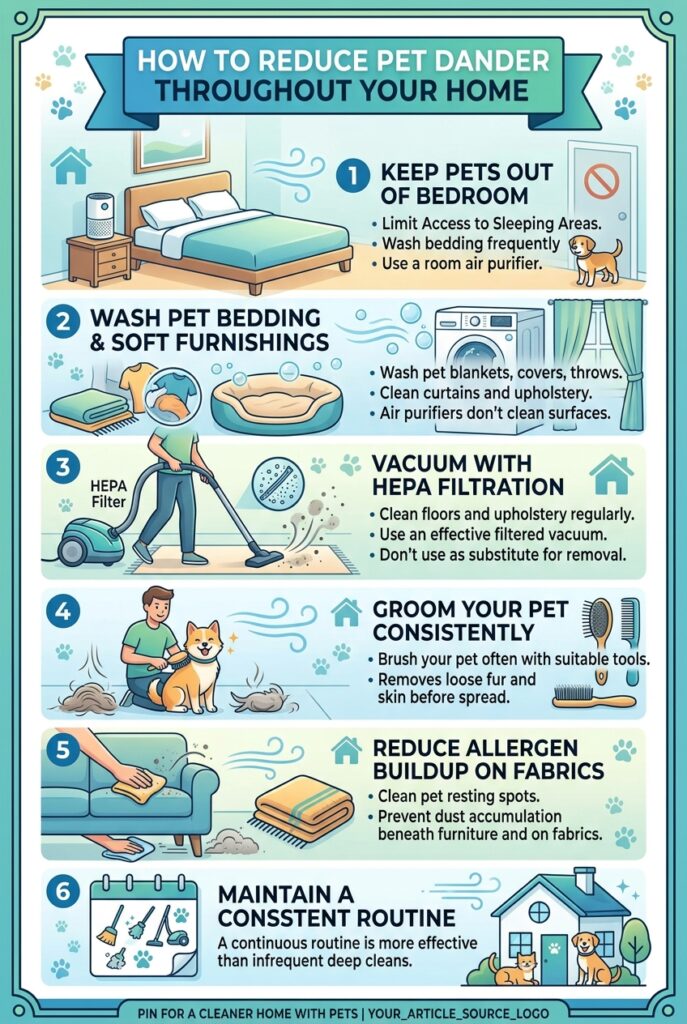
An air purifier works best as part of a wider cleaning routine. The goal is to reduce the amount of allergen entering the air and remove what settles on surfaces.
Keep pets out of the bedroom if possible
Bedrooms contain bedding, mattresses, pillows, and upholstered surfaces that can collect allergens. Keeping pets out of the sleeping area can reduce one source of exposure.
If that is not practical, wash bedding regularly and consider using an appropriately sized purifier in the room.
Wash pet bedding and soft furnishings
Pet beds, blankets, and removable covers can collect skin flakes and saliva proteins. Wash them according to their care instructions.
Clean curtains, cushions, and upholstery as appropriate. Reducing settled allergens matters because an air purifier cannot directly clean the surface of a sofa or mattress.
Vacuum with suitable filtration
Use a vacuum cleaner with effective filtration and clean floors and upholstery regularly. Vacuuming removes settled hair, dust, and allergen-containing debris.
If vacuuming stirs up dust, allow the air purifier to continue running afterward. Avoid treating the purifier as a substitute for removing the source.
Groom your pet consistently
Grooming helps remove loose fur and skin flakes before they spread through the home. Brush your pet in an easy-to-clean area and use tools suited to its coat.
Grooming alone will not eliminate pet allergens, but it can help control loose material.
Reduce allergen buildup on fabrics
Wash frequently used throws and pet blankets. Clean the areas where your pet rests and avoid letting dust accumulate beneath furniture.
A consistent routine is more useful than occasional deep cleaning followed by long periods without maintenance.
Can an Air Purifier Eliminate Pet Allergies?
No. An air purifier cannot eliminate a pet allergy or remove every allergen from your home.
A suitable purifier can reduce some airborne particles, which may help as part of an allergy-management plan. However, allergens also remain on bedding, furniture, carpets, clothing, and other surfaces.
Results vary by person, exposure level, room conditions, and the purifier’s performance. Some people may notice a benefit, while others may experience limited symptom improvement.
If symptoms persist, disrupt sleep, or affect breathing, speak with a qualified healthcare professional. An allergist can help identify triggers and discuss appropriate treatment and exposure-reduction strategies.
HEPA vs. Activated Carbon: Which Matters More for Pet Allergies?
These filter types serve different purposes.
| Feature | HEPA or high-efficiency particle filtration | Activated carbon |
|---|---|---|
| Main purpose | Capture airborne particles | Adsorb certain gases and odor compounds |
| Relevance to pet dander | High | Limited for particles |
| Helps with some pet odors | Not its primary function | Potentially, depending on carbon quantity and design |
| What to prioritize for allergies | Particle-filtration performance and airflow | An optional addition for odor concerns |
If pet dander is your main concern, prioritize effective particle filtration and suitable airflow. Activated carbon may help with some odors, but a thin carbon layer should not be treated as a complete odor solution.
Common Mistakes When Buying an Air Purifier for Pet Dander
Choosing by advertised room size alone. Check the cleaning rate behind the coverage claim and compare CADR where available.
Assuming a washable pre-filter captures everything. A pre-filter mainly catches larger debris. Fine particles need an effective main filtration stage.
Expecting the purifier to clean furniture. Air purifiers filter air, not surfaces. Vacuuming and laundering remain necessary.
Buying a purifier that is too small. An undersized unit may not circulate enough air to meet your needs.
Ignoring maintenance costs. Filter replacement is part of owning the device. Consider ongoing costs before choosing a model.
Assuming symptom improvement is guaranteed. Filtration can reduce airborne particles, but it cannot guarantee that allergy symptoms will disappear.
Frequently Asked Questions
What is the best air purifier for pet dander and allergies?
The best option is a purifier with effective fine-particle filtration, enough airflow for your room, and a manageable maintenance routine. The Levoit Core 400S, Alen BreatheSmart 45i, Coway Airmega 250, Blueair Blue Pure 311i+ Max, and Levoit Core 600S offer different sizes and features to compare.
Is a HEPA air purifier good for pet allergies?
A properly sized air purifier with effective HEPA filtration can reduce airborne particles, including some allergen-containing particles. It cannot remove all allergens from the room or guarantee relief from allergy symptoms.
Can an air purifier help with cat allergies?
It may help reduce airborne particles associated with cats. Cat allergens can also settle on furniture, bedding, and clothing, so surface cleaning and exposure management remain important.
Can an air purifier help with dog allergies?
It can help reduce some airborne particles in a room, including particles associated with dogs. Results depend on the purifier, room conditions, and the individual’s allergy triggers.
Should I leave an air purifier running all day?
Continuous operation can increase the amount of air filtered, particularly when pets spend time in the room. Use the manufacturer’s instructions, choose a comfortable setting, and maintain the filters regularly.
Where should I place an air purifier for pet allergies?
Place it in the room where you spend the most time with your pet, often a bedroom or living room. Keep the intake and outlet clear and follow the manufacturer’s placement guidance.
Does an air purifier remove pet dander from carpets and furniture?
No. It filters airborne particles that reach the unit. Vacuuming, laundering, and cleaning upholstery help remove allergens that have settled on surfaces.
Is activated carbon necessary for pet allergies?
No. Activated carbon is mainly used for certain gases and odors. For pet dander, prioritize particle filtration and sufficient airflow.
Final Thoughts
The best air purifier for pet dander and allergies combines effective particle filtration with enough airflow for the room where you use it.
The Levoit Core 400S suits many medium-sized spaces, while the Alen BreatheSmart 45i and Levoit Core 600S offer options for larger areas. The Coway Airmega 250 and Blueair Blue Pure 311i+ Max provide alternative feature sets for everyday use.
Choose according to room size, filtration, noise, and maintenance—not simply the number of features on the box. Then combine air cleaning with regular vacuuming, washing, and grooming.
For a broader comparison covering fur, odors, and general pet-related air quality, visit our best air purifiers for pets guide.
Affiliate disclosure: This article may contain affiliate links. EmraldLifestyle may earn a commission if you purchase through qualifying links, at no additional cost to you.