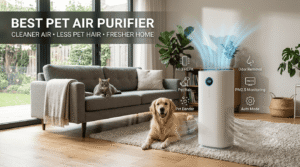
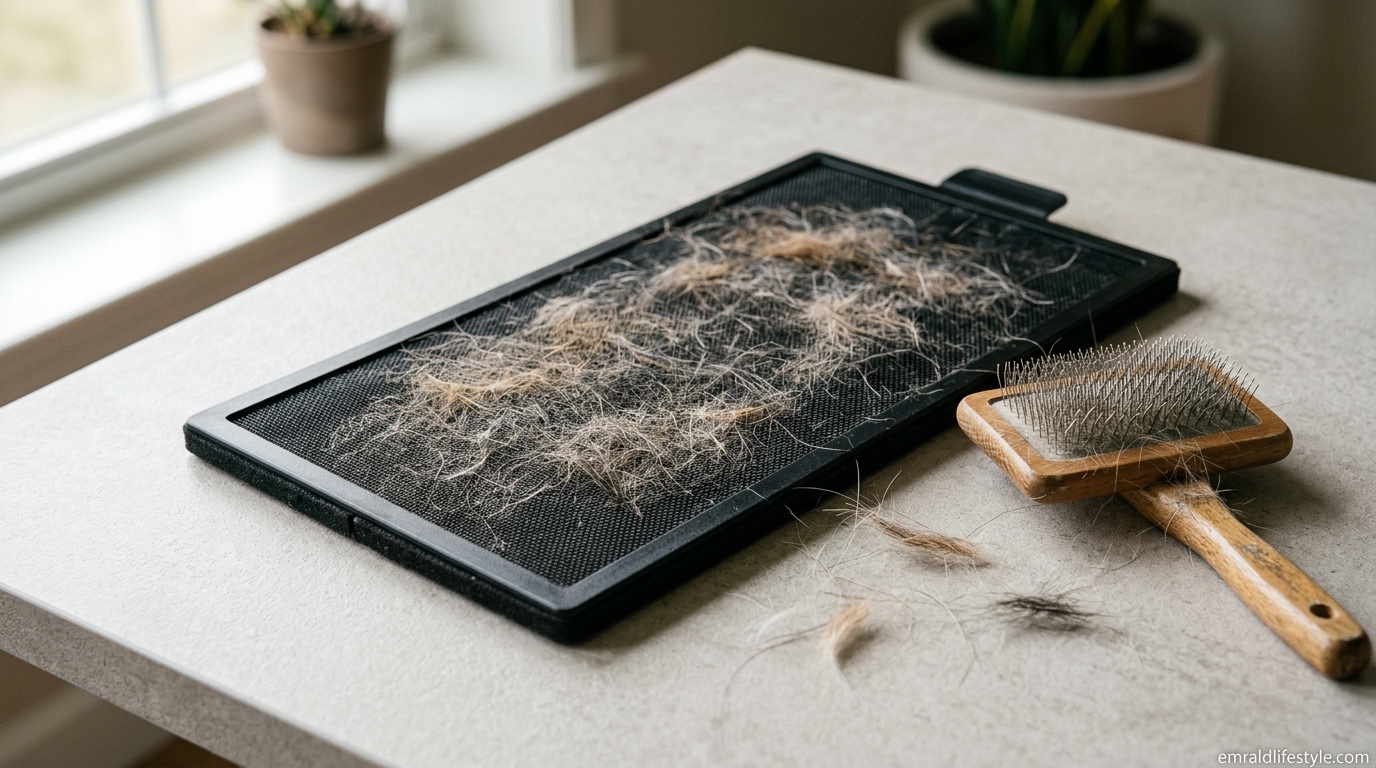
Pet hair has a way of reaching places you never expected. It gathers on furniture, floats through sunny rooms, and collects around vents and corners. Regular vacuuming helps, but it cannot catch every loose strand before it settles. An air purifier can capture some airborne fur while filtering smaller particles that circulate with it.
However, not every purifier handles pet hair equally well. The most useful models combine effective airflow, a pre-filter that catches larger debris, and straightforward maintenance. This guide focuses on those features. You’ll find five different air purifiers worth considering, what makes each one suitable for a shedding household, and how to choose the right design for your home.
How an Air Purifier Helps With Pet Hair
An air purifier pulls room air through a filter system. Larger particles may collect on the pre-filter, while finer particles move through additional filtration stages.
That distinction matters in a home with shedding pets. Visible fur and microscopic dander are different problems, so one filter layer does not handle everything equally.
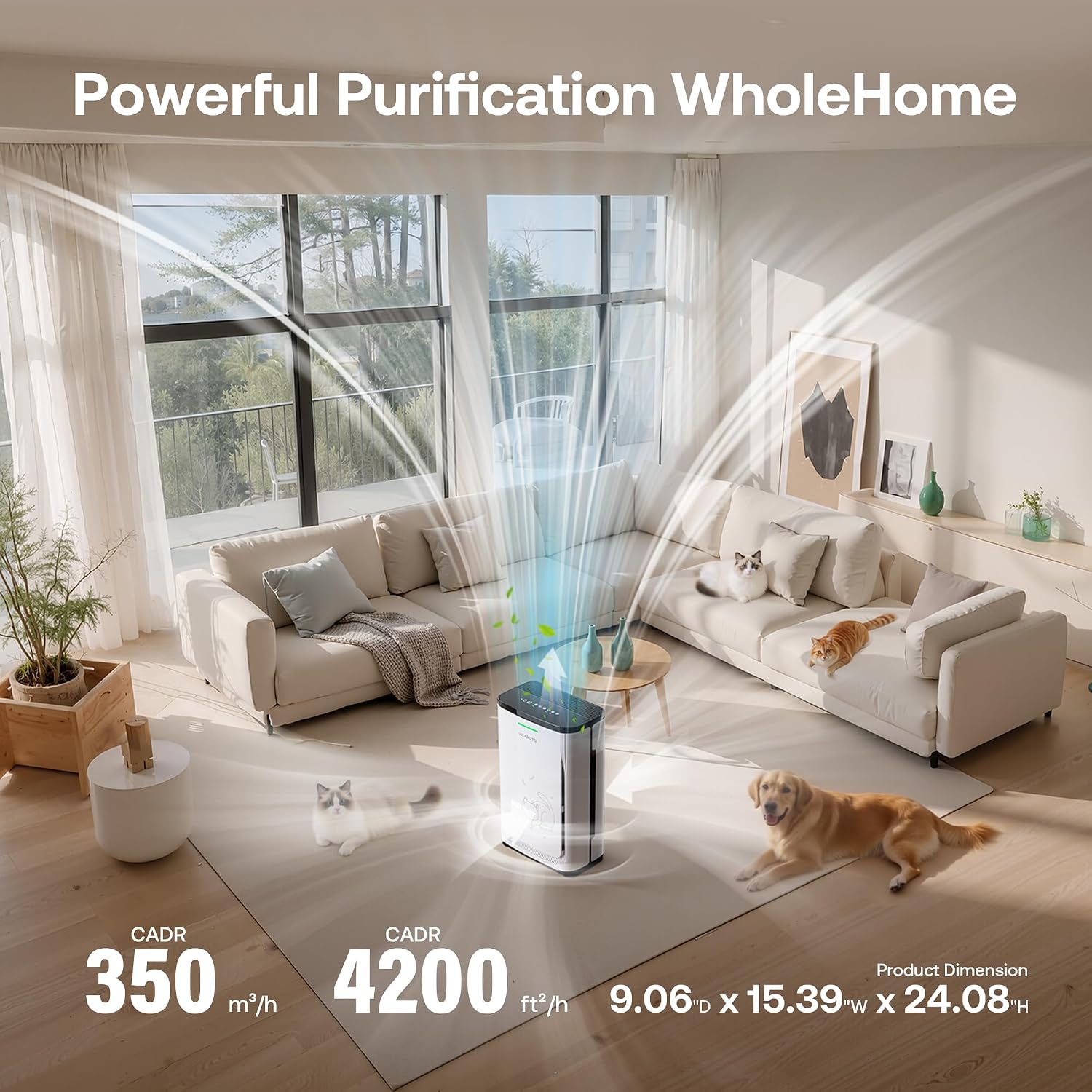
What an air purifier can capture
- Loose airborne fur: Larger hairs that reach the purifier’s intake can collect on a suitable pre-filter.
- Fine pet dander: Tiny skin flakes can remain suspended in the air and require finer filtration.
- Dust mixed with fur: Dust and fabric fibers often circulate alongside pet hair.
- Some airborne allergens: Effective particle filtration can reduce airborne particles, including pet-related allergens.
What it cannot do
An air purifier will not remove fur already embedded in rugs, trapped in upholstery, or settled beneath furniture. It also cannot prevent a pet from shedding.
For visible hair, combine air purification with vacuuming, grooming, and cleaning soft furnishings. The purifier works on the airborne portion of the problem.
5 Best Air Purifiers for Pet Hair
These picks use different approaches to handling fur, from washable debris screens to multi-stage filtration. The best choice depends on your room size, shedding level, cleaning routine, and budget.
| Air purifier | Best for | Pet-hair feature |
|---|---|---|
| Shark NeverChange Air Purifier MAX | Frequent shedding and easier upkeep | Removable, washable Debris Defense screen |
| Rabbit Air A3 | Multi-stage filtration | Washable pre-filter designed to catch larger particles |
| Alen BreatheSmart 45i | Larger rooms and regular use | Replaceable pre-filter plus HEPA filtration |
| IQAir HealthPro Plus XE | Premium multi-stage particle filtration | Coarse-particle pre-filtration before finer filters |
| Honeywell HPA300 | Straightforward, high-airflow filtration | True HEPA filtration with a separate pre-filter stage |
1. Shark NeverChange Air Purifier MAX
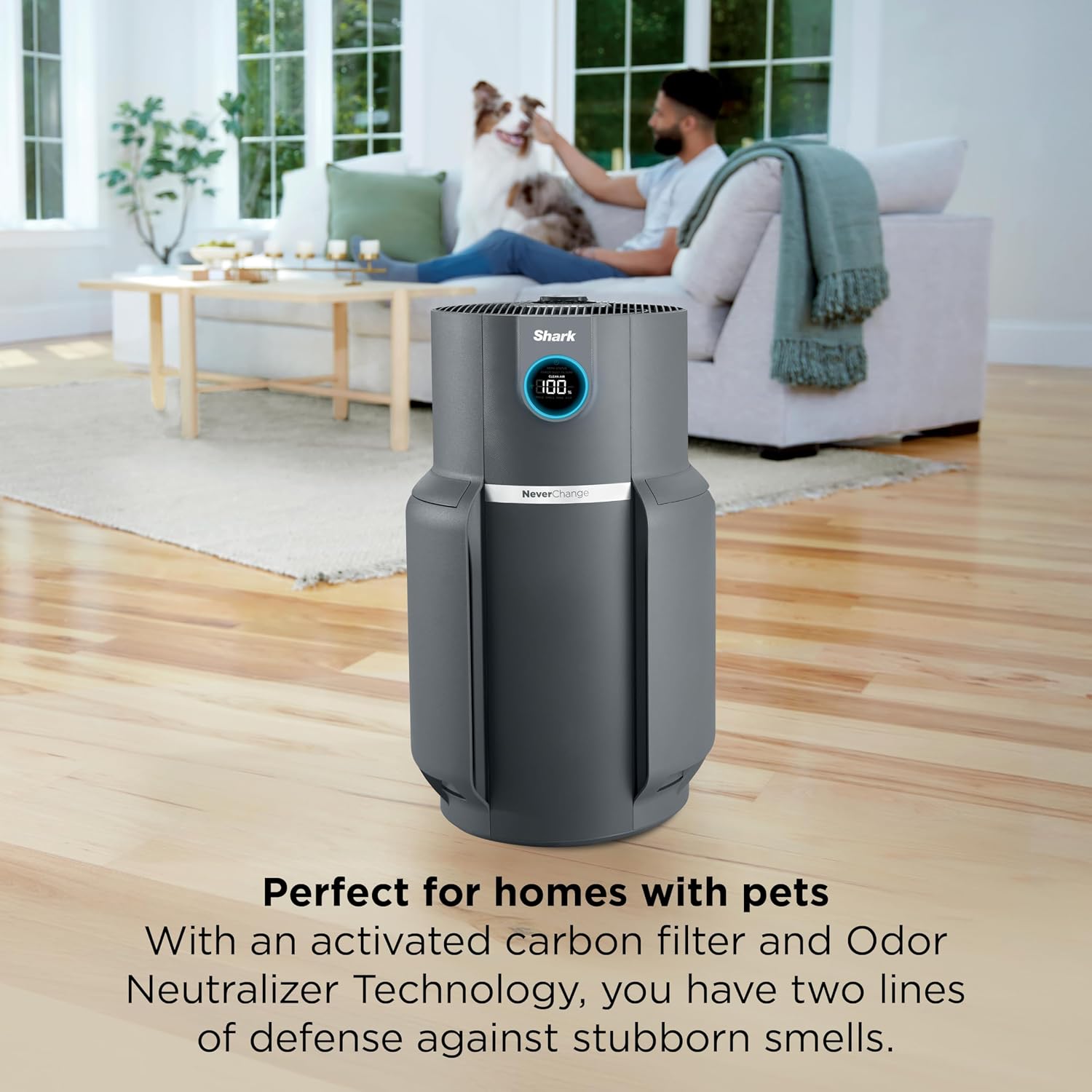
Best for: Pet owners who want an easy-to-clean debris screen
The Shark NeverChange MAX is designed to capture larger debris before it builds up on the main filtration layers. Its Debris Defense screen pulls in particles such as hair, dust, and dander.
You can remove the screen and vacuum, wipe, or rinse it clean. That feature makes this model especially relevant to homes where shedding creates visible buildup.
The purifier also includes long-lasting HEPA filtration and an odor-neutralizing cartridge. Its manufacturer lists coverage of up to 1,400 square feet at one air change per hour, so use the room-coverage details carefully when choosing a setting.
Why it suits pet owners
- Removable screen helps collect larger debris.
- Cleaning the screen is simpler than replacing a clogged filter.
- Long-lasting main filtration reduces routine replacement needs.
- Odor-neutralizing technology provides an additional feature for pet households.
What to consider: Its odor-neutralizing cartridge releases a scent. That may not suit every household, especially if you prefer unscented air.
2. Rabbit Air A3
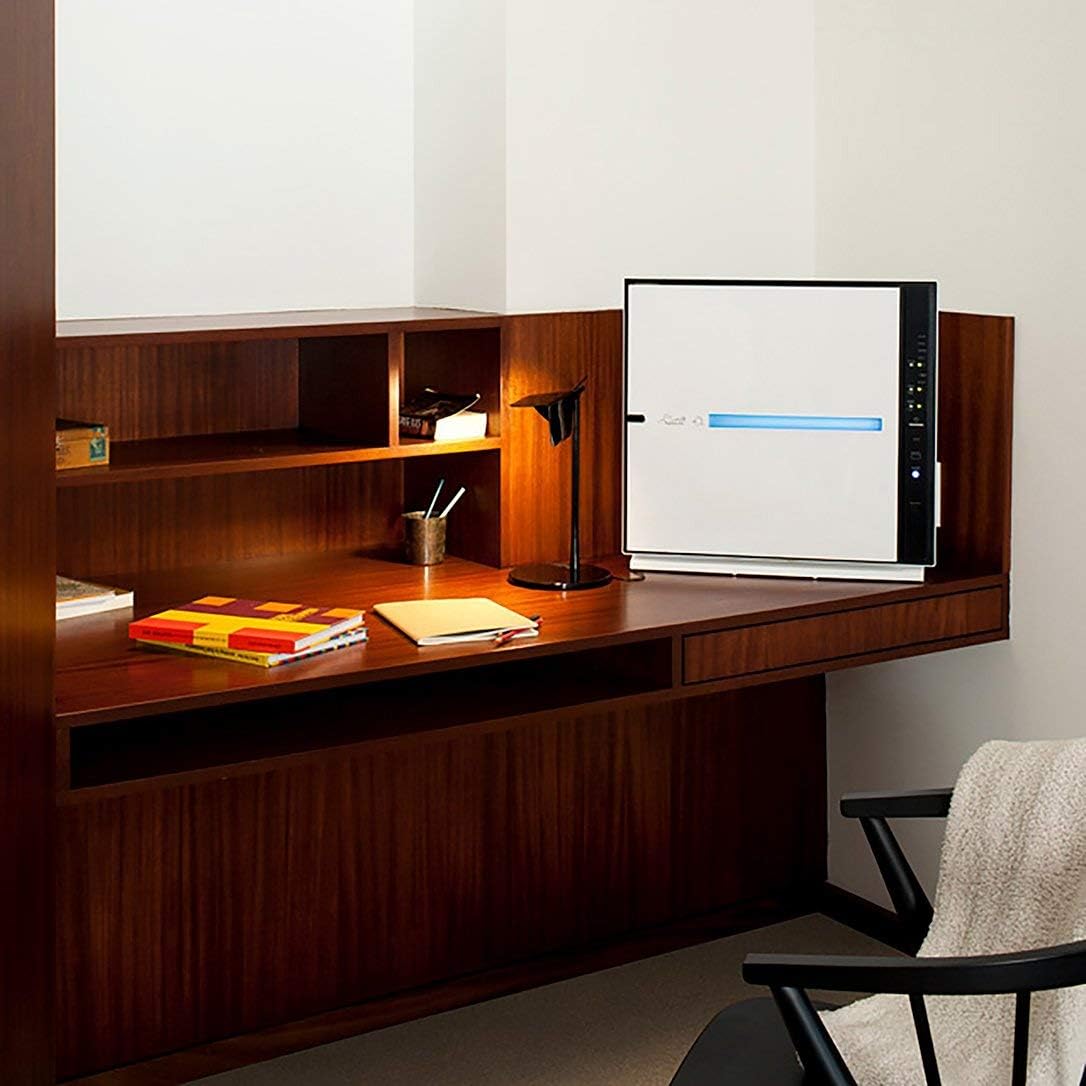
Best for: Homes that need several stages of particle filtration
The Rabbit Air A3 uses a six-stage filtration system. Its first stage is a pre-filter designed to catch larger airborne particles, including pet hair and dust.
A medium filter follows, then activated carbon, HEPA filtration, and a customizable filter. This layered design addresses both larger debris and finer airborne particles.
The A3’s pre-filter is washable, giving pet owners a practical way to remove accumulated fur. Rabbit Air recommends cleaning it regularly and allowing it to dry fully before reinstalling it.
Why it suits pet owners
- Washable pre-filter captures larger airborne particles.
- Multi-stage filtration handles particles of different sizes.
- Activated carbon helps address household and pet odors.
- The customizable filter allows buyers to tailor the system to a particular concern.
What to consider: This is a premium option. Compare its upfront cost and replacement-filter expenses with how much filtration your household actually needs.
Image prompt: Detailed studio photograph of a rectangular washable pre-filter from a premium air purifier, with a visible layer of pale pet fur across the mesh. Show the filter partly removed from its frame, with a folded microfiber cloth nearby. Warm neutral background, sharp texture, no pets, no text.
3. Alen BreatheSmart 45i
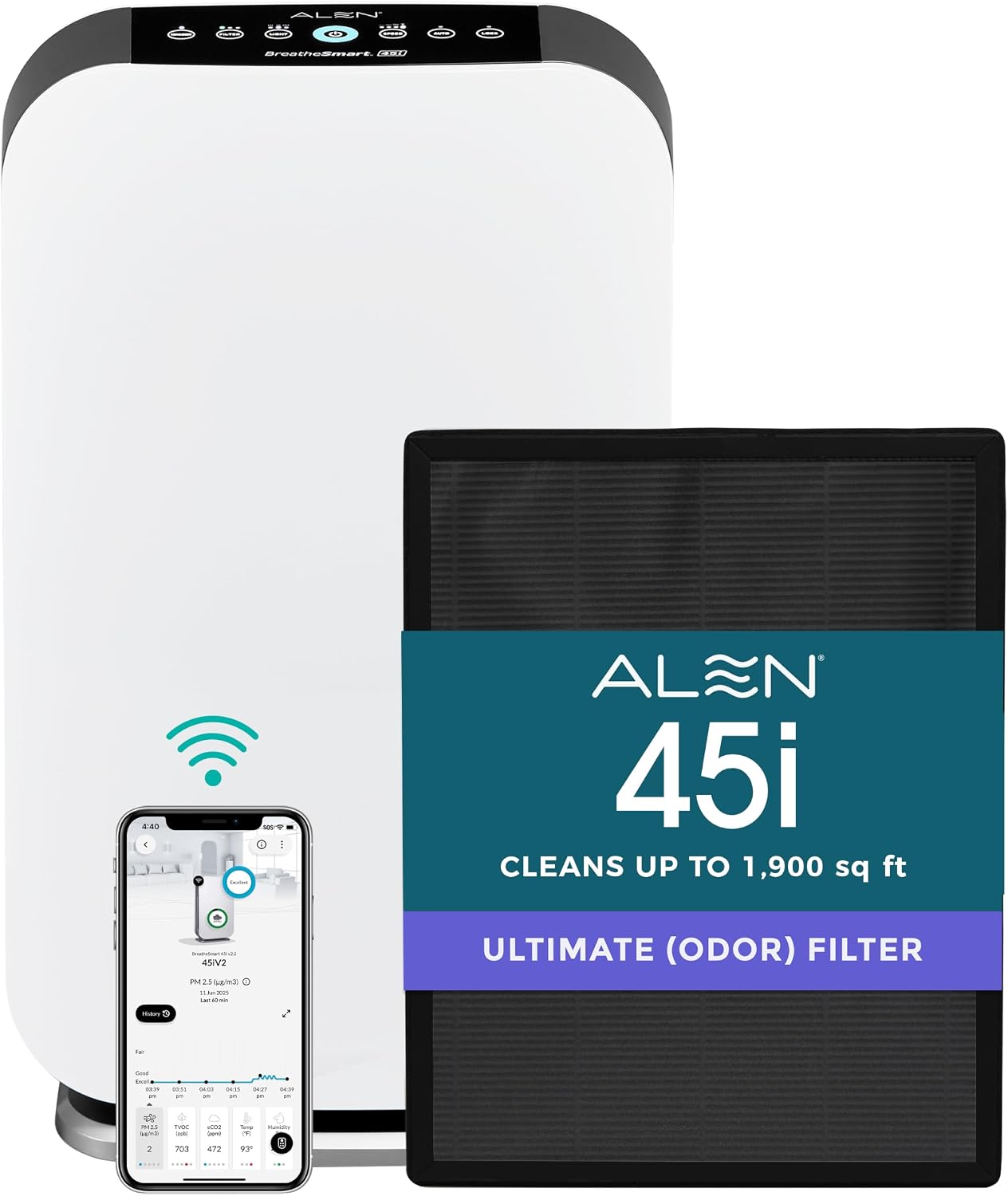
Best for: Larger rooms with ongoing shedding
The Alen BreatheSmart 45i combines HEPA filtration with a separate pre-filter. The pre-filter helps catch larger debris before it reaches the main filter.
This arrangement is useful when pets shed throughout the day. You can address visible buildup on the pre-filter without treating every strand as a problem for the HEPA layer.
Alen offers different filter configurations for the 45i. Buyers focused on pet-related particles can prioritize particle filtration, while households also concerned about odors may prefer a compatible odor-focused option.
Why it suits pet owners
- Separate pre-filter helps intercept larger debris.
- HEPA filtration targets finer airborne particles.
- Filter options accommodate different household concerns.
- Its room-coverage specifications make it worth considering for larger spaces.
What to consider: The 45i’s pre-filter is a replaceable felt-like material, not a washable mesh screen. Include replacement pre-filters and main-filter costs in your long-term budget.
4. IQAir HealthPro Plus XE
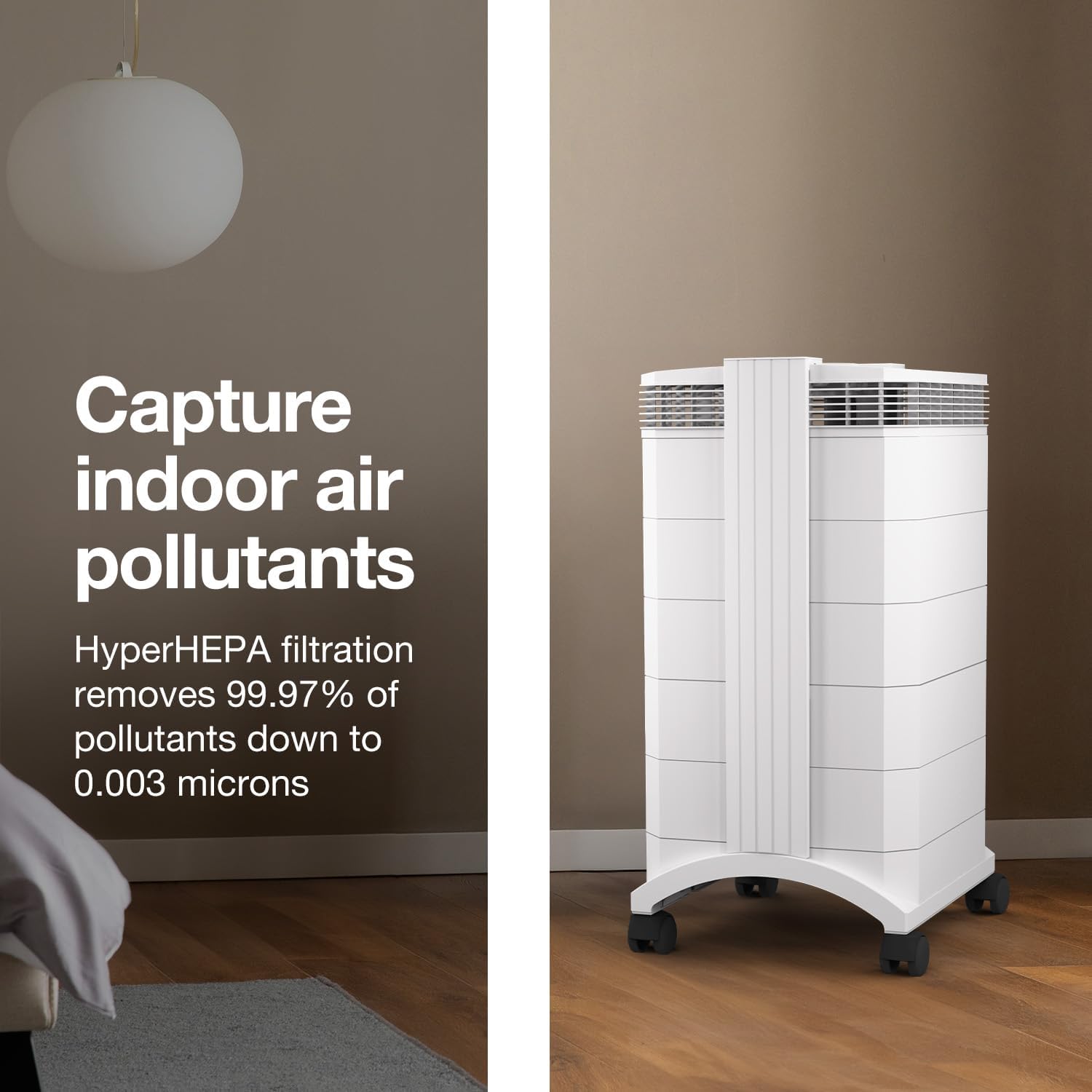
Best for: Buyers prioritizing a multi-stage particle-filtration system
The IQAir HealthPro Plus XE uses multiple filtration stages to handle airborne particles and gases. Its PreMax filter provides the initial filtration stage before air passes through the remaining system.
That first stage helps manage coarse and fine particulate matter. Later stages target finer particles and gases, making the unit a broader air-quality solution rather than a device focused only on visible fur.
For pet households, the main benefit is the layered approach. A pre-filter can catch some larger airborne debris, while the later filters address smaller particles that ordinary cleaning may leave circulating.
Why it suits pet owners
- Initial pre-filtration helps protect the later filter stages.
- Multi-stage design targets different airborne pollutants.
- Suitable for buyers who want more than basic fur collection.
- Useful when pet particles are only one of several indoor-air concerns.
What to consider: This is a premium system with a larger investment and multiple filters to maintain. It may be more than you need if your main concern is simply visible fur on furniture.
5. Honeywell HPA300
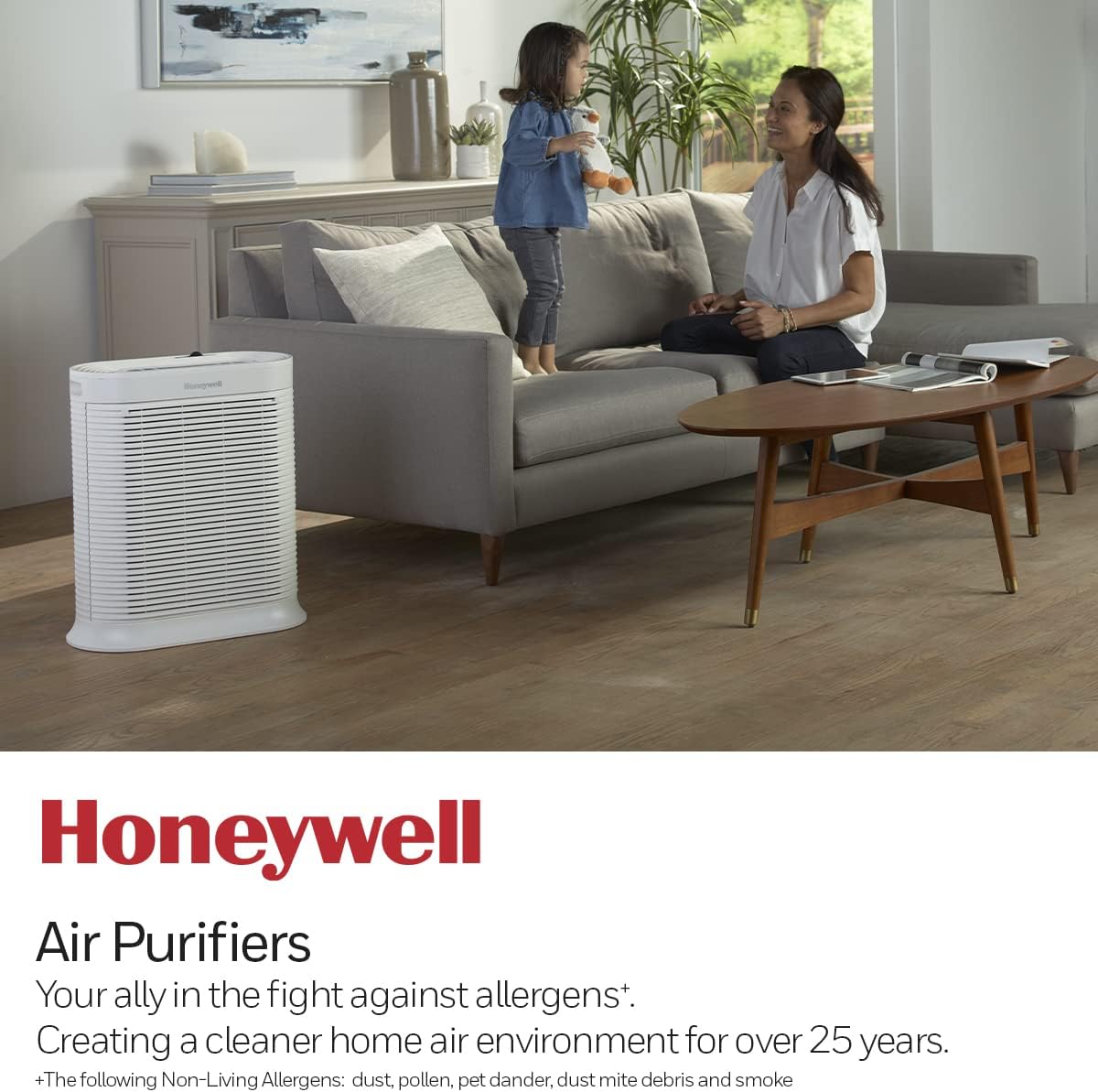
Best for: Buyers who want a conventional HEPA air purifier
The Honeywell HPA300 uses a pre-filter stage and True HEPA filtration. Its design focuses on circulating room air through the filtration system rather than offering a dedicated washable fur screen.
That makes it a reasonable option for people who want to target airborne particles in a pet-owning household. The pre-filter helps handle larger particles, while the HEPA filters target smaller airborne material.
Before buying, review the model’s filter arrangement and ongoing replacement requirements. A purifier that moves plenty of air still needs regular maintenance to keep its filtration system working as intended.
Why it suits pet owners
- Pre-filtration helps capture larger airborne debris.
- HEPA filtration targets fine airborne particles.
- Straightforward design without unnecessary connected features.
- A useful comparison option for shoppers who prefer conventional air cleaners.
What to consider: Unlike models with a removable washable debris screen, this is not the most specialized choice for collecting visible fur. It makes more sense when you want general airborne-particle filtration alongside regular cleaning.
What to Look for in an Air Purifier for Pet Hair
The product name matters less than the way its intake and filters handle larger particles. Use these features to compare models.
1. A pre-filter that catches larger debris
The pre-filter is the first feature to examine. It helps intercept larger airborne material before it reaches finer filters.
Some models use washable mesh screens. Others use felt-like or replaceable pre-filters. A washable screen can simplify cleanup, while a replaceable pre-filter may need less hands-on washing.
Do not assume every pre-filter is washable. Follow the care instructions for the specific model.
2. Enough airflow for your room
A purifier can only capture fur that reaches its intake. Strong circulation helps move room air through the filters, but placement and room layout also affect performance.
Check the clean air delivery rate (CADR) and the recommended room size. Pay attention to the number of air changes per hour behind the coverage figure, because a large advertised area may reflect a slower cleaning rate.
For an open-plan home, one small purifier may not circulate air effectively through every separated area.
3. Easy filter maintenance
Pet fur can accumulate quickly in homes with heavy shedders. A difficult-to-clean filter can make regular upkeep frustrating.
Look for accessible intake screens, clear maintenance instructions, and replacement filters that fit your budget. Check the filter regularly when your pet is shedding heavily.
4. Particle filtration beyond visible fur
A large strand of fur is easy to see, but pet dander is much smaller. If you want to reduce fine airborne particles, choose a purifier with effective particle filtration in addition to its pre-filter.
A pre-filter designed for hair does not replace HEPA filtration. Each stage has a different job.
5. Reasonable ongoing costs
The purchase price is only part of the cost. Consider replacement filters, washable-screen care, electricity, and how often the unit needs maintenance.
A purifier with a low initial price may cost more over time if its filters require frequent replacement. A premium model may offer convenient maintenance but still carry a higher long-term cost.
How to Keep Pet Hair From Clogging Your Air Purifier
A few simple habits can reduce the amount of fur that reaches the main filter.
Clean the pre-filter regularly
Inspect the pre-filter more often during seasonal shedding or after adopting a pet with a thick coat. Remove accumulated fur according to the manufacturer’s instructions.
Use a vacuum attachment when permitted. Wash a pre-filter only if the manufacturer identifies it as washable, and let it dry completely before reinstalling it.
Place the purifier near the source of shedding
Position the unit in the room where your pet spends the most time. Keep its intake and outlet clear of curtains, furniture, walls, and bedding.
Avoid hiding the purifier behind a sofa or pushing it into a tight corner. Restricted airflow can limit how much room air passes through the filter.
Groom your pet consistently
Brushing removes loose fur before it spreads around the home. Choose a grooming tool suited to your pet’s coat, and groom in an easy-to-clean area.
Regular grooming will not stop shedding entirely, but it can reduce the amount of loose fur released indoors.
Vacuum floors and upholstery
Air purifiers do not collect fur that has already settled. Vacuum carpets, rugs, sofas, and pet beds to remove that material.
A vacuum with suitable filtration can also help limit the dust released during cleaning. Empty or maintain it according to its instructions.
Keep pet bedding clean
Pet beds, blankets, and favorite resting spots collect hair and dander. Wash removable covers as directed and clean the surrounding floor.
This reduces the amount of loose material available to circulate back into the room.
Can an Air Purifier Remove Dog and Cat Hair From the Air?
Yes, an air purifier can capture some airborne dog and cat hair when the particles reach its intake. A pre-filter designed to catch larger debris can be especially helpful.
However, not all loose fur stays airborne for long. Many strands settle onto floors, sofas, clothing, and bedding before reaching the purifier.
For that reason, an air purifier should complement grooming and vacuuming rather than replace them. If fine pet dander is also a concern, choose a model with effective particle filtration beyond its initial pre-filter.
Air Purifier vs. Vacuum Cleaner for Pet Hair
These tools solve different parts of the same problem.
| Task | Air purifier | Vacuum cleaner |
|---|---|---|
| Capture airborne fur | Yes, when fur reaches the intake | Usually only when directly vacuuming |
| Remove fur from carpets | No | Yes |
| Remove hair from upholstery | No | Yes, with a suitable attachment |
| Filter fine airborne particles | Yes, depending on the filter system | Depends on the vacuum’s filtration and how it handles exhaust |
| Reduce loose fur before it settles | Can capture some of it | Not without direct cleaning |
The best approach is to use both. Vacuum surfaces for visible hair and run the purifier to capture airborne particles that pass through its intake.
Which Air Purifier Is Best for Your Pet-Hair Problem?
Your best choice depends on the kind of maintenance you prefer.
- Choose the Shark NeverChange MAX if you want a removable debris screen designed for easy cleaning.
- Choose the Rabbit Air A3 if you prefer a washable pre-filter and several filtration stages.
- Choose the Alen BreatheSmart 45i if you need a larger-room option with a separate pre-filter.
- Choose the IQAir HealthPro Plus XE if your priorities include multi-stage filtration for several types of airborne pollutants.
- Choose the Honeywell HPA300 if you prefer a conventional HEPA air purifier and do not need a specialized washable fur screen.
If your biggest frustration is fur on sofas, clothes, and carpets, start with grooming and vacuuming. If loose particles keep circulating, add a purifier with an accessible pre-filter and suitable airflow.
For a broader comparison that covers pet dander and odors as well as fur, read our guide to the best air purifiers for pets.
Frequently Asked Questions
Do air purifiers actually help with pet hair?
They can capture some pet hair that remains airborne and reaches the intake. They cannot remove fur already settled on floors, rugs, or furniture. Regular vacuuming and grooming remain important.
What type of filter is best for pet hair?
A pre-filter that catches larger particles is particularly useful for visible fur. Washable screens can simplify maintenance, while finer filtration helps capture smaller airborne particles such as pet dander.
Should I choose an air purifier with a washable pre-filter?
A washable pre-filter can be convenient in a home with heavy shedding because you can remove collected debris without replacing that screen each time. Make sure the specific filter is designed for washing and dries fully before reuse.
Will an air purifier stop pet hair from settling on furniture?
No. It may capture some airborne fur before it settles, but it cannot prevent every strand from landing on furniture. Grooming, laundering, and vacuuming remain necessary.
Where should I place an air purifier for pet hair?
Start with the room where your pet spends the most time. Keep the intake and outlet unobstructed, and follow the manufacturer’s spacing guidance. You may need separate units for rooms divided by walls or doors.
How often should I clean an air purifier’s pre-filter?
The interval depends on the model, the amount your pet sheds, and how much dust circulates in your home. Inspect it regularly and follow the manufacturer’s maintenance instructions. Heavy shedding may require more frequent cleaning.
Can an air purifier help with pet dander as well as fur?
Yes, if the unit has effective fine-particle filtration. Visible fur and microscopic dander differ in size, so a pre-filter alone is not enough to address both.
Final Thoughts
The best air purifier for pet hair is one that captures larger airborne debris, provides suitable airflow, and fits your cleaning routine.
For easy debris-screen maintenance, consider the Shark NeverChange MAX. For a washable pre-filter and multi-stage design, look at the Rabbit Air A3. Other options may suit larger rooms or households with broader air-quality concerns.
Remember that no purifier can replace surface cleaning. Pair the right unit with regular grooming, vacuuming, and pre-filter care to keep shedding under better control.
Affiliate disclosure: This article may contain affiliate links. If you purchase through these links, EmraldLifestyle may earn a commission at no additional cost to you.