
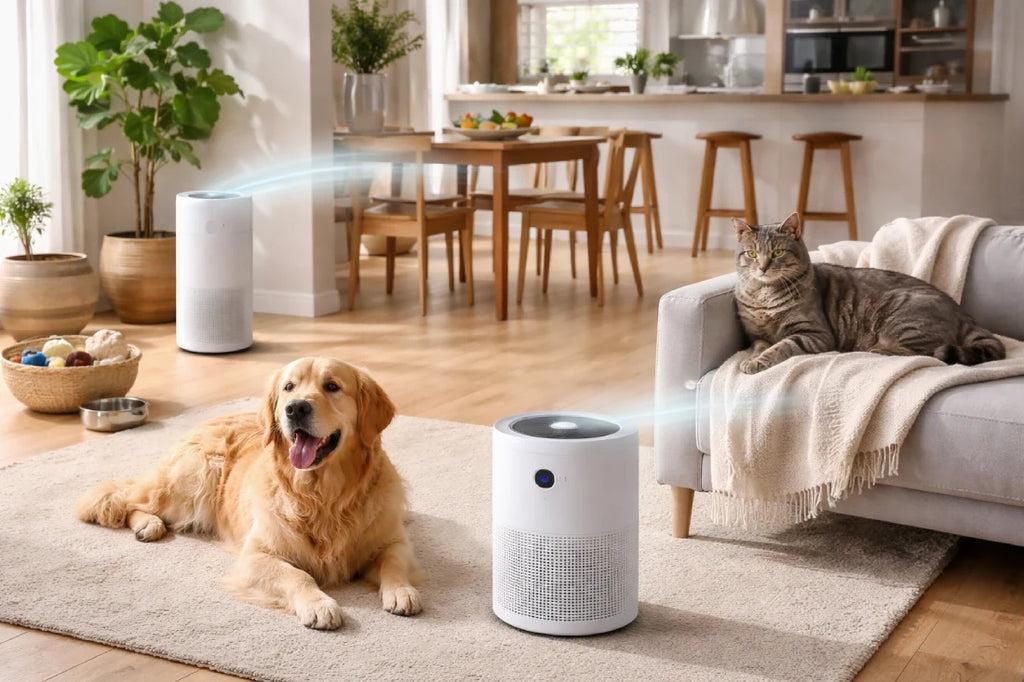
Living with pets makes a house feel more like home. However, floating fur, airborne dander, and lingering odors can make indoor air harder to manage.
The best air purifier for pets helps capture airborne particles and can reduce certain pet-related odors. The right model depends on your room size, your pet’s shedding habits, and the type of filtration you need.
Some purifiers work well in bedrooms, while others suit larger living spaces. A few prioritize particle filtration, while others add more substantial odor-control features.
This guide compares five air purifiers worth considering for pet-friendly homes. You’ll also learn which features matter most, how to choose the right size, and how to keep your purifier working effectively.
Quick Picks: Best Air Purifiers for Pets
| Best for | Recommended model | Why consider it |
|---|---|---|
| Best overall for many pet homes | Winix 5500-2 | Multi-stage filtration and a washable pre-filter |
| Large rooms | Levoit Vital 200S-P | Designed for larger spaces and pet-friendly filtration |
| General household use | Coway Airmega AP-1512HH Mighty | Compact design with multiple filtration stages |
| Bedrooms and smaller rooms | Levoit Core 300S-P | Compact footprint and smart features |
| Larger open living spaces | Blueair Blue Pure 211i Max | High airflow capacity for larger areas |
Important: These are category-based recommendations, not a claim that every model has been independently tested by EmraldLifestyle. Match each product to your room size, filtration needs, operating costs, and safety preferences before purchasing.
What Is the Best Air Purifier for Pets?
For many households, the best air purifier for pets combines effective particle filtration, sufficient airflow, and a pre-filter that catches larger airborne debris.
A model with activated carbon can also help reduce certain pet odors. However, carbon performance depends on the amount and type of carbon used. A thin carbon-coated filter may have limited odor-control capacity.
Start by identifying your biggest problem.
- Pet dander and allergies: Prioritize a high-efficiency particle filter and adequate clean air delivery.
- Floating pet hair: Look for a washable or easy-to-clean pre-filter and unobstructed air inlets.
- Litter-box or dog odors: Choose a model with a meaningful activated-carbon stage.
- Large rooms: Prioritize clean air delivery rate and suitable room coverage.
- Bedrooms: Consider lower operating noise, sleep settings, and the ability to run the unit consistently.
A purifier should complement regular cleaning, not replace it. Vacuuming, washing pet bedding, and removing waste promptly remain important parts of a cleaner pet-friendly home.
5 Best Air Purifiers for Pets
1. Winix 5500-2 — Best Overall for Many Pet Homes
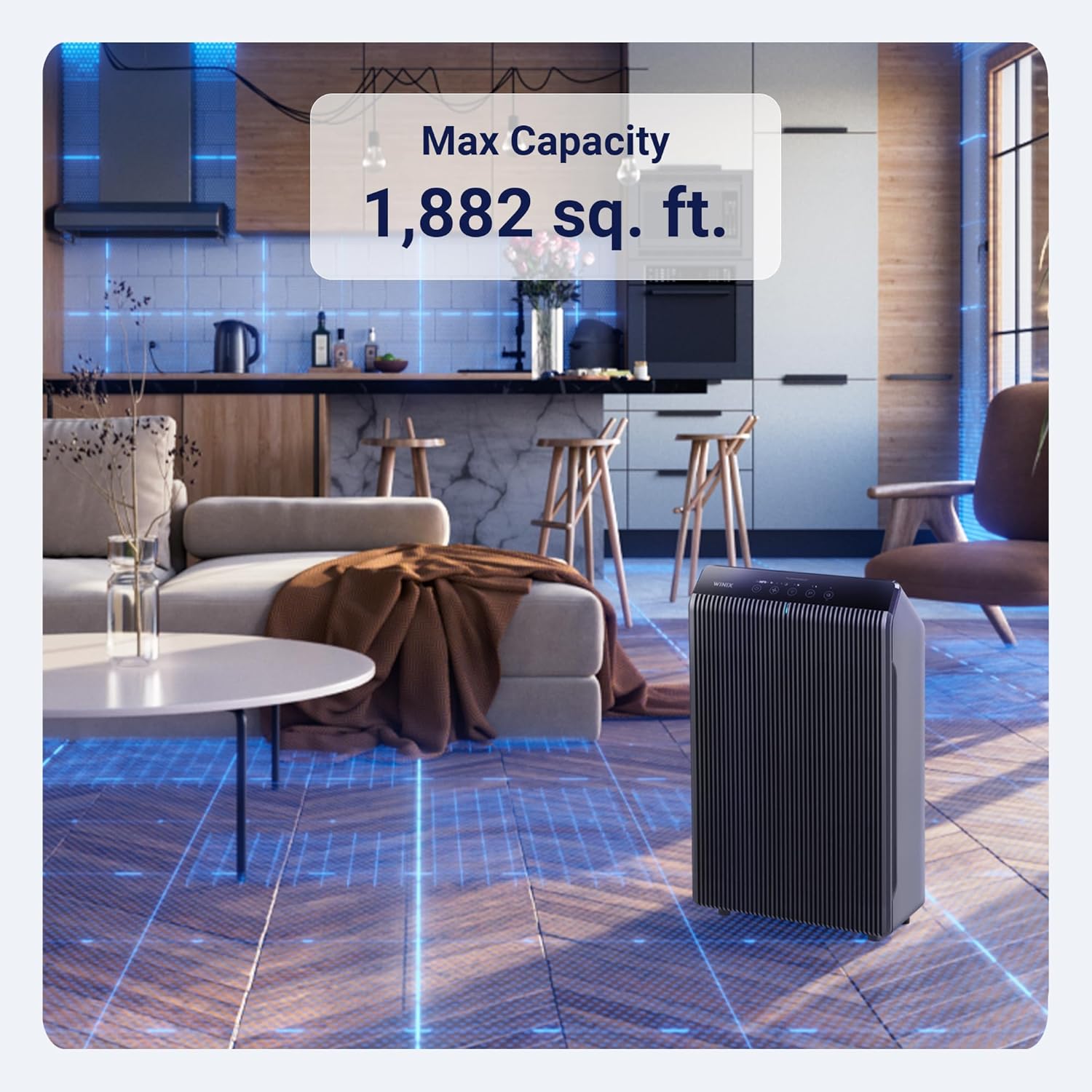
The Winix 5500-2 is worth considering if you want a multi-stage air purifier for a household with cats or dogs.
Its filtration system includes a washable pre-filter, a HEPA filter, and an activated-carbon filter. Together, these components address different types of airborne pollutants.
The pre-filter catches larger particles before they reach the main filter. The HEPA filter captures fine airborne particles, including many particles associated with pet dander. The carbon stage helps reduce certain odors.
Key features to consider
- Washable pre-filter for larger debris
- HEPA filtration for airborne particles
- Activated-carbon filtration for odor control
- Multiple fan settings for different operating needs
- An optional PlasmaWave feature
Pros
- Combines particle filtration with an odor-control stage.
- The washable pre-filter helps simplify routine maintenance.
- Offers several useful features without requiring a premium smart-home setup.
Cons
- The activated-carbon stage may not eliminate strong or persistent odors.
- The PlasmaWave feature raises an important consideration for households avoiding ozone-generating technologies.
- Filter replacement and cleaning still require ongoing attention.
Best for: Pet owners who want a versatile purifier for everyday use and are comfortable evaluating its filtration features.
Safety note: The Plasma Wave feature is marketed as an air-cleaning technology. If you want to avoid ozone-producing features, review the manufacturer’s documentation and select a configuration that meets your requirements. Consider a purifier that does not use ionization or ozone-generating technology.
Buying advice: Check the model’s rated room coverage and clean air delivery rate before placing it in a large living room. The correct size matters more than the number of features.
2. Levoit Vital 200S-P — Best for Larger Pet-Friendly Rooms
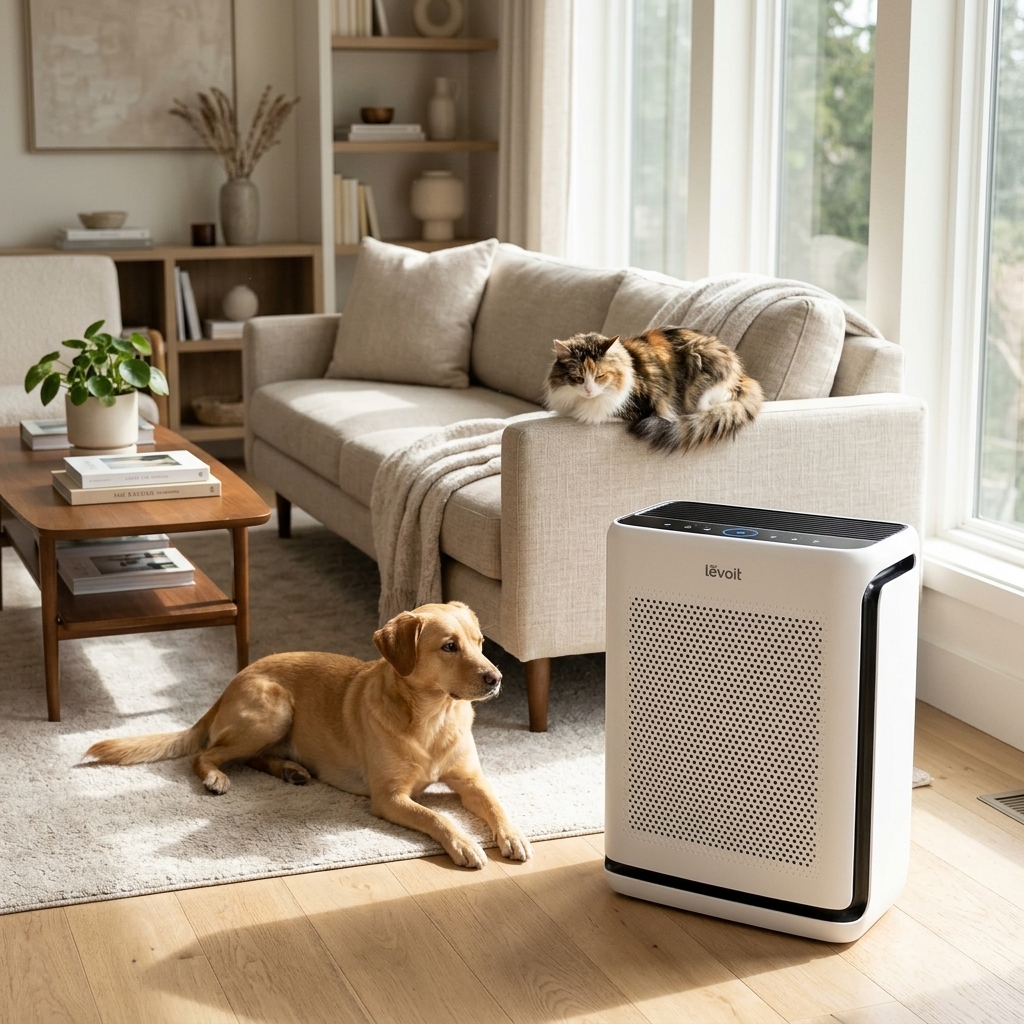
The Levoit Vital 200S-P is designed for households that need more air-cleaning capacity than a small bedroom purifier can provide.
Its pet-focused design and larger intake area make it worth considering for homes with shedding cats or dogs. The model also offers smart controls, allowing users to manage operation through compatible features.
Room coverage should remain a central consideration. A purifier can have an impressive advertised coverage figure yet perform differently depending on its operating speed and the number of air changes required.
Key features to consider
- Design intended for larger rooms
- Multi-stage particle filtration
- A washable pre-filter
- Smart controls and operating modes
- A larger form factor than compact bedroom models
Pros
- Suitable for comparing options for larger living areas.
- The pre-filter helps capture larger debris before it reaches the main filter.
- Smart controls can make regular operation more convenient.
Cons
- Its size may be less convenient in small rooms.
- Replacement filters add to long-term ownership costs.
- Large advertised coverage figures should not replace a check of CADR and recommended room size.
Best for: Homes where pets spend much of their time in a larger living room or shared family space.
Buying advice: Measure the room before choosing this model. For open-plan homes, consider the area where the purifier will operate rather than assuming one unit will clean every connected room equally well.
3. Coway Airmega AP-1512HH Mighty — Best for Everyday Household Use
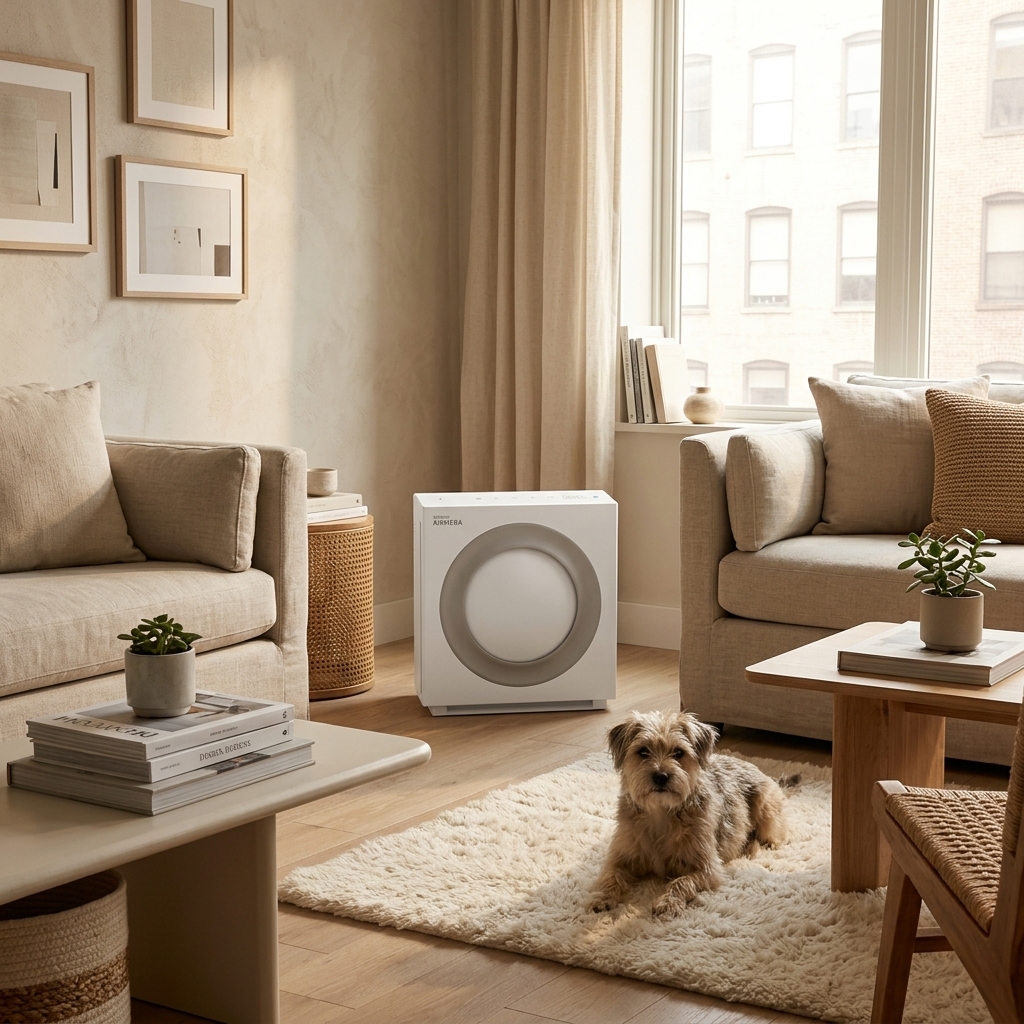
The Coway Airmega AP-1512HH Mighty is a compact option for pet owners who want a multi-stage filtration system without a particularly bulky appliance.
Its filtration design includes a pre-filter, a deodorization filter, a HEPA filter, and an ionizer feature. That combination makes it important to consider both particle filtration and the technologies used to treat the air.
The model’s suitability depends on the room size, operating speed, and your preferences around ionization.
Key features to consider
- Compact design for common household spaces
- Multi-stage filtration
- A washable pre-filter
- Air-quality monitoring features
- Multiple operating modes
Pros
- Fits comfortably into many bedrooms and living areas.
- Provides several filtration stages in one unit.
- The pre-filter can help reduce the amount of larger debris reaching the main filter.
Cons
- It may not provide enough capacity for every large or open-plan room.
- The ionizer feature may not suit people who prefer mechanical filtration only.
- The deodorization filter is not a substitute for cleaning the source of strong odors.
Best for: Pet owners seeking a practical, general-purpose purifier for a suitably sized room.
Buying advice: If you prefer to avoid ionization, review the manufacturer’s instructions for the relevant operating modes. Choose a different model if you require a device with no ionizer feature at all.
4. Levoit Core 300S-P — Best for Bedrooms and Smaller Rooms
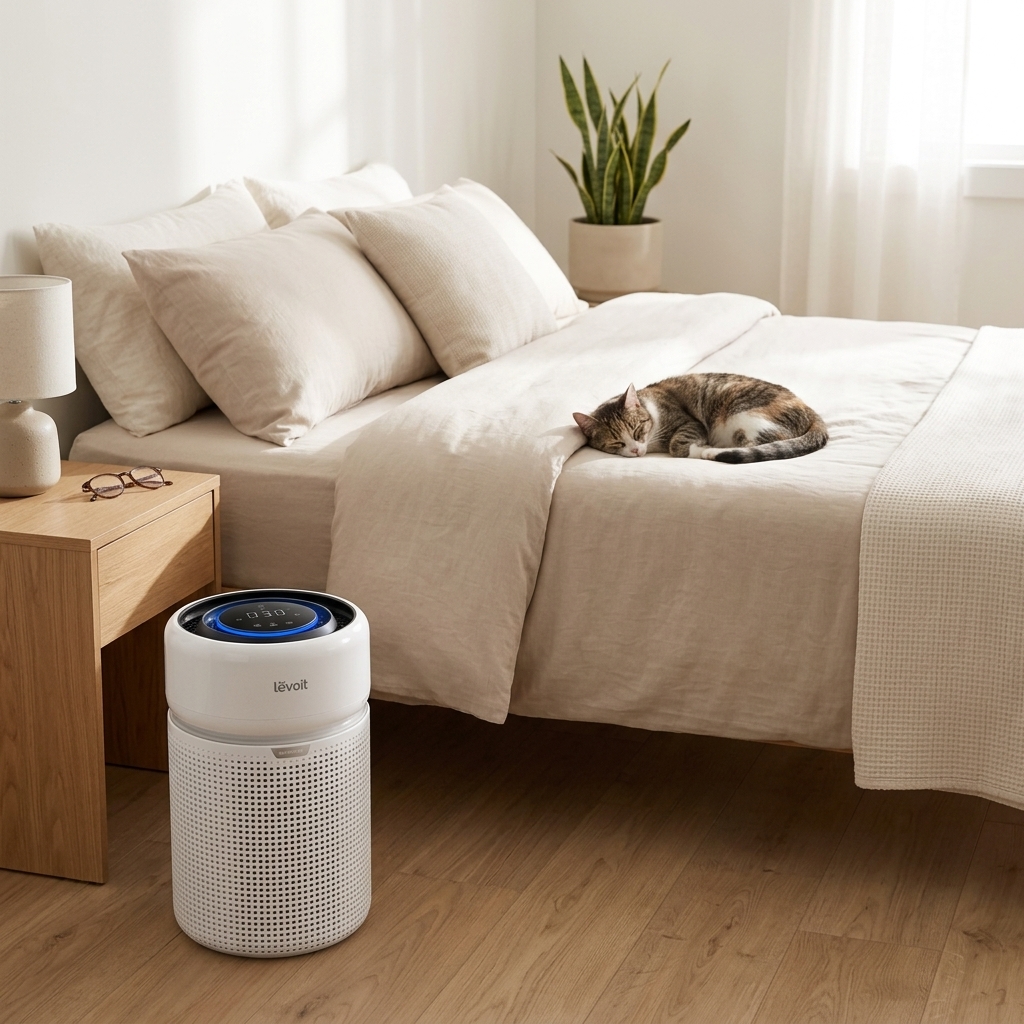
A bedroom purifier should fit the space without becoming difficult to live with. The Levoit Core 300S-P is a compact option for pet owners who want particle filtration and convenient controls.
Its smaller footprint makes it worth considering for bedrooms, home offices, and other spaces where a large unit would be inconvenient.
However, a compact purifier is not automatically the best choice for every small room. Airflow, filter performance, noise, and the room’s actual dimensions still matter.
Key features to consider
- Compact cylindrical design
- Particle filtration for airborne contaminants
- Smart controls
- Multiple fan settings
- A smaller footprint than large-room units
Pros
- Easy to position in a bedroom or home office.
- Suitable for pet owners who need a smaller appliance.
- Smart features can simplify everyday operation.
Cons
- Its capacity may be insufficient for large living spaces.
- Odor control depends on the specific filter and its carbon content.
- Higher fan settings can be more noticeable during sleep.
Best for: Small bedrooms, apartments, and home offices where a suitably sized purifier can operate consistently.
Buying advice: Choose a model with enough CADR for the room rather than relying on a manufacturer’s maximum coverage figure alone. If nighttime noise is important, compare sound levels at the fan speed you expect to use.
5. Blueair Blue Pure 211i Max — Best for Larger Open Living Spaces
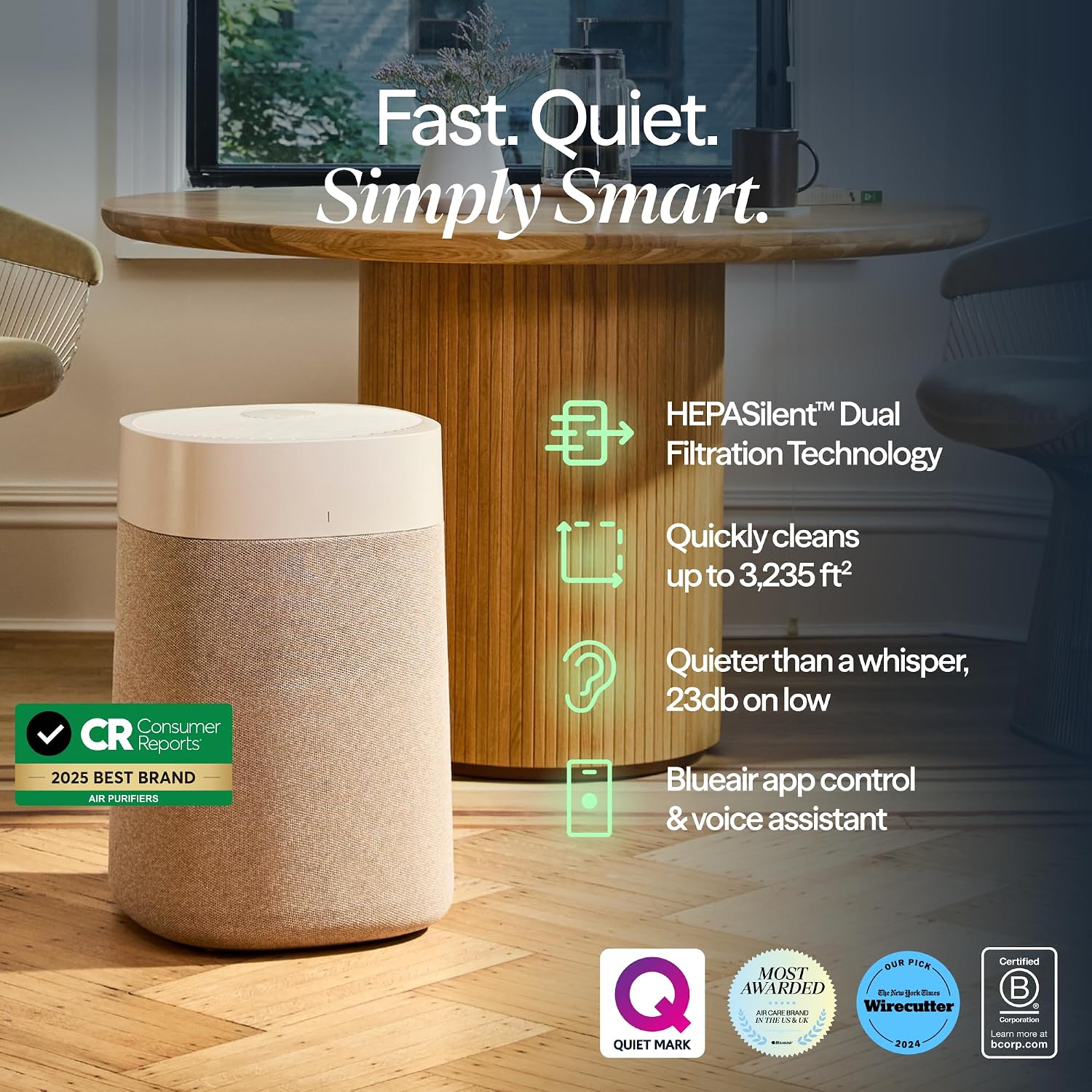
Homes with multiple pets often need more airflow than a small bedroom purifier can deliver. The Blueair Blue Pure 211i Max is an option to consider when comparing high-capacity models for larger living spaces.
Its design combines particle filtration with an odor-reduction stage. The large-room format makes it particularly relevant for households where cats or dogs spend much of their time in shared areas.
As with other models, the amount of odor reduction depends on the filtration system, the pollutant source, and how much air the unit processes.
Key features to consider
- High airflow capacity for larger spaces
- Multi-stage filtration
- A fabric pre-filter
- Smart operating features
- A design intended for larger rooms
Pros
- Worth considering for larger living rooms and shared spaces.
- The pre-filter can capture some larger airborne debris.
- Smart features may help manage regular operation.
Cons
- Its size may be excessive for a small bedroom.
- Replacement filters contribute to the cost of ownership.
- Blueair’s filtration technology and any ionization-related features should be reviewed if avoiding ozone is a priority.
Best for: Pet owners comparing higher-capacity purifiers for larger rooms.
Buying advice: Compare the manufacturer’s CADR figures, room-size recommendations, and filtration technology. If you need a purifier with no ionization or ozone-generating features, confirm that the exact model meets that requirement before buying.
How to Choose the Best Air Purifier for Pets
The right purifier is not necessarily the most expensive model. It is the one that addresses your main problem and suits the space where you plan to use it.
1. Choose the Right Filtration System
Start with the pollutants you want to reduce.
HEPA filtration for pet dander
Pet dander consists of tiny skin flakes and other particles associated with animals. Proteins found in pet skin, saliva, and urine can contribute to allergic reactions.
A high-efficiency particle filter can capture airborne particles when air passes through it. For reference, a qualifying HEPA filter is commonly rated to remove at least 99.97% of particles measuring 0.3 microns under specified test conditions.
That rating describes filter performance under particular conditions. It does not mean the entire room instantly becomes free of allergens.
Pre-filters for larger pet hair
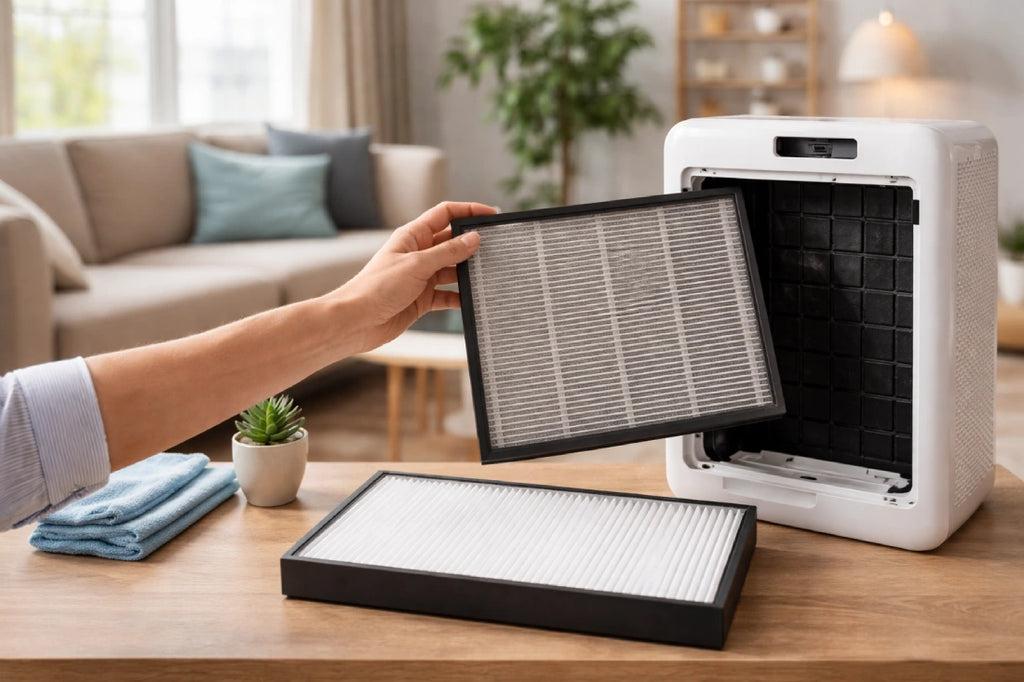
A pre-filter catches larger debris before it reaches the main filter. This helps prevent premature clogging and makes routine maintenance easier.
However, an air purifier is not a replacement for vacuuming. Most pet hair settles on carpets, upholstery, and clothing rather than remaining airborne long enough to be captured.
Activated carbon for pet odors
Activated carbon can adsorb certain odor-causing gases and compounds. Its effectiveness depends on the amount of carbon, the filter design, airflow, and the type of odor.
A thin carbon layer may provide only modest results against persistent smells. For strong litter-box or urine odors, remove the source and clean the affected area first.
2. Match the Purifier to Your Room Size
Room coverage is one of the most important buying factors.
A small purifier may struggle to clean the air quickly enough in a large living room. A larger unit can provide greater airflow, but it may take up more floor space and cost more to operate.
Look at the clean air delivery rate (CADR) when comparing models. CADR indicates how quickly a purifier delivers filtered air for specified particle types.
The Association of Home Appliance Manufacturers provides a useful starting point for room sizing. Its common guideline is to choose a smoke CADR of at least two-thirds of the room’s floor area in square feet for a typical eight-foot ceiling.
For example, a room measuring 300 square feet would call for a smoke CADR of approximately 200 cubic feet per minute under that guideline.
This is a starting point, not a universal rule. Ceiling height, room layout, pollution levels, and desired air changes can affect the capacity you need.
3. Consider Your Pet’s Shedding Habits
A home with one short-haired cat has different needs from a home with three long-haired dogs.
If your pets shed heavily, prioritize an accessible pre-filter and easy cleaning. Check whether the manufacturer allows the pre-filter to be washed or vacuumed. Never wash a filter unless its instructions explicitly permit it.
For households with multiple pets, consider the combined effect of shedding, room size, and the amount of time animals spend indoors.
4. Evaluate Noise Levels
A purifier only helps while it is running. Noise can become a problem if the unit is too disruptive to use consistently.
Compare the published noise levels at different fan speeds. The lowest setting may be quiet, but it may also deliver less clean air than a higher setting.
Look for a sleep mode if you plan to use the purifier overnight. Remember that a low-noise setting should still provide enough airflow for the room.
5. Calculate Long-Term Costs
The initial purchase price is only part of the expense.
Before buying, consider:
- Replacement-filter costs
- Recommended filter replacement intervals
- Electricity consumption
- Cleaning and maintenance requirements
- Warranty coverage
A less expensive purifier can cost more over time if its filters need frequent replacement. Compare the annual cost of ownership rather than the purchase price alone.
6. Avoid Ozone-Generating Air Cleaners
Pet owners should pay close attention to the technologies used to clean the air.
Ozone is a respiratory irritant. Avoid air cleaners designed to generate ozone, and be cautious with ionization or plasma features if you want to minimize ozone exposure.
Some products combine mechanical filtration with additional technologies. Review the exact model’s documentation instead of assuming that all products within a brand use the same system.
For a straightforward approach, prioritize effective mechanical particle filtration and an appropriate activated-carbon stage when odor control matters.
Where Should You Place an Air Purifier in a Pet-Friendly Home?
Placement affects how well a purifier can draw in and circulate air.
Use these practical guidelines:
- Living room: Place the purifier in the room where your pets spend the most time.
- Bedroom: Position it where air can circulate freely, especially if pets sleep in the room.
- Near a litter box: Keep it close enough to help treat airborne odors, but follow clearance requirements and avoid placing it where litter dust can quickly clog the intake.
- Open-plan spaces: Position the unit in the main occupied area rather than assuming it will clean every connected room equally.
- Around pets: Keep cords secure and maintain the manufacturer’s required clearances.
Avoid pushing the purifier directly against a wall or hiding it behind furniture unless the design allows that placement. Blocked air inlets and outlets can reduce airflow.
If several rooms need filtration, separate appropriately sized units may work better than one small purifier placed in a distant corner.
How to Maintain an Air Purifier When You Have Pets
Pet hair and dust can collect on the pre-filter faster than they would in a home without animals. Regular maintenance helps preserve airflow and filtration performance.
Clean the Pre-Filter Regularly
Inspect the pre-filter according to the manufacturer’s instructions. Remove accumulated fur and dust before they obstruct the intake.
Some pre-filters can be washed, while others should only be vacuumed or replaced. Always follow the specific cleaning instructions.
Replace Filters as Directed
A clogged filter can restrict airflow. Odor-control materials can also become less effective as they accumulate pollutants.
Follow the manufacturer’s replacement schedule and pay attention to filter indicators. Heavy shedding, dust, and frequent use may increase maintenance needs.
Keep the Area Around the Unit Clean
Vacuum nearby carpets and upholstery. Wash pet bedding regularly, and clean litter-box areas promptly.
These habits reduce the material that can become airborne and help your purifier focus on particles that remain suspended in the air.
Run the Purifier Consistently
Airborne particles can return when pets move around, people clean, or fresh air enters the room.
Consistent operation helps manage those changes. Choose a fan setting that balances airflow, noise, and energy use for your household.
Can an Air Purifier Remove All Pet Hair, Dander, and Odors?
No. An air purifier can reduce certain airborne particles and odors, but it cannot remove every pet-related pollutant from a home.
Pet hair often settles on floors and furniture. Dander can remain on upholstery, bedding, and other surfaces. Odors may persist when their sources remain in carpets, litter, or fabrics.
For better results, combine air filtration with regular vacuuming, cleaning, grooming, and washing pet bedding.
If allergies remain troublesome, an air purifier should be only one part of a broader plan. Speak with a qualified healthcare professional about persistent allergy symptoms.
Frequently Asked Questions
What is the best air purifier for pets?
The best choice depends on your room size and your main concern. Look for effective particle filtration, adequate CADR, and a pre-filter for larger debris. Add a meaningful activated-carbon stage if odor reduction is important.
Do air purifiers help with pet dander?
Yes. A properly sized purifier with an effective particle filter can capture airborne pet dander. However, it will not remove all allergens from carpets, furniture, bedding, or other surfaces.
Can an air purifier remove pet hair?
An air purifier can capture some hair that remains airborne, especially when it has an accessible pre-filter. It cannot replace vacuuming or remove fur that has already settled on furniture and floors.
Which air purifier is best for pet odors?
Choose a model with an activated-carbon filter designed for odor control. The amount and type of carbon matter. Persistent smells also require cleaning the source rather than relying on filtration alone.
Should I leave my air purifier on all day with pets?
Continuous operation can help maintain cleaner air because pets and household activities continually introduce particles. Choose an appropriate fan setting and follow the manufacturer’s operating guidance.
Are air purifiers safe for cats and dogs?
Mechanical filtration units can be suitable for pet-friendly homes when used correctly. Avoid ozone generators and carefully evaluate ionizers or plasma features. Keep cords secure and follow the product’s placement and maintenance instructions.
Do I need an air purifier in every room?
Not necessarily. Start with the room where your pets spend the most time or where you notice the greatest problem. For multiple rooms, consider whether separate units provide more suitable coverage.
How often should I replace an air purifier filter in a home with pets?
The interval depends on the model, filter type, usage, and amount of airborne debris. Follow the manufacturer’s recommendations and inspect the pre-filter regularly, particularly if your pets shed heavily.
Final Verdict: Which Air Purifier Should You Choose?
The best air purifier for pets is the one that matches your home’s size, your pets’ habits, and the pollutants you want to reduce.
For a versatile household option, consider the Winix 5500-2. For a larger room, compare the Levoit Vital 200S-P. The Coway Airmega AP-1512HH Mighty and Levoit Core 300S-P are worth considering for appropriately sized everyday spaces, while the Blueair Blue Pure 211i Max is an option for larger living areas.
Before making your final choice, compare CADR, filter design, noise, replacement costs, and any ionization-related features.
Most importantly, pair filtration with regular cleaning and good pet-care habits. That combination provides a more practical approach to keeping a pet-friendly home comfortable.
Affiliate Disclosure
EmraldLifestyle may earn a commission when you purchase through qualifying links in this article, at no additional cost to you. Our recommendations are intended to help readers compare products and make informed decisions.