
Affiliate disclosure: This article contains Amazon links. Emrald Lifestyle may earn a commission from qualifying purchases at no additional cost to you.
Keeping the air fresh in a large home with pets takes more than choosing a purifier with an impressive square-footage claim. Dog and cat dander can travel beyond the rooms where pets spend most of their time. Fur, dust, and other airborne particles can easily circulate through open-plan living areas, which is why finding the best air purifier for large homes with pets is essential. A small purifier may work well in a bedroom but struggle in a spacious living room; a larger home needs enough clean-air delivery to handle its room size, ceiling height, layout, and everyday pet activity.
The best air purifier for large homes with pets combines strong airflow with effective particle filtration. A washable pre-filter can also make maintenance easier in homes with heavy shedding. If pet odors are a concern, activated carbon becomes another important feature. This guide compares five large-space options available to shop for on Amazon.com. It also explains how to size a purifier properly, when to use multiple units, and which features matter most in a pet-friendly home.
Quick Comparison: Best Large-Room Air Purifiers for Pet Owners
| Air purifier | Best for | Main advantage |
|---|---|---|
| Coway Airmega 400S | Large shared living spaces | Dual-filter design and smart air-quality monitoring |
| Medify MA-112 | Extra-large rooms | High clean-air delivery at its highest setting |
| Alen BreatheSmart 75i | Open-plan homes | Large-room coverage and selectable filter options |
| Winix T810 | Large everyday living areas | HEPA filtration with smart features |
| Blueair Blue Max 3350i | Modern, spacious homes | Large-area particle filtration in a streamlined design |
Coverage figures vary by model, fan speed, room conditions, and the air-change rate used in the manufacturer’s claim. The most useful comparison is how much clean air a purifier can deliver in your actual space.
How We Chose These Air Purifiers
For a large home with pets, the most important features are effective particle filtration, sufficient airflow, and manageable upkeep.
This shortlist focuses on:
- Room capacity: Models designed for large rooms or open spaces.
- Particle filtration: Features suited to airborne dust, dander, and other fine particles.
- Pre-filter design: Helpful for capturing larger debris before it reaches the main filter.
- Everyday usability: Features such as automatic modes, air-quality indicators, or convenient controls.
- Maintenance: Filter access, replacement needs, and the practicality of running a unit regularly.
- Amazon shopping: Each recommended model links to Amazon.com for product discovery and purchasing.
These are product-based recommendations, not claims that EmraldLifestyle independently laboratory-tested the five models.
1. Coway Airmega 400S — Best Overall for Large Homes With Pets
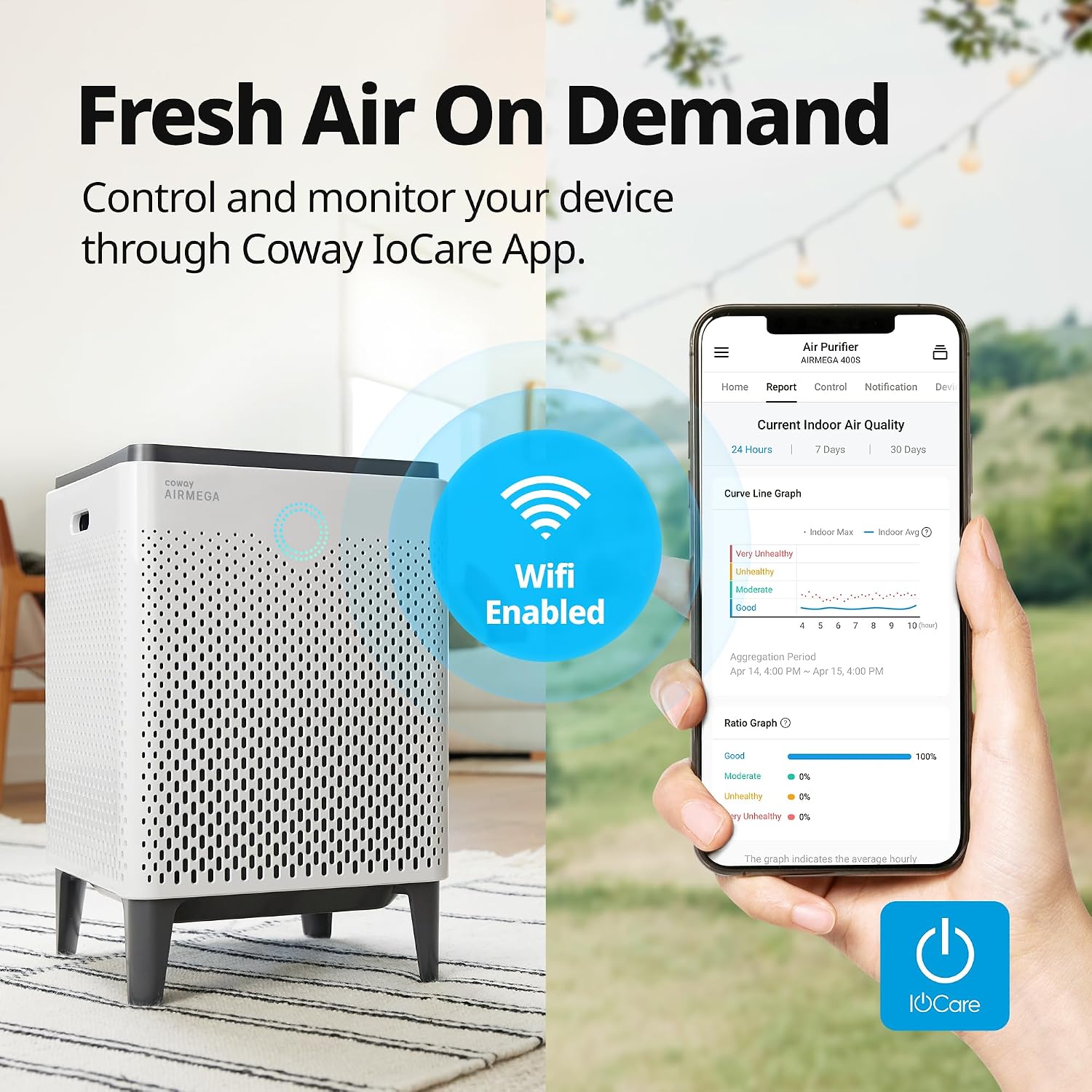
The Coway Airmega 400S is a compelling choice for a spacious living room, combined kitchen and dining area, or open-plan main floor. Its dual-filter design combines particle filtration with activated carbon, while its smart features help monitor indoor air quality.
As a contender for the best air purifier for large homes with pets, Coway lists coverage of up to 1,560 square feet at two air changes per hour—though that distinction matters, since advertised coverage is not equivalent to cleaning the air at a faster rate.
Home Air Purifier, Wifi-Enabled – Cowaymega
Why pet owners should consider it
A large shared space needs more airflow than a compact bedroom. The Airmega 400S is designed for this challenge, with two filter assemblies and smart modes that adjust operation based on air-quality readings.
Its washable pre-filters are useful for catching larger debris before it reaches the main filters. This can help manage maintenance in homes where pets shed regularly.
Key features
- Dual-filter configuration
- Particle filtration with activated carbon
- Washable pre-filters
- Smart modes and app connectivity
- Built-in air-quality monitoring
- Manufacturer-rated coverage of up to 1,560 square feet at two air changes per hour
Pros and cons
Pros
- Strong fit for large shared living spaces
- Combines particle filtration and activated carbon
- Smart features support convenient everyday use
- Washable pre-filters help with routine upkeep
Cons
- Requires considerable floor space
- Costs more than many smaller-room purifiers
- Its advertised coverage assumes a particular air-change rate
Best for: Pet owners who want one substantial purifier for a large, connected living area.
2. Medify MA-112 — Best for Extra-Large Rooms
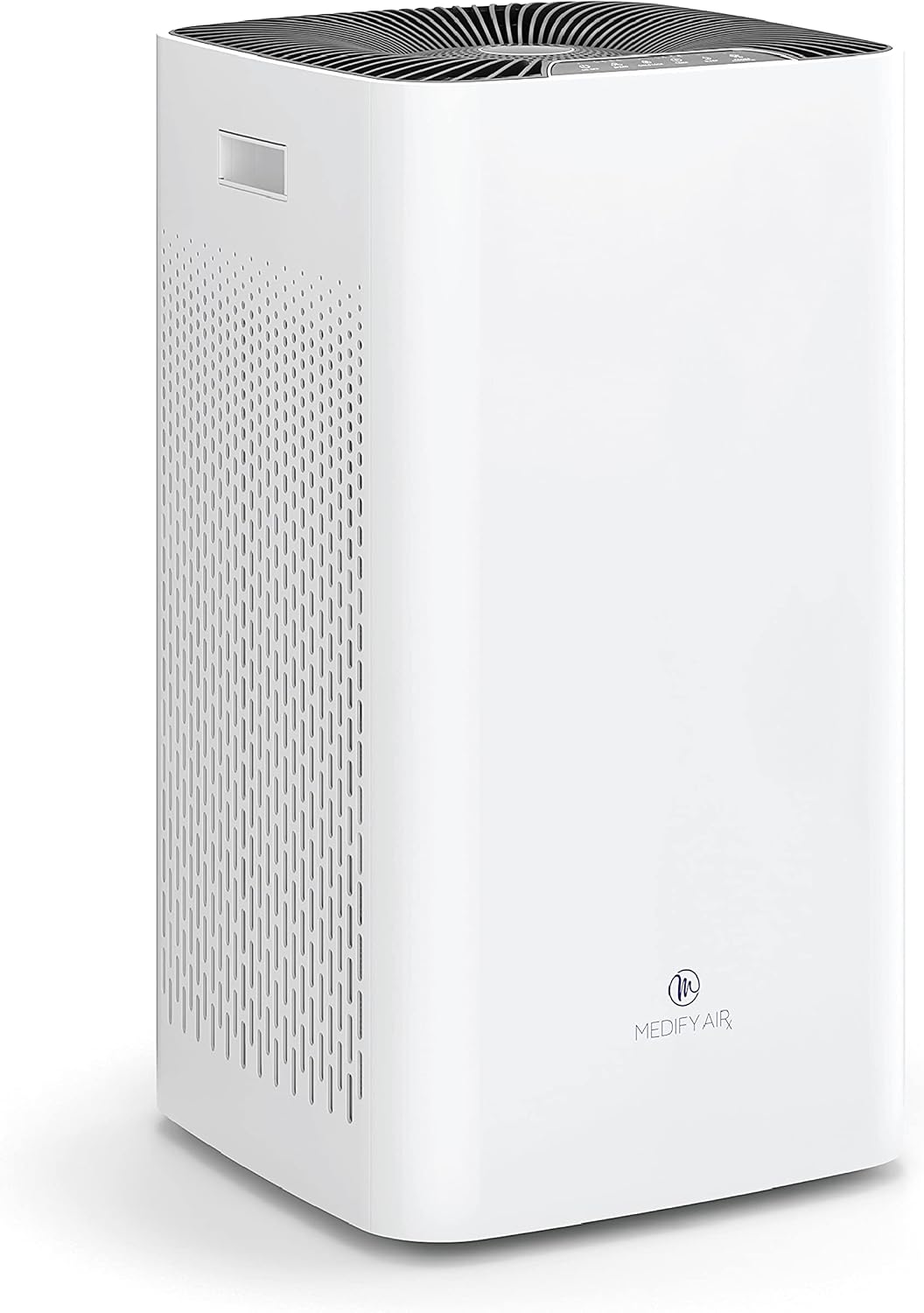
The Medify MA-112 is designed for spacious rooms where airflow is a priority. It combines a pre-filter, HEPA filtration, and an active-carbon composite filter.
When evaluating options for the best air purifier for large homes with pets, Medify lists a smoke clean-air delivery rate of 594 cubic feet per minute at its highest setting, though its coverage figures vary with the number of air changes per hour, making it important to match the specification to your needs.
Why pet owners should consider it
Homes with several pets can generate a steady stream of dander and other airborne particles. A high-output purifier can help circulate more air through its filters in a large room.
The MA-112 is particularly worth considering for large living rooms, finished basements, or open spaces where smaller models may need to run at their highest speeds.
Key features
- Pre-filter, HEPA, and active-carbon composite filtration
- Four fan speeds
- Sleep mode and filter indicator
- Child-lock controls
- Wheels for easier movement
- High clean-air delivery at maximum speed
Pros and cons
Pros
- Designed for large spaces
- High maximum clean-air delivery
- Includes particle and carbon filtration stages
- Wheels make repositioning easier
Cons
- Large and heavy compared with compact units
- Higher fan speeds produce more noise
- The manufacturer’s stated filter life is around 3,000 hours, so filter costs deserve attention
Best for: Owners of extra-large rooms who prioritize high airflow and particle filtration.
3. Alen BreatheSmart 75i — Best for Open-Plan Homes
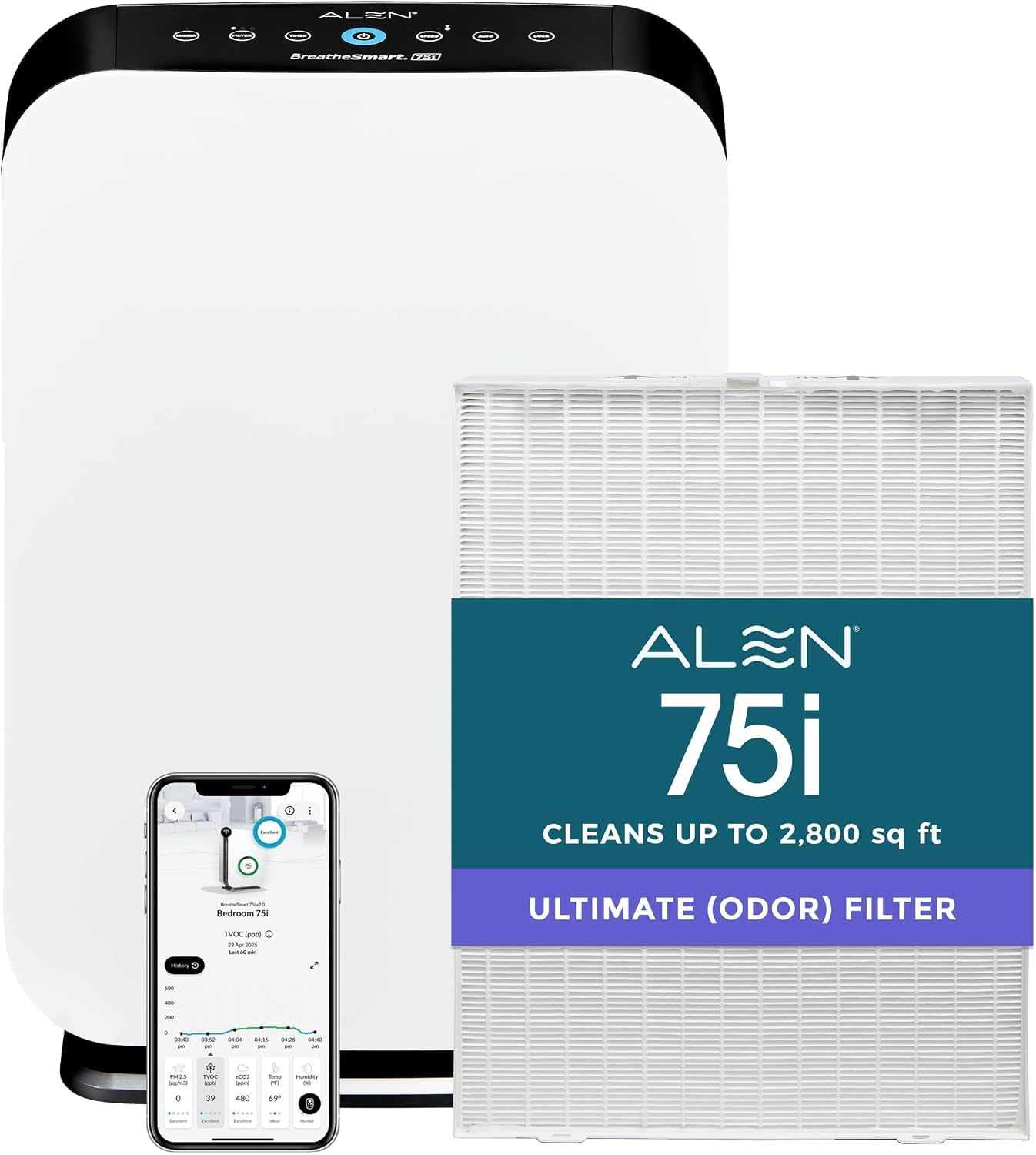
The Alen BreatheSmart 75i is built for large, open-concept spaces. Its tall, slim design can fit into a living room or kitchen without looking like commercial equipment.
As one of the best air purifier for large homes with pets choices, Alen offers several filter options for the 75i, including options aimed at different indoor air concerns, with the manufacturer listing coverage up to 1,300 square feet when the unit cleans the room’s air every 30 minutes on its highest setting.
Why pet owners should consider it
The 75i is a useful option for homes where the main living space connects to a kitchen, dining area, or hallway. Its room coverage and filter choices make it worth comparing with other large-room models.
For households concerned about both pet dander and odors, the selected filter configuration matters. Particle filtration and odor filtration serve different purposes, so choose the filter that matches your main concern.
Key features
- True HEPA H13 filtration
- Multiple filter options
- Automatic mode and particle-level sensing
- Designed for large and open-concept rooms
- Slim profile
- Manufacturer-listed coverage up to 1,300 square feet at the stated cleaning rate
Pros and cons
Pros
- Made for large shared spaces
- Offers different filter choices
- Slim design suits many home interiors
- Automatic mode supports continuous use
Cons
- Premium positioning may not suit every budget
- Filter choice affects which pollutants the unit targets
- Room coverage depends on the selected operating conditions
Best for: Pet owners with open-plan homes who want a large-room purifier with selectable filtration options.
4. Winix T810 — Best for Everyday Large-Room Air Cleaning
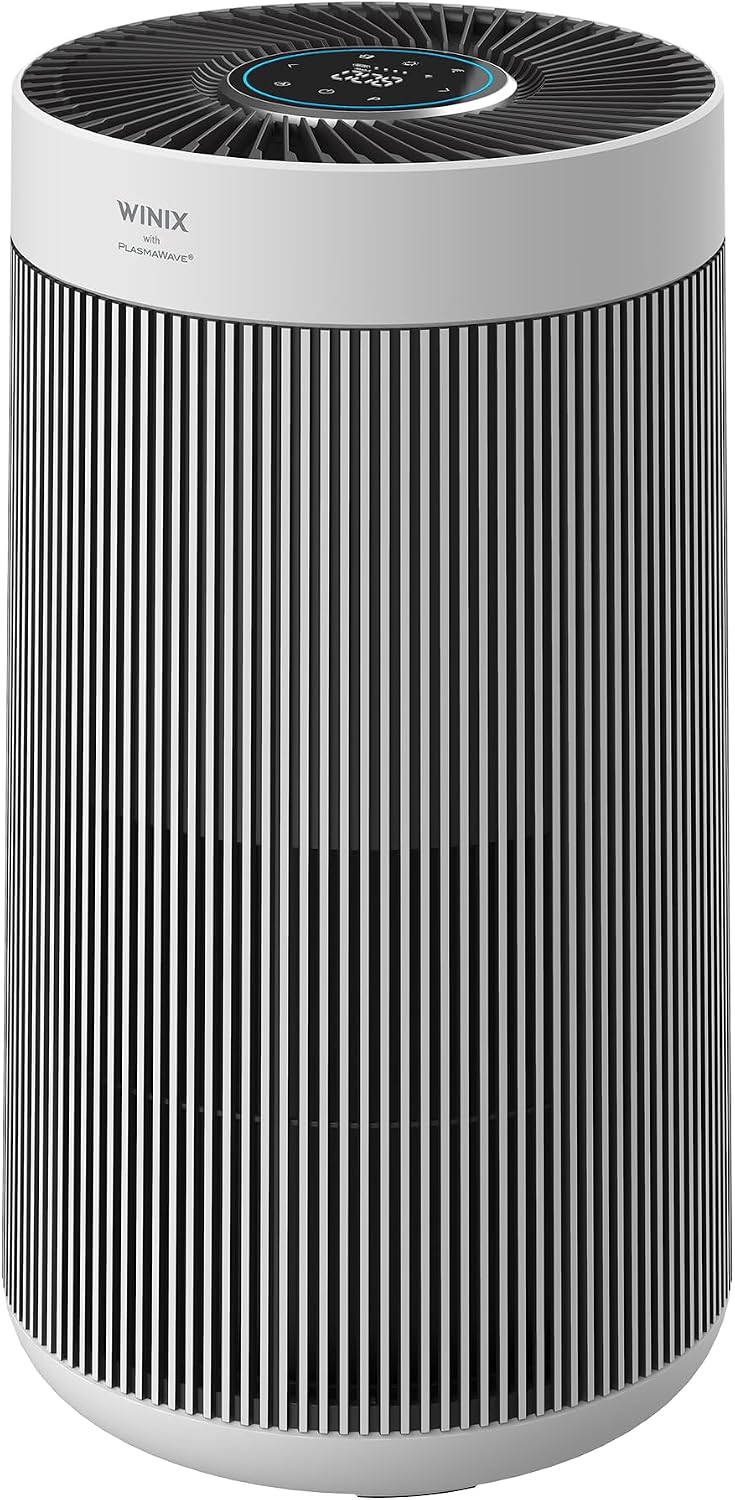
The Winix T810 is another model to consider for large living areas where everyday particle filtration is the priority. It combines HEPA filtration with a carbon filter and offers features designed for convenient household use.
For pet owners using the best air purifier for large homes with pets, this combination can help address airborne particles while the carbon stage targets certain odors; however, carbon-filter capacity varies between purifiers, so do not assume every carbon stage provides the same odor-control performance.
Why pet owners should consider it
A large shared room can collect dander from sofas, rugs, pet beds, and other frequently used areas. Consistent filtration can help reduce the particles circulating through that space.
The T810 is worth comparing with the more powerful models above if you want a large-room option without automatically moving to the most expensive category.
Key features to compare
- HEPA particle filtration
- Carbon filtration stage
- Multiple fan settings
- Automatic operation and air-quality features, depending on the specific version
- Manufacturer-rated room coverage
Pros and cons
Pros
- Combines particle filtration and a carbon stage
- Designed for everyday residential use
- Worth comparing for large living areas
- Offers an alternative to premium dual-filter systems
Cons
- Exact coverage and features depend on the product version
- Carbon filtration may be less substantial than in specialized odor-control units
- Check room-size ratings at the relevant air-change rate
Best for: Pet owners looking for an everyday purifier for a large living area.
5. Blueair Blue Max 3350i — Best for a Modern, Spacious Home

The Blueair Blue Max 3350i is worth comparing if you want a modern-looking purifier for a spacious home. Its design focuses on particle filtration and room-air circulation, making it a candidate for everyday dust and airborne dander management.
As with any device marketed as the best air purifier for large homes with pets, the key question is whether its clean-air delivery can keep up with your room’s size, so you should look at the coverage rating and the conditions behind it rather than relying on the phrase “large room” alone.
Why pet owners should consider it
A purifier in a shared living space needs to operate regularly without becoming difficult to live with. A design that fits the room and is straightforward to maintain can make consistent use easier.
Before choosing this model, compare its stated coverage, filter replacement options, and controls with the other picks in this guide.
Key features to compare
- Particle filtration for everyday indoor air cleaning
- Room coverage suited to your space
- Filter access and replacement requirements
- Fan settings and noise
- Design and placement options
Pros and cons
Pros
- Modern design for residential spaces
- Worth considering for everyday particle filtration
- Offers another option to compare with larger traditional units
Cons
- Match the exact model’s coverage to your room
- Check the filter configuration for your specific needs
- May not be the best choice if substantial gas and odor filtration is your primary priority
Best for: Pet owners who want a contemporary purifier and have confirmed that its capacity fits their room.
How to Choose the Right Air Purifier for a Large Home With Pets
The most powerful purifier is not automatically the best choice for every home. You need a model that suits your room layout, pet-related air-quality concerns, and maintenance preferences.
1. Measure the actual space
Measure the room’s length and width, then multiply them to calculate the square footage. For an open-plan space, include the connected areas that share air, as choosing the best air purifier for large homes with pets requires accounting for all continuous airflow. A living room that opens directly into a kitchen and dining area may need more capacity than its individual room dimensions suggest.
Also consider ceiling height. Most standard coverage claims assume an eight-foot ceiling.
2. Understand air changes per hour
Air changes per hour (ACH) describes how often a purifier can process an amount of air equivalent to the room’s volume in one hour.
Even when shopping for the best air purifier for large homes with pets, a model rated for a large area at one air change per hour may not provide the same cleaning intensity as one operating at four or five air changes per hour; therefore, especially where dander or allergies are concerns, compare coverage figures at a higher air-change rate rather than choosing solely by the largest advertised square footage.
3. Prioritize particle filtration for dander
Pet dander consists of tiny particles that can become airborne and circulate around the home. HEPA filtration is designed to capture airborne particles, making it an important feature for pet owners.
If allergies are your main concern, read our detailed guide to the best air purifier for pet dander and allergies. It explains particle filtration and other features relevant to allergy-focused households.
4. Choose a useful pre-filter for shedding
A pre-filter catches larger debris before it reaches the main filter. This can be useful in homes with long-haired dogs, cats, or multiple shedding pets.
However, air purifiers are not substitutes for grooming or vacuuming. Much of the visible fur settles on floors and furniture before it ever reaches the purifier.
For models focused on shedding and visible fur, explore our guide to the best air purifier for pet hair.
5. Consider activated carbon for odors
HEPA filtration captures particles, but it does not remove every gas or odor compound. Activated carbon can adsorb certain airborne compounds, depending on the type and amount of carbon used.
If lingering pet smells are a major issue, compare the carbon filtration in each model carefully. Our guide to the best air purifier for pet odors focuses specifically on odor-control needs.
6. Check replacement-filter costs
A purifier’s purchase price is only part of its long-term cost. You may need to replace filters regularly, particularly when the unit runs for long periods or handles heavy particle loads.
Compare replacement-filter prices, expected filter life, and the availability of compatible filters before buying.
7. Consider noise and energy use
A powerful purifier may need to run at a high fan speed to reach its maximum clean-air delivery. That can increase noise and energy use.
Consider whether you can comfortably run the unit at a useful speed throughout the day. An oversized model that stays on its lowest setting may be less effective than expected if its airflow is too low for the space.
Should You Use One Large Air Purifier or Several Smaller Ones?
The answer depends on the layout of your home.
One large purifier may work well when:
- Your living room, dining area, and kitchen form one connected space.
- The purifier can sit in a central, unobstructed location.
- The unit provides sufficient clean-air delivery for the combined area.
- Most pet activity occurs in that shared space.
Multiple purifiers may be better when:
- Bedrooms are separated by closed doors.
- Your home has several floors.
- Pets spend time in different rooms.
- Hallways, walls, or furniture restrict airflow.
- You want to treat a bedroom separately from the main living area.
Air does not circulate equally through every room. A powerful purifier in the living room cannot be expected to clean a closed bedroom as effectively as a unit placed inside that bedroom.
For a multi-room home, consider one appropriately sized purifier in the main shared area and smaller units where needed. Choose capacity based on each room’s size and how you use the space.
Where Should You Place an Air Purifier in a Large Home?
Placement affects how much air the unit can draw through its filters.
- Living room: Position the purifier where air can circulate around it, away from large obstructions.
- Open-plan kitchen and dining area: Choose a location that allows airflow through the connected space.
- Pet sleeping area: Consider a separate purifier if your pet spends long periods in a bedroom or another enclosed room.
- Multi-story home: Treat each floor as a separate air-cleaning zone when airflow between floors is limited.
Keep the intake and outlet clear. Follow the manufacturer’s clearance recommendations, and avoid hiding the purifier behind furniture or curtains.
How to Keep a Large Home Fresher With Pets
A purifier works best when you reduce the source of airborne particles and odors.
Groom pets regularly
Brushing can remove loose fur before it spreads around the home. Choose grooming tools suited to your pet’s coat and grooming needs.
Vacuum floors and upholstery
Use a vacuum suited to your flooring and upholstery. Focus on rugs, sofas, pet beds, and other areas where fur and dander collect.
Wash pet bedding
Pet beds and blankets can accumulate dander, oils, and odor-causing residue. Wash them according to their care instructions and dry them thoroughly.
Clean odor sources directly
Litter boxes, accidents, damp bedding, and dirty feeding areas need direct cleaning. A purifier cannot remove residue from a carpet or eliminate the source of a persistent smell.
For an all-around overview of choosing a purifier for a pet household, start with our main guide to the best air purifiers for pets.
Frequently Asked Questions
What is the best air purifier for a large home with pets?
The best choice depends on your room size and priorities. The Coway Airmega 400S is a strong candidate for large shared living spaces, while the Medify MA-112 suits buyers prioritizing high clean-air delivery in extra-large rooms. The Alen BreatheSmart 75i is another option for open-plan homes.
How big should an air purifier be for a home with pets?
Choose a purifier based on the area it can clean at a useful air-change rate. Do not rely only on the largest square-footage claim. Room dimensions, ceiling height, connected spaces, and the amount of air the unit delivers all matter.
Can one air purifier clean an entire house?
Sometimes, a single unit can serve a large connected space. It is less effective at treating multiple rooms separated by closed doors, walls, or floors. Larger homes often benefit from separate units in the rooms where people and pets spend the most time.
Do air purifiers help with pet allergies?
A purifier with suitable particle filtration can reduce airborne particles, including pet dander, as air passes through the filter. It does not eliminate every allergen in a home. Cleaning, washing bedding, and reducing the buildup of dander remain important.
Are air purifiers effective against pet hair?
They can capture some airborne fur, but much of the visible hair settles before reaching the machine. A pre-filter can help catch larger debris, while regular grooming and vacuuming remain essential for managing shedding.
Should I leave my air purifier running all day?
Continuous operation can help maintain more consistent filtration. Choose a setting that provides suitable airflow without creating unacceptable noise, and follow the manufacturer’s instructions for maintenance and use.
Do large-room air purifiers remove pet odors?
Models with activated carbon can help reduce certain airborne odor compounds. Performance depends on the amount and type of carbon, the compounds involved, and airflow. Cleaning the source of the odor is still necessary.
Final Verdict: Which Large-Room Air Purifier Should You Buy?
The right choice comes down to room size, airflow, particle filtration, and the specific challenges pets create in your home.
- Choose the Coway Airmega 400S for a large shared living area and smart air-quality features.
- Choose the Medify MA-112 if high clean-air delivery is your priority.
- Consider the Alen BreatheSmart 75i for an open-plan home and selectable filter options.
- Compare the Winix T810 for everyday large-room filtration.
- Consider the Blueair Blue Max 3350i if you prefer a modern design and its verified capacity suits your space.
Before purchasing, match the exact model’s coverage to your room and compare replacement-filter costs. A purifier that fits your home and runs consistently is more useful than one selected by its maximum square-footage claim alone.
If you are still comparing options for your household, our complete guide to the best air purifiers for pets covers the broader category. Use the pet hair guide, dander and allergies guide, and pet odor guide to narrow your choice further.