

Thinning hair and loss of skin firmness can make choosing an aesthetic treatment surprisingly difficult. Traditional treatments include injectables and hair transplants, while regenerative options include platelet-rich plasma (PRP), exosomes, growth factors, and stem cell-based formulations.
These treatments are often discussed together, but they work differently and address different problems. For example, a technique that restores facial volume may not improve skin quality. Similarly, a treatment that promotes existing hair follicles cannot replace follicles that have already been lost.
The key to an informed decision is knowing what a regenerative treatment contains, what it can realistically do, and whether its results have been assessed.
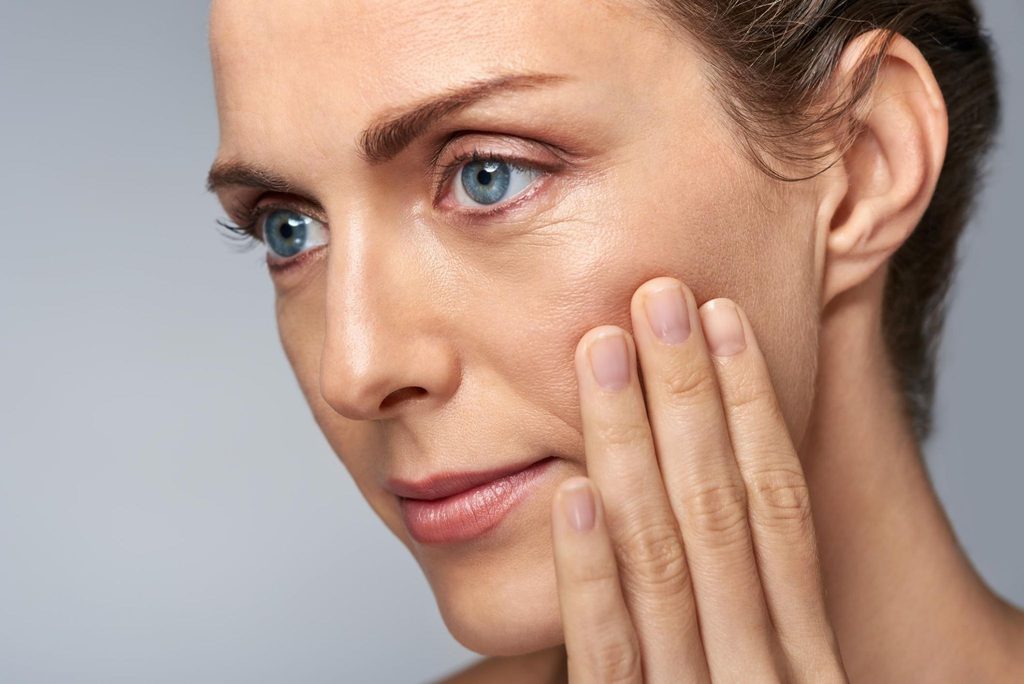
What is Regenerative Aesthetics & How Does It Work?
Regenerative aesthetics aims to enhance the biological environment for healthy skin and hair. These treatments aim to improve tissue quality, support recovery, and support follicular function rather than simply changing appearance through volume replacement or tissue repositioning.
There are several technologies that fit this category.
Platelet-rich plasma uses material prepared from the patient’s own blood. Polynucleotides and PDRN are purified DNA-derived substances. Biostimulators stimulate collagen production. Exosomes are tiny extracellular vesicles that carry proteins, lipids, and other stuff between cells. Other means of cell-to-cell communication include growth factors and cytokines.
Another approach is to use a stem-cell secretome, a more expansive set of signalling molecules secreted by cultured cells. These products do not contain live stem cells.
This distinction matters because products labelled as regenerative are not necessarily equivalent in composition or biological activity.
Which is more important, skin firmness or hair density?
The first practical consideration is deciding what it is that you really want to improve.
Regenerative treatments can help aging skin regain elasticity, firmness, texture, radiance, and recovery. A person with declining quality of skin is therefore likely to have different treatment priorities as compared to a person seeking to replace lost facial volume.
Botox and other injectables relax the muscles that they target, and fillers add volume back. Surgery can tighten loose tissue. Regenerative approaches tend to focus on incremental improvements in tissue quality rather than reproducing those effects.
Hair thinning, on the other hand, also deserves equal consideration. Regenerative treatments can reduce shedding, enhance strand thickness, or support density in areas with viable hair follicles. Hair transplantation, conversely, moves working follicles to areas where they have disappeared.
This distinction helps to set realistic expectations. Regenerative care can be particularly effective for someone who wants to improve existing hair or skin, but it shouldn’t necessarily be viewed as a replacement for every conventional procedure.
Why Does the Source of the Regenerative Ingredients Matter?
Two products may have similar descriptions but contain very different biological materials.
Formulation based on a single growth factor or synthetic peptide that provides a selected signal. Conditioned media from cell sources can contain a broader network of naturally occurring growth factors, cytokines, and exosomal proteins.
However, that added complexity doesn’t necessarily mean all cell-derived formulations are better. It does mean a broad secretome can’t be rated the same as a product with only a few isolated ingredients. So it is worth examining the source and manufacturing process.
For example, Calecim hair serum from Calecim Professional uses a proprietary ingredient called PTT-6, which is derived from conditioned media produced by mesenchymal stem cells from red deer umbilical cord lining.
One umbilical cord can produce billions of cord-lining cells, giving a substantial population of cells for making conditioned media, according to a study published in Cell Transplantation.
Consistency also depends on the manufacturing approach. Unlike patient-derived PRP, which varies with the biological material collected from each individual, PTT-6 is produced from a defined cell source under controlled conditions.
So consumers need to look beyond ingredient percentages. High concentration doesn’t necessarily mean biological activity, especially among formulations from different sources.
What clinical evidence should guide your choice?
Scientific words may impress, but the most useful evidence is about the particular treatment you are considering.
For example, research into the category of exosomes does not prove that all products containing exosomes will produce similar results.
A more meaningful evaluation considers the specific formulation, how it was administered, what concern was treated, and what outcomes were measured.
PTT-6 and its base conditioned media have been studied in preclinical and clinical studies for hair and skin. In the skin study, 40 participants were randomized to receive a cream containing PTT-6 in a double-blind, split-face design. Additional studies with conditioned media from red deer cord-lining demonstrated enhanced elastin and hyaluronic-acid production in cultured eyelid fibroblasts with a minor topical clinical component.
These studies provide evidence that is specific to Calecim’s formulation, not just general claims about regenerative ingredients.
For hair, a 12-week prospective, open-label case series found hair counts approximately 14% higher and the width of new and existing hairs increased 16%.
The key question in comparing treatments is whether the evidence relates to the specific product, method of application, and concern you want to address.
How Do You Know if a Hair Treatment is Good for Your Thinning Type?
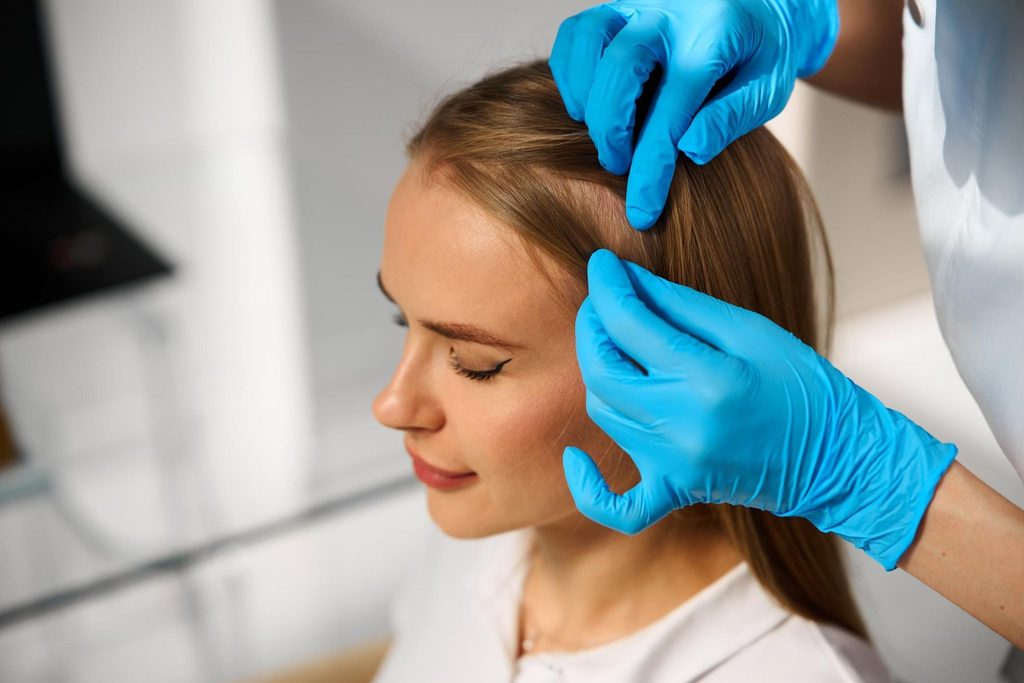
Hair loss is not always due the the same underlying cause, and regenerative treatments have not been studied the same way for all causes of hair loss.
PTT-6 has been studied for early androgenetic alopecia, menopausal or hormone-related thinning, and certain forms of telogen effluvium.
For example, one study followed women aged 37 to 54 who had menopausal or early androgenetic hair loss. The treatment consisted of a microneedling session in-clinic and 5 weeks of weekly home microneedling and application of PTT-6 serum.
After 6 weeks, 9 of 10 participants reported improvements such as reduced shedding, greater thickness, or increased volume. Further improvement at 12 weeks. These results are promising for selected types of thinning, particularly when viable follicles exist.
Before starting a cosmetic treatment, sudden, patchy, painful, or rapidly progressive hair loss should be medically evaluated. This example illustrates how important it is to determine the type of hair loss to choose a proper regenerative approach.
Can you get meaningful results from home regenerative treatments?

Convenience can be a factor in the choice of therapy, particularly when the protocol requires multiple applications.
Some regenerative hair treatments include professional sessions and ongoing home care. The PTT-6 hair case series had participants undergo a weekly treatment protocol for 12 weeks involving formulation and 0.5-millimeter microneedling at home and returning to the clinic for assessments.
Objective measurements showed increases in follicular units and total hair counts, indicating improvements were observed with a home administration protocol.
You should evaluate the purpose, duration, application requirements, and evidence base for a treatment plan. A protocol that suits a person’s circumstances may be more practical than one that can be followed consistently.
How do I choose the best regenerative treatment?
With regenerative treatments, start with a clear concern.
If you have loose skin, determine whether the goal is to improve the quality of the skin or to achieve an effect that requires volume replacement or tissue repositioning. If your hair is thinning, learn what type of hair loss you have and if the remaining follicles can be supported.
Next, consider the formulation, biological source, consistency of manufacturing, and research on the actual product.
Those interested in cell-derived approaches may review the regenerative treatment considerations presented by Calecim Professional to better understand the differences between available technologies.
Ultimately, the best treatment may not be the newest or most complex. It’s the one whose purpose of use, evidence, and application protocol best fit the concern being addressed.
Want to learn more about choosing the right regenerative treatment for thinning hair and loose skin?
READ THE FULL GUIDE →

