
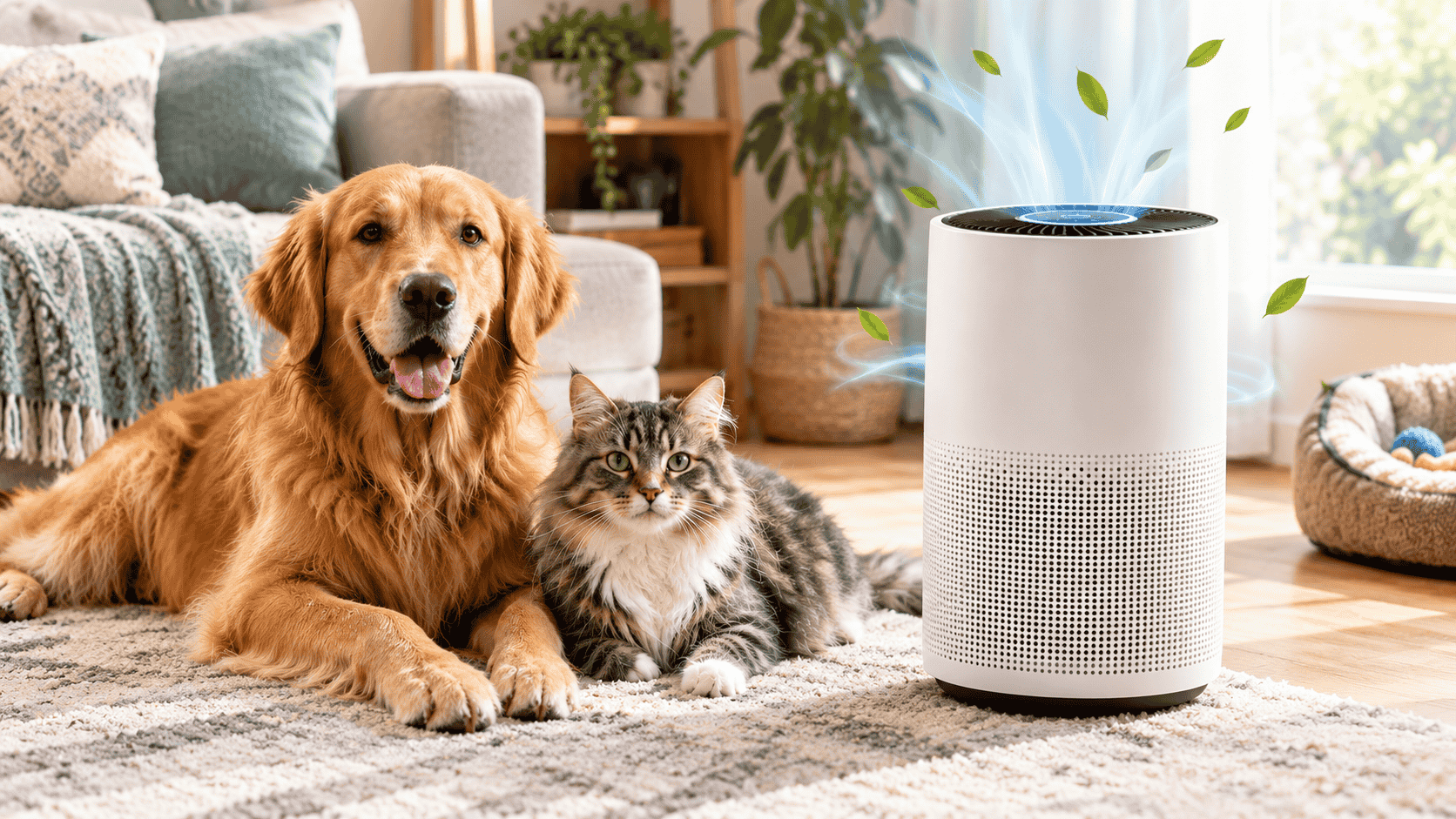
Pet odors can make an otherwise clean home smell unpleasant. Dog beds hold musty smells, litter boxes release persistent odors, and damp fur can leave a lingering scent. Opening a window may help temporarily, but it rarely solves every odor problem. The best air purifier for pet odors uses filtration designed to address airborne odor compounds. Models with substantial activated carbon can help reduce certain smells. HEPA filtration serves a different purpose by capturing airborne particles, including pet dander.
Choosing the right purifier depends on the source of the smell, your room size, and the filter technology inside the machine. A unit designed primarily for airborne particles may not handle persistent odors as effectively as one with a substantial carbon filter.
This guide compares five air purifiers suited to different odor-control needs. You will also learn which features matter, where to place your purifier, and how to get better results without relying on filtration alone.
Quick Comparison: Best Air Purifiers for Pet Odors
| Air purifier | Best for | Main strength |
|---|---|---|
| Austin Air HealthMate | General household odors | Combined particle and gas filtration |
| Airpura R600 | Homes with persistent odors | Carbon-focused filtration |
| AllerAir AirMedic Pro 5 MCS | Odor-sensitive households | Deep activated-carbon filtration options |
| Oransi TrueCarbon 270C | Gases, fumes, and odors | Dedicated carbon filtration |
| Airpura C600 | Stronger odor-control needs | Carbon-focused design |
These models emphasize different filtration needs. Compare their filter configurations and room coverage before choosing one.
What Makes an Air Purifier Effective Against Pet Odors?
Not every air purifier handles smells in the same way. Understanding the difference between particle filtration and gas filtration helps you choose the right model.
Activated carbon helps capture odor compounds
Activated carbon contains a porous structure that adsorbs certain gases and odor-causing compounds. The process allows compounds to adhere to the carbon’s surface.
For pet owners, this technology can help address some airborne smells from litter areas, pet bedding, and other household sources.
However, carbon filters differ considerably. Their effectiveness depends on factors such as carbon quantity, media type, airflow, and the compounds involved. A thin carbon-coated sheet may offer less odor-control capacity than a filter containing a substantial amount of carbon.
HEPA filtration captures airborne particles
HEPA filtration targets particles rather than gases. It can capture airborne pet dander and other fine particles that circulate through a room.
That distinction matters because pet-related air-quality problems often involve both particles and smells. A purifier with particle filtration and a substantial carbon filter may address a broader range of concerns than a basic particle-focused unit.
If your main concern is airborne fur rather than lingering smells, read our guide to the best air purifier for pet hair. It focuses on pre-filters, visible fur, and the practical challenges of shedding.
Air circulation affects odor control
An air purifier must draw room air through its filters to treat it. A powerful filter cannot do much for odors that remain outside the unit’s effective airflow.
Room size, purifier placement, fan speed, and air circulation all influence performance. A suitable unit should move enough air for the space where you intend to use it.
Cleaning remains essential
An air purifier cannot remove the underlying source of a persistent smell. Dirty litter, damp bedding, accidents, and residue on floors can continue releasing odors.
Remove the source first, then use filtration to help manage what remains in the air.
1. Austin Air HealthMate — Best Overall for General Pet Odors
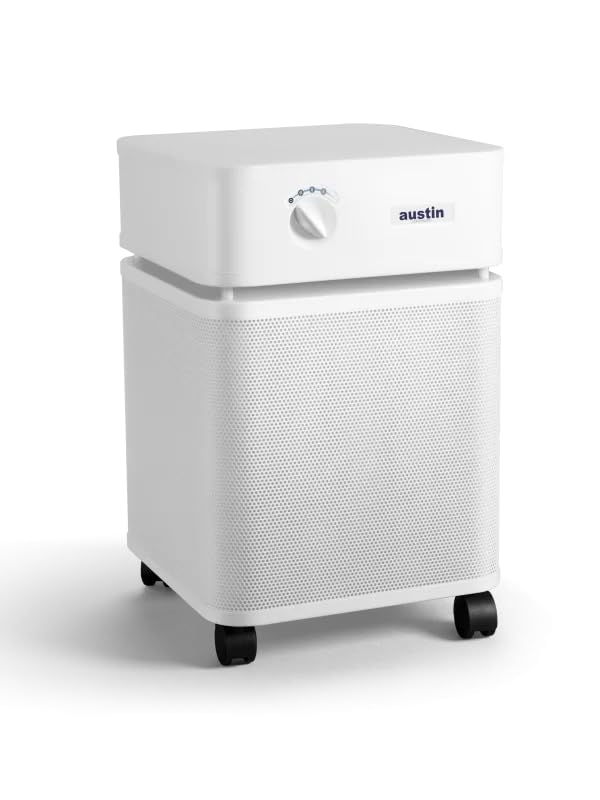
The Austin Air HealthMate is a strong option for households dealing with several indoor air-quality concerns at once. Its filtration system combines particle filtration with a substantial bed of activated carbon and other media.
This combination makes it worth considering when pets contribute to a mix of airborne particles and household odors.
Why it stands out
The HealthMate uses a multi-stage filtration system designed to address particles and certain airborne gases. Its carbon and mineral media help distinguish it from purifiers that rely mainly on a particle filter.
For homes where pet smells mix with everyday cooking odors and other indoor pollutants, that broader filtration approach can be useful.
Key features
- Multi-stage filtration system
- HEPA filtration for airborne particles
- Activated carbon and mineral media for certain gases and odors
- Freestanding design for everyday home use
- Suitable for households seeking combined particle and gas filtration
Pros and cons
Pros
- Combines particle and gas filtration
- Contains a substantial carbon-based filtration stage
- Useful for more than one indoor air-quality concern
Cons
- Larger footprint than many compact purifiers
- Replacement filters can represent a significant long-term expense
- Requires suitable placement for effective airflow
Best for: Pet owners who want one purifier to address airborne particles and a range of household odors.
2. Airpura R600 — Best for Homes With Persistent Odors
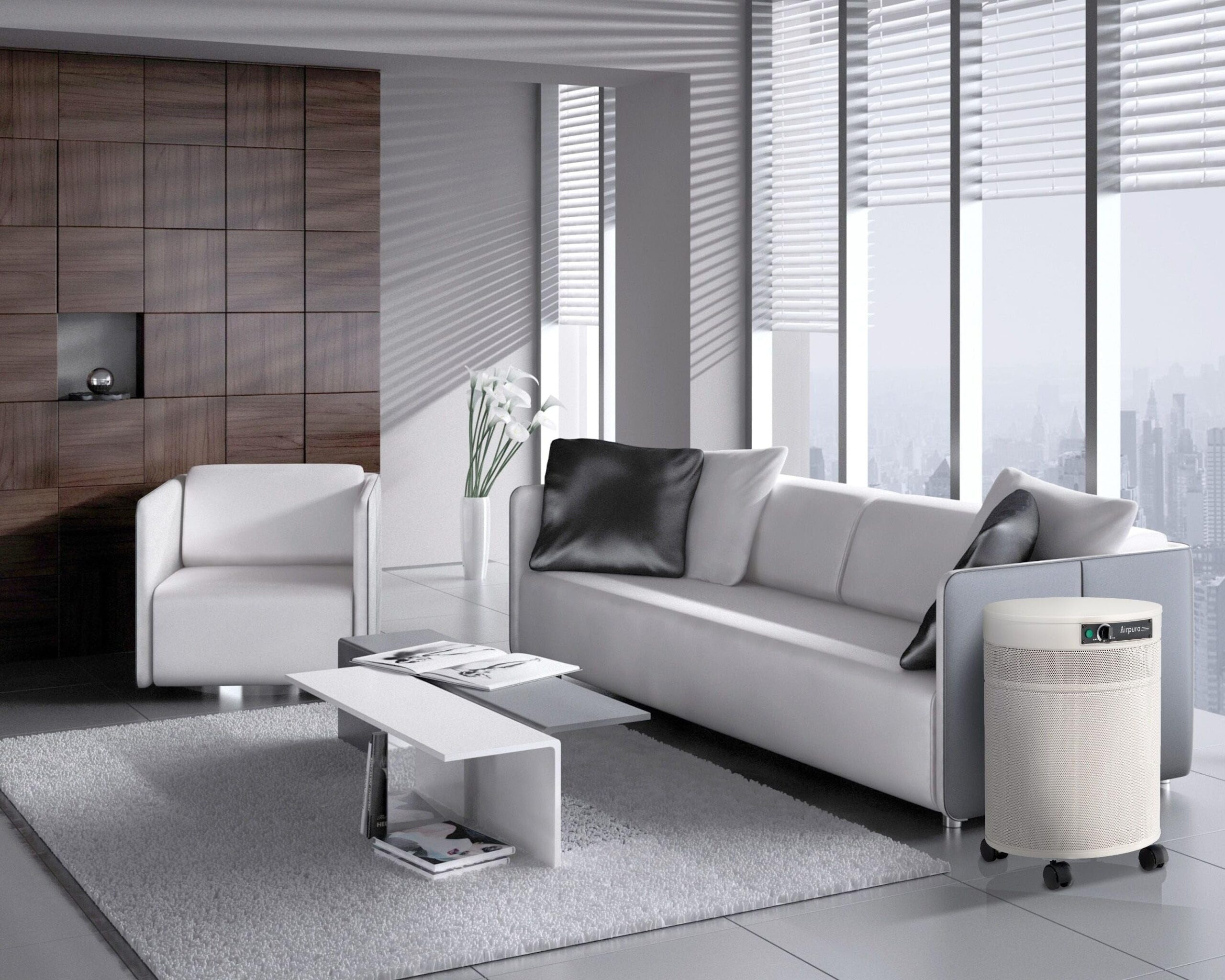
The Airpura R600 is worth considering when odor filtration is a major priority. Its design emphasizes gas and odor removal alongside particle filtration, making it relevant to homes where pet smells linger despite regular cleaning.
The key consideration is the filtration configuration. For odor control, carbon capacity and the type of carbon media matter more than a product’s general claim to improve indoor air quality.
Why it stands out
A carbon-focused purifier can be useful when the primary concern is the smell carried by airborne compounds rather than visible pet hair.
The R600 belongs on the shortlist for buyers who want a dedicated, full-size purifier and are prepared to consider the space, cost, and filter maintenance involved.
Key features to consider
- Carbon-focused filtration design
- Particle filtration options depending on configuration
- Full-size housing for residential use
- Intended for households with demanding filtration needs
Pros and cons
Pros
- Designed with gas and odor filtration in mind
- A potential fit for persistent household smells
- More appropriate for odor-focused evaluation than a basic particle-only purifier
Cons
- Requires floor space
- Filter configuration matters when comparing models
- Ongoing filter replacement costs deserve attention
Best for: Households where persistent pet odors are a leading concern and a substantial carbon filter is a priority.
3. AllerAir AirMedic Pro 5 MCS — Best for Odor-Sensitive Households

The AllerAir AirMedic Pro 5 MCS is designed for people who pay close attention to indoor air quality and airborne chemical sensitivities. Its filtration options include a deep activated-carbon canister and particle filtration.
For pet owners, the appeal is the emphasis on carbon media rather than a thin odor-control layer.
Different carbon blends target different types of compounds. That makes filter selection an important part of choosing a unit for a specific odor problem.
Why it stands out
The AirMedic Pro 5 MCS offers a carbon-focused approach for households that want to address certain gases and odor compounds alongside airborne particles.
Its deeper carbon configuration is particularly relevant when evaluating odor-control capacity. Still, no single carbon blend captures every possible compound equally well.
Key features
- Deep activated-carbon filtration
- Particle filtration, including HEPA options
- Carbon media choices for different filtration needs
- Full-size design for residential spaces
Pros and cons
Pros
- Emphasizes carbon capacity
- Offers filtration choices for different indoor air concerns
- Can address certain odors and airborne particles in one system
Cons
- Selecting the appropriate carbon configuration requires care
- Larger housing needs a suitable location
- Filter replacement can be more involved than with compact units
Best for: Pet owners who want a customizable, carbon-focused purifier and have specific concerns about persistent indoor odors.
4. Oransi TrueCarbon 270C — Best for Carbon-Focused Odor Filtration

The Oransi TrueCarbon 270C takes a more specialized approach than a typical all-purpose air purifier. Its design focuses on activated-carbon filtration for gases, fumes, and odors.
That focus makes it relevant to pet owners who want to target smells rather than primarily remove visible fur or airborne dander.
Why it stands out
A dedicated carbon-focused purifier can fill a different role from a conventional HEPA model. It prioritizes compounds that may pass through a particle filter.
This distinction is important when comparing purifiers for litter-box smells, dog odors, and other persistent household scents.
Key features
- Activated-carbon filtration designed for odors and fumes
- Focus on gas-phase filtration
- Different purpose from a conventional particle-focused purifier
- Suitable for buyers prioritizing odor management
Pros and cons
Pros
- Specialized focus on gases and odors
- Useful for evaluating odor filtration separately from particle filtration
- Offers an alternative to general-purpose purifiers
Cons
- A carbon-focused design may not replace a dedicated HEPA purifier for particle concerns
- Results depend on the compounds involved and filter capacity
- Buyers should match the unit to their primary indoor air-quality goal
Best for: Pet owners whose main priority is airborne odors and fumes rather than a combined hair, dander, and odor solution.
5. AIRDOCTOR AD4000 Air Purifier — Best Alternative for Carbon-Focused Pet Odor Control
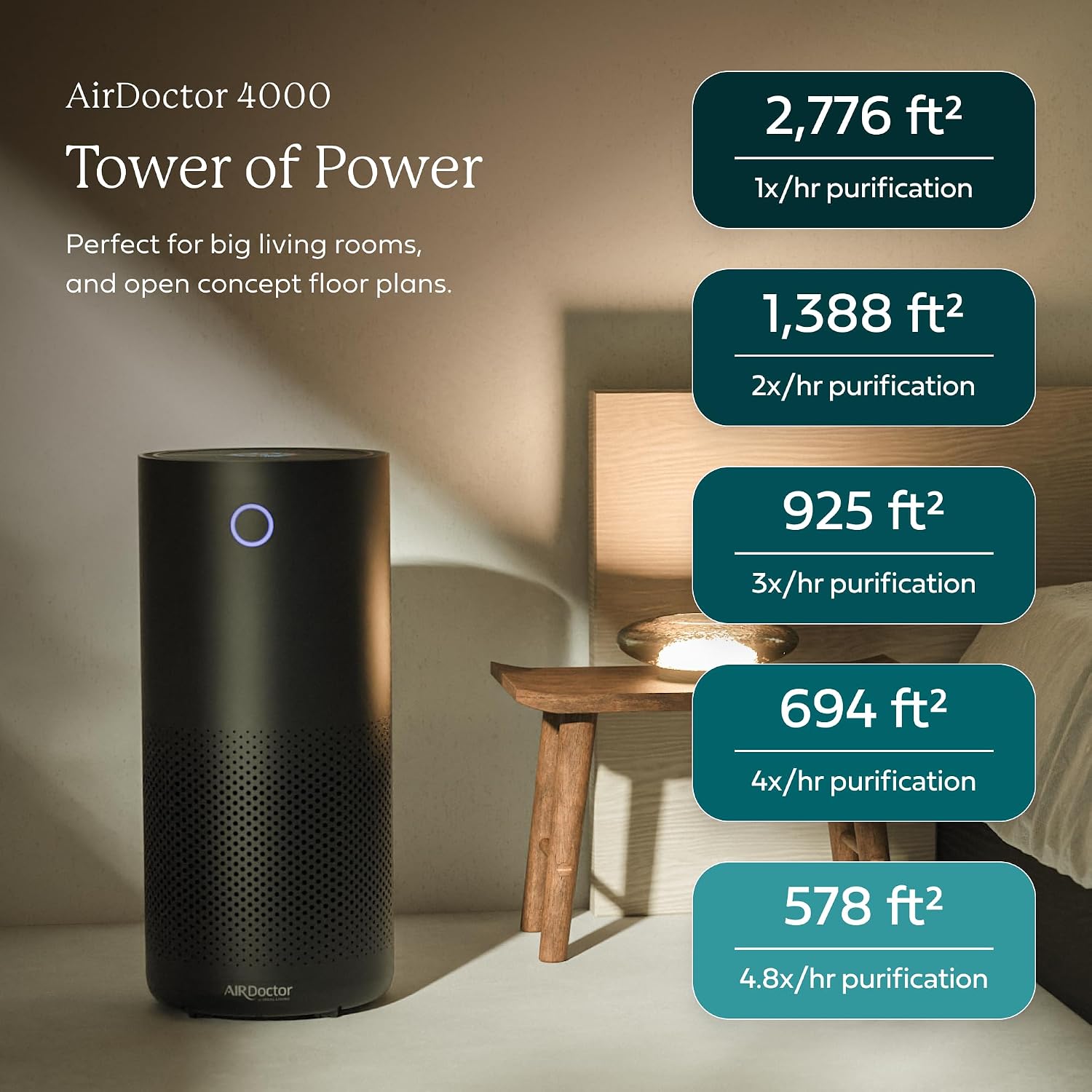
The AIRDOCTOR AD4000 Air Purifier is another model to consider when carbon filtration is central to your buying decision. It is particularly relevant for shoppers comparing dedicated odor-control systems rather than looking only at conventional HEPA purifiers.
Its suitability depends on the filter configuration and the kind of odor you want to address.
Why it stands out
Pet odors can involve different compounds from different sources. A persistent litter-box smell, damp dog bedding, and an odor caused by a cleaning product may require different approaches.
A carbon-focused system gives buyers another option when ordinary particle filtration is not their primary goal.
Before selecting this model, compare its carbon media, filtration configuration, airflow, and maintenance requirements with the other carbon-focused options in this guide.
Key features to compare
- Carbon filtration configuration
- Intended use for gas and odor concerns
- Particle filtration capabilities of the selected setup
- Filter replacement requirements
- Space and airflow requirements
Pros and cons
Pros
- Worth considering for carbon-focused filtration needs
- Provides another option for comparing odor-control systems
- Can suit buyers whose priorities differ from those seeking a compact HEPA purifier
Cons
- The selected filter configuration is important
- May be more specialized than a typical all-purpose air purifier
- Requires a comparison of long-term filter costs and maintenance
Best for: Buyers who want to compare another carbon-focused Airpura system for persistent household odors.
How to Choose the Best Air Purifier for Pet Odors
The right purifier depends on your home, the type of smell, and whether you also need to reduce airborne particles.
1. Identify the main source of the odor
Start by identifying where the smell originates.
- Dog odor: Wash bedding, clean surfaces, and remove moisture or residue before relying on filtration.
- Cat litter odor: Scoop litter regularly, clean the surrounding area, and position the purifier where air can circulate without disturbing the litter.
- Damp pet bedding: Wash and dry fabrics thoroughly. A purifier cannot replace proper drying.
- General pet-room smells: Consider a purifier that combines particle filtration with substantial activated carbon.
2. Prioritize carbon capacity for odor control
For persistent smells, examine the carbon filter rather than relying on a broad claim that the unit reduces odors.
Look at the amount of carbon, the type of media, and whether the system is designed for gas filtration. A thin carbon-coated pre-filter and a deep carbon bed are not equivalent.
3. Consider HEPA filtration for airborne particles
If your household also struggles with airborne dander, a purifier with appropriate particle filtration may be a better fit.
Our guide to the best air purifier for pet dander and allergies explains how particle filtration, room sizing, and airflow affect this particular need.
4. Match the purifier to your room
Room coverage and airflow affect how quickly a purifier can treat the air. A unit intended for a small bedroom may not be suitable for a large living room.
Check the manufacturer’s stated room coverage and airflow specifications. For open-plan homes, consider how walls, furniture, and distance affect circulation.
5. Factor in filter maintenance
Filters collect particles and eventually require maintenance or replacement. Carbon media also has a finite capacity for adsorbing compounds.
Compare replacement-filter costs and maintenance requirements before making your choice. A purifier is only useful over the long term if you can maintain it properly.
6. Think about noise and placement
A purifier running at a high fan speed may create noticeable noise. This matters in bedrooms, living rooms, and spaces where pets sleep.
Keep the air intake and outlet clear. Avoid placing the unit directly behind furniture or against obstacles that restrict airflow.
How to Reduce Pet Odors More Effectively
An air purifier works best as part of a broader cleaning routine. Use these steps to reduce the odor source and help your purifier handle what remains airborne.
Wash pet bedding regularly
Pet beds, blankets, and washable covers can hold oils, moisture, and odor-causing residue. Clean them according to their care instructions and dry them completely before use.
Clean litter areas consistently
Remove waste regularly and clean the surrounding surfaces. A purifier can help with some airborne odors, but it cannot replace litter-box maintenance.
Vacuum floors and upholstery
Fur, dander, and debris can accumulate in carpets, rugs, sofas, and pet resting areas. Regular vacuuming helps remove material before it contributes to indoor air problems.
For a deeper look at visible shedding and filtration, explore our guide to the best air purifier for pet hair.
Address dampness quickly
Wet fur, damp bedding, and moisture around feeding or litter areas can contribute to unpleasant smells. Dry affected areas promptly and investigate persistent moisture.
Place the purifier near the problem area
Position the unit in the room where odors occur most often, while keeping its intake and outlet unobstructed.
For litter areas, avoid placing it so close that it draws litter dust directly into the machine or interferes with your cat’s comfort.
Give the purifier time to circulate air
An air purifier needs to move room air through its filters. Running it consistently at a suitable setting can help manage airborne pollutants more effectively than using it only after a room begins to smell.
However, persistent smells usually require cleaning the source as well as treating the air.
Is a HEPA Air Purifier Enough for Pet Odors?
Not always. HEPA filtration is designed to capture particles, including airborne pet dander. Odors caused by gases and volatile compounds require a different filtration approach.
A purifier with a substantial activated-carbon filter may be more suitable when odor reduction is the main goal. Some models combine carbon and HEPA filtration, making them useful for households that need help with both particles and certain smells.
If your main concern is pet allergies, focus on particle filtration and suitable room coverage. Our best air purifier for pet dander and allergies guide explores those priorities in greater detail.
Frequently Asked Questions
What is the best air purifier for pet odors?
The best choice depends on the type of odor and your filtration needs. The Austin Air HealthMate is a strong option for combined particle and gas filtration, while carbon-focused models such as the Oransi TrueCarbon 270C are worth considering when odor control is the main priority.
Do air purifiers remove dog smell?
Air purifiers with suitable activated-carbon filtration can help reduce certain airborne compounds that contribute to dog odors. However, washing bedding, cleaning surfaces, and addressing the source of the smell remain essential.
Can an air purifier eliminate cat litter odor?
A suitable purifier may help reduce some airborne litter-box odors, especially when it uses activated carbon. Regular scooping, litter replacement, and cleaning the surrounding area remain the most important steps.
Is activated carbon or HEPA better for pet smells?
Activated carbon is generally the more relevant technology for certain gases and odor compounds. HEPA filtration targets airborne particles, such as pet dander. A combination of both can be useful when your household has both concerns.
Where should I put an air purifier for pet odors?
Place it in the room where the smell occurs most often. Keep the intake and outlet clear, allow air to circulate around the unit, and avoid positioning it where litter dust or furniture obstructs airflow.
How often should I replace an air purifier filter?
Replacement intervals depend on the model, filter type, usage, and indoor conditions. Follow the manufacturer’s maintenance guidance. Carbon filters can lose odor-adsorption capacity even when they do not look visibly dirty.
Will an air purifier remove pet odors from carpets and furniture?
It can help manage some airborne compounds, but it will not remove odor residue trapped in carpets, upholstery, or bedding. Clean the affected materials directly and use the purifier to treat the air.
Final Verdict: Which Pet Odor Air Purifier Should You Choose?
The best air purifier for pet odors depends on whether you need broad indoor air filtration or a more specialized approach to gases and smells.
- Choose the Austin Air HealthMate if you want combined particle and gas filtration.
- Consider the Airpura R600 if persistent odors make carbon filtration a priority.
- Consider the AllerAir AirMedic Pro 5 MCS if you want a carbon-focused system with filtration options.
- Look at the Oransi TrueCarbon 270C if your main concern is gases, fumes, and odors.
- Compare the Airpura C600 if you want another carbon-focused option.
Remember that filtration works best alongside regular cleaning. Remove odor sources, wash pet bedding, maintain litter areas, and choose a purifier with the right filter technology for your needs.
If you’re still deciding which type of purifier fits your household, start with our complete guide to the best air purifiers for pets. It covers broader pet-related air-quality needs beyond odors alone.