You’re training hard. You want the data to back it up. And right now you’re stuck between WHOOP and Garmin — two of the most respected names in wearable fitness technology.
The WHOOP vs Garmin debate comes up constantly in training communities, Reddit threads, and coaching conversations. And the reason it’s so difficult? Both devices are genuinely excellent — just at completely different things.
This guide cuts through the noise. You’ll get a full, honest breakdown of every category that matters: recovery tracking, GPS accuracy, sleep quality, battery life, subscription costs, and long-term value. By the time you finish reading, you’ll know exactly which one belongs on your wrist.
Quick Verdict
| Question | Winner |
|---|---|
| Better recovery tracking | WHOOP |
| Better GPS and running metrics | Garmin |
| Better sleep coaching | WHOOP |
| Better battery life | Garmin |
| Better for triathletes | Garmin |
| Better HRV monitoring | WHOOP |
| Better smart features | Garmin |
| Lower long-term cost | Garmin |
| Better for serious athletes overall | Depends — see below |
| Better for beginners | Garmin |
The short version: If recovery and sleep optimization are your primary goals, WHOOP is the better tool. If you want GPS performance, multisport tracking, and a full-featured sports watch with no ongoing fees, Garmin wins. Many serious athletes use both — and for good reason.
Full Feature Comparison Table
| Feature | WHOOP 4.0 / 5.0 | Garmin Forerunner 265 | Garmin Fenix 8 |
|---|---|---|---|
| Display | None | Color AMOLED | Color AMOLED |
| GPS | ❌ | ✅ Multi-band | ✅ Multi-band |
| Recovery Score | ✅ Daily HRV-based | ✅ Body Battery | ✅ Body Battery |
| HRV Monitoring | ✅ Advanced (overnight) | ✅ HRV Status (nightly) | ✅ HRV Status (nightly) |
| Sleep Tracking | ✅ Excellent + Coach | ✅ Good | ✅ Good |
| Battery Life | ~4–5 days | ~13 days | ~16 days (GPS off) |
| Subscription | Required (~$18–30/mo) | Optional (Garmin Connect free) | Optional |
| Heart Rate Accuracy | ✅ Continuous 24/7 | ✅ Continuous | ✅ Continuous |
| VO2 Max Estimate | ❌ | ✅ | ✅ |
| Training Load | ✅ Strain Score | ✅ Training Load Focus | ✅ Training Load |
| Running Metrics | Basic | ✅ Advanced Dynamics | ✅ Advanced Dynamics |
| Cycling | Strain tracking | ✅ Full metrics | ✅ Full + power meter support |
| Swimming | IP68 | ✅ Open water + pool | ✅ Multisport |
| Smart Notifications | ❌ | ✅ | ✅ |
| Music Storage | ❌ | ✅ (265) | ✅ |
| Payments | ❌ | ✅ Garmin Pay | ✅ Garmin Pay |
| On-wrist Charging | ✅ | ❌ | ❌ |
| Water Resistance | IP68 | 10ATM | 10ATM / MIL-SPEC |
| AI Coaching | ✅ WHOOP Coach | ✅ Daily Suggested Workouts | ✅ Daily Suggested Workouts |
| Women’s Health | ✅ Cycle + recovery correlation | ✅ Menstrual Health | ✅ Menstrual Health |
| Upfront Device Cost | Included in membership | ~$300–350 | ~$600–900 |
| Long-term Cost (3 yr) | ~$648–1,080 | ~$300–350 (+ Connect IQ free) | ~$600–900 |
| Best For | Recovery, sleep, athletes | Runners, cyclists, all-round sport | Elite multisport, military, adventure |
What Is WHOOP?
WHOOP launched in 2012, founded by Harvard athlete Will Ahmed. The idea was simple but powerful: give athletes a way to measure not just how hard they’re training, but how well their bodies are recovering.
The device has gone through four hardware generations, with WHOOP 4.0 currently the primary consumer product and WHOOP 5.0 introducing new sensors and updated algorithms in 2024. WHOOP has carved out a specific niche — continuous biometric monitoring without a screen.
The WHOOP band is worn 24 hours a day. There are no buttons to press and no display to check. Its entire purpose is to measure the things happening inside your body — heart rate, HRV, skin temperature, blood oxygen, and respiratory rate — and turn them into two daily numbers that tell you how your body is really doing.
The Two Numbers WHOOP Lives On
Recovery Score (0–100%): Calculated every morning using your overnight HRV, resting heart rate, sleep quality, and respiratory rate. Green means go hard. Red means back off.
Strain Score (0–21): A measure of the total cardiovascular load on your body throughout the day. WHOOP accumulates strain from workouts and daily activity and tells you when you’ve hit your target — or exceeded it.
That framework sounds simple. In practice, it’s one of the most actionable systems any consumer wearable has ever built.
WHOOP Membership Model
WHOOP doesn’t sell a device in the traditional sense. You buy a membership, and the hardware comes with it. Pricing has varied across generations — roughly $18–30/month depending on commitment length. Always verify current rates at whoop.com before signing up.
Who WHOOP is built for: Competitive athletes, performance-focused individuals, recovery-obsessed biohackers, people who take sleep optimization seriously.
What Is Garmin?
Garmin has been building GPS technology since 1989. Its move into fitness wearables brought the same precision engineering that powers aviation and marine navigation to the world of running and cycling.
Today, Garmin makes the most comprehensive lineup of sports wearables on the market. From the entry-level Instinct to the flagship Fenix 8 — a watch capable of guiding you through a marathon, a 100-mile bike ride, an open-water swim, and a mountaineering expedition — Garmin covers every athlete at every level.
The Garmin Lineup
| Model | Best For | Approx. Price |
|---|---|---|
| Garmin Instinct 3 | Rugged outdoor adventures | ~$200–250 |
| Garmin Venu 3 | Lifestyle + wellness tracking | ~$300–350 |
| Garmin Forerunner 265 | Serious runners and triathletes | ~$300–350 |
| Garmin Forerunner 965 | Elite multisport athletes | ~$500–600 |
| Garmin Fenix 8 | Premium multisport + outdoor | ~$600–900 |
Garmin’s Recovery System: Body Battery
Garmin’s equivalent of WHOOP’s Recovery Score is Body Battery — an energy reserve metric (0–100) that rises as you sleep and drops as you train or deal with stress. It uses HRV data, sleep quality, and activity levels.
Garmin also offers HRV Status — a rolling assessment of your heart rate variability over 5 weeks compared to your personal baseline, flagging when your HRV is elevated (good) or suppressed (potential overtraining or illness).
Daily Suggested Workouts is Garmin’s AI training coach: it adapts planned workouts to your current readiness level, factoring in Body Battery, recent training load, and VO2 Max trends.
Who Garmin is built for: Runners, cyclists, triathletes, outdoor adventurers, and serious athletes who want a full-featured GPS sports watch with robust health metrics.
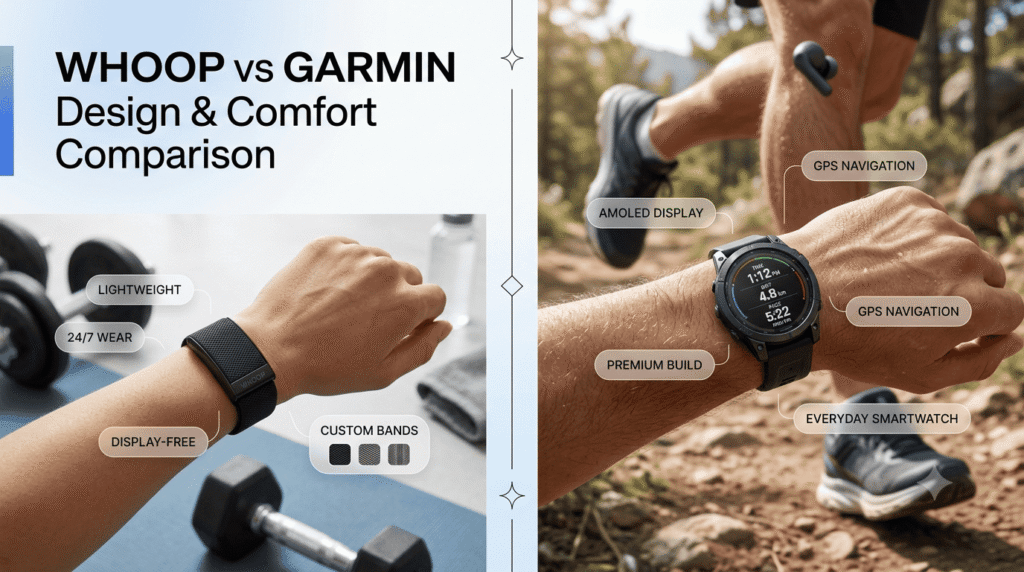
WHOOP vs Garmin Design and Comfort
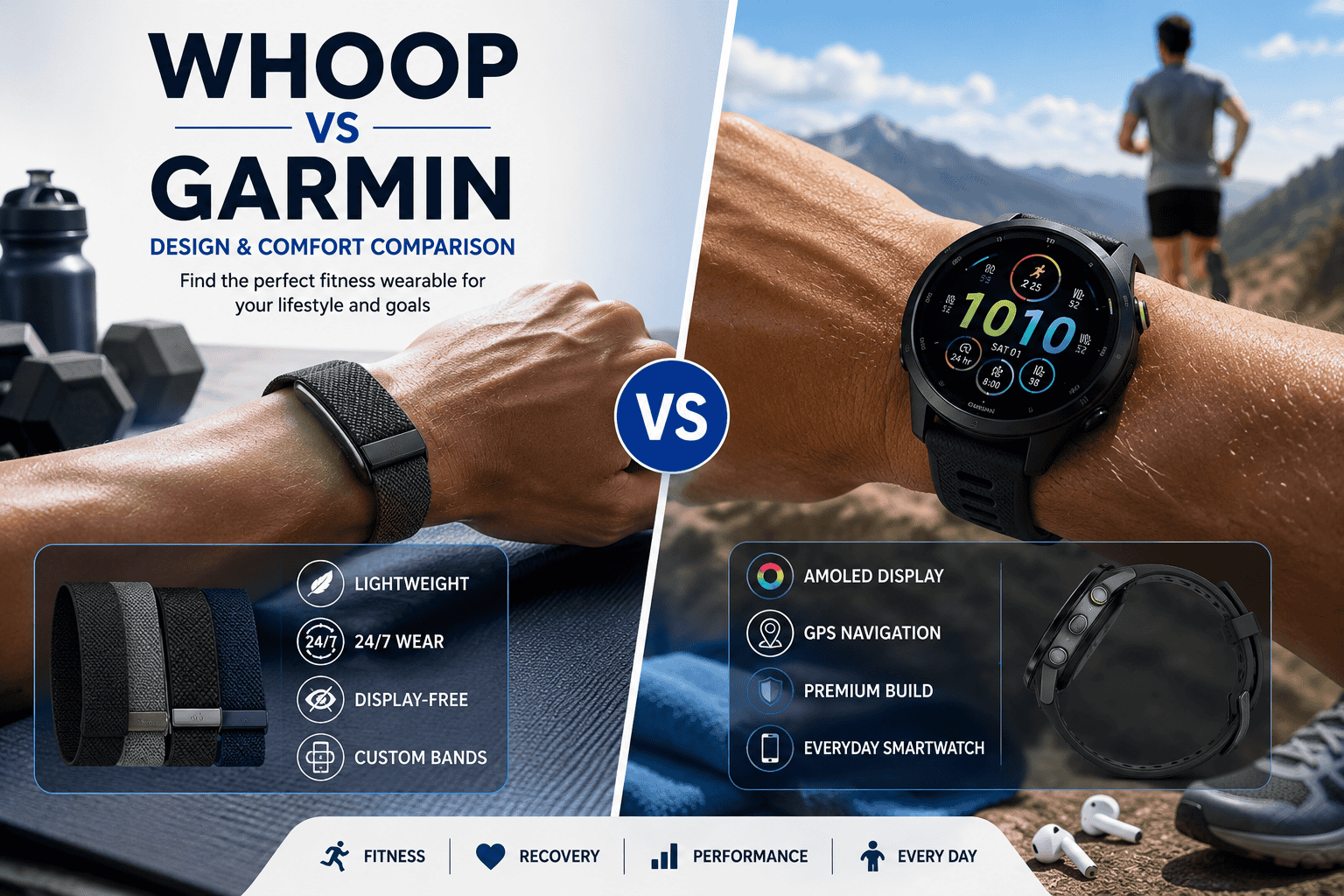
WHOOP is intentionally minimal. A slim, screenless band that sits flat on your wrist, bicep, or forearm. It barely registers under a shirt sleeve. Many users forget it’s there — which is exactly the point. WHOOP also supports alternative wear sites via accessory bands for activities where wrist wear is impractical.
Garmin watches range from sport-slim (Forerunner 265) to genuinely chunky (Fenix 8). The Forerunner 265 is comfortable for daily all-day wear and light enough to sleep in, though most Garmin users charge at night rather than wearing continuously. The Fenix 8 is a serious piece of hardware — built for outdoor durability, with a bezel and case size that makes a statement.
For overnight comfort — critical for sleep tracking — WHOOP has a clear edge. Its slim, textile-backed band with no display or raised components sits flush against the skin without creating pressure points.
Winner: WHOOP for 24/7 comfort and sleep wear. Garmin for versatile sport watch feel.
Suggested image: whoop-vs-garmin-design-comfort-comparison.jpg | Alt: “”
WHOOP vs Garmin Subscription Costs
This is a defining factor in the WHOOP vs Garmin comparison — especially over a multi-year ownership window.
WHOOP Subscription
WHOOP requires an ongoing membership. The device is part of the plan. Approximate pricing:
| Plan | Cost |
|---|---|
| Monthly | ~$30/month |
| 12-month | ~$25/month (~$300/year) |
| 24-month | ~$18/month (~$432 upfront) |
Check current pricing at whoop.com — rates have changed with each product release.
Garmin Subscription
Garmin devices are one-time purchases. and Garmin Connect — the companion app that houses your data, training history, Body Battery, and HRV Status — is completely free. There’s no subscription gate on any core feature.
Garmin offers Garmin Connect+ (optional) for additional training insights and coaching features, but the platform is fully functional and rich without paying a cent beyond your initial device purchase.
Long-Term Cost Comparison
| Timeframe | WHOOP (Annual Plan) | Garmin Forerunner 265 | Garmin Fenix 8 |
|---|---|---|---|
| Year 1 | ~$300 | ~$300–350 | ~$600–900 |
| Year 2 | ~$600 | Same device | Same device |
| Year 3 | ~$900 | Same device | Same device |
| Year 4 | ~$1,200 | Potential upgrade (~$350) | Same or upgrade |
By Year 3, WHOOP costs roughly the same as two Garmin Forerunner 265 devices. That math matters — especially for athletes on a tight training budget.
Winner: Garmin — no recurring fees, and the hardware retains value for years.
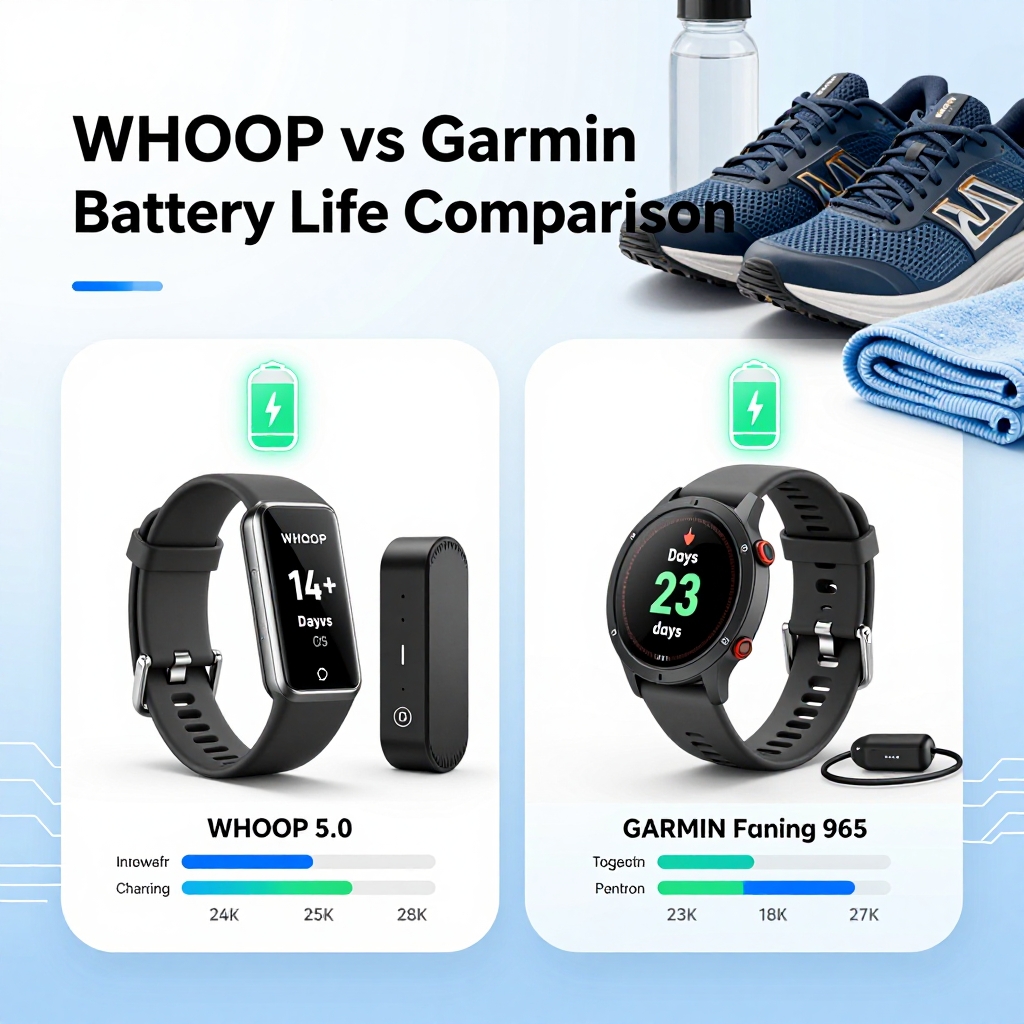
WHOOP vs Garmin Battery Life
WHOOP: Approximately 4–5 days per charge. The differentiator is the on-wrist charging system — a battery pack that clips onto the device while you’re still wearing it. You never have to take WHOOP off to charge. That means zero data gaps, zero interruptions in your overnight biometric stream.
Garmin: Battery life varies dramatically by model and GPS usage:
| Model | Battery (GPS off) | Battery (GPS on) |
|---|---|---|
| Garmin Forerunner 265 | ~13 days | ~20 hours |
| Garmin Forerunner 965 | ~23 days | ~31 hours |
| Garmin Fenix 8 (47mm) | ~16 days | ~57 hours (multi-band) |
| Garmin Instinct 3 | ~30 days | ~60 hours |
Garmin wins on raw battery numbers by a large margin. Most Garmin users charge once or twice a week. Some Fenix and Instinct users charge even less frequently.
The trade-off: when you charge your Garmin watch overnight, you miss the overnight biometric data that powers Body Battery and HRV Status. Many Garmin athletes charge during recovery activities — sitting at a desk, watching film — rather than during sleep.
Winner: Garmin for battery endurance. WHOOP for continuous, gap-free monitoring.
WHOOP vs Garmin Sensors and Accuracy
Both WHOOP and Garmin use optical photoplethysmography (PPG) for wrist-based heart rate monitoring. Both include SpO2 sensors for blood oxygen, skin temperature sensors, and accelerometers for movement detection.
Where they diverge is in the depth and application of that sensor data.
WHOOP: Six-LED PPG array sampling continuously at a high rate, 24 hours a day. The higher sampling frequency gives WHOOP’s overnight HRV readings more data points, which translates to higher precision in recovery calculations. WHOOP’s sensors are also positioned for continuous skin contact by design — no display housing altering how it sits on the wrist.
Garmin: Multi-LED PPG with optical HR reading every second during workouts. Mid-range models like the Forerunner 265 add multi-band GPS for significantly improved route accuracy versus single-band GPS. Top-tier Fenix 8 and Forerunner 965 models use dual-frequency GNSS (GPS, GLONASS, Galileo) for best-in-class GPS precision under tree cover and in canyons.
For heart rate during high-intensity exercise — intervals, sprints, heavy lifting — no wrist-based optical sensor is fully reliable. Both WHOOP and Garmin recommend pairing with a chest strap or arm-band HR monitor for maximum accuracy during peak-effort training.
Winner: WHOOP for resting/recovery HR and HRV precision. Garmin for GPS accuracy and multisport sensor depth.
WHOOP vs Garmin Heart Rate and HRV
Heart rate variability is the most important metric in the WHOOP vs Garmin comparison for recovery-focused athletes. It’s the core input into WHOOP’s Recovery Score — and an increasingly important input into Garmin’s Body Battery and HRV Status.
How WHOOP Measures HRV
WHOOP measures HRV continuously throughout the night and produces a single RMSSD (root mean square of successive differences) value each morning. This overnight measurement approach — combined with respiratory rate and resting heart rate — gives WHOOP the most granular and personally-calibrated HRV reading of any mainstream consumer device.
Critically, your WHOOP Recovery Score isn’t compared to a population average. It’s compared to your own baseline — your HRV patterns over the past 30, 60, and 90 days. That personalization is what makes WHOOP’s daily readiness signal genuinely reliable.
How Garmin Measures HRV
Garmin’s HRV Status measures overnight HRV across a 5-week window and categorizes your current status as Balanced, Low, or Unbalanced relative to your personal baseline. It’s a useful trend indicator — but it updates more slowly than WHOOP and flags trends rather than giving a precise daily score.
Garmin’s Body Battery uses HRV as one of several inputs alongside sleep, stress, and activity to produce a daily energy reserve number. It’s practical and intuitive — but it uses HRV as a component, not the primary signal.
For athletes who want the deepest, most precise HRV monitoring available in a consumer device, WHOOP has the edge. Garmin’s HRV tools are solid for trend-watching but less granular for day-to-day training decisions.
Winner: WHOOP for HRV precision and daily recovery scoring. Garmin for accessible HRV trend monitoring.
WHOOP vs Garmin Recovery Tracking
Recovery tracking is WHOOP’s core identity. It was literally the reason WHOOP was built.
WHOOP Recovery Score
Every morning, you wake up to a WHOOP Recovery Score between 0 and 100. The color code tells you where you stand:
- Green (67–100%): Your body has recovered well. Push hard today.
- Yellow (34–66%): Proceed with moderate effort. Be mindful of accumulated fatigue.
- Red (0–33%): Rest or active recovery only. Don’t force it.
This isn’t just a wellness estimate. It’s a physiologically-grounded decision tool. When an athlete’s WHOOP consistently reads red before a race week, that’s actionable data. When a coach sees their athletes running orange instead of green three weeks into a training block, that triggers a conversation about rest.
Garmin Body Battery
Garmin’s Body Battery is excellent for what it does — and far more accessible than WHOOP’s recovery framework for casual users.
Body Battery ranges from 0 to 100. A full night of good sleep typically restores 30–50 Body Battery points. Training burns them back down. Stress, alcohol, and poor sleep accelerate the drain. The visual energy chart over 24 hours is one of Garmin’s most intuitive features.
The key limitation: Body Battery doesn’t carry the same HRV granularity as WHOOP’s system. It’s more of a relative energy gauge than a physiological readiness score. Two athletes can have the same Body Battery number but very different HRV profiles — a difference WHOOP’s system would catch and Garmin’s might not.
Winner: WHOOP for recovery scoring depth and daily HRV precision.
For more on recovery-focused wearables, see our comparison of the best WHOOP alternatives for every type of athlete.
WHOOP vs Garmin Sleep Tracking
Both devices take sleep seriously — but they deliver different levels of guidance on what to do about it.
WHOOP Sleep Tracking
WHOOP tracks all four sleep stages: light, deep, REM, and awake time. Its Sleep Coach sets a personalized bedtime recommendation based on your recovery goal for the following day.
Want to “peak” for tomorrow’s race? WHOOP will tell you exactly what time to be asleep by. Training day? Here’s your minimum sleep need. Recovery day? Here’s the target that’ll maximize tomorrow’s recovery score.
The Sleep Performance Score measures how much of your needed sleep you actually got. Combined with your Recovery Score, it closes the loop between what you did yesterday, how you slept, and what you should do tomorrow.
WHOOP’s Journal feature — where you log alcohol, caffeine, stress, supplements, and other lifestyle factors — reveals statistically how these behaviors correlate with your sleep quality over time. That level of behavioral insight is rare.
Garmin Sleep Tracking
Garmin’s sleep tracking is genuinely capable and has improved substantially across recent firmware updates. The Forerunner 265 and Fenix 8 provide sleep stage analysis, sleep scores, and respiratory rate monitoring.
The Body Battery overnight recharge curve shows you how well your Body Battery recovered during sleep — useful context for understanding whether last night’s rest actually restored your energy reserves.
What Garmin lacks is the forward-looking sleep coaching that WHOOP delivers. Garmin shows you what happened. WHOOP tells you what to do next.
Winner: WHOOP for sleep coaching and behavioral insights. Garmin for solid sleep reporting integrated with a sports watch.
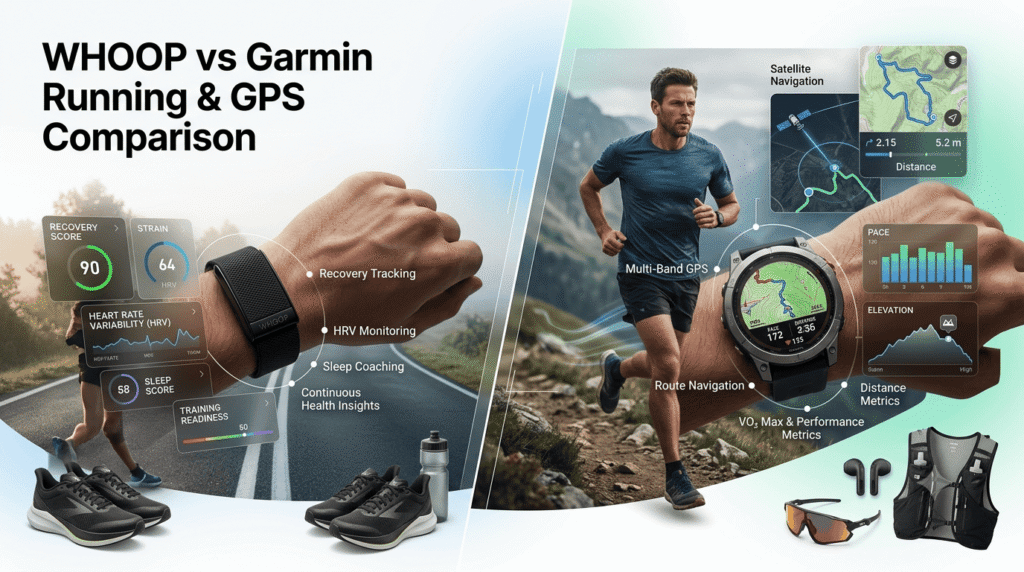
WHOOP vs Garmin Running
This is where Garmin’s advantage becomes most obvious. Running is Garmin’s home turf.
Garmin Running Metrics
Garmin’s Advanced Running Dynamics (available on Forerunner 265/965 and Fenix 8 with compatible HRM accessory) deliver a full biomechanical picture of your stride:
- Cadence (steps per minute)
- Ground contact time and balance
- Stride length
- Vertical oscillation and ratio
- Running power estimation
Garmin provides Suggested Workouts calibrated to your current fitness level and fatigue state. It tracks your VO2 Max trend, estimates your predicted race times at distances from 5K to marathon, and gives you a Race Predictor that updates as your training progresses.
Multi-band GPS on Forerunner 265 and above provides accurate routes even under heavy tree cover. The Pace Pro feature helps you execute a target-pace race strategy in real time.
For marathon runners, ultrarunners, and anyone running with a structured training plan, Garmin is the superior dedicated tool.
WHOOP for Running
WHOOP tracks runs as cardiovascular strain events. It measures your HR zones throughout the run, calculates accumulated strain, and connects that session to your following day’s recovery. There’s no GPS, no pace data, no route map — unless you carry your phone for connected GPS.
WHOOP adds value for runners who want to understand the physiological cost of their training. A 10-mile long run that pushes your strain to 18/21 and drops your next-morning recovery to 35% is a signal worth knowing. But WHOOP can’t replace a Garmin for active run guidance.
Winner: Garmin — this isn’t close for runners.
WHOOP vs Garmin Cycling
Garmin dominates cycling — unsurprisingly, given its deep roots in the sport.
Higher-end Garmin models support ANT+ and Bluetooth power meter pairing — the standard tool for serious cyclists measuring watts and training load via Training Stress Score (TSS). The Forerunner 965 and Fenix 8 pair with cycling speed/cadence sensors, smart trainers, and radar rear-view cameras like the Garmin Varia.
Garmin also offers dedicated Cycling Dynamics for paired power meters, including left/right power balance, torque effectiveness, and pedal smoothness.
WHOOP tracks cycling strain just as it tracks any cardiovascular activity. Post-ride, it tells you how much that effort cost you physiologically. That’s useful — but a cyclist on a structured training plan needs wattage, cadence, and route data that Garmin provides and WHOOP simply doesn’t.
Winner: Garmin by a significant margin for cycling-specific metrics.
WHOOP vs Garmin Swimming
WHOOP: IP68 water resistance — safe for swimming and showering. However, WHOOP doesn’t offer structured swim metrics. No lap counting, pace tracking, or stroke rate. The device stays on and continues tracking HR and movement, but swimming data is minimal.
Garmin: Strong swim tracking across multiple models. The Forerunner 265 and above support open-water swim tracking with GPS and pool swim mode with automatic lap counting, stroke detection, and SWOLF score. The Fenix 8 Sapphire Dive edition adds dive metrics.
For triathletes and competitive swimmers, Garmin is in a completely different league.
Winner: Garmin.
WHOOP vs Garmin Strength Training
Strength training is one of the most interesting categories in the garmin watch vs whoop comparison — because neither device is purpose-built for the weight room, yet both offer value.
WHOOP for Strength Training: WHOOP measures the cardiovascular strain of a lifting session, not the mechanical load. A heavy barbell squat session won’t show massive cardiovascular strain — but over time, WHOOP shows you how your recovery responds to heavy training days. Powerlifters and bodybuilders tracking WHOOP over a training block can see exactly how multiple hard sessions affect their HRV baseline.
WHOOP’s recovery score the morning after a hard leg day is genuinely informative. Lower HRV and elevated resting HR are physiological signals that strength training produced real systemic stress.
Garmin for Strength Training: Garmin’s strength training mode logs sets and reps automatically on some models, though auto-rep detection accuracy is variable. The Fenix 8 and Forerunner series also track heart rate during lifting for zone monitoring. Body Battery will drop noticeably during a heavy session — useful feedback on training load.
Neither device replaces a barbell tracking app like Hevy or Strong for detailed strength programming. But WHOOP gives more meaningful recovery context post-session.
Winner: Slight edge to WHOOP for post-training recovery insight. Garmin for multi-modal tracking during the session.
WHOOP vs Garmin GPS
No display, no GPS. That’s WHOOP’s position.
You can connect WHOOP to your phone’s GPS via the app during outdoor activities, which provides route data — but this requires carrying your phone. For athletes who run or ride phone-free, WHOOP offers zero independent route data.
Garmin’s GPS is class-leading. Multi-band GPS on the Forerunner 265 and above uses multiple satellite signals simultaneously to maintain accuracy in challenging environments — dense forests, urban canyons, mountainous terrain. The improvement over single-band GPS in complex conditions is significant and well-documented in independent GPS tracking tests.
For outdoor athletes of any kind — runners, cyclists, hikers, triathletes — Garmin’s GPS capability is not just better than WHOOP’s. It’s in a different category entirely.
Winner: Garmin. WHOOP has no real GPS to speak of.
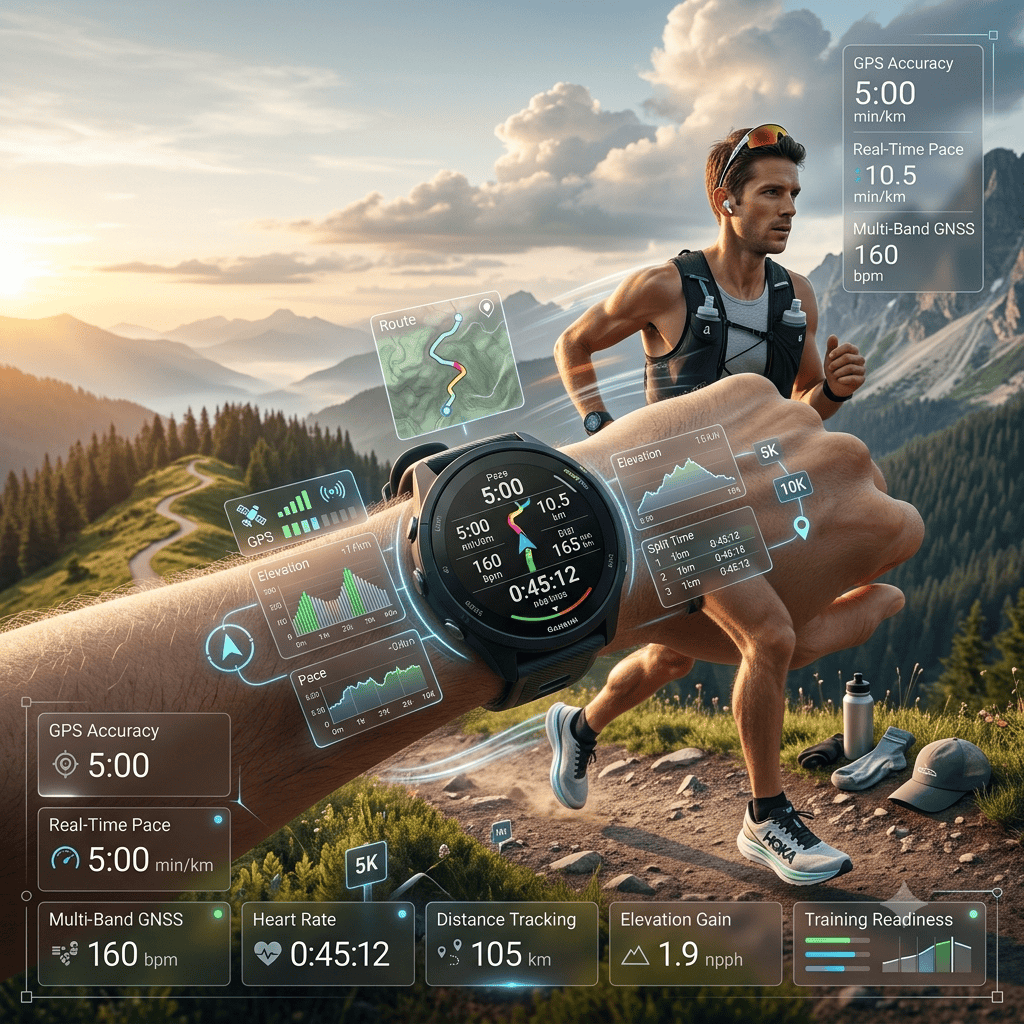
WHOOP vs Garmin Stress Tracking
Both devices monitor physiological stress — but through different lenses.
WHOOP: Tracks stress indirectly through HRV trends and resting heart rate patterns. When your HRV drops and resting HR rises outside training, WHOOP flags it through a suppressed recovery score. The Journal feature links lifestyle stressors — work pressure, poor nutrition, travel — to measurable impacts on your biometrics.
Garmin: Provides a Stress Level metric (0–100) that uses HRV data throughout the day to estimate autonomic nervous system load. You can see stress levels fluctuate in real time on compatible models. Garmin also suggests Breathwork exercises when it detects elevated stress — a practical intervention built directly into the device.
Garmin’s real-time stress display is more accessible than WHOOP’s retrospective stress interpretation. But WHOOP’s Journal correlation — seeing how a stressful week concretely affected your HRV baseline — is more analytically powerful.
Winner: Garmin for real-time stress awareness. WHOOP for long-term stress impact analysis.
WHOOP vs Garmin Women’s Health
Both platforms include menstrual cycle tracking, and both have invested in making their data relevant for female athletes.
WHOOP: Correlates cycle phases with recovery data, HRV, and sleep quality. Female athletes can see how their body’s physiological readiness shifts across the follicular and luteal phases — and plan training accordingly. Skin temperature monitoring adds sensitivity to hormonal cycle changes.
Garmin: Menstrual health tracking is available across most Garmin models and integrates with Garmin Connect to overlay cycle phase data on your training calendar. The Fenix 8 and Forerunner 965 connect to compatible third-party app data. Research-informed guidance explains how hormonal cycles affect training adaptations, recovery, and energy levels.
Both are thoughtful implementations. WHOOP has a slight edge in directly connecting cycle phase to physiological performance metrics. Garmin’s integration with a full training calendar makes it more practical for structured training planning.
Women exploring alternative form factors for health tracking should also check our guide to the best smart ring for women.
Winner: Near-tie. WHOOP edges ahead on physiological correlation; Garmin wins on calendar integration.
WHOOP vs Garmin Smart Features
It has no smart features. Full stop. No notifications, no music, no payments, no apps.
Garmin, by contrast, is a sophisticated smartwatch platform:
- Smart Notifications: Calls, texts, emails, app alerts delivered to your wrist
- Garmin Pay: Contactless NFC payments (model-dependent)
- Music Storage: Offline Spotify, Amazon Music, and other providers on select models
- Garmin Connect IQ: Third-party app platform for watch faces, data fields, widgets, and apps
- Offline Maps & Navigation: Topographical maps on Fenix 8 and Forerunner 965; turn-by-turn navigation
- Safety Features: Incident detection, assistance alerts, LiveTrack for sharing real-time location with contacts
For athletes who want a device that functions as a smartwatch during their non-training hours, Garmin is the obvious choice. WHOOP requires your phone for everything.
Winner: Garmin — there’s no competition here.
WHOOP vs Garmin App Experience
The WHOOP App
The WHOOP app is designed for deep engagement. Opening it each morning delivers your Recovery Score, previous night’s sleep breakdown, HRV reading, and recommended daily strain range. From there, you can explore:
- Weekly HRV trends and monthly baselines
- Sleep stage timelines and respiratory rate overnight
- Strain history by activity type and date
- Journal insights with statistically correlated behavior patterns
- WHOOP Coach AI-generated recommendations
The app rewards consistent users. After 60–90 days of wear, the pattern-matching becomes genuinely personal and the insights shift from generic to “this is specifically about me.” That’s the moment WHOOP earns its subscription fee.
Garmin Connect
Garmin Connect is one of the most feature-complete free fitness platforms in existence. Your dashboard aggregates every metric your watch collects — Body Battery, HRV Status, training load, sleep, stress, activity history — in a clean, customizable interface.
Garmin Connect also provides:
- Performance Condition tracking in real time during runs
- Training Status (Productive, Peaking, Maintaining, Overreaching)
- Fitness Age and Health Snapshot reports
- Full workout history with GPS maps and lap data
- Compatibility with Strava, TrainingPeaks, Zwift, and dozens of third-party platforms
Garmin’s third-party ecosystem is a major advantage for structured athletes using coaching software like TrainingPeaks. WHOOP data doesn’t flow into these platforms natively.
Winner: WHOOP for depth of recovery insight. Garmin for breadth of data and third-party integration.
WHOOP vs Garmin AI Coaching Features
Both platforms now use AI to make training recommendations — and both are genuinely useful.
WHOOP Coach: Uses your biometric history to generate personalized recommendations in natural language. “Your HRV is trending down across the last 5 days. Consider reducing training intensity today and prioritizing 8+ hours of sleep.” It also analyses Journal behaviors to tell you which lifestyle habits statistically help or hurt your recovery.
Garmin Daily Suggested Workouts: Adapts your training plan based on your current Body Battery, Training Status, and recent load. If you’ve been overreaching, it’ll suggest a recovery run rather than the intervals you had scheduled. If your Training Status shows you’re peaking, it builds on that momentum.
Both systems are more than marketing — they demonstrably adjust recommendations based on real biometric signals.
Winner: Near-tie. WHOOP for behavioral insight. Garmin for structured workout adaptation.
WHOOP vs Garmin Long-Term Value
Over a 36-month window, the cost math changes the conversation considerably.
WHOOP at 36 months (annual plan): ~$900 in membership fees Garmin Forerunner 265 at 36 months: ~$300–350 upfront, then free
On pure cost, Garmin wins by a margin that grows every year you keep using it.
But “value” isn’t just price. For an athlete who genuinely uses WHOOP’s daily Recovery Score to make better training decisions, prevents an overuse injury, executes a smarter taper week before a race, or improves their sleep quality by 45 minutes per night — the ROI is real and hard to assign a dollar amount to.
The honest answer: WHOOP delivers its value only if you engage with the data daily. If you wear it but don’t act on what it tells you, the subscription fee is wasted. Garmin delivers consistent value for any athlete who uses GPS and wants a full-featured sports watch.
Winner: Garmin for pure cost-per-year efficiency. WHOOP for data-driven athletes who act on daily recovery insights.
WHOOP vs Garmin vs Apple Watch
Adding Apple Watch to the whoop vs garmin vs apple watch comparison gives you a third very different option.
| Feature | WHOOP 4.0 | Garmin Forerunner 265 | Apple Watch Series 10 |
|---|---|---|---|
| Display | None | AMOLED | OLED LTPO |
| Battery | ~4–5 days | ~13 days | ~18 hours |
| GPS | ❌ | ✅ Multi-band | ✅ |
| Recovery Score | ✅ Advanced | ✅ Body Battery | Limited (third-party) |
| HRV Monitoring | ✅ Advanced | ✅ HRV Status | ✅ Basic |
| Smart Features | None | Moderate | ✅ Full (iPhone ecosystem) |
| ECG | ❌ | ❌ (select models) | ✅ |
| Subscription | Required | None | None (Apple Fitness+ optional) |
| Platform | Cross-platform | Cross-platform | iPhone only |
| Best For | Athletes, recovery | Runners, multisport | iPhone users, smartwatch fans |
Apple Watch is the best smartwatch for iPhone users who want solid fitness tracking alongside deep iOS integration. But the ~18-hour battery demands daily charging, which creates overnight data gaps that undermine sleep and recovery tracking. Apple Watch doesn’t match Garmin’s GPS depth for endurance sports, and it doesn’t match WHOOP’s recovery precision for performance athletes.
For broader context across all the top options, our full wearable fitness tracker comparison covers all major platforms in one place.
WHOOP vs Garmin vs Oura Ring
The Oura Ring Gen 4 is the most relevant comparison point for WHOOP specifically — both devices focus on recovery, sleep, and readiness rather than GPS performance.
| Feature | WHOOP 4.0 | Garmin Forerunner 265 | Oura Ring Gen 4 |
|---|---|---|---|
| Form Factor | Wrist band | Wrist watch | Finger ring |
| Recovery Score | ✅ HRV-based daily | ✅ Body Battery | ✅ Readiness Score |
| Sleep Tracking | ✅ + Sleep Coach | ✅ Good | ✅ Excellent |
| HRV Monitoring | ✅ Advanced | ✅ Moderate | ✅ Advanced |
| GPS | ❌ | ✅ | ❌ |
| Subscription | ~$18–30/mo | None | ~$6/mo |
| Display | None | ✅ AMOLED | None |
| Overnight Comfort | Excellent | Good | Excellent (ring) |
| Workout Tracking | Strain-based | ✅ Full multisport | Activity-based |
| Best For | Athletes, training load | Runners, endurance | Sleep, wellness, readiness |
For athletes focused on sleep and recovery who find wristbands uncomfortable overnight, Oura Ring is a compelling WHOOP alternative at a lower monthly subscription cost.
For a deep dive, see our full breakdown of WHOOP vs Oura — and our roundup of the best Oura Ring alternatives if you want to explore more recovery-focused options.
WHOOP vs Garmin vs Fitbit
| Feature | WHOOP 4.0 | Garmin Forerunner 265 | Fitbit Charge 6 |
|---|---|---|---|
| Recovery Score | ✅ Excellent | ✅ Body Battery | ❌ (Premium: Readiness Score) |
| GPS | ❌ | ✅ Multi-band | ✅ Basic |
| Subscription | Required (~$18–30/mo) | None | Optional ($9.99/mo) |
| Display | None | ✅ AMOLED | ✅ Color |
| Smart Features | None | ✅ Full | ✅ Google Pay, Maps |
| Weight Loss Tools | Basic | Moderate | ✅ Strong |
| Best For | Athletes, recovery | Runners, multisport | Everyday wellness users |
Fitbit sits in a third category — everyday wellness and general health tracking — rather than competing directly with WHOOP or Garmin on athletic performance. For beginners or users focused on general health, step tracking, weight loss, and everyday smart features, Fitbit delivers strong value at a lower price than either competitor.
See our complete WHOOP vs Fitbit breakdown for the full comparison.
Amazon Product Recommendations
Verify current prices and availability on Amazon before purchasing. Prices change regularly.
1. WHOOP 4.0 Fitness Tracker (with Band)

Best for: Recovery-focused athletes, serious endurance athletes, biohackers, and performance-driven individuals
WHOOP 4.0 delivers the most comprehensive HRV-based recovery scoring available in a mainstream consumer wearable. Paired with the WHOOP app’s Sleep Coach and Journal insights, it’s the best daily recovery tool on the market.
- Pros: Best-in-class HRV and recovery scoring; on-wrist charging; continuous 24/7 monitoring; AI coaching; IP68 waterproof; no display distraction
- Cons: Subscription required; no GPS; no screen; no smartwatch features; 30+ days to fully personalize
- Why we recommend it: There’s no better tool for the athlete who wants to know exactly how ready their body is to train each morning
- Avg. rating: ⭐ 4.3/5
- Approx. price: Check current Amazon pricing (subscription required separately)
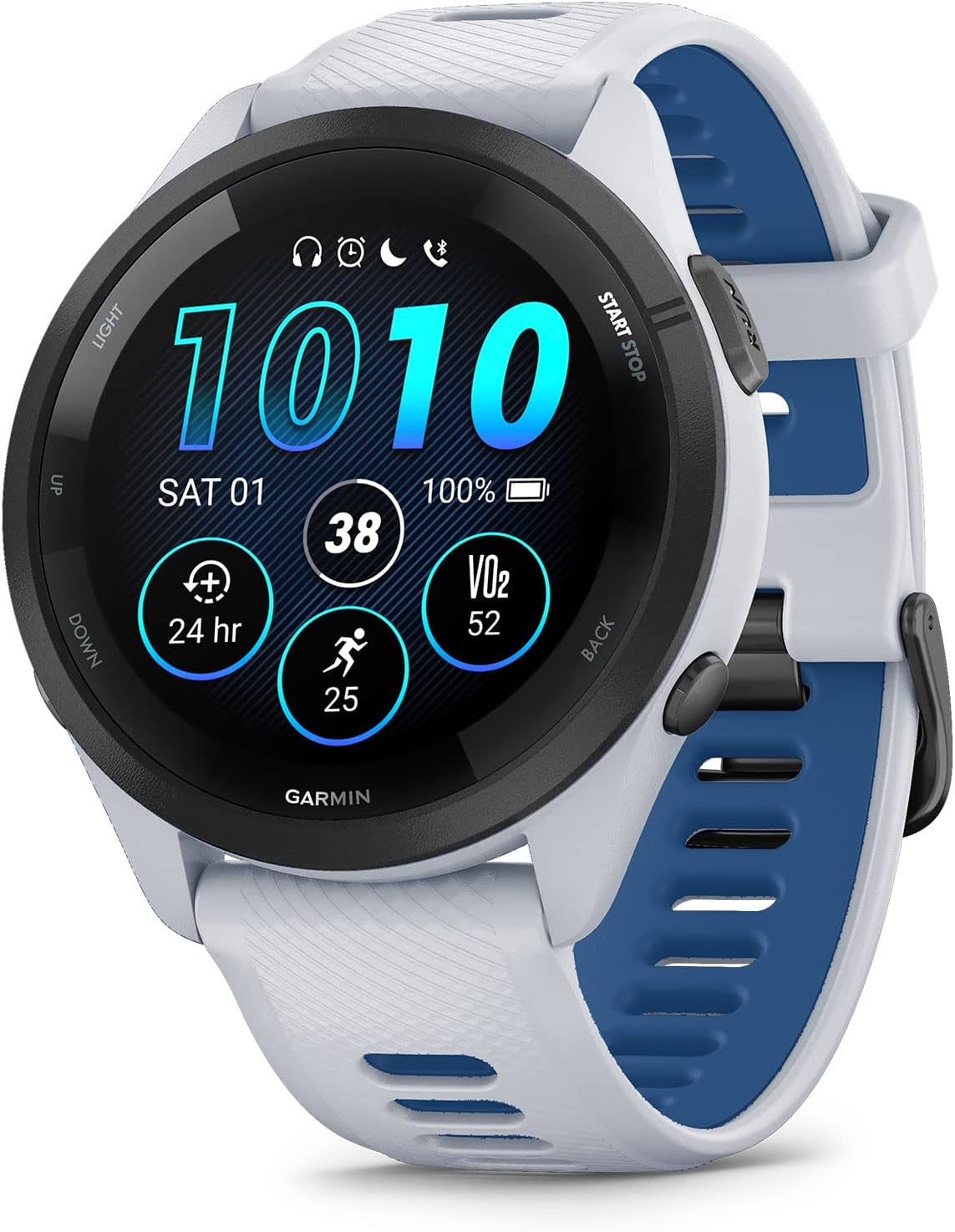
2. Garmin Forerunner 265 GPS Running Watch
Best for: Dedicated runners, triathletes, and serious multisport athletes
The Forerunner 265 hits the sweet spot between advanced performance metrics and everyday wearability. Multi-band GPS, AMOLED display, 13-day battery, and Daily Suggested Workouts make it the best all-around running watch in its price range.
- Pros: Excellent multi-band GPS; AMOLED display; Body Battery; HRV Status; VO2 Max; music storage; 13-day battery; no subscription
- Cons: Shorter battery with GPS active; no offline maps; less recovery depth than WHOOP
- Why we recommend it: Best value GPS running watch for athletes who want serious performance data without a recurring fee
- Avg. rating: ⭐ 4.7/5
- Approx. price: ~$300–350 on Amazon
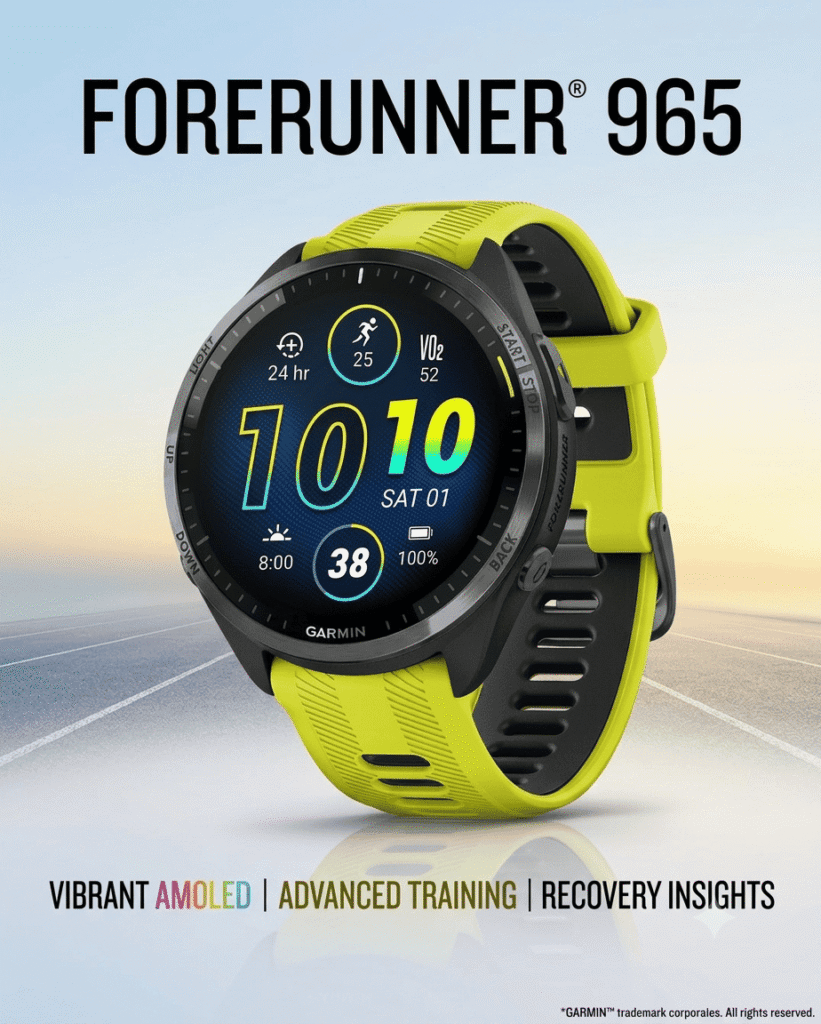
3. Garmin Forerunner 965 Multisport GPS Watch
Best for: Elite runners, triathletes, and ultra-endurance athletes
The 965 adds offline maps, longer battery, and more advanced training metrics over the 265. A top-tier choice for anyone training for long-course triathlon or ultramarathon.
- Pros: 23-day battery; offline color topographic maps; advanced multisport profiles; race screen customization; training load focus
- Cons: Larger and heavier than 265; higher price; no subscription but premium price upfront
- Why we recommend it: The best Garmin Forerunner for serious endurance athletes who need maps and extended battery
- Avg. rating: ⭐ 4.7/5
- Approx. price: ~$500–600 on Amazon
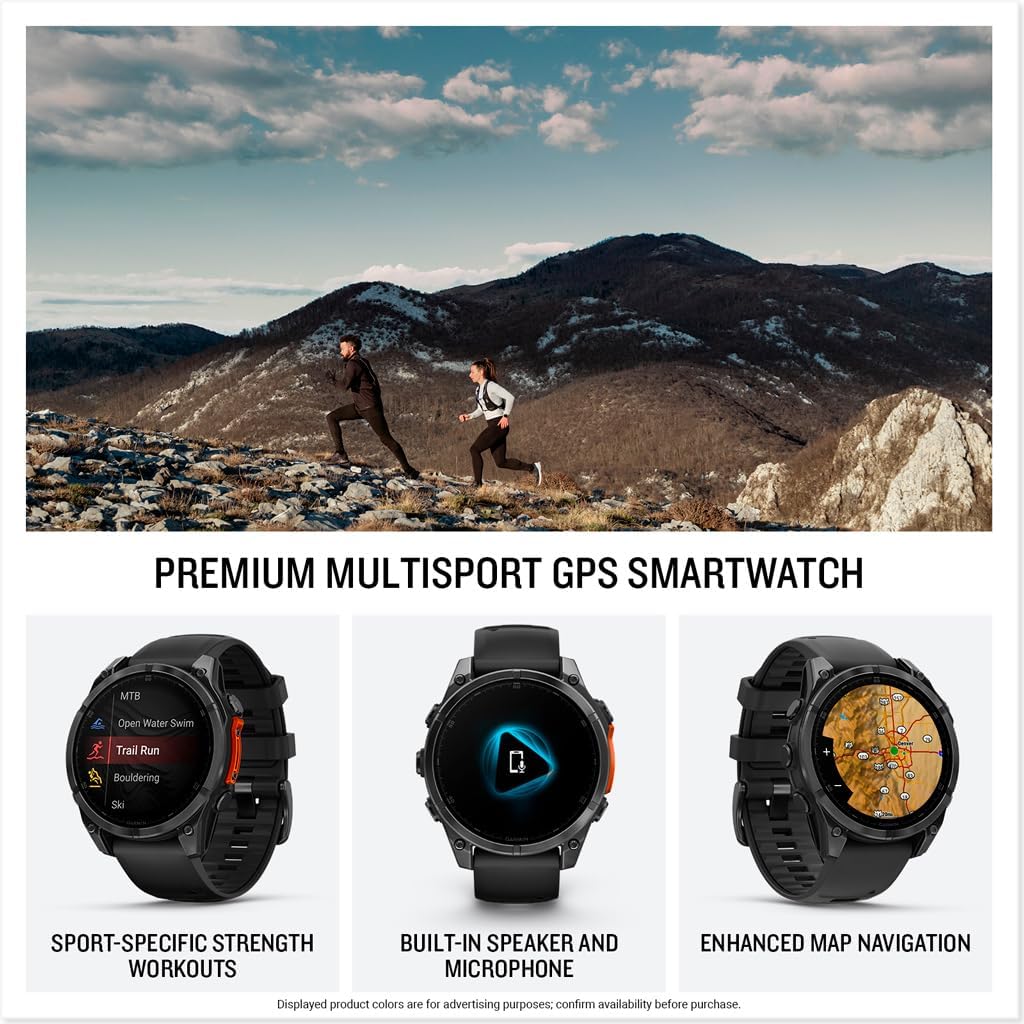
4. Garmin Fenix 8 Multisport GPS Watch
Best for: Elite adventure athletes, military, expedition athletes, and those who demand the absolute best
The Fenix 8 is Garmin’s flagship — rugged, feature-complete, and built for athletes who need a device that keeps up with anything they throw at it.
- Pros: MIL-STD-810 durability; 16-day battery; offline topo maps; dive computer; LED flashlight; incident detection; voice control; multi-band GPS
- Cons: Significant upfront investment; heavy and bulky for everyday wear; overkill for most users
- Why we recommend it: Unmatched durability and capability for adventure athletes and serious multisport competitors
- Avg. rating: ⭐ 4.6/5
- Approx. price: ~$600–900 on Amazon
5. Garmin Instinct 3 Rugged GPS Smartwatch
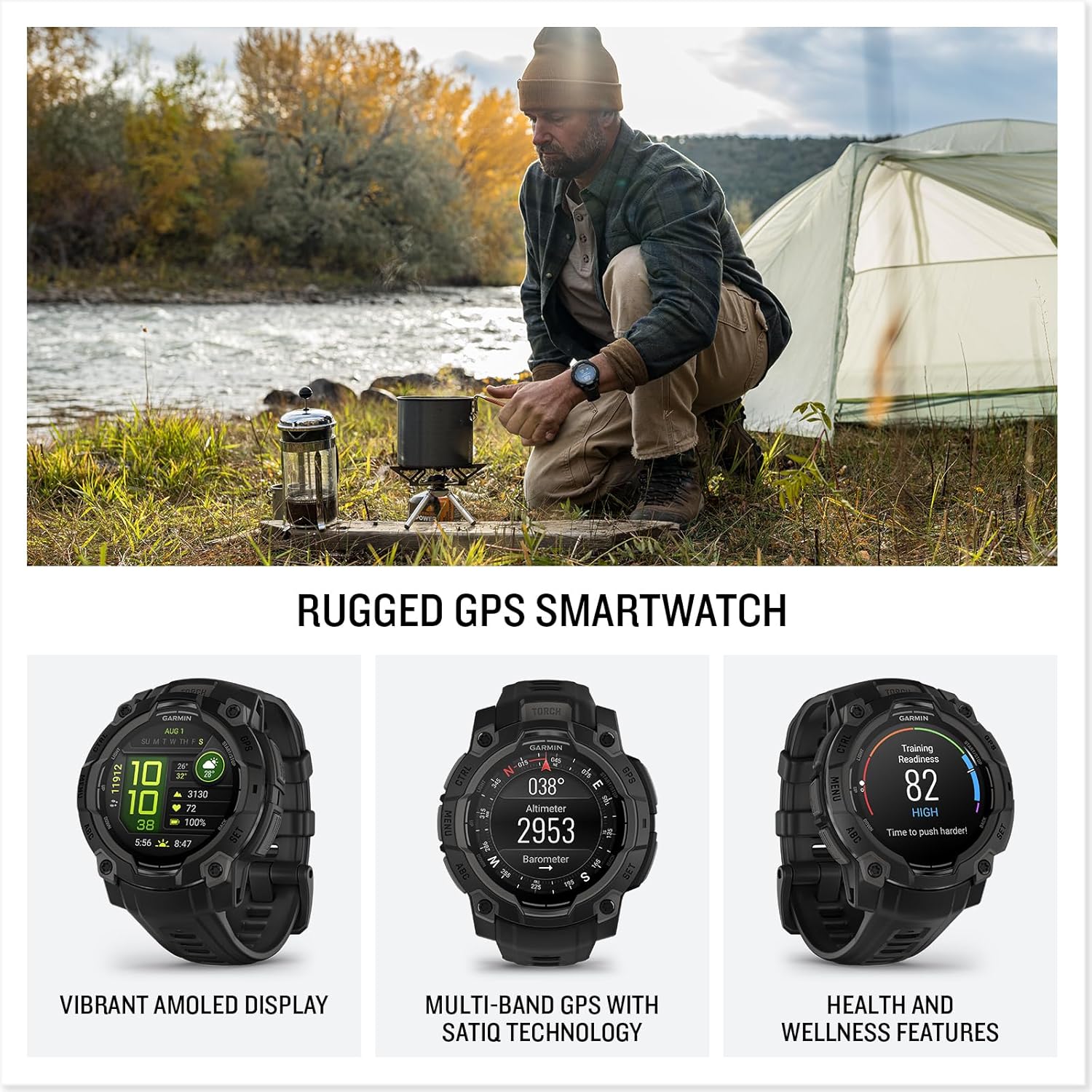
Best for: Outdoor athletes and adventure users who need durability and long battery life on a budget
The Instinct 3 brings Garmin’s rugged DNA at a more accessible price. Up to 30 days of battery life (smartwatch mode) makes it the endurance battery champion in Garmin’s lineup.
- Pros: Up to 30-day battery; MIL-STD-810G rated; GPS; Body Battery; Garmin Pay (select models); affordable relative to Fenix
- Cons: Smaller, less feature-rich display; fewer smart features; less advanced training analytics
- Why we recommend it: Best Garmin for hikers, mountain athletes, and outdoor adventurers who prioritize battery and durability
- Avg. rating: ⭐ 4.6/5
- Approx. price: ~$200–250 on Amazon
6. Garmin Venu 3 Fitness & Health Smartwatch
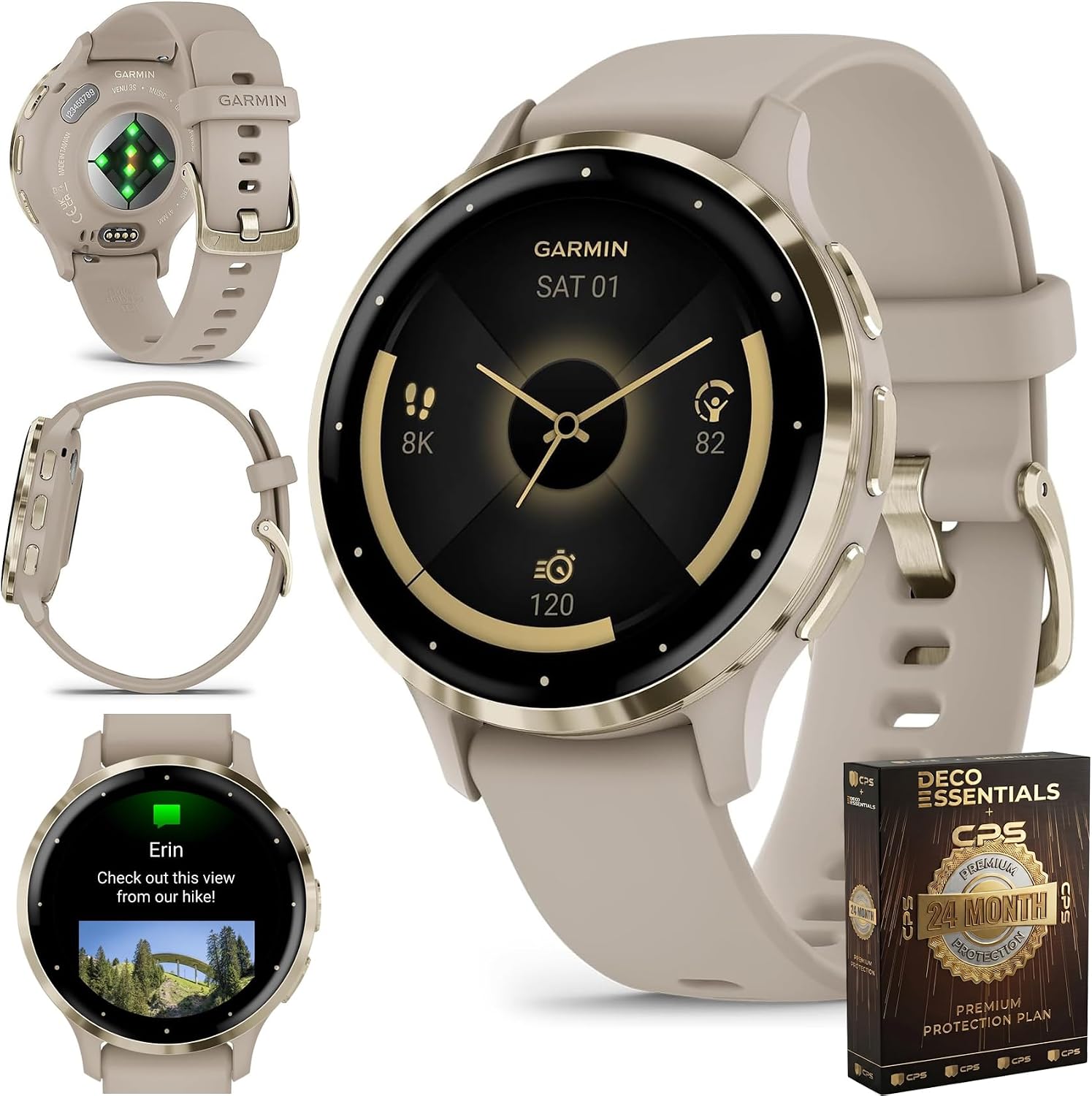
Best for: Lifestyle-oriented users and wellness-focused athletes who want stylish design and solid health tracking
The Venu 3 blends Garmin’s health tracking with a more consumer-friendly design. It’s the Garmin for everyday life without the sport-first aesthetic of the Forerunner line.
- Pros: AMOLED display; Body Battery; nap detection; wheelchair mode; sleep coaching; stylish design; Garmin Pay
- Cons: Shorter battery than Forerunner/Fenix; less advanced running metrics; higher price vs. Forerunner 265 for athletes
- Why we recommend it: Best Garmin for health-focused users who want the full ecosystem without a sport-specific focus
- Avg. rating: ⭐ 4.5/5
- Approx. price: ~$300–350 on Amazon
7. Apple Watch Series 10
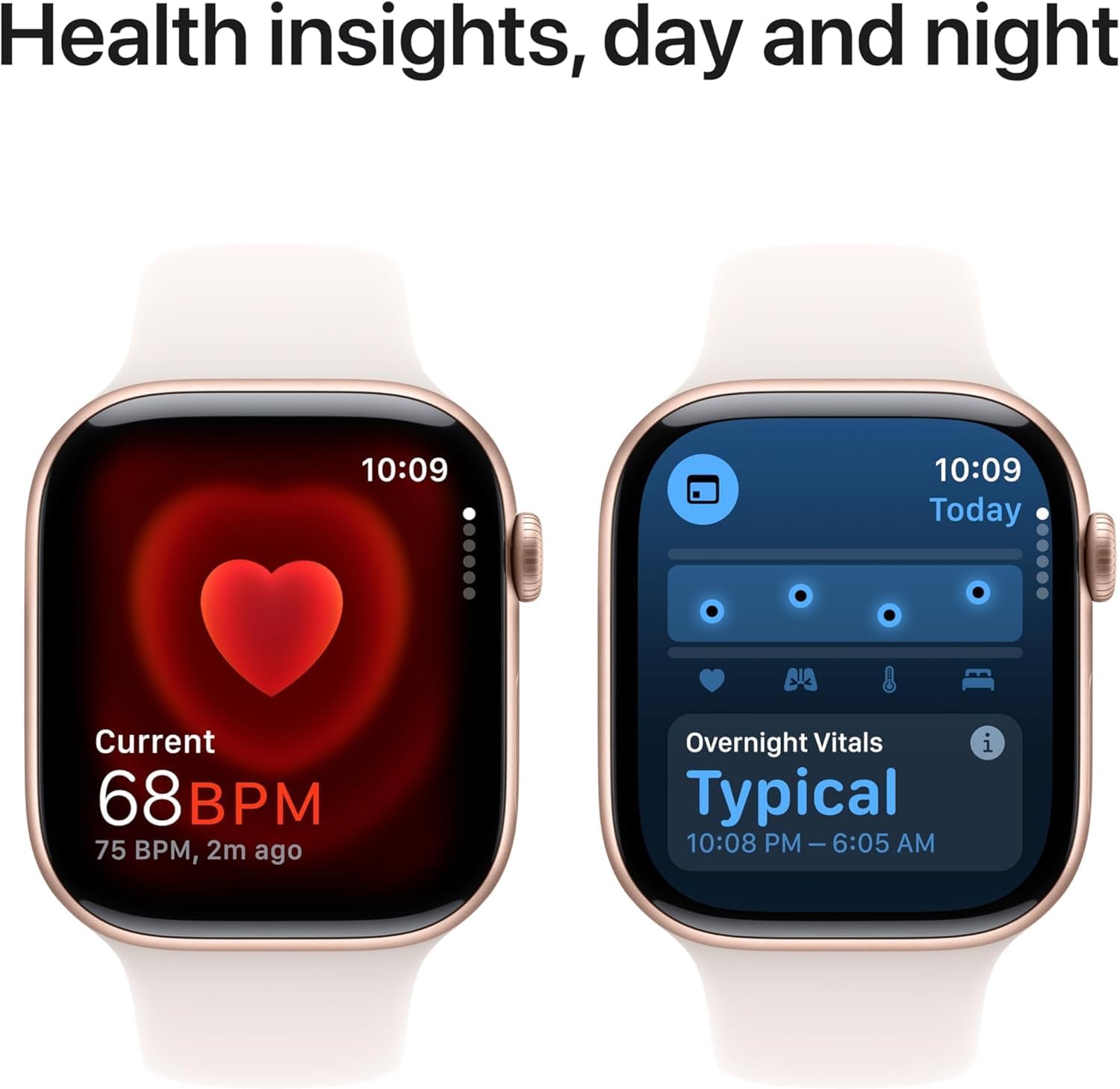
Best for: iPhone users who want a full smartwatch with solid fitness tracking and great everyday usability
The Series 10 is the thinnest, lightest Apple Watch ever made. Excellent for iPhone users who want health tracking integrated with their Apple ecosystem.
- Pros: Thinnest design yet; LTPO OLED display; crash detection; ECG; watchOS app ecosystem; Apple Pay; cellular option
- Cons: ~18-hour battery requires daily charging; iPhone required; less running depth than Garmin; less recovery depth than WHOOP
- Why we recommend it: Best smartwatch for iPhone users in the whoop vs garmin vs apple watch debate — especially for everyday use beyond sport
- Avg. rating: ⭐ 4.5/5
- Approx. price: ~$350–400 on Amazon
8. Oura Ring Gen 4
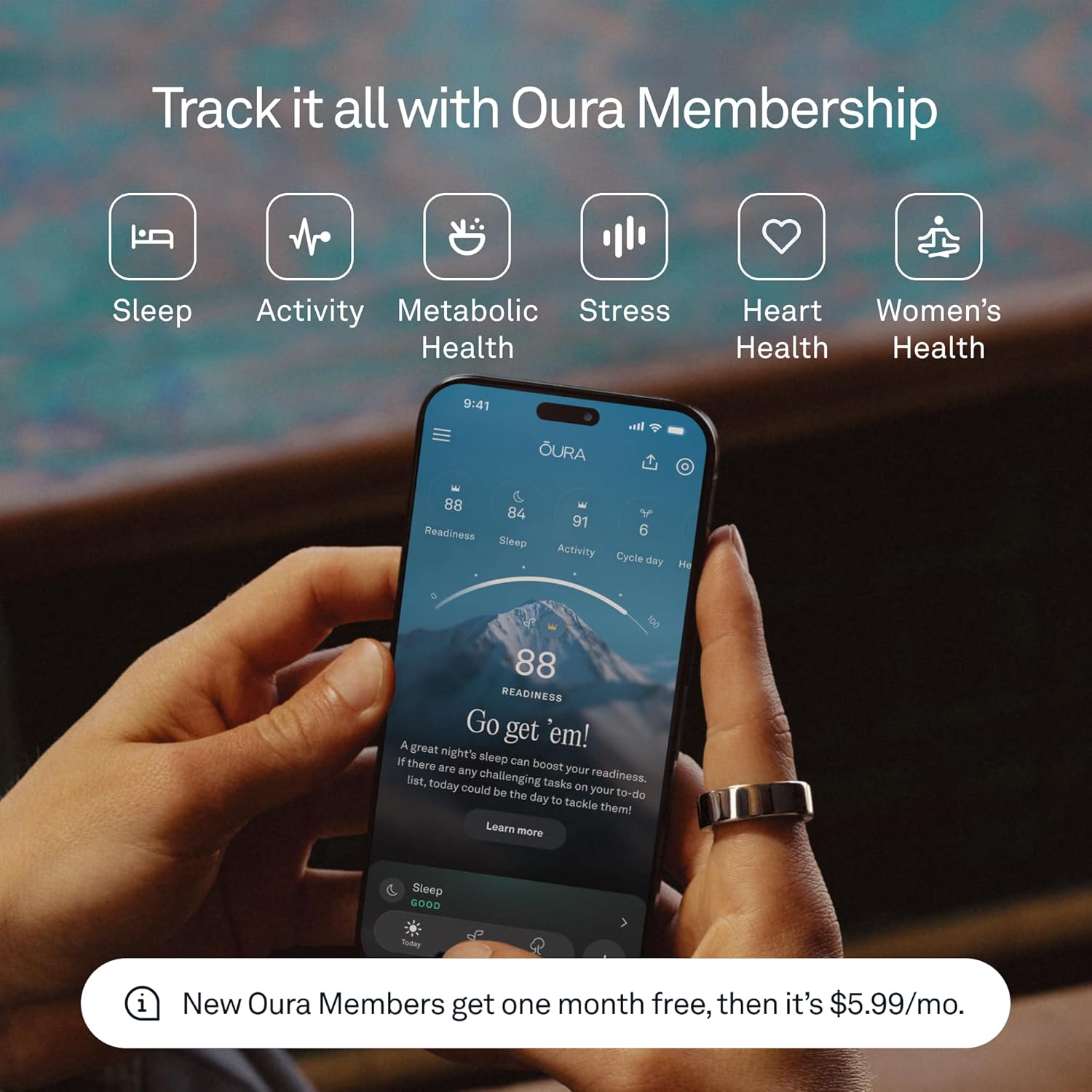
Best for: Recovery-focused users who prefer a ring form factor over a wristband or watch
Oura Gen 4 tracks sleep, recovery, HRV, and readiness from your finger with near-invisible wear. Excellent for people who find wristbands uncomfortable overnight.
- Pros: Ring form factor ideal for sleep; excellent HRV and sleep accuracy; Readiness Score; $6/month subscription (much less than WHOOP); skin temperature sensing
- Cons: No GPS; no display; no workout tracking depth; ring sizing is permanent once ordered
- Why we recommend it: Best alternative to WHOOP for recovery and sleep tracking — at a lower monthly subscription cost
- Avg. rating: ⭐ 4.4/5
- Approx. price: ~$300–350 on Amazon + subscription
9. WHOOP Body and Accessories Band Set
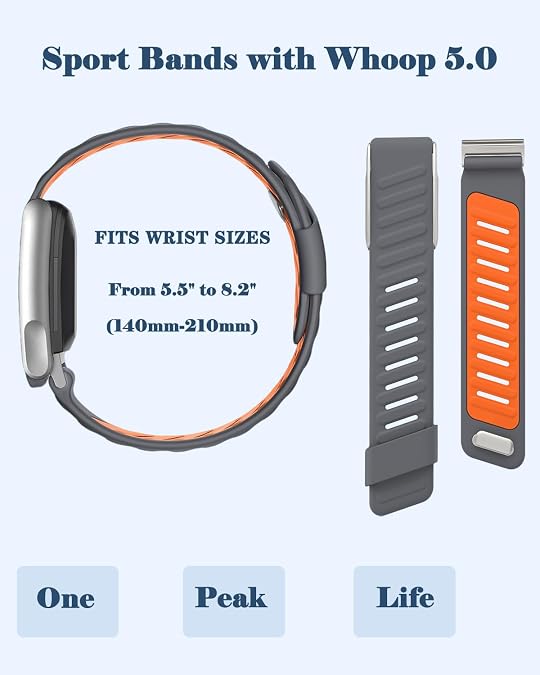
Best for: WHOOP users wanting alternative wear sites (bicep, forearm, calf) or replacement bands
WHOOP’s accessory band ecosystem opens up wear locations beyond the wrist — useful for athletes where wrist wear interferes with equipment (barbell grip, gloves, etc.).
- Approx. price: ~$29–69 on Amazon depending on band type
10. Garmin HRM-Pro Plus Heart Rate Monitor
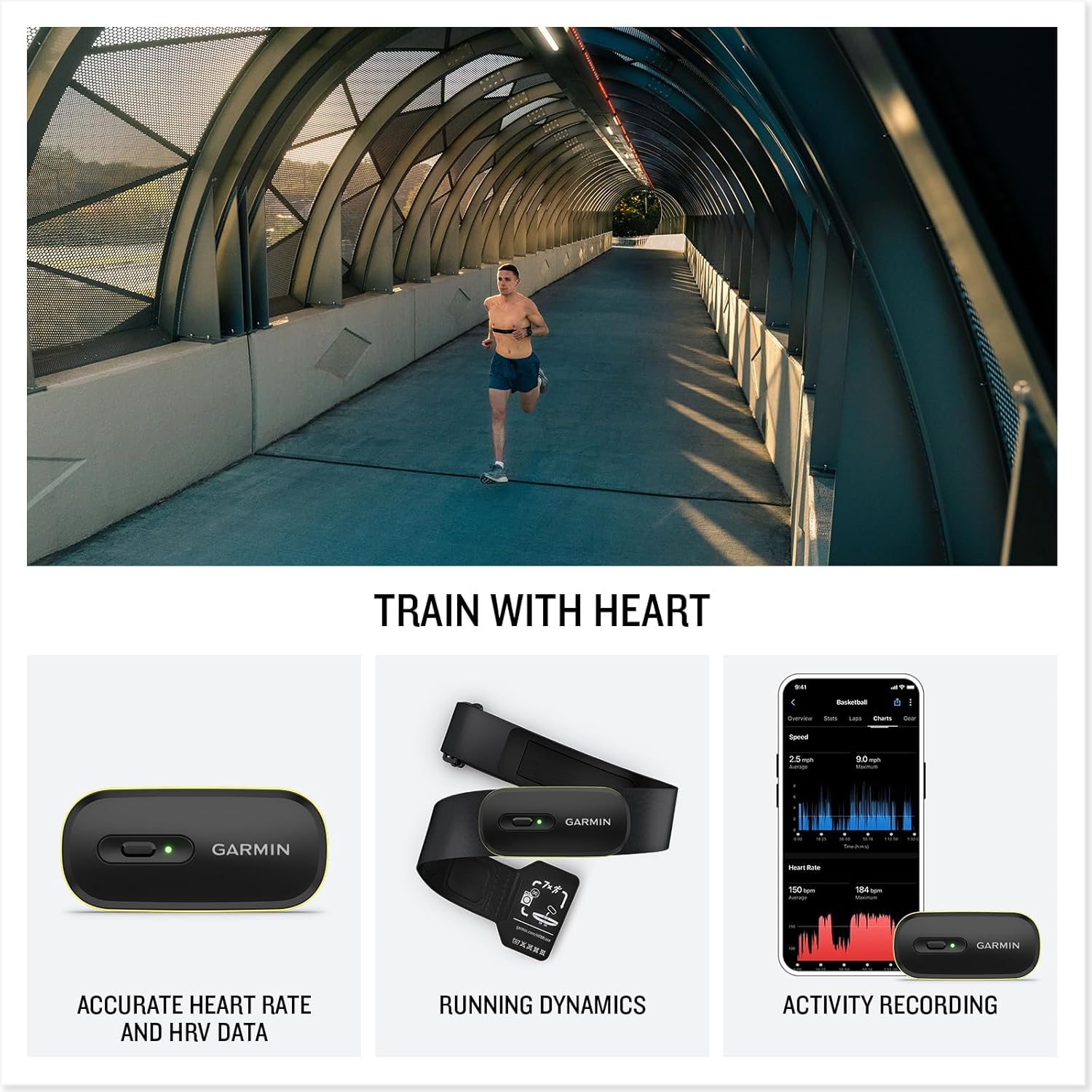
Best for: Any Garmin athlete who needs maximum HR accuracy during high-intensity training or strength sessions
Pairing your Garmin with a chest strap HRM-Pro Plus eliminates the optical HR accuracy limitations during intense effort. Also provides running dynamics data wirelessly to compatible Garmin watches.
- Pros: Clinical-grade chest strap HR accuracy; captures running dynamics; stores data offline; ANT+ and Bluetooth dual broadcast
- Why we recommend it: The single best accessory upgrade for any Garmin athlete serious about HR accuracy during hard efforts
- Avg. rating: ⭐ 4.6/5
- Approx. price: ~$80–100 on Amazon
Buying Guide: How to Choose Between WHOOP and Garmin
Use this decision framework to cut through the noise and match the right device to your actual life.
1: What Is Your Primary Training Focus?
| Training Focus | Best Device |
|---|---|
| Running (structured training) | Garmin Forerunner 265 or 965 |
| Triathlon / Multisport | Garmin Forerunner 965 or Fenix 8 |
| Recovery optimization | WHOOP |
| Sleep improvement | WHOOP (or Oura) |
| Weight training / gym | WHOOP (recovery) or Garmin (general) |
| Outdoor adventure / hiking | Garmin Instinct 3 or Fenix 8 |
| General fitness and wellness | Garmin Venu 3 |
2: How Important Is GPS to You?
- GPS is critical → Garmin
- GPS is secondary or irrelevant → WHOOP is viable
3: How Do You Feel About Subscriptions?
- Subscriptions are fine if the data is worth it → WHOOP is worth evaluating
- Subscriptions are a dealbreaker → Garmin (free app forever)
4: Do You Need a Display?
- Yes → Garmin (any model)
- No → WHOOP is a match
5: What’s Your Budget Over 3 Years?
- Under $400 total → Garmin Forerunner 265 or Instinct 3
- $400–$600 total → Garmin or WHOOP at lower membership tier
- $600–$1,000 → Garmin Fenix 8 or WHOOP committed athlete
- Cost isn’t the primary factor → WHOOP for recovery depth, Garmin for GPS
6: Are You a Beginner or Experienced Tracker?
- First fitness tracker → Garmin Forerunner 265 or Venu 3
- Experienced athlete upgrading from another device → WHOOP for recovery focus, Garmin 965/Fenix for performance
7: Do You Also Want a Smartwatch?
- Smart notifications, payments, music → Garmin
- Data-only, no distractions → WHOOP

Pros and Cons Summary
WHOOP 4.0/5.0
| ✅ Pros | ❌ Cons |
|---|---|
| Best daily HRV and Recovery Score | Subscription mandatory and ongoing |
| AI-powered Journal behavior correlation | No display — requires phone |
| Personalized Sleep Coach | No built-in GPS |
| On-wrist charging — zero data gaps | No smart features or notifications |
| Slim and comfortable 24/7 | Higher long-term total cost |
| IP68 waterproof | 30+ days to fully personalize |
| Strain tracking across all activities | Limited value for casual users |
Garmin Forerunner 265
| ✅ Pros | ❌ Cons |
|---|---|
| Multi-band GPS — best in class | Less HRV granularity than WHOOP |
| 13-day battery life | Charging overnight causes data gaps |
| Body Battery and HRV Status | Body Battery less precise than Recovery Score |
| VO2 Max and race predictor | GPS active reduces battery to ~20 hours |
| Daily Suggested Workouts AI | More complex to set up for beginners |
| Free Garmin Connect app forever | Display adds bulk vs. WHOOP |
| Full smart features (music, payments) | Third-party integrations require manual sync |
| No subscription |
Garmin Fenix 8
| ✅ Pros | ❌ Cons |
|---|---|
| Military-grade durability | Heaviest, most expensive option |
| Offline topographic maps | Overkill for casual users |
| Up to 57 hours GPS battery | Takes time to learn all features |
| LED flashlight, dive mode | High upfront cost |
| Best-in-class multisport |
Common Mistakes Buyers Make
1. Choosing WHOOP expecting GPS
There is no GPS on WHOOP. If you run or ride outdoors and want route data, WHOOP cannot replace a GPS sports watch. Know this before you subscribe.
2. Picking Garmin and expecting WHOOP-level HRV recovery
Garmin’s Body Battery is good. WHOOP’s HRV-based Recovery Score is more granular. They serve similar purposes but at different depths. Don’t expect identical recovery insight from both platforms.
3. Comparing upfront costs without calculating 3-year totals
WHOOP’s subscription makes it substantially more expensive over time than a Garmin that costs more upfront. Do the 36-month math before deciding.
4. Buying WHOOP without committing to the data
WHOOP only delivers ROI if you check your Recovery Score daily and act on it. Passive wearers get little benefit from the subscription.
5. Choosing Garmin Fenix 8 when Forerunner 265 is sufficient
The Fenix 8 is exceptional — and often overkill for road runners and gym athletes. The Forerunner 265 handles 95% of what most athletes need at about one-third the price.
6. Charging your Garmin overnight and wondering why Body Battery is inconsistent
Charging at night creates overnight data gaps that break the continuity of Body Battery and HRV Status. Charge during recovery activities, not during sleep.
7. Expecting immediate WHOOP personalization
New WHOOP users sometimes feel the data is generic or inaccurate in the first 3–4 weeks. WHOOP needs 30+ days of consistent wear to establish your personal baseline. Give it time.
8. Buying the wrong Garmin for your sport
Garmin’s lineup is extensive. A Venu 3 is excellent for lifestyle use but lacks the running dynamics of a Forerunner. A Forerunner 265 is perfect for running but lacks the offline maps needed for trail running expeditions. Match the model to your activity.
9. Treating wearable data as medical diagnosis
Neither WHOOP nor Garmin produces medical-grade biometric data. Sleep staging, HRV, and SpO2 readings are useful for trends and training decisions — not clinical diagnosis. Use the data as directional guidance.
10. Ignoring the platform ecosystem you’re already in
If you already use TrainingPeaks, Strava, or a structured coaching platform, Garmin’s third-party integrations make it a more natural fit. WHOOP’s ecosystem is more closed. Check your existing tools before buying.
Frequently Asked Questions
Is WHOOP better than Garmin?
It depends on what you need. WHOOP is better for HRV-based recovery tracking, daily readiness scoring, and sleep coaching. Garmin is better for GPS performance, endurance sport metrics, and long-term cost efficiency. Many serious athletes use both.
Can Garmin replace WHOOP?
Partially. Garmin’s Body Battery and HRV Status serve similar recovery-awareness functions. But Garmin doesn’t match WHOOP’s HRV precision, personalized Sleep Coach, or behavioral Journal insights. For casual recovery tracking, Garmin is sufficient. For granular recovery optimization, WHOOP is stronger.
What can WHOOP do that Garmin can’t?
WHOOP delivers a daily HRV-calibrated Recovery Score built from your personal baseline, a personalized Sleep Coach that tells you what time to sleep based on your next-day goals, and a Journal feature that statistically correlates lifestyle behaviors with your recovery data over time. Garmin doesn’t replicate any of these at the same depth.
Can Garmin measure recovery?
Yes — through Body Battery and HRV Status. These are useful recovery indicators. WHOOP’s recovery system is more granular and HRV-centric, but Garmin’s tools are valuable and completely free.
Does WHOOP have GPS?
No. WHOOP has no built-in GPS. It can pair with your phone’s GPS during outdoor activities, but there’s no independent GPS capability.
Which is more accurate — WHOOP or Garmin?
WHOOP has an edge for continuous resting heart rate and overnight HRV accuracy. Garmin’s multi-band GPS (on Forerunner 265 and above) leads the industry for route and pace accuracy. Both devices struggle with optical HR accuracy during high-intensity efforts — a chest strap improves accuracy for both platforms.
Can WHOOP track running?
Yes, but without GPS or pace data unless your phone is present. WHOOP records the cardiovascular strain of your run and logs it in the app. For route maps, pace, distance, and running dynamics, you need a GPS watch like Garmin.
Does Garmin require a subscription?
No. Garmin Connect — including Body Battery, HRV Status, sleep tracking, training history, and GPS mapping — is completely free for all Garmin device owners. There’s an optional premium tier but no mandatory subscription.
Is WHOOP worth the monthly fee?
For athletes who engage with the data daily and make training or lifestyle decisions based on their Recovery Score, WHOOP is worth it. For passive wearers or casual fitness enthusiasts, the subscription is hard to justify versus a one-time Garmin purchase.
Which tracks sleep better — WHOOP or Garmin?
Both track sleep stages with reasonable accuracy. WHOOP provides more actionable forward-looking coaching through its Sleep Coach. Garmin provides good sleep reporting integrated with Body Battery overnight recovery. WHOOP wins for athletes who want to actively improve their sleep.
Is Garmin better for marathon training?
Yes — for the active training and race-day elements. Garmin’s GPS accuracy, running dynamics, VO2 Max estimation, race predictor, and Daily Suggested Workouts make it the better marathon training tool. WHOOP complements Garmin beautifully for recovery management between sessions.
Can I wear both WHOOP and Garmin at the same time?
Yes — and many serious athletes do exactly this. WHOOP on one wrist (or bicep) for recovery data, Garmin on the other for GPS and real-time performance metrics. It’s not a cheap combination, but it covers every base.
WHOOP vs Garmin vs Apple Watch — which wins?
Depends on your needs. WHOOP wins for recovery. Garmin wins for GPS and endurance sport. Apple Watch wins for iPhone users who prioritize smartwatch functionality and everyday iOS integration.
WHOOP vs Garmin vs Oura Ring — which is best for sleep?
WHOOP and Oura both excel at sleep tracking. Also WHOOP has a slight edge for athletes due to its integration with training strain and recovery data. Oura is more comfortable for ring-preferring users and has a lower monthly subscription (~$6/month). Garmin tracks sleep well but lacks the same coaching depth as WHOOP or Oura.
WHOOP vs Garmin vs Fitbit — which is best for beginners?
Fitbit is the most beginner-friendly option — accessible app, clear display, no mandatory subscription, and strong motivational features. Garmin is excellent for beginners with athletic goals. WHOOP has a learning curve and is better suited for users who are already engaged with training data. Our full WHOOP vs Fitbit guide covers that match-up in detail.
Which wearable is best for biohackers and health optimizers?
WHOOP and Oura Ring are both popular in biohacking communities for their depth of recovery and sleep data. For biohackers who also train, WHOOP’s behavioral Journal is a uniquely powerful self-experimentation tool. See our roundup of the best fitness wearables for a full landscape view.
Final Verdict
The WHOOP vs Garmin debate doesn’t have one universal answer. It has the right answer for you — based on what you need and how you train.
Best overall for recovery optimization: WHOOP
No other mainstream consumer wearable delivers the same depth of daily HRV-based recovery scoring, behavioral insight through the Journal, and personalized Sleep Coach guidance. If you’re training hard and want to know whether your body is ready before you push it — WHOOP is the tool.
Best overall for runners: Garmin Forerunner 265
Multi-band GPS, 13-day battery, Daily Suggested Workouts, VO2 Max, and race predictor — the Forerunner 265 is the best running watch at its price point. No subscription needed. Data flows into every major training platform.
Best for elite multisport athletes: Garmin Forerunner 965 or Fenix 8
Triathlon, ultra-endurance, mountain sports — the 965 and Fenix 8 handle everything. The Fenix 8 adds offline maps, durability, and safety features for athletes who venture far from cell coverage.
Best for sleep and recovery (budget-conscious): Oura Ring Gen 4
If WHOOP’s subscription feels steep and your primary goal is sleep and recovery optimization, Oura delivers comparable depth at a lower monthly cost in a ring you’ll barely notice overnight.
Best for beginners: Garmin Forerunner 265 or Garmin Venu 3
Free platform, GPS, Body Battery, and a clear display make Garmin the most accessible entry point for new wearable users with fitness goals.
Best value over 3 years: Garmin
The numbers don’t lie. A Garmin Forerunner 265 purchased once and used for three years costs less than eight months of a WHOOP membership. For cost-conscious athletes, Garmin’s value proposition is hard to argue against.
Best for athletes who want both:
Wear WHOOP on your bicep and Garmin on your wrist. Many elite athletes do exactly this — and they have complete performance and recovery data coverage. It’s an investment, but it’s the most complete picture available in consumer wearables today.
The WHOOP vs Garmin decision ultimately comes down to this: Are you optimizing training performance, or optimizing recovery? Both matter. One device does each better. Know your priority, and the right choice becomes obvious.