TABLE OF CONTENTS
- Introduction: Why Whoop Isn’t for Everyone
- Quick Comparison Table
- The 11 Best Whoop Alternatives
- Oura Ring Gen 3
- Garmin Forerunner 265
- Garmin Venu 3
- Apple Watch Series 9
- Apple Watch Ultra 2
- Fitbit Charge 6
- Fitbit Sense 2
- Polar Ignite 3
- Polar Pacer Pro
- Amazfit Balance
- COROS Pace 3
- Detailed Buying Guide: What to Look For
- Why People Are Leaving Whoop
- Whoop vs Popular Alternatives
- Frequently Asked Questions
- Conclusion: Which Whoop Alternative Is Right for You?
Whoop built its reputation by doing one thing brilliantly: telling you exactly how hard you can push today based on how well you recovered last night. Athletes, runners, and biohackers fell in love with it — and honestly, for good reason. But if you aren’t ready to commit to a monthly subscription, finding the Best Whoop Alternatives is the next logical step.
But then the bill arrives every single month.
At $30/month (or $239/year on the annual plan), Whoop asks you to keep paying indefinitely — just to access the data your own body is generating. The device itself comes “free” with the membership, but make no mistake: you’re renting your fitness tracker. Stop paying, and it stops working.
That’s a dealbreaker for a lot of people.
The good news? The wearable fitness tech world has exploded. You can now get exceptional sleep tracking, HRV monitoring, recovery scores, and training readiness metrics from devices that cost a one-time fee and nothing more. Some even outperform Whoop in specific areas.
This guide breaks down the 11 best Whoop alternatives available right now — with honest assessments of what each one does well, where it falls short, and exactly who should buy it.
Let’s find yours.
What Makes a Great Whoop Alternative?
Before diving into the list, it’s worth knowing what you’re actually replacing. Whoop’s core value sits in four areas:
- Recovery Score — A daily readiness metric based on HRV, resting heart rate, sleep performance, and recent training load
- Sleep Tracking — Detailed sleep staging including REM, deep, and light sleep, plus respiratory rate
- Strain Score — A measure of how hard your cardiovascular system worked during the day
- HRV Monitoring — Heart rate variability, the gold standard for measuring how recovered your nervous system is
A great Whoop alternative should hit at least three of these four, ideally with better hardware or smarter software — and without charging you a monthly membership fee.
Quick Comparison Table
| Product | Best For | Subscription? | Sleep Tracking | Recovery Score | Battery Life | Price Range |
|---|---|---|---|---|---|---|
| Oura Ring Gen 3 | All-day comfort & sleep | Optional ($5.99/mo) | ⭐⭐⭐⭐⭐ | ⭐⭐⭐⭐⭐ | 7 days | $299–$549 |
| Garmin Forerunner 265 | Runners & triathletes | None | ⭐⭐⭐⭐ | ⭐⭐⭐⭐ | 13 days | $449 |
| Garmin Venu 3 | Everyday athletes | None | ⭐⭐⭐⭐ | ⭐⭐⭐⭐ | 14 days | $449 |
| Apple Watch Series 9 | iPhone users & smart features | None | ⭐⭐⭐ | ⭐⭐⭐ | 18 hours | $399 |
| Apple Watch Ultra 2 | Extreme athletes | None | ⭐⭐⭐ | ⭐⭐⭐ | 36 hours | $799 |
| Fitbit Charge 6 | Budget-conscious users | Optional ($9.99/mo) | ⭐⭐⭐⭐ | ⭐⭐⭐ | 7 days | $159 |
| Fitbit Sense 2 | Stress & wellness tracking | Optional ($9.99/mo) | ⭐⭐⭐⭐ | ⭐⭐⭐ | 6 days | $249 |
| Polar Ignite 3 | Fitness beginners & style | None | ⭐⭐⭐⭐ | ⭐⭐⭐⭐ | 5 days | $299 |
| Polar Pacer Pro | Serious runners | None | ⭐⭐⭐⭐ | ⭐⭐⭐⭐ | 7–35 days | $349 |
| Amazfit Balance | Budget-friendly all-rounder | None | ⭐⭐⭐⭐ | ⭐⭐⭐ | 14 days | $179 |
| COROS Pace 3 | Ultramarathoners & GPS athletes | None | ⭐⭐⭐ | ⭐⭐⭐ | 17–38 days | $229 |
The 11 Best Whoop Alternatives
1. Oura Ring Gen 3 — Best Overall Whoop Alternative for Sleep & Recovery
Best For: Anyone who prioritizes recovery tracking, sleep science, and comfort above all else.
Key Features
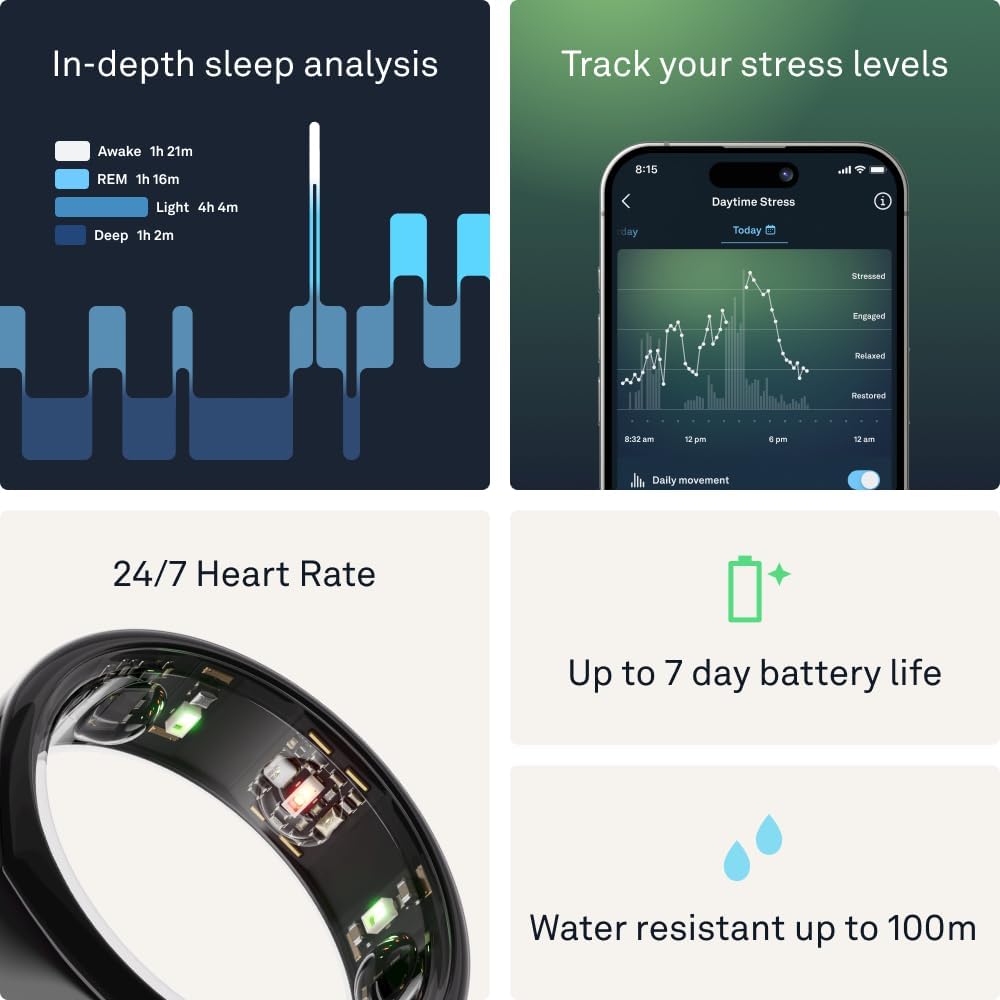
- Optical heart rate sensors, infrared LEDs, and a temperature sensor embedded in a titanium ring
- Readiness Score built on HRV, resting heart rate, sleep stages, and activity balance
- Detailed sleep staging: REM, deep, light, and awake time
- Continuous daytime heart rate and activity tracking
- Menstrual cycle tracking with cycle predictions
- Optional Oura Membership ($5.99/month) unlocks advanced insights and personalized recommendations
Pros
- The most comfortable wearable for overnight wear — most people forget it’s there
- Industry-leading sleep tracking accuracy, frequently cited in peer-reviewed research
- Elegant, low-profile design that works in professional settings
- No bulky display to break or catch on gear
- One-time device cost is comparable to a few months of Whoop
Cons
- No GPS (not a sports watch)
- Basic features are now paywalled behind the $5.99/month membership
- Not ideal for athletes who want real-time workout displays
Sleep Tracking Performance
As one of the Best Whoop Alternatives, the Oura Ring Gen 3 remains the gold standard for consumer sleep tracking. Its position on the finger — where blood flow is closer to the surface — gives it an advantage over wrist-based sensors. Expect accurate sleep staging, responsive total sleep time estimates, and a morning Readiness Score that genuinely reflects how you feel.
Recovery Tracking Performance
The Readiness Score is Whoop’s closest competitor. It synthesizes HRV, resting heart rate, body temperature, sleep quality, and recent activity load into a single 1–100 score. It’s nuanced and, more importantly, accurate. Many athletes report the Readiness Score aligns better with their subjective feel than Whoop’s Strain-to-Recovery model.
Battery Life
Up to 7 days — far exceeding Whoop’s 4–5 days — and it charges in about 20 minutes, meaning you’ll rarely miss a night of tracking.
Why It’s Better Than Whoop
When looking for the Best Whoop Alternatives, Oura wins on comfort, sleep accuracy, and price-to-value. The optional subscription is less than half the cost of Whoop’s, and you can also get meaningful baseline data from the free tier.
Who Should Buy It
Perfect for anyone who wants world-class sleep and recovery tracking without wearing a bulky device. Especially recommended for office professionals, those in physical jobs, and athletes who prefer a non-sporty aesthetic.
Overall Rating: 9.4/10
2. Garmin Forerunner 265 — Best Whoop Alternative for Runners and Multisport Athletes
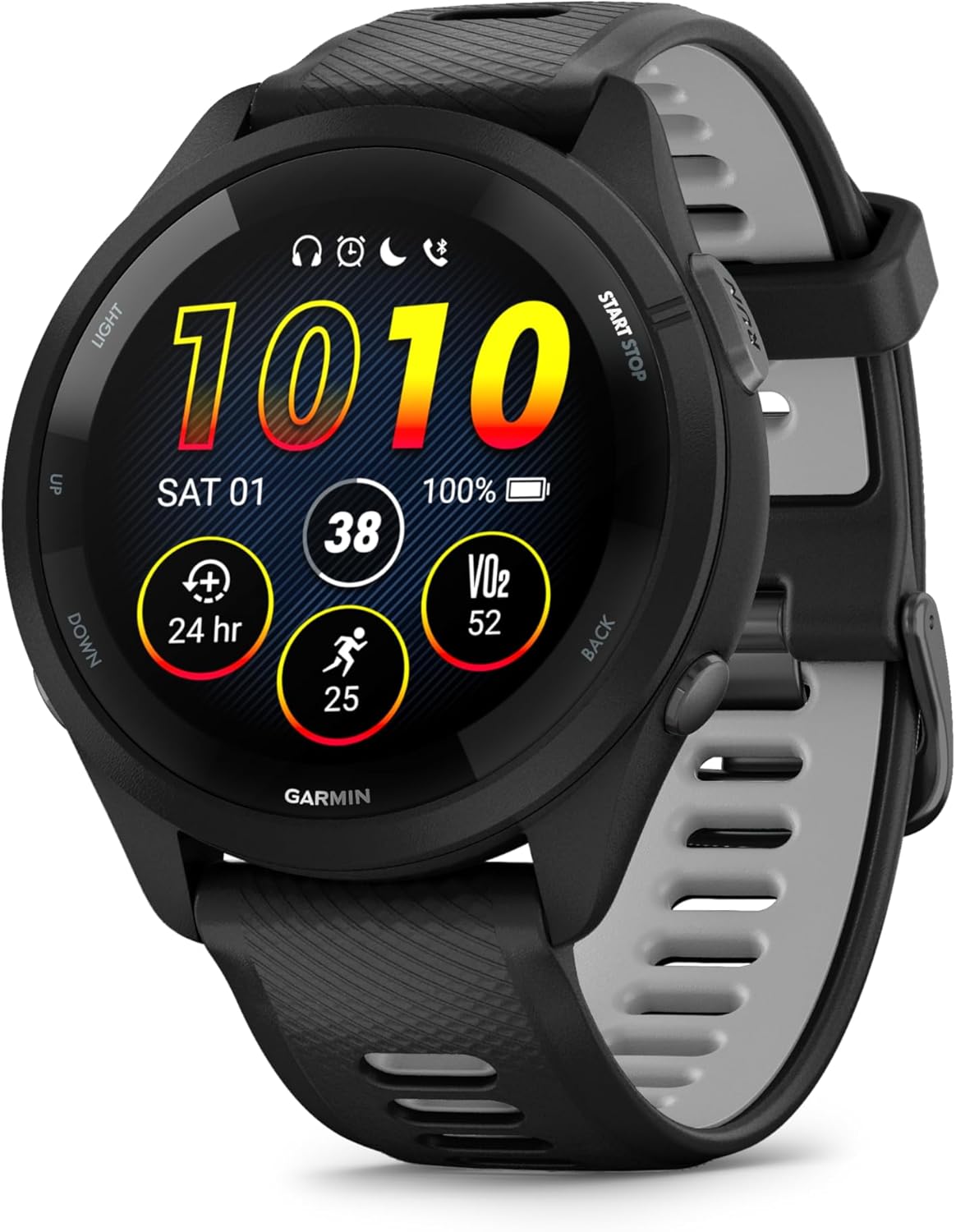
Best For: Runners, cyclists, swimmers, and triathletes who need elite sports tracking alongside strong recovery metrics.
Key Features
- Bright AMOLED display with full color sports metrics
- Training Readiness score combining HRV status, sleep, recovery time, and training load
- HRV Status — a 5-day HRV rolling average compared to your baseline
- Body Battery energy monitoring (0–100 scale)
- Running Dynamics: cadence, stride length, ground contact time, vertical oscillation
- Built-in GPS with multi-band accuracy
- Sleep tracking with sleep stages and Pulse Ox
- Compatible with Garmin Connect — one of the best fitness apps in the business
- No subscription required
Pros
- Deep sports analytics that Whoop can’t touch
- Lifetime GPS maps included
- No subscription — ever
- Massive third-party app ecosystem
- Music storage and contactless payments
- Accurate swimming and triathlon modes
- Training load and VO2 Max estimates
Cons
- Heavier and bulkier than Whoop for everyday wear
- Battery life shorter than Garmin’s GPS watches when using continuous GPS
- AMOLED display drains battery faster than MIP display models
Sleep Tracking Performance
When evaluating the Best Whoop Alternatives, Garmin’s sleep tracking has improved significantly in recent firmware updates. Sleep staging is reliable, and the morning HRV Status check is one of the most scientifically grounded recovery indicators available outside of clinical settings.
Recovery Tracking Performance
The combination of Body Battery, HRV Status, and Training Readiness creates a recovery picture that serious athletes find more actionable than Whoop’s strain-focused approach. Training Readiness scores pull from stress levels, sleep quality, HRV, recovery time advisories, and recent load — giving you a genuinely useful morning check-in.
Battery Life
Up to 13 days in smartwatch mode, or around 20 hours with continuous GPS. That’s two to three times what Whoop offers on a charge.
Why It’s Better Than Whoop
No subscription, plus GPS tracking, sport-specific metrics, music storage, and contactless payments — none of which Whoop offers. The Training Readiness score rivals Whoop’s recovery metric while the broader platform goes miles deeper.
Who Should Buy It
This is for runners, triathletes, cyclists, and anyone who logs serious training volume and wants their recovery data to live inside a rich sports analytics platform—making it stand out among the Best Whoop Alternatives.
Overall Rating: 9.2/10
3. Garmin Venu 3 — Best Whoop Alternative for Everyday Athletes Who Want Style
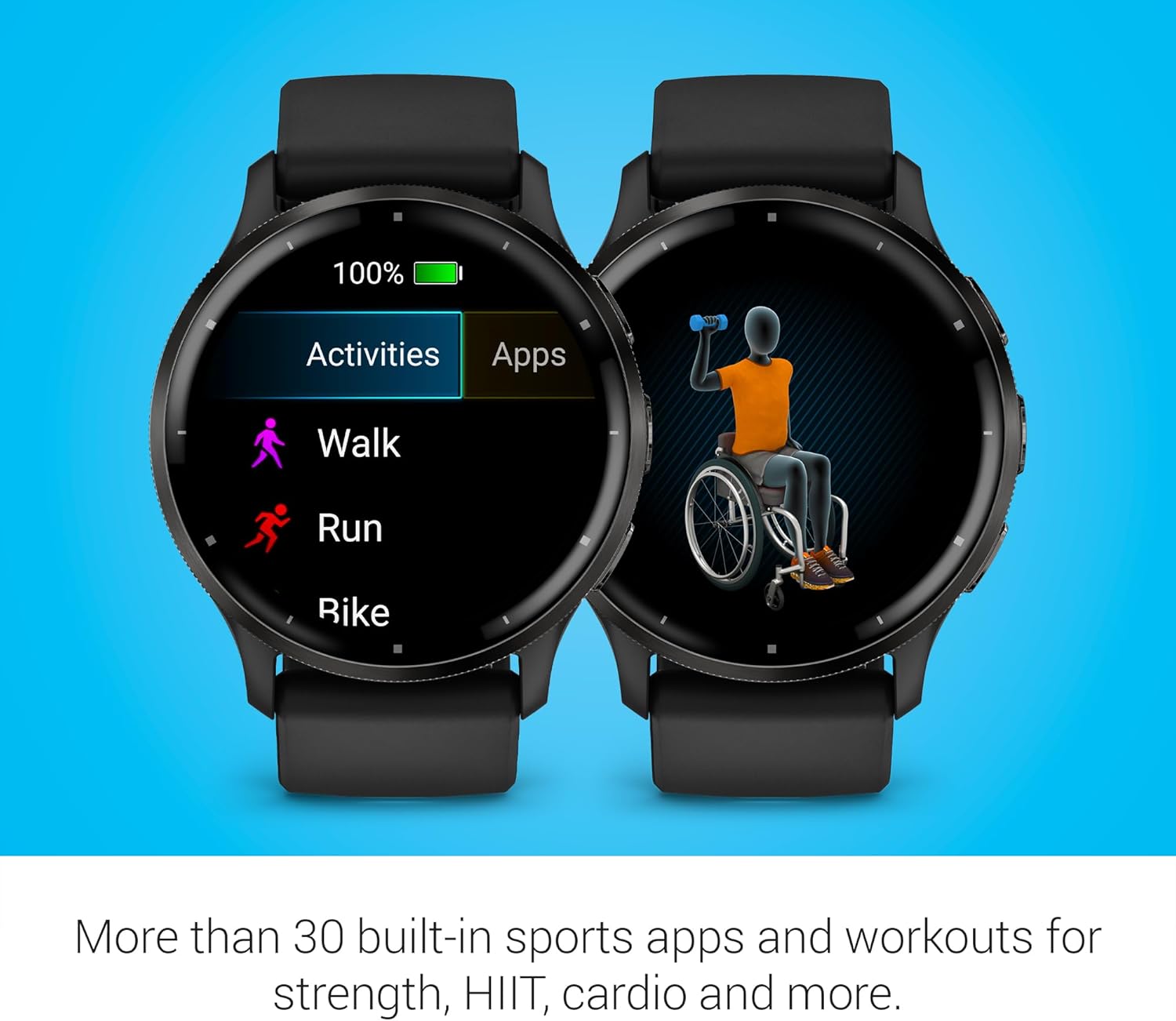
Best For: Fitness-conscious individuals who want premium tracking in a sleek, lifestyle-friendly design.
Key Features
- Stunning AMOLED display with always-on mode
- Nap detection and sleep coaching program
- Body Battery energy monitoring
- HRV Status tracking
- Animated on-device workouts with strength, cardio, yoga, and Pilates guidance
- Wheelchair activity tracking modes
- Menstrual cycle tracking and pregnancy tracking
- Stress tracking and guided breathing
- No subscription required
Pros
- Beautiful, fashion-forward design that works as an everyday watch
- Comprehensive wellness tracking beyond pure sports performance
- Sleep coaching is uniquely useful and personalized
- Strong Garmin Connect app with deep historical data
- No subscription fees
Cons
- Less running-specific than Forerunner series
- No built-in barometric altimeter
- Battery drains faster with always-on display enabled
Sleep Tracking Performance
The Venu 3 adds something special: nap detection. It auto-detects when you fall asleep outside your normal schedule and tracks it. Combined with a full sleep coaching program that builds personalized recommendations over time, it secures its spot among the Best Whoop Alternatives for anyone wanting a top-tier sleep tracking experience on a traditional smartwatch.
Recovery Tracking Performance
Body Battery and HRV Status carry the recovery story here. While it doesn’t go as deep as Oura Ring or the Forerunner 265, it gives everyday athletes a clear, color-coded signal for how to approach each day.
Battery Life
Up to 14 days in smartwatch mode — exceptional. Even with the always-on display, you’ll get 5–6 days between charges.
Why It’s Better Than Whoop
It’s more wearable day-to-day, has no subscription, features a real display, and offers app support and wellness features that extend well beyond the athletic context Whoop lives in — making it one of the Best Whoop Alternatives on the market.
Who Should Buy It
Office workers, casual gym-goers, health-conscious individuals who want strong tracking without looking like they’re heading to a triathlon at brunch.
Overall Rating: 9.0/10
4. Apple Watch Series 9 — Best Whoop Alternative for iPhone Users
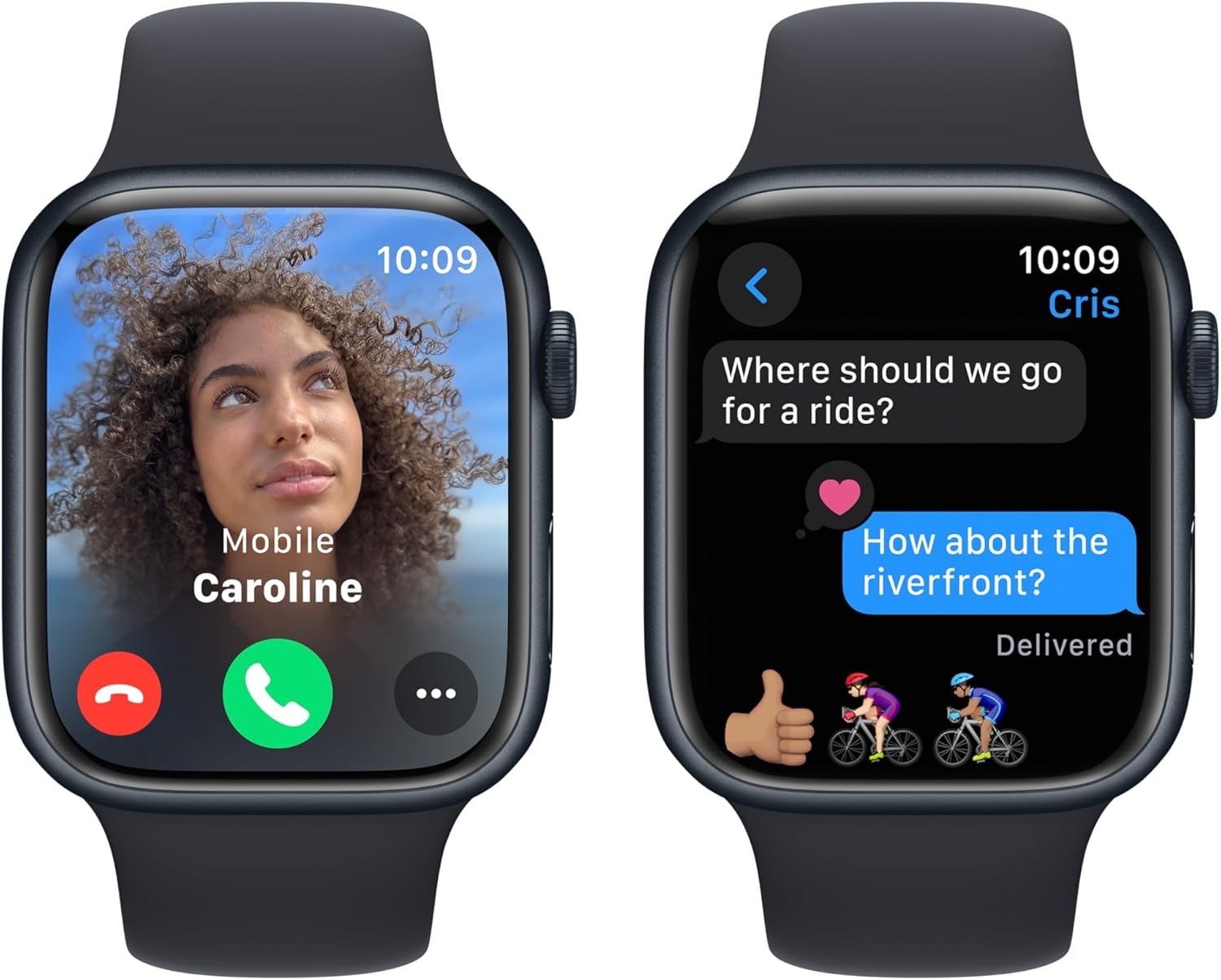
Apple Watch Series 9 [GPS 45mm] Midnight Aluminum Case with Midnight Sport Band
Best For: iPhone users who want seamless ecosystem integration and broad health tracking.
Key Features
- S9 chip with on-device Siri
- Double Tap gesture control
- Blood oxygen sensor (Pulse Ox)
- ECG app with atrial fibrillation detection
- Crash detection and Emergency SOS
- Sleep tracking with sleep stages
- Temperature sensing for cycle tracking
- watchOS 10 with new Smart Stack and refreshed apps
- Apple Health integration
- No fitness tracking subscription required
Pros
- Best-in-class app ecosystem through App Store
- Seamless iPhone integration
- ECG and AFib detection for heart health
- Works with Apple Fitness+ (optional, $9.99/month)
- Regular software updates that genuinely improve the device
- Strong resale value
Cons
- Sleep tracking lags behind Oura and Garmin in accuracy
- No recovery score comparable to Whoop’s
- 18-hour battery means daily charging is mandatory
- Only works with iPhone
Sleep Tracking Performance
Apple Watch tracks sleep stages, total sleep time, and heart rate during sleep. It’s improved steadily since launch, but still sits behind dedicated sleep trackers. You must charge it during the day rather than overnight if you want to track sleep — an inconvenient tradeoff for many users.
Recovery Tracking Performance
Apple Health provides a basic readiness picture through resting heart rate, HRV trends, and Activity rings, but there’s no single recovery score on par with Whoop or Oura. Third-party apps like AutoSleep and HRV4Training fill this gap reasonably well.
Battery Life
The weakest point in the lineup at 18 hours. Apple Watch Ultra 2 extends this significantly (see below), but the standard Series 9 requires a nightly charging habit.
Why It’s Better Than Whoop
Smarter overall. ECG, crash detection, app ecosystem, Apple Pay, Siri, and dozens of third-party fitness apps give it broader real-world utility. And there’s no mandatory monthly fee.
Who Should Buy It
For iPhone users who want a premium smartwatch experience and don’t mind supplementing with third-party apps for deeper recovery metrics, it stands out as one of the Best Whoop Alternatives.
Overall Rating: 8.5/10
5. Apple Watch Ultra 2 — Best Whoop Alternative for Extreme Athletes
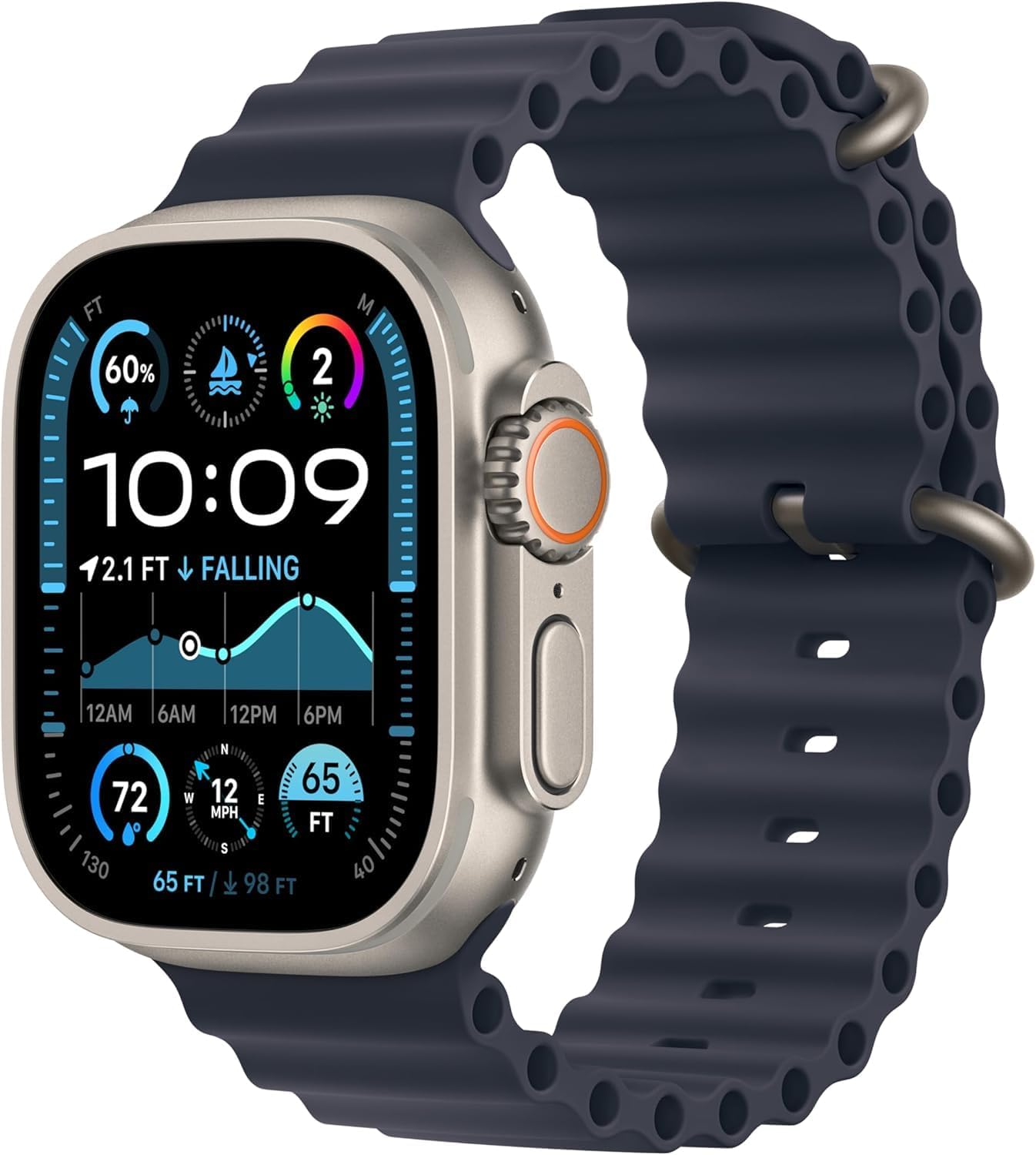
Best For: Ultramarathoners, mountaineers, open water swimmers, and serious endurance athletes.
Key Features
- Titanium case built to MIL-STD-810H military durability standards
- 100m water resistance (WR100)
- Dual-frequency GPS (L1 + L5) for pinpoint accuracy in challenging terrain
- Precision second hand for dive-safe timekeeping
- Action Button for custom shortcut assignments
- Up to 36 hours battery (60+ hours in Low Power Mode)
- Loudest speaker ever on an Apple Watch (86 dB)
- Night mode for low-light trail use
- All Series 9 health features included
Pros
- Extremely durable for adventure sports
- Best GPS accuracy of any Apple Watch
- Battery life that’s actually usable for ultra-distance events
- Works with Wayfinder watch face for backcountry navigation
Cons
- Large 49mm case isn’t comfortable for smaller wrists
- Premium price of $799
- Still runs watchOS — same sleep/recovery limitations as Series 9
- Overkill for everyday fitness users
Sleep Tracking Performance
Featuring identical software to the Series 9, the same limitations apply here, but if you are researching the Best Whoop Alternatives, the extended battery is the real advantage: you can charge during workouts rather than overnight, making sleep tracking much more practical.
Recovery Tracking Performance
Same watchOS health suite as the Series 9. Athletes often pair the Ultra 2 with HRV4Training or Training Today apps for a more Whoop-like recovery experience.
Battery Life
Up to 36 hours standard, 60+ hours in Low Power Mode. Enough for multi-day stage races and expeditions.
Why It’s Better Than Whoop
For extreme athletes, the Ultra 2 goes places Whoop never could — literally. Dual-frequency GPS, deep-water resistance, and 60-hour battery life make it indispensable for long-distance events and adventure sports.
Who Should Buy It
For ultra-distance runners, IRONMAN competitors, mountaineers, divers, and anyone searching for the Best Whoop Alternatives who pushes into environments where durability and GPS accuracy are non-negotiable.
Overall Rating: 8.7/10
6. Fitbit Charge 6 — Best Budget-Friendly Whoop Alternative
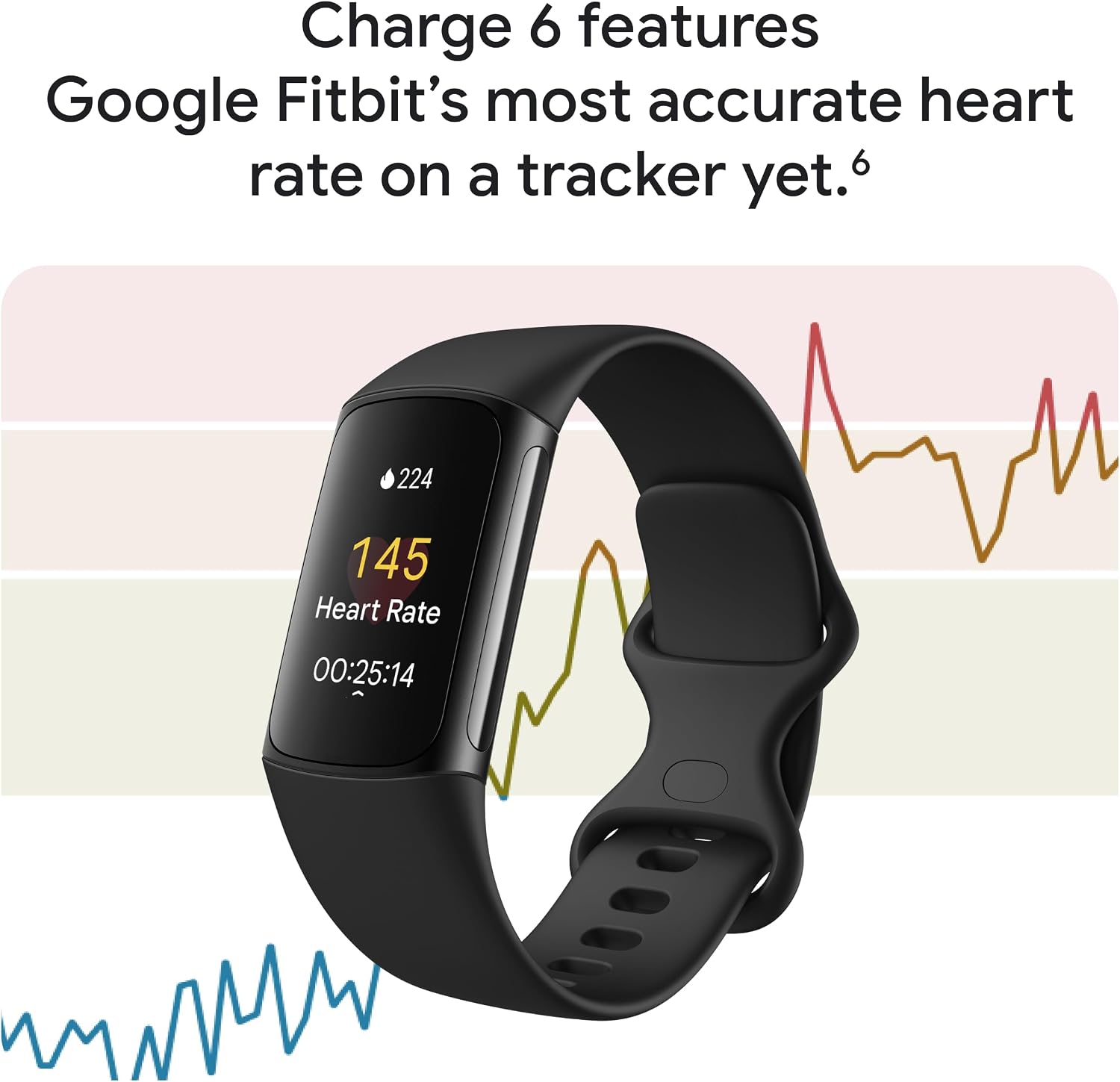
Best For: Budget-conscious fitness enthusiasts who want solid core tracking at an accessible price point.
Key Features
- Built-in GPS (no phone required)
- Google Maps and Google Wallet integration
- 24/7 heart rate monitoring
- Daily Readiness Score (requires Fitbit Premium — $9.99/month or $79.99/year)
- Active Zone Minutes for cardiovascular fitness goals
- 40+ exercise modes
- Stress management score and EDA sensor
- SpO2 (blood oxygen) monitoring
- Compatible with both Android and iOS
Pros
- Most affordable option on this list
- Slim, comfortable band design
- Built-in GPS is a major upgrade over Charge 5
- Google integration is genuinely useful
- Long battery life relative to its price
Cons
- Best recovery features (Daily Readiness Score) require Fitbit Premium
- Premium costs more than Oura’s subscription at full price
- Display is small and harder to read mid-workout
Sleep Tracking Performance
Fitbit’s sleep tracking has years of refinement behind it, ensuring it ranks highly among the Best Whoop Alternatives. Sleep staging, Sleep Score, and snore/noise detection combine into one of the cleaner sleep summaries available in this price range.
Recovery Tracking Performance
The Daily Readiness Score — available with Fitbit Premium — considers your recent activity, sleep quality, and heart rate variability to produce a 1–100 readiness number with workout intensity recommendations. It’s not as nuanced as Whoop but solid for casual to intermediate athletes.
Battery Life
Up to 7 days, which puts it ahead of most smartwatches and on par with Whoop.
Why It’s Better Than Whoop
At $159 versus Whoop’s $239/year (before you factor in the hardware they’re essentially leasing you), the Charge 6 delivers the core functionality at a fraction of the cost. Even with Fitbit Premium, your first-year total is usually less than two years of Whoop.
Who Should Buy It
This is the ideal choice for budget-conscious users, Fitbit loyalists upgrading from older models, and anyone searching for the Best Whoop Alternatives who wants a lightweight tracker that doesn’t feel like wearing a smartwatch.
Overall Rating: 8.0/10
7. Fitbit Sense 2 — Best Whoop Alternative for Stress and Holistic Wellness Tracking
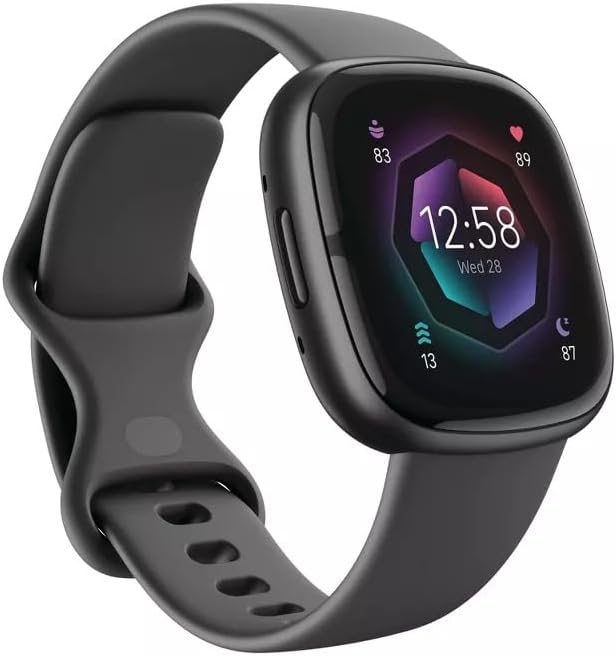
Best For: Users who want comprehensive stress management tracking alongside fitness and sleep metrics.
Key Features
- EDA (electrodermal activity) scan for stress detection
- Continuous ECG monitoring for heart rhythm insights
- Skin temperature tracking
- Daily Readiness Score (Premium required)
- Sleep Profiles — six animal archetypes describing your sleep patterns over time
- 40+ exercise modes with automatic exercise detection
- Mindfulness tools including guided breathing sessions
- Google integration (Maps, Wallet, Assistant)
Pros
- Best stress tracking of any device on this list
- Sleep Profiles give long-term perspective on sleep patterns
- ECG monitoring adds heart health monitoring
- Comfortable 24/7 wear for all-day wellness tracking
Cons
- Fitbit Premium required for the best features ($9.99/month)
- Smaller display than smartwatches
- GPS relies on phone connection (no standalone GPS)
Sleep Tracking Performance
The Sleep Profile feature alone makes the Sense 2 worth considering. Rather than just showing you last night’s data, it synthesizes a month of sleep patterns into a personalized archetype — telling you whether you’re a “Gator” (rarely wakes) or a “Pecking Robin” (light sleeper with frequent wake-ups). It’s one of the most unique sleep features in consumer wearables.
Recovery Tracking Performance
Combined stress, HRV, sleep, and heart rate data feed into the Daily Readiness Score (with Premium). It gives a holistic picture that places as much emphasis on mental stress recovery as physical recovery — something Whoop doesn’t do as explicitly.
Battery Life
Up to 6 days — solid, though slightly below Charge 6.
Why It’s Better Than Whoop
As you look into the Best Whoop Alternatives, the Sense 2 adds a dimension Whoop lacks: stress physiology. If your recovery dips are often stress-related rather than training-related, this device surfaces that connection clearly.
Who Should Buy It
High-stress professionals, wellness-focused users, and anyone whose sleep and recovery struggles have a strong stress component.
Overall Rating: 8.2/10
8. Polar Ignite 3 — Best Whoop Alternative for Fitness Beginners Who Want Premium Tracking
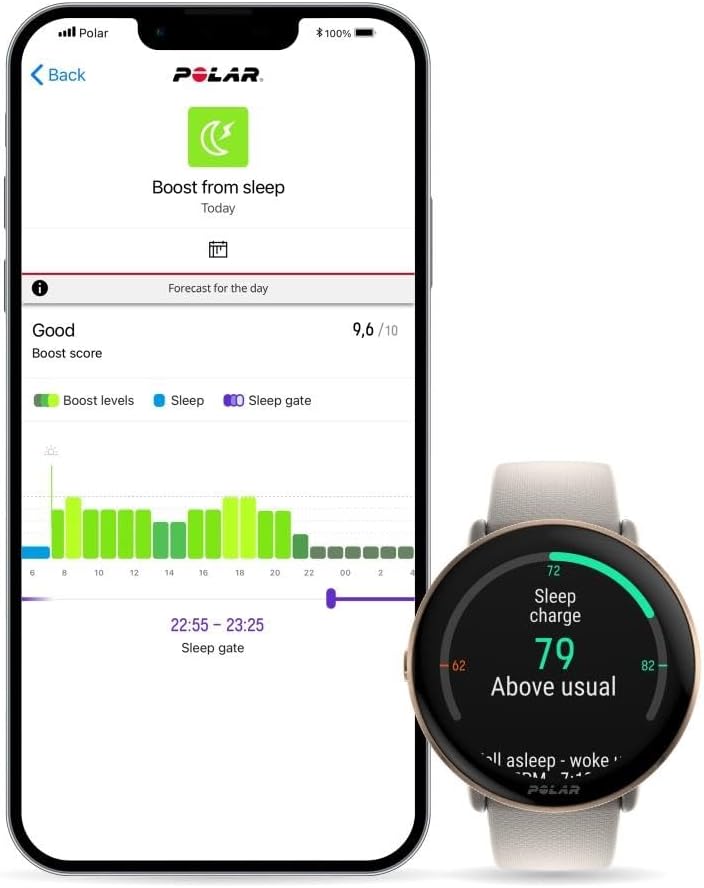
Best For: Newer fitness enthusiasts who want accurate sleep and recovery data in a lightweight, stylish package.
Key Features
- AMOLED color touchscreen
- Nightly Recharge — recovery metric measuring autonomic nervous system recharge
- Sleep tracking with Polar SleepPlus Stages
- FitSpark daily training guide based on recovery status
- Running power measurement
- Continuous heart rate and HRV measurement
- GPS and route guidance
- Skin temperature measurement
- No subscription required
Pros
- Beautiful, slim design comparable to a fashion watch
- FitSpark removes the guesswork by telling you exactly what workout to do based on your recovery
- No subscription fees
- Nightly Recharge is a genuinely strong recovery metric
Cons
- Less third-party app support than Garmin or Apple Watch
- Smaller fitness community and social features
- Not ideal for swim tracking (5 ATM water resistance, not dedicated swim mode)
Sleep Tracking Performance
Polar’s SleepPlus Stages technology tracks light, deep, and REM sleep using wrist-based optical heart rate monitoring and movement data. Accuracy is strong, and the integration with Nightly Recharge (which specifically measures how well your autonomic nervous system recovered) adds depth you won’t find on most wrist wearables.
Recovery Tracking Performance
Nightly Recharge is Polar’s answer to Whoop’s Recovery Score — and it’s impressive. It specifically measures sleep quality and ANS recharge separately, then combines them into a clear recommendation for how intense your next training session should be. The FitSpark guide then prescribes specific workouts — strength, cardio, or recovery — based on where your score lands.
Battery Life
Up to 5 days — not the longest on this list, but respectable for an AMOLED device.
Why It’s Better Than Whoop
The FitSpark workout guidance feature takes recovery data one step further than Whoop by translating your readiness into specific workout prescriptions, making this tracker one of the Best Whoop Alternatives with no subscription and beautiful hardware.
Who Should Buy It
Fitness beginners to intermediate athletes who want guided, recovery-aware training without needing to interpret raw data themselves.
Overall Rating: 8.6/10
9. Polar Pacer Pro — Best Whoop Alternative for Serious Runners
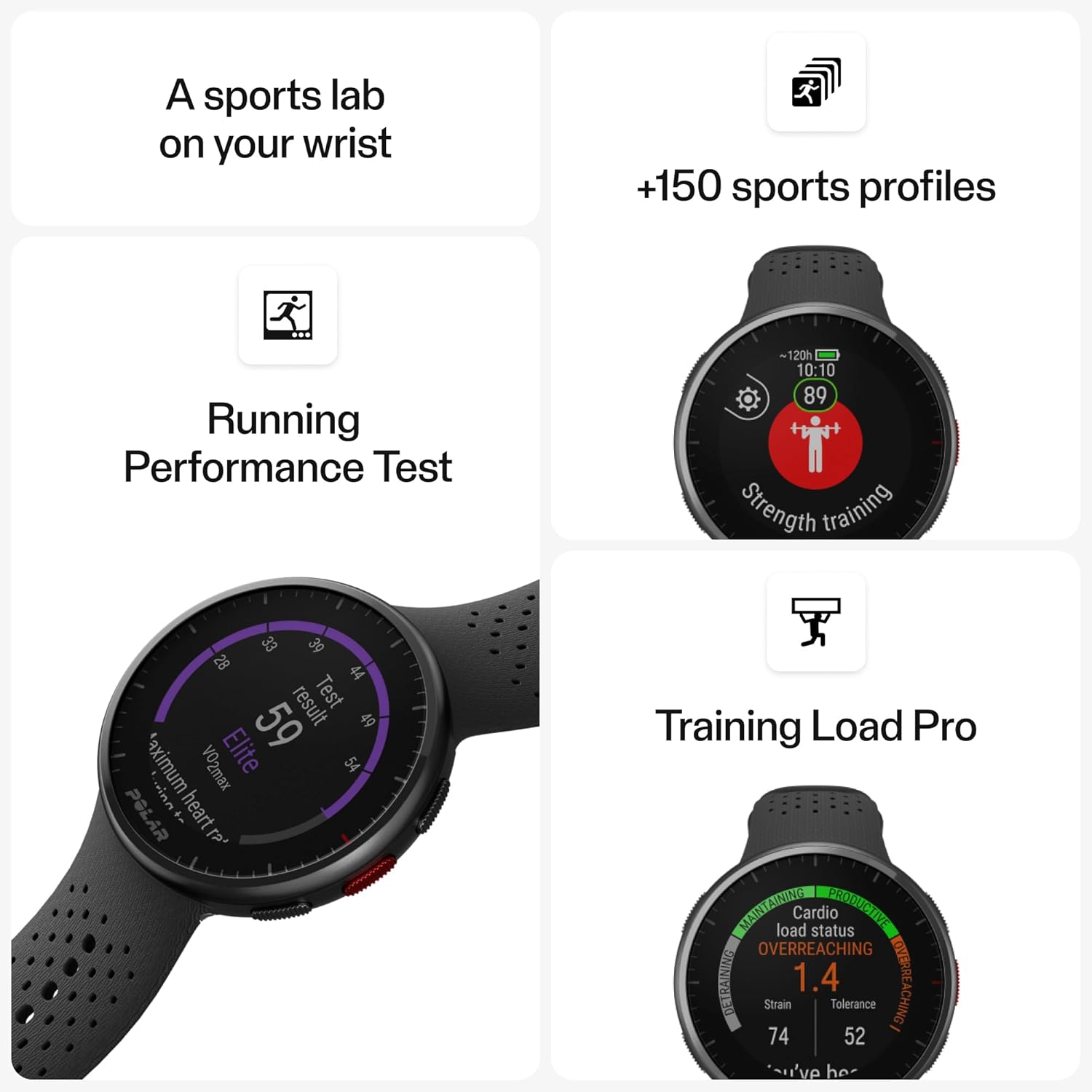
POLAR Pacer Pro Advanced Ultra-Light GPS Fitness Tracker Smartwatch
Best For: Dedicated runners who want elite running metrics alongside deep recovery and HRV tracking.
Key Features
- Running Power (wrist-based, no external pod needed)
- Running cadence, stride length, and vertical oscillation
- Hill Splitter for segment analysis on hilly routes
- Route guidance with turn-by-turn directions
- Training Load Pro with cardio, muscle, and perceived load breakdown
- Nightly Recharge and SleepPlus Stages
- VO2 Max estimation and fitness test
- FitSpark daily training guide
- Multi-sport profiles including triathlon mode
- Barometric altimeter
- No subscription required
Pros
- Exceptional running metrics for the price
- Training Load Pro separates cardiovascular and muscular load — a rare and useful distinction
- GPS tracks in challenging environments like dense cities and forests
- Remarkable battery life for an optical HR sports watch
- No monthly fees
Cons
- Older-style transflective display (not AMOLED) looks dated compared to competitors
- Slightly heavier than Polar Ignite 3
- App ecosystem is smaller than Garmin Connect or Apple Health
Sleep Tracking Performance
Same SleepPlus Stages and Nightly Recharge system as the Ignite 3. Consistent and reliable across both devices.
Recovery Tracking Performance
Training Load Pro is the standout feature here. By separating cardiovascular strain from muscular strain, it identifies the specific type of recovery your body needs — a level of nuance that Whoop doesn’t currently match. Combined with Nightly Recharge, you get a recovery picture that’s both physiologically accurate and practically actionable.
Battery Life
Offering up to 35 hours in GPS mode and 7 days in watch mode with HR monitoring, it stands out among the Best Whoop Alternatives because Polar’s efficient hardware architecture keeps power consumption low without sacrificing sensor accuracy.
Why It’s Better Than Whoop
For runners specifically, Training Load Pro’s cardio vs. muscular load distinction is a meaningful upgrade over Whoop’s generalized Strain score. No subscription. Superior GPS battery life.
Who Should Buy It
Dedicated runners — especially those logging 30+ miles per week — who want the depth of a coaching tool in their wrist tracker.
Overall Rating: 8.8/10
10. Amazfit Balance — Best Budget All-Rounder Whoop Alternative
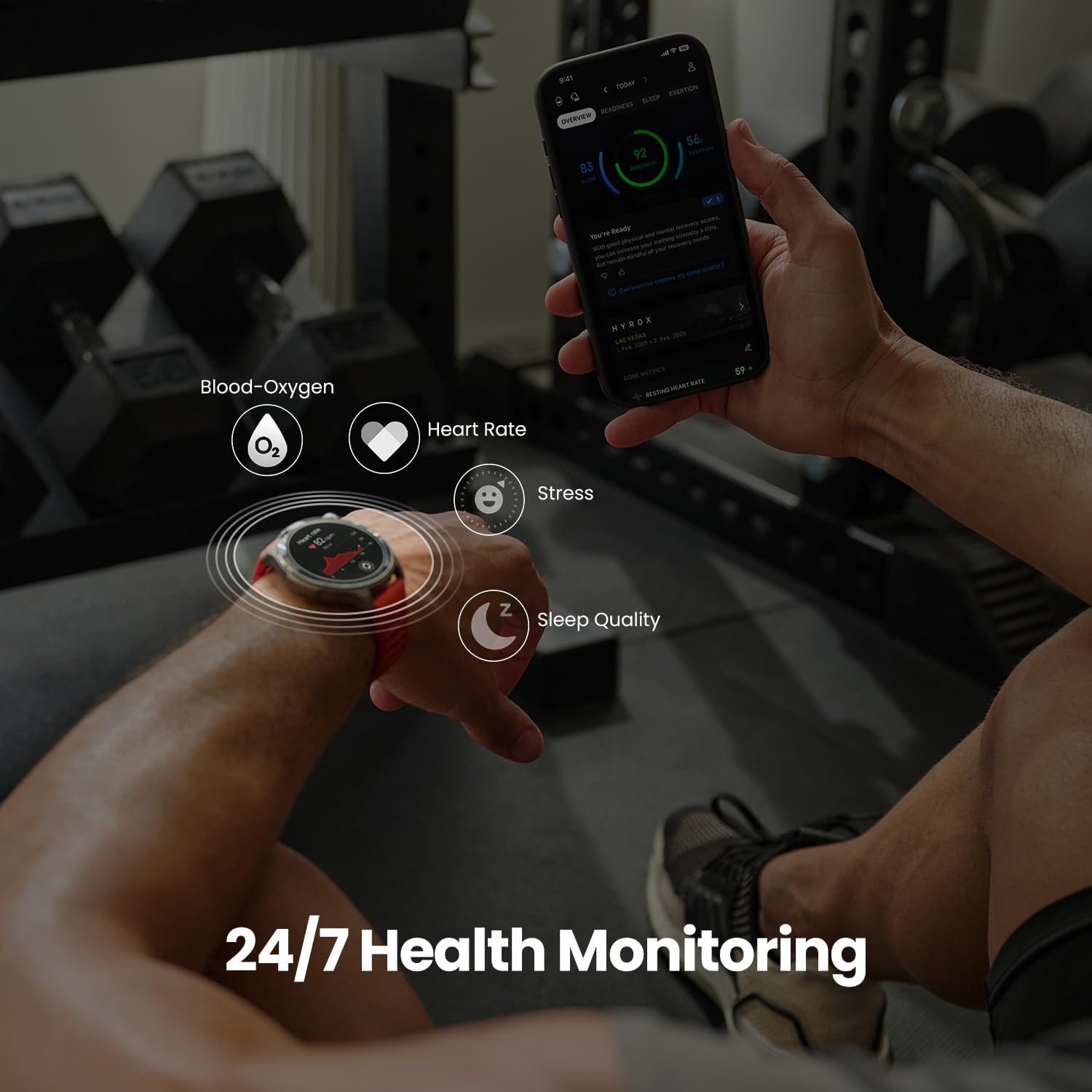
Best For: Budget-conscious users who want solid sleep and recovery tracking with smartwatch features.
Key Features
- AMOLED display with AOD support
- Zepp OS with third-party app support
- Body Vitality Score (daily readiness metric powered by AI)
- Sleep tracking with sleep stages and Sleep Quality Score
- Stress monitoring and HRV data
- 14-day battery life
- Built-in GPS
- Body Composition measurement (BIA sensor)
- AI health management tool — Zepp Coach
- No subscription required for core features
Pros
- Outstanding battery life at 14 days
- Body composition measurement is a premium feature at this price
- Zepp Coach provides personalized training suggestions
- AMOLED display looks premium for the price point
- Affordable entry point without sacrificing key metrics
Cons
- Third-party app ecosystem less mature than Garmin or Apple
- GPS accuracy not as precise as dual-frequency options
- HRV accuracy slightly below premium competitors
- Brand recognition lower, which affects community resources
Sleep Tracking Performance
Amazfit’s sleep tracking has improved markedly in recent firmware versions, earning it a spot in the conversation around the Best Whoop Alternatives. Sleep stages, nap detection, and a morning Sleep Quality Score give you a solid foundation — not as accurate as Oura or Garmin at the top end, but significantly better than most people expect at this price point.
Recovery Tracking Performance
The Body Vitality Score consolidates HRV, sleep quality, activity patterns, and stress data into a daily readiness metric. It’s less sophisticated than Whoop’s recovery system but delivers surprising insight for the price. The body composition measurement adds a layer of metabolic awareness most competitors at this tier skip entirely.
Battery Life
14 days — the joint-best on this list alongside Garmin Venu 3. Easily the strongest argument for the Amazfit Balance over more expensive options.
Why It’s Better Than Whoop
At under $200, the Amazfit Balance stands out among the Best Whoop Alternatives by delivering most of what Whoop does at roughly 10% of the five-year cost. Battery life alone makes the case.
Who Should Buy It
Budget shoppers, students, and anyone curious about recovery tracking who isn’t ready to invest in premium options.
Overall Rating: 8.3/10
11. COROS Pace 3 — Best Whoop Alternative for Ultramarathoners and GPS Enthusiasts
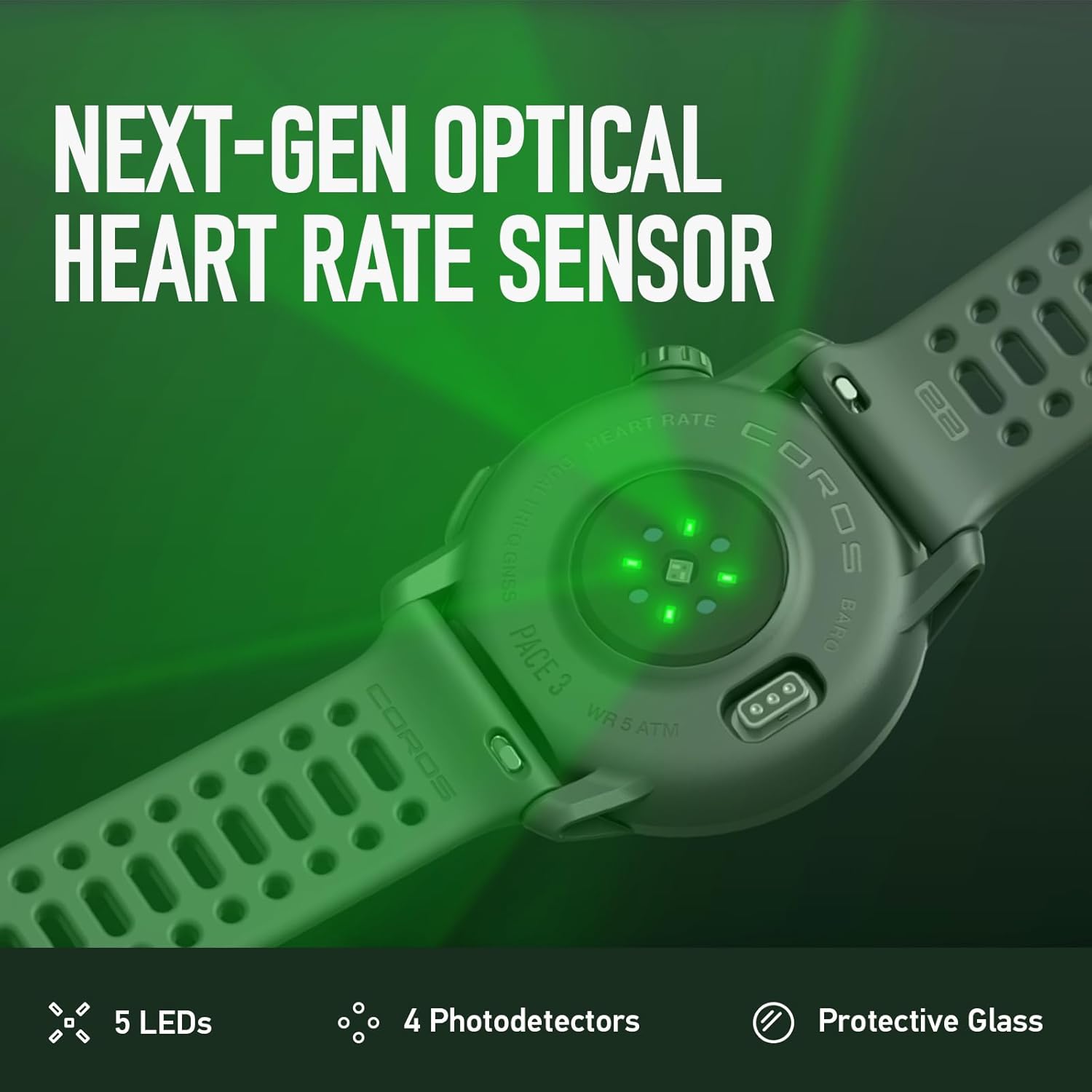
COROS PACE 3 GPS Sport Watch – Lightweight
Best For: Ultramarathon runners, thru-hikers, and multi-day adventure athletes who need exceptional GPS battery life.
Key Features
- Dual-frequency GPS (GPS/GNSS/Galileo/BeiDou/QZSS) for the highest positioning accuracy
- Up to 38 days watch battery life / 17 hours GPS mode
- Body Recovery metric (proprietary readiness score)
- Sleep tracking with sleep stage analysis
- EvoLab: training science tool with Race Predictor, Base Fitness, Training Load, Recovery, and Form
- Fiber-polymer case for ultra-light weight
- COROS Training Hub app with structured plan support
- Compatible with Strava and TrainingPeaks
- No subscription required
Pros
- Best GPS battery life on this entire list (17 hours continuous)
- EvoLab training science rivals premium coaching platforms
- Incredibly lightweight at 30g
- Strava and TrainingPeaks integration out of the box
- The Race Predictor tool is uniquely accurate for runners
Cons
- Display is small and less vibrant than AMOLED alternatives
- Sleep tracking not as deep as dedicated sleep-focused devices
- Lacks the consumer wellness features of Garmin or Apple Watch
- Limited smartwatch functionality
Sleep Tracking Performance
COROS prioritizes athlete performance over wellness aesthetics. Sleep staging is present but not as detailed as Oura, Garmin, or Polar. The Body Recovery metric draws partly on sleep quality, but COROS doesn’t lead with sleep as a primary feature.
Recovery Tracking Performance
EvoLab is where COROS earns its place on this list. The platform calculates training load, fitness form, base fitness, and fatigue across modalities — providing a training science depth that few consumer wearables match. If your goal is performance optimization rather than general wellness, EvoLab offers more structured insight than Whoop’s Strain/Recovery model.
Battery Life
17 hours in GPS mode, and up to 38 days in standard watch mode. For ultra-distance athletes covering 50–100+ mile events, this is the list’s standout performer.
Why It’s Better Than Whoop
EvoLab’s training science platform, combined with GPS battery life that lasts entire ultra-distance races, makes the COROS Pace 3 one of the Best Whoop Alternatives purpose-built for serious endurance athletes in a way Whoop — without GPS — simply cannot match.
Who Should Buy It
Ultramarathon runners, thru-hikers, IRONMAN athletes, and competitive runners who use structured training plans and want the deepest available training science analytics.
Overall Rating: 8.9/10
Detailed Buying Guide: What to Look For in a Whoop Alternative
Sleep Tracking Accuracy
Not all sleep trackers are equal. Optical heart rate sensors on the wrist offer decent accuracy, but devices that track multiple biometrics — including HRV, skin temperature, and movement — perform more reliably. The Oura Ring’s finger placement gives it a physiological advantage here. Garmin, Polar, and Fitbit all perform well on the wrist.
HRV Monitoring
Heart rate variability is the most scientifically validated indicator of recovery status. Look for devices that take HRV readings overnight (continuous) rather than just a single morning reading. Garmin, Polar, and Oura all do this well. A long baseline period (typically 3–4 weeks) improves accuracy for all devices.
Recovery Metrics
The best recovery scores synthesize multiple data points: HRV, resting heart rate, sleep quality, recent training load, and sometimes stress or temperature data. Single-input “recovery” metrics should be treated with healthy skepticism.
Training Readiness
Beyond recovery, some devices predict future performance using training load trends. Garmin’s Training Readiness, Polar’s FitSpark, and COROS’s EvoLab all do this well. This is where fitness trackers transition from reactive health tools to proactive coaching platforms.
Battery Life
Whoop lasts 4–5 days. Most alternatives on this list exceed that. Garmin Venu 3 and Amazfit Balance reach 14 days. COROS Pace 3 reaches 38 days in smartwatch mode. Longer battery means you’re less likely to miss nights of sleep tracking during charging.
Subscription Costs
This is the whole reason you’re reading this article. Here’s the summary:
- No subscription ever: Garmin, Polar, COROS, Amazfit, Apple Watch
- Optional subscription for enhanced features: Oura ($5.99/month), Fitbit ($9.99/month)
- Mandatory subscription: Whoop ($30/month or $239/year)
Ecosystem Compatibility
Consider where your data will live. Garmin Connect, Apple Health, Google Fit, Polar Flow, and COROS Hub each have distinct strengths. If you’re already deep in one ecosystem, choosing a compatible device compounds the value of your existing data history.
Accuracy Considerations
No consumer wearable matches clinical ECG or polysomnography lab accuracy. However, several devices — particularly Oura Ring, Garmin, and Polar — have been independently validated in peer-reviewed studies. This matters if you’re making training decisions based on the data.
Why People Are Leaving Whoop
Subscription Fatigue
Five years of Whoop membership costs over $1,200 — and you own nothing. Competitors offer one-time device purchases that deliver comparable or better metrics without the perpetual billing.
Rising Ownership Costs
Whoop raised its membership rates in recent years. What started as an accessible subscription now rivals monthly gym fees, making many users question the value proposition — especially as alternatives improve.
Competing Technology Catching Up
Garmin, Oura, and Polar have all closed the gap on HRV accuracy and recovery scoring in recent product generations. The performance differential that once justified Whoop’s premium is narrowing.
Better Smartwatch Functionality
Whoop remains a bare-bones device by design. No display, no GPS, no notifications beyond basics. Competitors now deliver equally strong biometrics inside full-featured smartwatches — giving you more without sacrificing the data quality you came for.
Whoop vs Popular Alternatives
Whoop vs Apple Watch
Apple Watch wins on ecosystem integration, app variety, ECG monitoring, and overall smartwatch utility. Whoop wins on dedicated recovery focus and 24/7 wrist comfort (no display to catch on things). For iPhone users who want a single daily driver, Apple Watch is the smarter buy. For pure recovery obsessives who already own a smartwatch, Whoop had an edge — but Garmin and Oura have largely eliminated it.
Whoop vs Garmin
Garmin wins in almost every measurable category for athletes: GPS, sports modes, battery life, app ecosystem, training load analytics, and zero subscription requirement. Whoop’s advantage is its simplified, recovery-first UX and the dedicated Strain coach. If you want depth without complexity, Garmin is the superior platform.
Whoop vs Oura Ring
This is the closest contest on the list. Both excel at recovery tracking and sleep science. Oura edges ahead on sleep accuracy (finger-based sensors outperform wrist in most studies) and comfort for overnight wear. Whoop edges ahead for athletes who want cardiovascular strain tracking during intense workouts. Cost-wise, Oura is significantly cheaper over time, especially with the free tier.
Whoop vs Fitbit
Fitbit wins on price and everyday usability. Whoop wins on recovery tracking depth. If you’re an intermediate fitness user — working out four or five days per week and wanting basic sleep insights — Fitbit Charge 6 with Fitbit Premium costs less than six months of Whoop and delivers sufficient value. For elite athletes, Whoop’s more specialized approach has historically been stronger, though Garmin and Polar have now built serious challengers in that space.

Frequently Asked Questions
1. What is the best alternative to Whoop?
The Oura Ring Gen 3 is the best overall Whoop alternative for most users, offering industry-leading sleep and recovery tracking with an optional $5.99/month subscription versus Whoop’s mandatory $30/month. For athletes who want GPS and sports metrics alongside recovery data, the Garmin Forerunner 265 is the top pick.
2. Is there a fitness tracker like Whoop without a subscription?
Yes — several. Garmin Forerunner 265, Garmin Venu 3, Polar Ignite 3, Polar Pacer Pro, COROS Pace 3, and Amazfit Balance all deliver strong recovery and sleep tracking with zero subscription costs.
3. Is Garmin better than Whoop?
For most athletes, yes. Garmin offers built-in GPS, broader sport modes, superior battery life, a richer training analytics platform (especially with EvoLab-comparable tools in Garmin Connect), and no subscription fee. Whoop’s advantage lies in its focused UX and simplicity.
4. Is Oura Ring more accurate than Whoop for sleep?
Most independent research suggests yes. The finger placement of the Oura Ring gives it better access to the photoplethysmography signals used for heart rate, HRV, and blood oxygen estimation, which translates into more accurate sleep staging. That said, both devices are significantly more accurate than casual wrist-based trackers.
5. Which fitness tracker has the best recovery score?
Oura Ring’s Readiness Score and Garmin’s Training Readiness score are the most scientifically grounded consumer recovery metrics available. Both draw from HRV, sleep quality, resting heart rate, and recent training load. Polar’s Nightly Recharge is a close third.
6. Can I get HRV monitoring without Whoop?
Absolutely. Every device on this list tracks HRV. Garmin, Polar, and Oura provide the most detailed HRV reporting, including overnight continuous tracking and multi-week trend analysis.
7. What is the cheapest Whoop alternative?
The Amazfit Balance ($179) and Fitbit Charge 6 ($159) are the most affordable options with meaningful recovery and sleep tracking. The Fitbit Charge 6 is particularly strong for its price, though some features require Fitbit Premium.
8. Does Apple Watch track recovery like Whoop?
Not natively at the same depth. Apple Watch tracks HRV, resting heart rate, and sleep stages, but doesn’t combine them into a single recovery score by default. Third-party apps like AutoSleep and HRV4Training extend Apple Watch’s capabilities significantly for recovery-focused users.
9. Is Polar Pacer Pro better than Whoop for runners?
For running specifically, yes. The Polar Pacer Pro adds built-in GPS, running power measurement, Training Load Pro with cardio-muscular load separation, and race-specific analytics — all features Whoop cannot offer. Recovery tracking quality is comparable, and there’s no subscription.
10. How long does the Oura Ring battery last compared to Whoop?
The Oura Ring Gen 3 lasts up to 7 days on a single charge, compared to Whoop’s 4–5 days. Oura also charges significantly faster (about 20 minutes for a full charge).
11. Which Whoop alternative is best for sleep optimization?
The Oura Ring Gen 3 is the clear winner for dedicated sleep optimization. Its finger-based sensor placement provides superior accuracy, and its sleep staging detail — combined with the morning Readiness Score — gives you the most actionable morning insight available in a consumer wearable.
12. Is COROS Pace 3 good for ultramarathons?
Yes — it’s arguably one of the Best Whoop Alternatives and the top wearable on this entire list for ultramarathon athletes. The dual-frequency GPS, 17+ hour GPS battery life, and EvoLab training science platform are unmatched at its price point. It’s the tracker that doesn’t die before you do.
Conclusion: Which Whoop Alternative Is Right for You?
You came here because Whoop’s subscription model wasn’t working for you — and hopefully, you’re leaving with a clear path forward.
Here’s the short version:
For the best overall Whoop replacement: Go with the Oura Ring Gen 3. World-class sleep tracking, strong recovery scoring, and less than half the subscription cost. It’s the closest true competitor to Whoop’s core value proposition.
For runners and multisport athletes: The Garmin Forerunner 265 or Polar Pacer Pro both deliver elite training analytics, GPS, and recovery tracking with zero subscription. They outperform Whoop in every dimension that matters for structured athletic training.
For lifestyle-first tracking: The Garmin Venu 3 gives you beautiful hardware, 14-day battery, and comprehensive wellness features without the sporty aesthetic. No subscription required.
For iPhone users: Apple Watch Series 9 integrates seamlessly with your existing ecosystem. Pair it with AutoSleep or HRV4Training for a stronger recovery picture.
For extreme athletes: Apple Watch Ultra 2 or COROS Pace 3 depending on whether your priority is ecosystem features or pure GPS endurance.
For budget shoppers: Amazfit Balance at $179 or Fitbit Charge 6 at $159 deliver surprising value — both with meaningful sleep and recovery tracking at a fraction of Whoop’s long-term cost.
The bottom line? You don’t have to choose between good data and a sustainable budget anymore. The alternatives have arrived — and in many cases, they’ve already surpassed the device they’re replacing.
Check the current prices on Amazon and see which one fits your goals, your budget, and your wrist.