
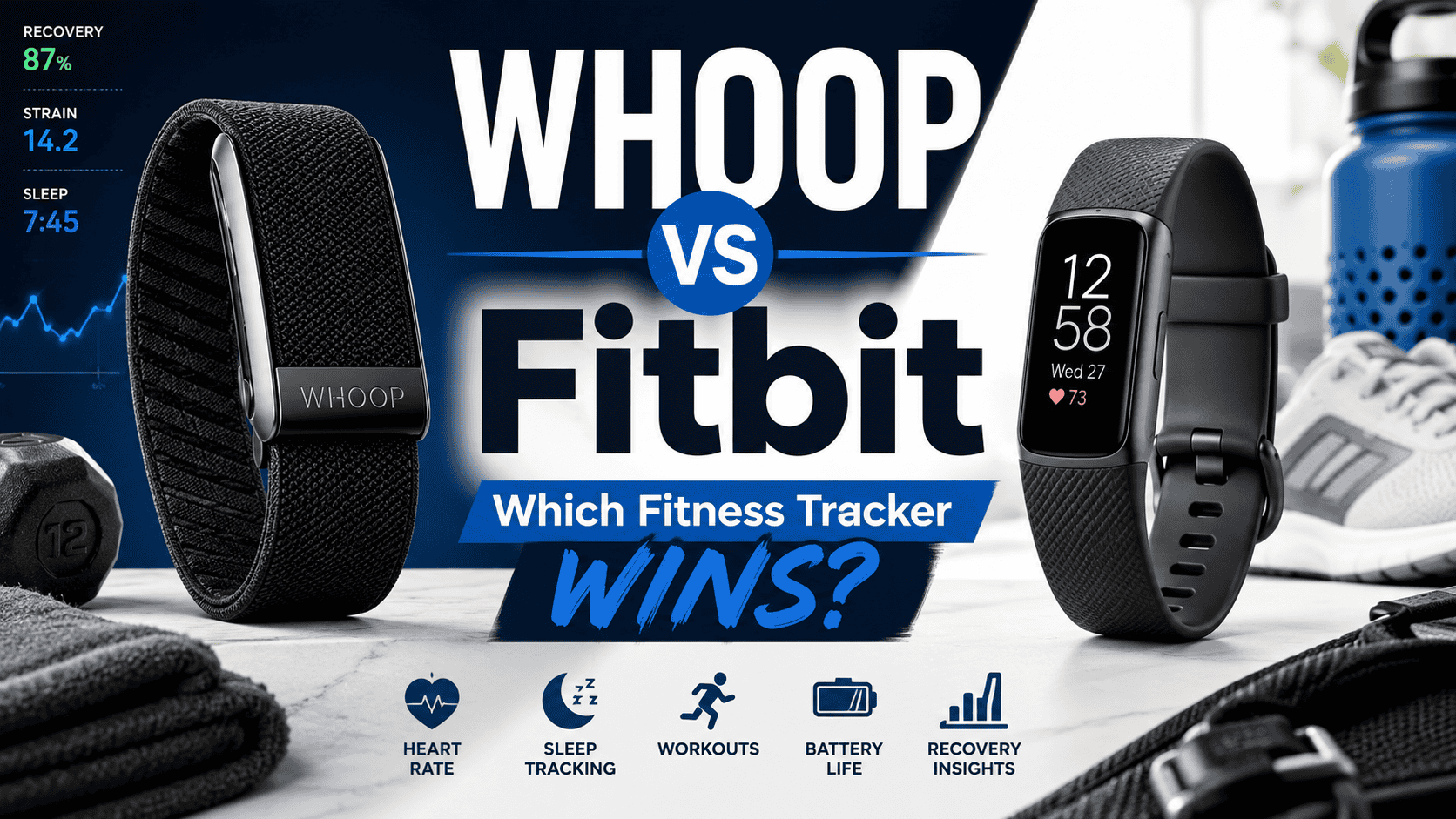
You’ve watched the YouTube reviews. You’ve scrolled through Reddit for an hour. And you’re still not sure whether to get WHOOP or Fitbit. That frustration makes sense. These two devices are often mentioned in the same breath, yet they take completely different approaches to fitness tracking. One is a screenless recovery machine built for serious athletes. The other is a versatile, everyday wellness companion that millions of people swear by.
In this WHOOP vs Fitbit comparison, you’ll get a full, honest breakdown of every major category — from sleep tracking and heart rate accuracy to subscription costs and long-term value. By the end, you’ll know exactly which one belongs on your wrist.
Wearable fitness trackers have changed how people understand their bodies. Step counting was just the beginning. Today’s devices track heart rate variability, sleep stages, blood oxygen, recovery readiness, skin temperature, and stress responses — all from your wrist. But choosing the right tracker still trips people up. WHOOP and Fitbit represent two very different philosophies, two very different price structures, and two very different types of users.
This guide is for athletes, beginners, and everyone in between. Whether you’re trying to optimize your marathon training, finally improve your sleep, or simply track your daily movement, this breakdown will help you make the right call — without wasting money on the wrong device.
Here’s what you’ll learn:
- How WHOOP and Fitbit compare across every meaningful metric
- Which device delivers more accurate data in real-world use
- Who each tracker was actually built for
- Total cost of ownership over 12, 24, and 36 months
- How both compare to Apple Watch, Oura Ring, and Garmin
Quick Verdict
Need a fast answer? Here it is.
| Question | Winner |
|---|---|
| Best overall tracker (serious users) | WHOOP |
| Best for beginners | Fitbit |
| Best for athletes and performance | WHOOP |
| Best for everyday wellness | Fitbit |
| Best sleep coaching | WHOOP |
| Best recovery tracking | WHOOP |
| Best value in Year 1 | Fitbit |
| Best GPS and smart features | Fitbit |
| Best for weight loss | Fitbit |
| No subscription required | Fitbit |
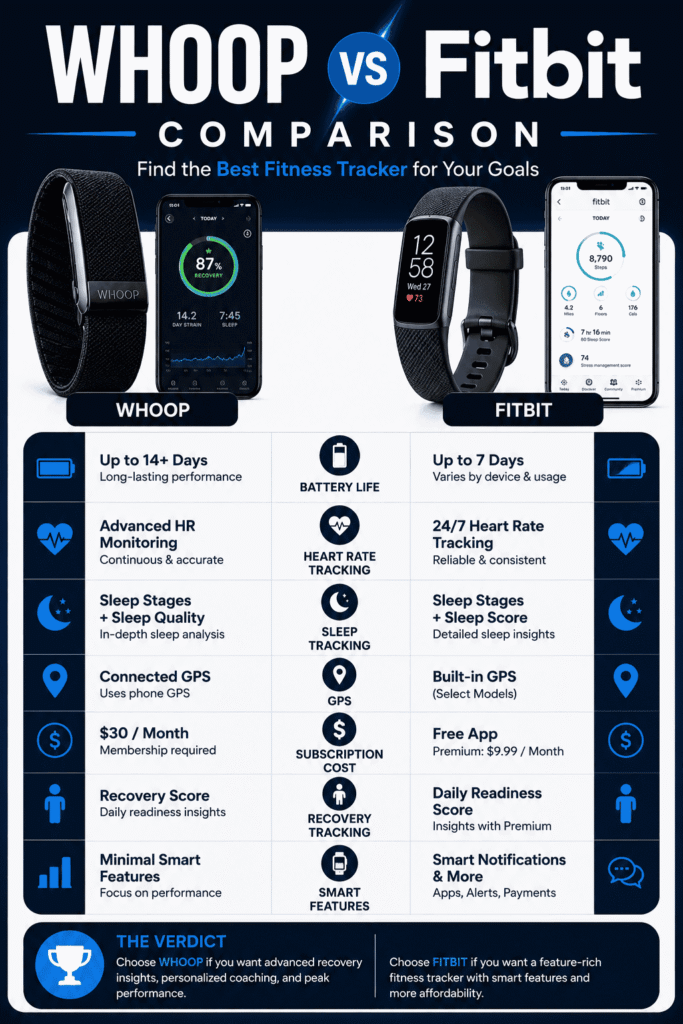
The bottom line: If you’re a serious athlete or someone who wants to optimize training and recovery with deep data, WHOOP is the better tool. If you want a display, everyday smart features, GPS, and no ongoing fees, Fitbit wins.
Full Comparison Table
| Feature | WHOOP 4.0 | Fitbit Charge 6 |
|---|---|---|
| Price | Subscription-based | ~$160 one-time |
| Monthly Subscription | Required (~$18–$30/mo) | Optional ($9.99/mo) |
| Display | None | Color touchscreen |
| Battery Life | ~4–5 days | ~7 days |
| Continuous Heart Rate | ✅ | ✅ |
| HRV Tracking | ✅ Advanced | ✅ Basic |
| Sleep Stage Tracking | ✅ Advanced | ✅ Good |
| Recovery Score | ✅ Daily | ❌ |
| Strain Score | ✅ | ❌ |
| Daily Readiness Score | ✅ | ✅ (Premium only) |
| GPS | ❌ | ✅ Built-in |
| Stress Tracking | ✅ (indirect) | ✅ (Stress Mgmt Score) |
| Blood Oxygen (SpO2) | ✅ | ✅ |
| ECG | ❌ | ✅ |
| Skin Temperature Sensor | ✅ | ✅ |
| Smart Notifications | ❌ | ✅ |
| NFC Payments | ❌ | ✅ Google Pay |
| Water Resistance | IP68 | 5ATM (50m) |
| Step Counting | ✅ | ✅ |
| Calorie Tracking | ✅ | ✅ |
| Food Logging | ❌ | ✅ (app) |
| Women’s Health Tracking | ✅ | ✅ |
| AI Coaching | ✅ | ✅ (Premium) |
| Best For | Athletes, recovery | Everyday users, beginners |
| Overall Rating | ⭐ 4.5/5 | ⭐ 4.3/5 |
Specs above reflect the Fitbit Charge 6. Fitbit offers multiple models — specs vary. Always verify current Amazon pricing before buying.
What Is WHOOP?
WHOOP was founded in 2012 by Will Ahmed, a Harvard University varsity athlete who was frustrated by the lack of tools available to measure training load and recovery. The premise was simple: athletes needed to know not just how hard they were training, but how well their bodies were recovering.
WHOOP launched its first consumer device in 2015 and has since become the go-to wearable for elite athletes, military personnel, and high performers across every discipline. It’s been worn by NBA players, professional cyclists, UFC fighters, and Olympic sprinters.
How WHOOP Works
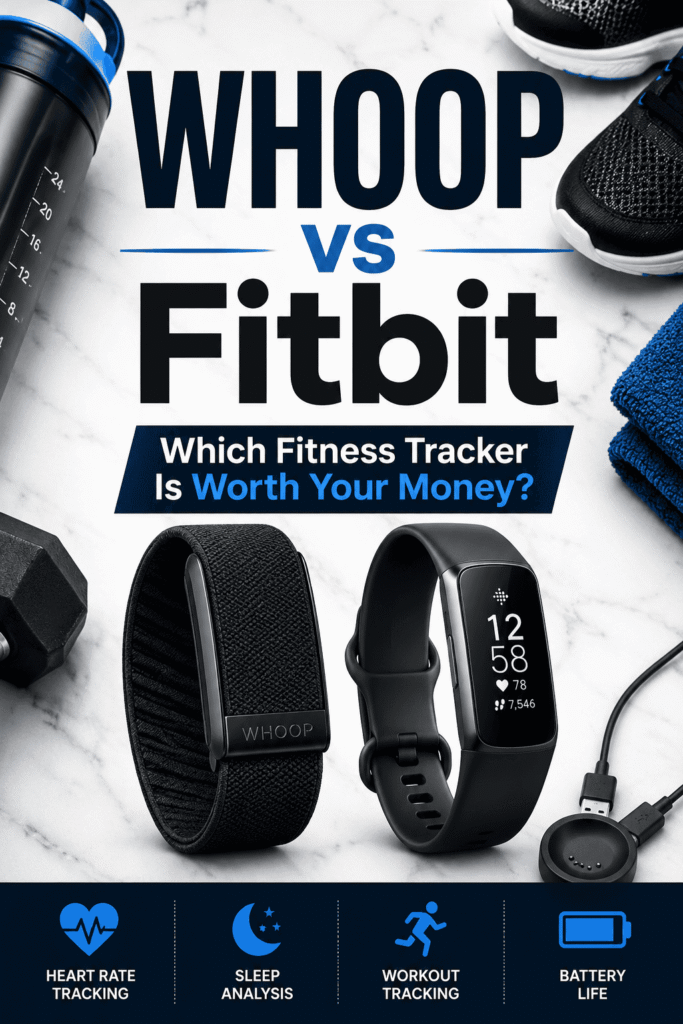
WHOOP is a screenless fitness wearable worn continuously on the wrist. It also supports alternative placements like the bicep or forearm via dedicated band accessories. The device continuously monitors:
- Heart rate — 100+ readings per second via six LEDs
- Heart rate variability (HRV) — the core of its recovery algorithm
- Respiratory rate — breaths per minute during sleep
- Blood oxygen (SpO2) — overnight saturation monitoring
- Skin temperature — to detect illness, recovery patterns, and hormonal cycles
- Sleep stages — light, deep, REM, and awake time
Every morning, WHOOP delivers two key outputs:
- Recovery Score (0–100%) — based on your HRV, resting heart rate, sleep quality, and respiratory rate
- Strain Score (0–21) — a daily measure of the cardiovascular load your body has accumulated
The WHOOP Membership Model
WHOOP operates on a subscription basis. The wearable device is provided through your membership. Pricing tiers have historically ranged from approximately $18/month (24-month commitment) to $30/month (monthly). WHOOP updated its pricing structure in 2024, so always check whoop.com for the latest rates before signing up.
This recurring cost is one of the biggest deciding factors in the WHOOP vs Fitbit debate — and rightfully so.
Who WHOOP Is Designed For
- Endurance athletes: runners, cyclists, triathletes
- Strength athletes: CrossFit, powerlifting, team sports
- People serious about improving sleep quality
- High performers who want data-driven answers
WHOOP Pros
- Best-in-class HRV monitoring and recovery scoring
- No screen means fewer distractions and better sensor contact
- On-wrist charging — never take it off
- Excellent sleep stage accuracy and Sleep Coach
- AI-powered behavior journal with actionable insights
- IP68 waterproof
WHOOP Cons
- No display — requires phone to view data
- Subscription is mandatory and ongoing
- No built-in GPS
- No smart features (notifications, payments)
- Takes 30+ days to fully personalize
- Higher long-term total cost
What Is Fitbit?
Fitbit was founded in 2007 by James Park and Eric Friedman — well before most people had ever heard of a fitness tracker. It helped define the consumer wearable category and spent years as the dominant player in everyday health monitoring.
In January 2021, Google completed its $2.1 billion acquisition of Fitbit. That acquisition brought Google Maps, Google Pay, and tighter Android integration to newer Fitbit models. It also raised some questions among loyal users about the platform’s long-term future — a legitimate concern worth noting.
Fitbit’s Product Lineup
Fitbit offers multiple devices across different price points, making it accessible to a wide range of budgets and needs:
| Model | Type | Approx. Price |
|---|---|---|
| Fitbit Inspire 3 | Entry-level fitness band | ~$80–100 |
| Fitbit Luxe | Fashion-forward fitness band | ~$130–150 |
| Fitbit Charge 6 | Flagship fitness tracker | ~$130–160 |
| Fitbit Versa 4 | Fitness smartwatch | ~$200–230 |
| Fitbit Sense 2 | Advanced health smartwatch | ~$200–250 |
This range means you can start tracking for under $100 or invest in ECG, GPS, and Google Health integration at the top end.
Fitbit Premium
Fitbit Premium is an optional subscription at $9.99/month or $79.99/year. It unlocks a Daily Readiness Score, deeper sleep analysis, advanced health reports, and guided wellness programs. Core features — step tracking, sleep stages, heart rate, SpO2 — work without it.
Who Fitbit Is Designed For
- Beginners starting their wellness journey
- Everyday health-conscious users
- People who want a display and notifications
- Budget-conscious buyers who want long-term value
- Google/Android ecosystem users
Fitbit Pros
- No mandatory subscription
- Wide product range for every budget
- Touchscreen display for at-a-glance stats
- Google Pay, Maps, and ecosystem integration
- ECG (Sense 2), GPS (Charge 6, Versa 4, Sense 2)
- Good sleep tracking out of the box
- Very beginner-friendly app
Fitbit Cons
- Less advanced recovery metrics than WHOOP
- HRV monitoring is less comprehensive
- Fitbit Premium required for Daily Readiness Score
- Google’s long-term Fitbit commitment raises questions
- Heart rate accuracy drops during high-intensity efforts
- Smart features limited vs Apple Watch or Galaxy Watch
WHOOP vs Fitbit Design
WHOOP is a minimalist, screenless band. No buttons. No display. Just a slim wearable with sensors on the underside and a clean, textile or elastomer band. It sits low and flat — the kind of thing that slides right under your shirt sleeve without anyone noticing. WHOOP also supports alternative wear sites including the bicep, forearm, and calf via purpose-built band accessories, giving athletes more flexibility than almost any other tracker.
Fitbit’s design varies by model. The Charge 6 is a slim vertical band with a small touchscreen. The Sense 2 and Versa 4 are more square-shaped, sitting closer to traditional smartwatch territory. All current Fitbit models look polished and modern without being flashy.
Winner: Depends on preference. WHOOP wins for low-profile, discreet daily wear. Fitbit wins for traditional wearable aesthetics.
WHOOP vs Fitbit Comfort
Both devices are designed for continuous 24/7 wear. WHOOP’s slim, lightweight build makes it easy to forget it’s there. The knit and hydro sport band options are especially comfortable for overnight wear. The band sits close to the skin, which actually improves sensor accuracy.
Most Fitbit models are also comfortable for all-day wear. Some users report that models with displays feel slightly bulkier against the wrist at night, but this is a minor issue for most people.
Winner: Slight edge to WHOOP for overnight wear. For daytime comfort, both are strong.
WHOOP vs Fitbit Display
This is the single biggest functional difference between the two devices — and it matters a lot depending on your preferences.
WHOOP has no display. Zero. You open the WHOOP app on your phone to see your Recovery Score, Strain Score, and sleep data. For some users — especially athletes who want fewer digital distractions — this is actually a feature. For most beginners and everyday users, it takes adjustment.
Fitbit has a touchscreen on every current model. You can check your steps, heart rate, notifications, and workout stats with a glance at your wrist.
If seeing your data without pulling out your phone is important to you, Fitbit is the obvious choice here.
Winner: Fitbit.
WHOOP vs Fitbit App Experience
Both companies invest heavily in their apps, but the experience feels very different.
The WHOOP App
The WHOOP app is built for data-driven users. Your morning opens with your Recovery Score and a recommended daily strain range. Dive deeper and you’ll find HRV trends over weeks and months, detailed sleep stage timelines, respiratory rate graphs, and cardiovascular load charts.
WHOOP’s Journal feature is one of its most underrated tools. Each day, you log behaviors — alcohol, caffeine, supplement intake, stress levels, naps, meditation — and WHOOP shows you statistically how each behavior correlates with your recovery. After 60–90 days, these insights become genuinely personal and actionable.
WHOOP also introduced AI-powered coaching that analyzes your patterns and delivers recommendations in plain language. It can tell you, for example, that going to bed one hour earlier improves your HRV by an average of 12 points.
The Fitbit App
The Fitbit app — now integrated with Google Health Connect on Android — is more accessible. Your dashboard shows steps, calories, active minutes, heart rate, and sleep at a glance. The layout is clean, the data is easy to read, and new users can get value from day one.
Fitbit Premium adds more detailed sleep analysis, health programs, mindfulness content, and guided workout videos. The app is more beginner-friendly and less demanding than WHOOP’s.
Winner: WHOOP for serious athletes who engage with data daily. Fitbit for everyday users and beginners who want simplicity.
WHOOP vs Fitbit Heart Rate Accuracy
Both WHOOP and Fitbit use optical photoplethysmography (PPG) — the same green-LED technology used in most consumer wearables. It works by shining light into your skin and measuring blood flow changes.
PPG is accurate at rest and during steady-state activities. It becomes less reliable during high-intensity intervals, heavy lifting, or any workout involving rapid wrist movement.
WHOOP uses six LEDs and collects continuous heart rate data 24 hours a day, which gives it a slight edge in resting and overnight monitoring. Several independent user tests and peer-reviewed comparisons of consumer wearables suggest WHOOP tracks resting HR and HRV with more consistency than most Fitbit models.
That said, neither device matches a chest-strap heart rate monitor during intense training. If precision is critical during HIIT or heavy lifting, pair either device with a chest strap.
Winner: Slight edge to WHOOP for continuous resting HR and HRV accuracy. Near-tie for most everyday users.
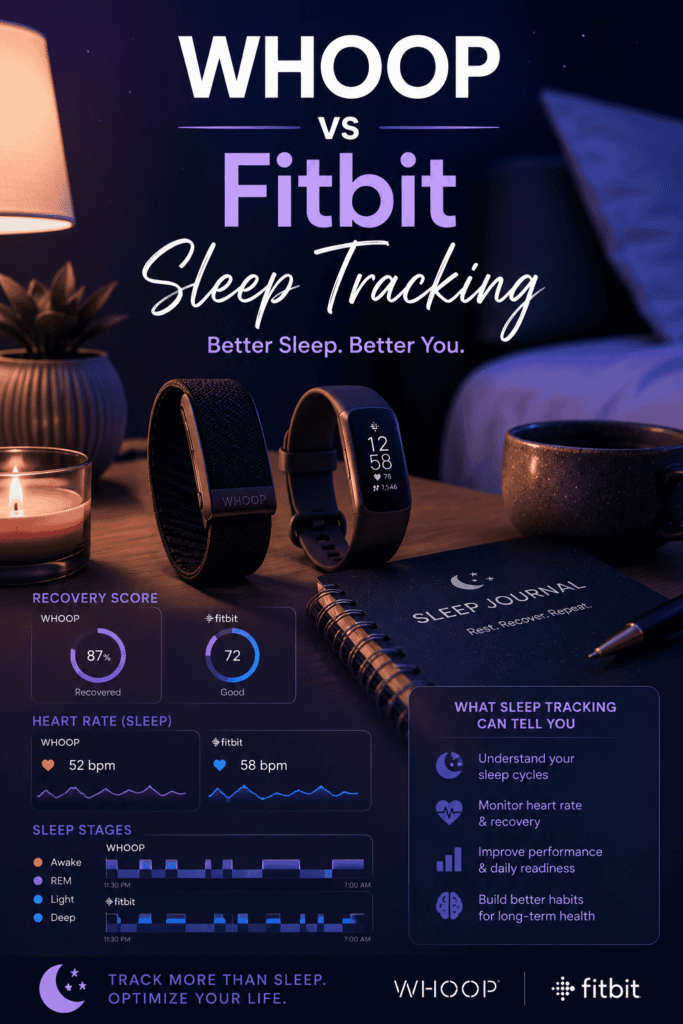
WHOOP vs Fitbit Sleep Tracking
Sleep tracking is where WHOOP truly earns its reputation — and its subscription fee.
WHOOP Sleep Tracking
WHOOP tracks all four sleep stages: light, deep, REM, and awake. It calculates a Sleep Performance Score based on:
- Total sleep time vs. your sleep need
- Time in each sleep stage
- Sleep efficiency (time asleep vs. time in bed)
- Sleep consistency (going to bed at the same time)
- Respiratory rate and resting heart rate during sleep
The crown jewel is WHOOP’s Sleep Coach. It tells you exactly what time to go to bed based on your recovery goal for the next day — whether you want to “peak,” “perform,” or simply “get by.” It adjusts for naps, early wake times, and unusual sleep schedules.
This level of actionable guidance is rare in consumer wearables. It doesn’t just show you your sleep. It tells you what to do about it.
Fitbit Sleep Tracking
Fitbit also tracks sleep stages and provides a Sleep Score out of 100. It shows time in each stage, overall sleep quality, and resting heart rate during sleep. Fitbit Premium unlocks a more detailed sleep profile and access to Guided Sleep Modes with breathing exercises and wind-down routines.
Fitbit’s sleep tracking is genuinely good — better than many competing devices. But it doesn’t provide the same level of forward-looking coaching or tight integration with training load that WHOOP does.
Winner: WHOOP — especially for users who want sleep coaching, not just sleep reporting.
For a deeper dive into recovery-focused wearables, see our comparison of the best Oura Ring alternatives and our full WHOOP vs Oura breakdown.
WHOOP vs Fitbit Recovery Tracking
Recovery tracking is WHOOP’s signature feature. It’s the reason elite athletes pay a monthly subscription instead of buying a one-time device.
WHOOP Recovery Score
Every morning, WHOOP delivers a Recovery Score from 0 to 100:
- Green (67–100%) — Your body is ready. Push hard.
- Yellow (34–66%) — Moderate effort. Be mindful.
- Red (0–33%) — Rest or light movement. Don’t force it.
This score is built primarily from heart rate variability (HRV) — the variation in time between consecutive heartbeats. Higher HRV generally indicates better parasympathetic nervous system recovery, meaning your body has absorbed your previous training stress and is ready for more.
WHOOP also factors in resting heart rate, sleep performance, and respiratory rate to produce a score that evolves with your personal baseline over time. In other words, your Recovery Score is measured against your own history, not a generic population average.
Fitbit Recovery
Fitbit doesn’t have a dedicated Recovery Score. With Fitbit Premium, it offers a Daily Readiness Score that pulls from sleep, activity, and HRV data. It’s a useful feature, but it’s less granular than WHOOP’s system — and it requires an extra subscription.
Winner: WHOOP. This is what WHOOP was built for, and nothing in Fitbit’s lineup competes at the same depth.
WHOOP vs Fitbit Workout Tracking
WHOOP Workout Tracking
It automatically detects activities using its motion sensors and heart rate data, then logs them as Strain events. You can also manually log a workout before or after. The Strain Score (0–21) reflects the cumulative cardiovascular load on your body throughout the day.
WHOOP doesn’t count reps, guide you through workouts, or display on-screen metrics. But it does give you zone-by-zone heart rate data for any activity and calculates exactly how much physiological stress your training added to your system.
Fitbit Workout Tracking
Fitbit tracks a wide variety of exercise modes — running, cycling, yoga, swimming, weights, HIIT, and more. Active Zone Minutes reward you for time spent in fat-burn, cardio, and peak heart rate zones. Higher-end models like the Charge 6 and Versa 4 offer on-screen stats during workouts, GPS route mapping, and post-workout summaries.
Fitbit’s workout tracking is more feature-rich for general fitness users. WHOOP’s is more insightful for athletes managing training load.
Winner: Fitbit for workout variety and guided features. WHOOP for training load management and recovery correlation.
WHOOP vs Fitbit Running
Runners will notice a significant gap here, and it almost always comes down to GPS.
Fitbit: Built-in GPS is available on the Charge 6, Sense 2, and Versa 4. You can run without your phone and still get full route mapping, real-time pace, distance, and heart rate zone breakdowns. Post-run summaries are detailed and useful.
WHOOP: No built-in GPS. WHOOP can pair with your phone’s GPS when you run with your phone, but that’s a workaround — not a native feature. If you leave your phone at home, you get HR data but no route or pace.
However, where WHOOP shines is post-run recovery. After a hard long run, WHOOP tells you exactly how much strain you accumulated and how long you need before training hard again. That information is valuable for building a smart training schedule.
Winner: Fitbit for GPS-based run tracking. WHOOP for post-run recovery analysis.
WHOOP vs Fitbit Strength Training
Strength athletes have different needs than runners — and WHOOP addresses them in a unique way.
WHOOP doesn’t track individual lifts, count reps, or guide you through a workout. But it excels at measuring the cardiovascular strain of your lifting session and connecting it to your recovery data. After a heavy leg day, WHOOP can tell you whether your nervous system is ready for another intense session — information that’s genuinely useful for periodization and avoiding overtraining.
Fitbit tracks strength training as an exercise mode and logs heart rate data throughout. It gives you Active Zone Minutes but not the recovery depth that serious strength athletes need.
For CrossFit athletes, powerlifters, and bodybuilders who train frequently and hard, WHOOP’s recovery insights are more valuable than Fitbit’s activity logs.
Winner: WHOOP for recovery-focused strength athletes. Fitbit for general activity tracking.
WHOOP vs Fitbit Battery Life & Charging
WHOOP: Approximately 4–5 days per charge. It uses a distinctive on-wrist charging system — you charge an external battery pack separately, then slide it onto the device while you’re still wearing it. You never remove WHOOP to charge, which means your data stream never interrupts. For continuous biometric monitoring, this is a genuine advantage.
Fitbit: Battery life varies by model:
| Model | Battery Life |
|---|---|
| Fitbit Inspire 3 | Up to 10 days |
| Fitbit Charge 6 | Up to 7 days |
| Fitbit Sense 2 | Up to 6 days |
| Fitbit Versa 4 | Up to 6 days |
On paper, most Fitbit models outlast WHOOP on a single charge. But with WHOOP’s on-wrist charging, you can top up while exercising, showering, or sleeping without any data gaps.
Winner: Fitbit for raw battery life. The WHOOP is for uninterrupted continuous monitoring.
WHOOP vs Fitbit GPS
WHOOP: No built-in GPS. Routes and pace data require your phone.
Fitbit: Built-in GPS on Charge 6, Sense 2, and Versa 4. Leave your phone at home and still get route maps and pace data.
If GPS matters to you for outdoor runs, bike rides, or hikes, Fitbit is the clear choice.
Winner: Fitbit.
WHOOP vs Fitbit Smart Features
This is another straightforward Fitbit win.
Fitbit Charge 6, Sense 2, and Versa 4 offer:
- Google Maps turn-by-turn navigation
- Google Pay (NFC contactless payments)
- Spotify and YouTube Music control
- Google Assistant (on select models)
- Call and text notifications
- Calendar alerts
WHOOP has none of these. There are no notifications, no payments, no music control, no assistant. WHOOP is a pure health monitoring device. That’s a deliberate design choice — but it’s a major trade-off for users who want wrist-based convenience.
Winner: Fitbit — especially for Google and Android users.
WHOOP vs Fitbit Stress Monitoring
Both devices monitor physiological stress, but through different mechanisms.
WHOOP: Tracks stress indirectly through HRV trends, resting heart rate, and the correlation between your daily habits and recovery. Lower HRV and elevated resting heart rate often signal accumulated psychological or physical stress. The Journal feature lets you see which habits push your stress responses higher over time.
Fitbit: The Sense 2 includes an electrodermal activity (EDA) sensor — a technology that measures skin conductance as a direct physiological marker of stress response. When your sympathetic nervous system activates (the “fight-or-flight” response), sweat gland activity changes and the EDA sensor picks that up. Fitbit also provides a Stress Management Score on the Charge 6, combining HRV, sleep, and activity data into a single daily number.
For real-time stress detection, the Fitbit Sense 2’s EDA sensor is impressive and unique in this price range.
Winner: Fitbit Sense 2 for direct, real-time stress detection. WHOOP for long-term stress trend analysis.
WHOOP vs Fitbit Women’s Health
Both WHOOP and Fitbit include menstrual cycle tracking, but they approach it differently.
WHOOP: Tracks cycle phases and actively correlates them with your recovery data, HRV, and sleep quality. Female athletes can see how their cycle phase affects their readiness to train — a feature that has meaningful implications for training periodization. WHOOP also monitors skin temperature, which can indicate hormonal shifts throughout the cycle.
Fitbit: Offers a cycle tracker in the app with period logging, symptom tracking, and reminders. Some Fitbit models also use skin temperature variations to flag possible ovulation windows. With Fitbit Premium, users get a more detailed Menstrual Health report.
For women athletes looking at how their cycle affects training and recovery, WHOOP’s integration with performance data adds meaningful, actionable context.
Winner: Near-tie. WHOOP wins for performance correlation. Fitbit wins for broader cycle management and ease of use.
Women interested in stylish health wearables should also check our guide to the best smart ring for women for alternative form factors.
WHOOP vs Fitbit Weight Loss
If your main goal is losing weight, Fitbit is more directly useful.
Fitbit tracks:
- Steps and total daily movement
- Estimated calorie burn throughout the day
- Active Zone Minutes (structured activity)
- Food and water logging (in the app)
- Body weight and BMI trends
- Calorie deficit goals
WHOOP does estimate calorie burn, but it’s not built with weight loss in mind. There’s no food logging, no step goal celebrations, no challenge features to keep you motivated day-to-day. The features that drive beginner engagement — streaks, badges, social challenges — are missing.
For most people working toward a weight loss goal, those motivational touchpoints genuinely matter. Fitbit provides them. WHOOP doesn’t.
Winner: Fitbit.
WHOOP vs Fitbit Subscription Costs
This may be the most important section of this entire WHOOP vs Fitbit comparison. Over the course of a few years, the cost difference is substantial.
WHOOP Cost Breakdown
WHOOP requires a membership. The device is provided as part of your plan. Historically offered tiers have included:
- Monthly: ~$30/month
- 12-month: ~$25/month (billed annually, ~$300/year)
- 24-month: ~$18/month (billed upfront, ~$432/24 months)
Always verify current rates at whoop.com — pricing has changed with each product generation.
Fitbit Cost Breakdown
Fitbit devices are one-time purchases. Also it’s a Premium is optional.
- Fitbit Charge 6: ~$160 upfront
- Fitbit Premium (monthly): $9.99/month
- Fitbit Premium (annual): $79.99/year
Long-Term Cost Comparison
| Timeframe | WHOOP (Annual Plan) | Fitbit Charge 6 + Annual Premium | Fitbit Charge 6 (No Premium) |
|---|---|---|---|
| Year 1 | ~$300 | ~$240 | ~$160 |
| Year 2 | ~$600 | ~$320 | ~$160 |
| Year 3 | ~$900 | ~$400 | ~$160 |
WHOOP becomes significantly more expensive over time. However, the WHOOP device is included in the membership fee — you’re not paying for hardware separately.
Winner: Fitbit for total cost of ownership — especially beyond Year 1.
WHOOP vs Fitbit Value for Money
Value isn’t just about price. It’s about what you actually get for what you spend.
WHOOP value proposition: If you’re a serious athlete or someone who genuinely engages with recovery data every single day, the insights WHOOP provides are worth the cost. Knowing your exact recovery state, training load, and sleep quality — and adjusting your behavior accordingly — can meaningfully improve your performance and prevent injury. For that user, WHOOP delivers strong ROI.
Fitbit value proposition: For everyday users who want a reliable, feature-rich tracker without a recurring fee, Fitbit delivers excellent value. The Charge 6 packs GPS, ECG, Google Pay, and strong health tracking into a device that costs less than two months of a WHOOP membership.
Winner: Fitbit for everyday users and cost-conscious buyers. WHOOP for serious athletes who use the data actively.
WHOOP vs Fitbit Accuracy
No consumer wearable is perfectly accurate — but some are measurably better than others.
Heart rate accuracy: Both devices perform similarly during rest and moderate activity. WHOOP has a slight advantage for continuous resting and sleeping HR monitoring. Both lose accuracy at high-intensity efforts.
Sleep stage accuracy: WHOOP rates highly in user satisfaction for sleep staging, likely due to granular HRV data and the Sleep Coach’s personalized calibration. Fitbit’s sleep staging is also considered reliable for consumer-grade use.
HRV accuracy: WHOOP is widely considered the benchmark for consumer HRV tracking. It takes continuous overnight measurements and calculates a single, reliable morning reading. Fitbit tracks HRV during sleep, but with less granularity.
Calorie accuracy: Neither device is highly precise for total calorie burn. Both tend to overestimate active calories to varying degrees. Use calorie data for trends and relative comparisons — not absolute targets.
Skin temperature: Both include skin temperature sensors, useful for detecting illness trends, recovery patterns, and cycle fluctuations.
Winner: WHOOP for advanced biometric accuracy. Near-tie for standard health metrics.
WHOOP vs Fitbit Data Insights & Coaching
WHOOP Coaching
WHOOP’s AI coaching analyzes your patterns over time and delivers insights in plain language. Its Journal feature turns lifestyle behaviors into data: log when you consume alcohol, coffee, supplements, or deal with high stress — and WHOOP shows you statistically which habits help or hurt your recovery.
After 60–90 days, these personalized insights are genuinely powerful. You might discover that going to bed before midnight lifts your HRV by 14 points on average, or that a second glass of wine drops your Recovery Score by 18 points. These aren’t generic tips. They’re built from your own body’s data.
Fitbit Coaching
Fitbit Premium includes guided health programs, mindfulness sessions, sleep programs, and certified workout videos. The coaching is more structured and more beginner-accessible. Fitbit has partnered with health professionals to integrate evidence-based guidance into the app.
Winner: WHOOP for personalized, data-driven coaching. Fitbit for structured, guided programs that work well for beginners.
WHOOP vs Fitbit Durability
WHOOP: Built for athletes. IP68 waterproof rating, rugged enough for daily wear through heavy training, swimming, saunas, and outdoor conditions. The band is replaceable if it wears out, which extends device longevity.
Fitbit: Most current models are rated 5ATM (water-resistant to 50 meters). The Charge 6, Sense 2, and Versa 4 hold up well for everyday use including swimming and showering. Not quite as rugged as WHOOP under extreme conditions, but durable for most users.
Winner: Near-tie for everyday users. WHOOP edges ahead for athletes in demanding environments.
WHOOP vs Fitbit for Beginners
If you’re new to fitness trackers, Fitbit is the easier starting point — and the better long-term value.
- The display lets you check stats at a glance without opening an app
- Setup takes minutes and works intuitively
- Step counting, calorie tracking, and sleep scores are immediately meaningful
- No subscription required to get started
- The app is designed for accessibility, not complexity
WHOOP, by contrast, has a learning curve. It takes 30+ days of consistent wear before the recovery data becomes truly personal. The Recovery Score and Strain Score framework takes time to understand and act on. And the absence of any display can be genuinely disorienting for first-time wearable users.
That said, WHOOP isn’t complicated to use — it just requires engagement. If you’re a beginner who wants to go deep into health data from day one, WHOOP can work. But Fitbit is the faster, lower-commitment path.
Winner: Fitbit for beginners.
WHOOP vs Fitbit for Athletes
Athletes almost universally choose WHOOP — and the reasoning is clear.
Elite performers across every sport rely on WHOOP’s recovery data to make smarter training decisions. The ability to see your HRV trend over six months, understand how different training sessions affect your recovery curve, and receive an AI-calibrated strain recommendation each day is something no other mainstream consumer device fully replicates at this price point.
Fitbit’s Daily Readiness Score (Premium required) attempts a similar function, but WHOOP does it with more granularity, more consistency, and a more proven track record in serious athletic communities.
One limitation: athletes who need GPS route data for runs or rides may need to supplement WHOOP with another device or carry their phone. Garmin is worth considering for serious runners who need both recovery data and advanced GPS metrics.
Winner: WHOOP for athletes.
For more alternatives built around serious performance, see our list of the best WHOOP alternatives and our roundup of the best fitness wearables for every use case.
WHOOP vs Fitbit for Everyday Users
Everyday users — people who want a bit more insight into their health without becoming obsessive about data — generally land on Fitbit.
It tracks the things that matter for general wellness: steps, calories, sleep, heart rate, and stress. It connects to Google Health and other fitness apps. It’s motivating without being demanding. And it doesn’t require a monthly fee to work.
Most everyday users won’t engage deeply with WHOOP’s full data set. Paying a monthly subscription to view a Recovery Score you rarely act on isn’t great value.
Winner: Fitbit for everyday users.
WHOOP vs Fitbit Customer Support & Software Updates
WHOOP: Offers live chat, email, and a comprehensive help center. It releases regular app and firmware updates, often adding features post-launch — AI coaching, ECG-adjacent sensing, improved algorithms — without charging for hardware upgrades. The product roadmap has been consistently user-focused since 2015.
Fitbit: Has a large support center and active community forums. Some users report slower support resolution on complex issues. Google’s acquisition has also led to the discontinuation of some older Fitbit devices, which raised concerns among users who worried about the platform’s longevity.
Winner: Slight edge to WHOOP for software velocity and consistent user-focused updates.
Fitbit vs WHOOP vs Apple Watch
Adding Apple Watch to the WHOOP vs Fitbit conversation opens up a third strong option — particularly for iPhone users.
| Feature | WHOOP 4.0 | Fitbit Charge 6 | Apple Watch SE (2nd Gen) |
|---|---|---|---|
| Price | Subscription | ~$160 | ~$200–250 |
| Subscription | Required | Optional | None |
| Display | None | Color touchscreen | OLED touchscreen |
| Battery Life | ~4–5 days | ~7 days | ~18 hours |
| GPS | ❌ | ✅ | ✅ |
| Recovery Score | ✅ Advanced | ❌ | Limited |
| HRV Tracking | ✅ Advanced | Basic | Basic |
| ECG | ❌ | ✅ | ✅ (Series 4+) |
| Smart Features | None | Moderate | Full smartwatch |
| App Ecosystem | WHOOP only | Google / Fitbit | Full Apple ecosystem |
| iPhone Required | ❌ | ❌ | ✅ |
| Best For | Athletes | Everyday users | iPhone power users |
Who Should Buy Apple Watch
Choose Apple Watch if you’re an iPhone user who wants the best smartwatch experience with solid fitness tracking built in. Apple Watch Series 9 and Apple Watch Ultra 2 offer more capable smartwatch functionality than any Fitbit. But the ~18-hour battery demands daily charging, and Apple Watch doesn’t match WHOOP’s depth for recovery-focused athletes.
Apple Watch’s strength is breadth: notifications, payments, third-party apps, health data integration through Apple Health, and the ability to connect with a huge ecosystem of fitness apps. If recovery optimization is secondary and smartwatch functionality is primary, Apple Watch wins.
For a broader perspective on all the options, our wearable fitness tracker comparison covers the full landscape.
Fitbit vs WHOOP vs Oura Ring
The Oura Ring is WHOOP’s closest rival in the recovery-tracking space — and it’s worth understanding how all three compare.
| Feature | WHOOP 4.0 | Fitbit Sense 2 | Oura Ring Gen 3 |
|---|---|---|---|
| Form Factor | Wrist band | Wrist band | Finger ring |
| Display | None | Touchscreen | None |
| Recovery Score | ✅ Daily | ❌ | ✅ Daily |
| Sleep Tracking | ✅ Excellent | ✅ Good | ✅ Excellent |
| HRV Monitoring | ✅ Advanced | Basic | ✅ Advanced |
| Subscription | Required (~$18–30/mo) | Optional ($9.99/mo) | Required (~$6/mo) |
| GPS | ❌ | ✅ | ❌ |
| Workout Tracking | Strain-based | Exercise modes | Activity-based |
| Sleep Comfort | Excellent | Good | Excellent |
| Best For | Athletes, training load | Everyday users | Sleep, wellness, readiness |
Key differences:
- Oura vs WHOOP: Oura focuses more on sleep quality and morning readiness, while WHOOP emphasizes cumulative training strain and recovery. Oura’s ring form factor makes it more comfortable for sleep for many users. WHOOP has the edge on workout tracking depth.
- Oura vs Fitbit: Oura has superior recovery and sleep tracking but no display and a subscription requirement. Fitbit is more versatile, more affordable to start, and better for beginner-friendly everyday tracking.
If sleep and recovery are your top priorities and you prefer a ring over a wristband, explore the full best Oura Ring alternatives to see all your options.
WHOOP vs Fitbit vs Garmin
Garmin sits in a different category — primarily a GPS sports watch — but it overlaps meaningfully with WHOOP and Fitbit on health and recovery metrics.
| Feature | WHOOP 4.0 | Fitbit Charge 6 | Garmin Forerunner 255 |
|---|---|---|---|
| GPS | ❌ | ✅ | ✅ Excellent |
| Recovery Tracking | ✅ Excellent (HRV) | Basic | ✅ Good (Body Battery) |
| Battery Life | ~4–5 days | ~7 days | ~14 days |
| Training Load | ✅ Strain Score | ❌ | ✅ Training Load Focus |
| Running Metrics | Basic | Moderate | ✅ Advanced |
| HRV Monitoring | ✅ Advanced | Basic | Moderate |
| Multisport | Cardio + Gym | Moderate | ✅ Strong |
| Approx. Price | Subscription | ~$160 | ~$280–350 |
| Best For | Recovery + training load | Everyday use | Runners, triathletes |
Who Should Choose Garmin
If you’re a serious runner, cyclist, triathlete, or outdoor athlete, Garmin outperforms both WHOOP and Fitbit in GPS accuracy, running dynamics, and battery endurance. Garmin’s Body Battery feature provides recovery-style readiness insights, though WHOOP’s HRV-based system offers more granular daily tracking.
For runners specifically who want the best of both worlds — solid GPS performance AND strong recovery data — a Garmin Forerunner paired with a thoughtful training approach can be compelling competition for WHOOP.
Product Recommendations
Always verify current pricing and availability on Amazon before purchasing. Prices fluctuate and availability changes.
1. WHOOP 4.0 Fitness Tracker (with Band)
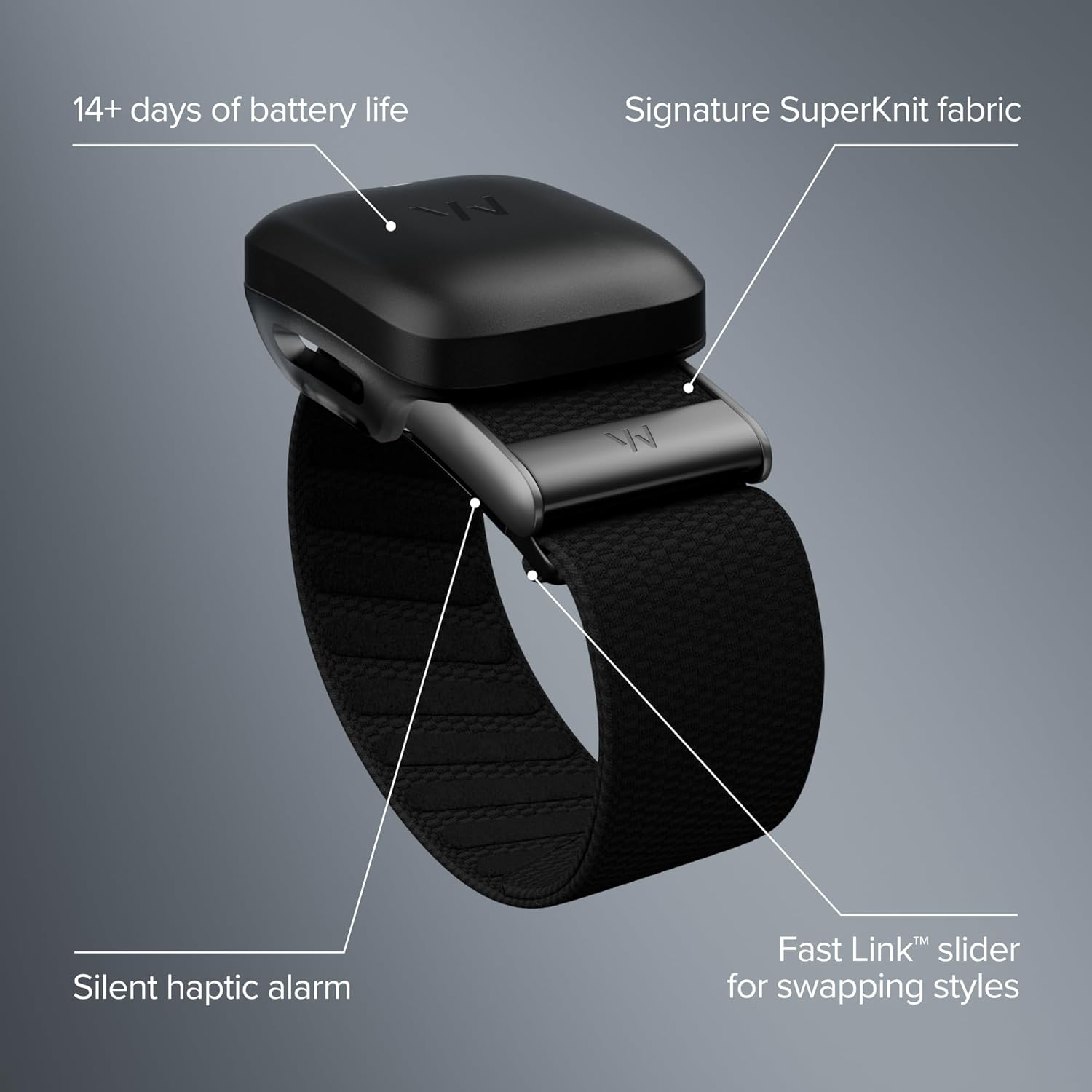
Best for: Athletes, serious recovery trackers, and performance-focused users
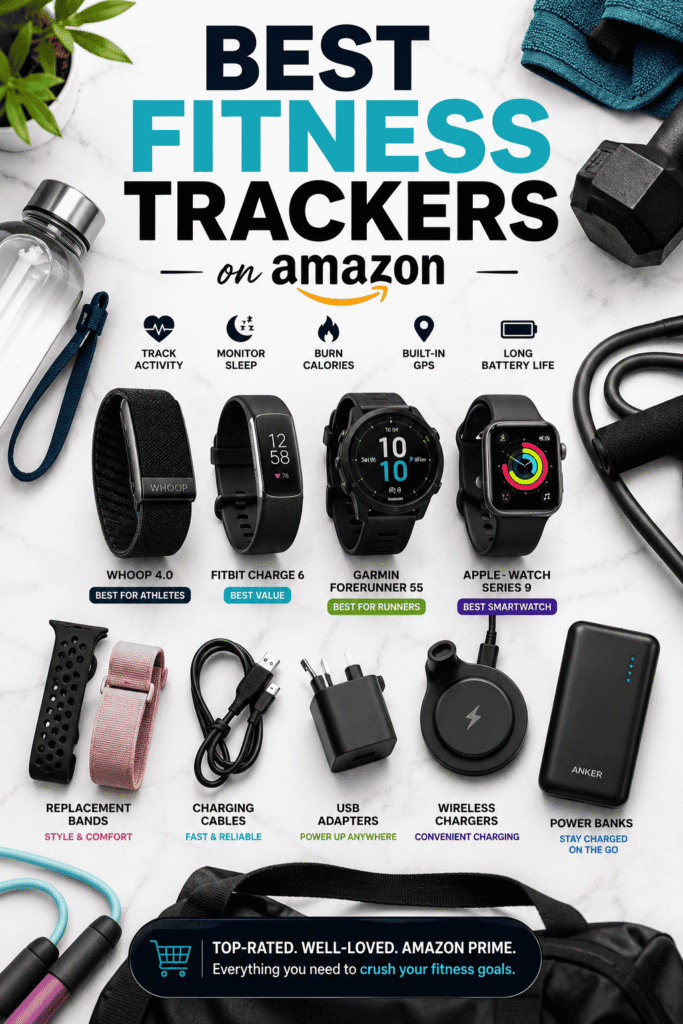
WHOOP 4.0 is available through Amazon with various band options. Remember: a WHOOP membership is required to activate and use the device. Check current subscription pricing at whoop.com.
- Key features: Continuous HR, HRV, SpO2, skin temp, respiratory rate, Recovery Score, Strain Score
- Pros: Best-in-class recovery data; on-wrist charging; AI coaching; IP68 waterproof
- Cons: Subscription required; no display; no GPS; higher long-term cost
- Why we recommend it: If you’re ready to commit to data-driven training and recovery, WHOOP delivers insights no other mainstream tracker matches
- Avg. rating: ⭐ 4.3/5
- Approx. price: Check Amazon for current pricing
2. Fitbit Charge 6 Fitness Tracker
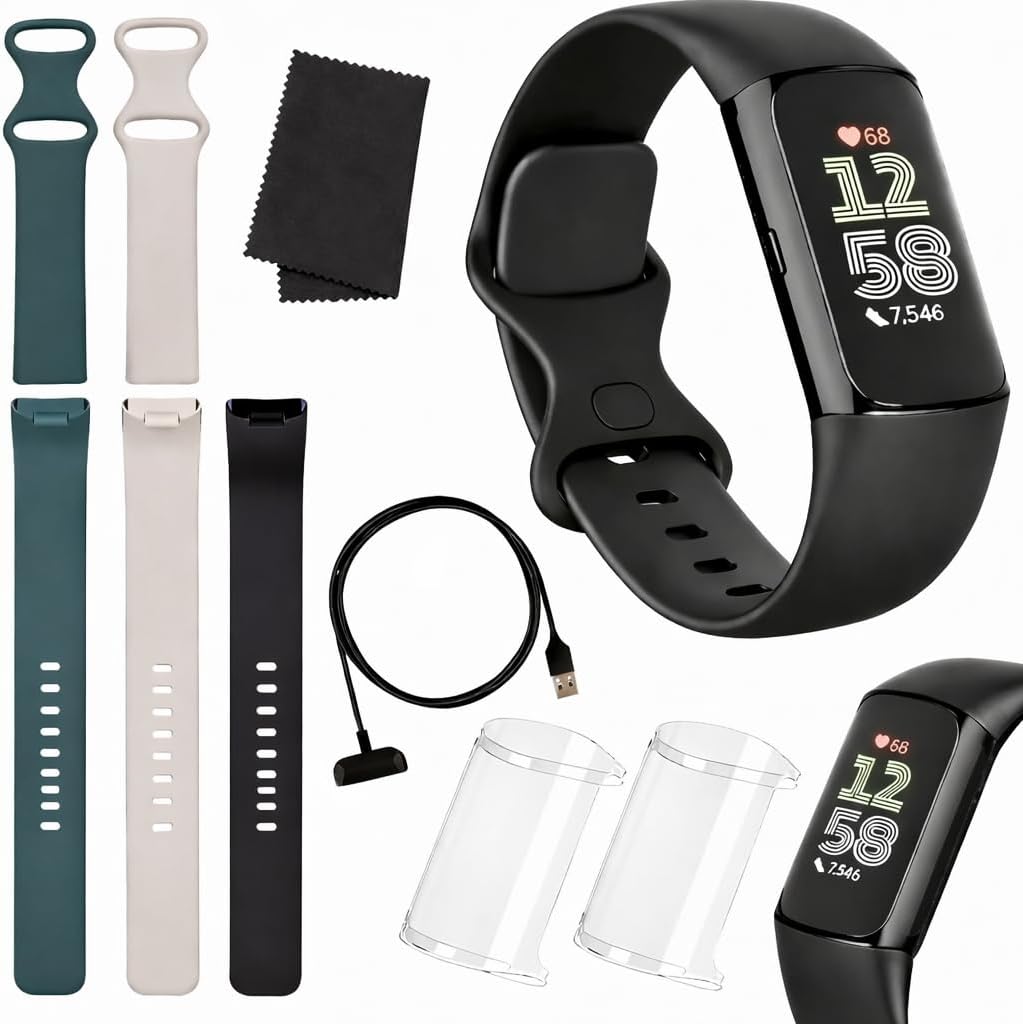
Best for: Everyday users who want GPS, smart features, and no mandatory subscription
The Fitbit Charge 6 is the best all-around Fitbit for most people. It packs GPS, ECG, Google Pay, Google Maps, and 7-day battery into a slim, comfortable band.
- Key features: Built-in GPS, ECG, skin temp sensor, Stress Management Score, Google ecosystem
- Pros: GPS included; display; ECG; no mandatory subscription; 7-day battery; Google Pay
- Cons: Less advanced recovery data; smaller screen than smartwatch; HRV tracking less comprehensive
- Why we recommend it: The best-value all-rounder in the Fitbit lineup — ideal for most users comparing fitbit or whoop
- Avg. rating: ⭐ 4.2/5
- Approx. price: ~$130–160 on Amazon
3. Fitbit Sense 2 Advanced Health Smartwatch
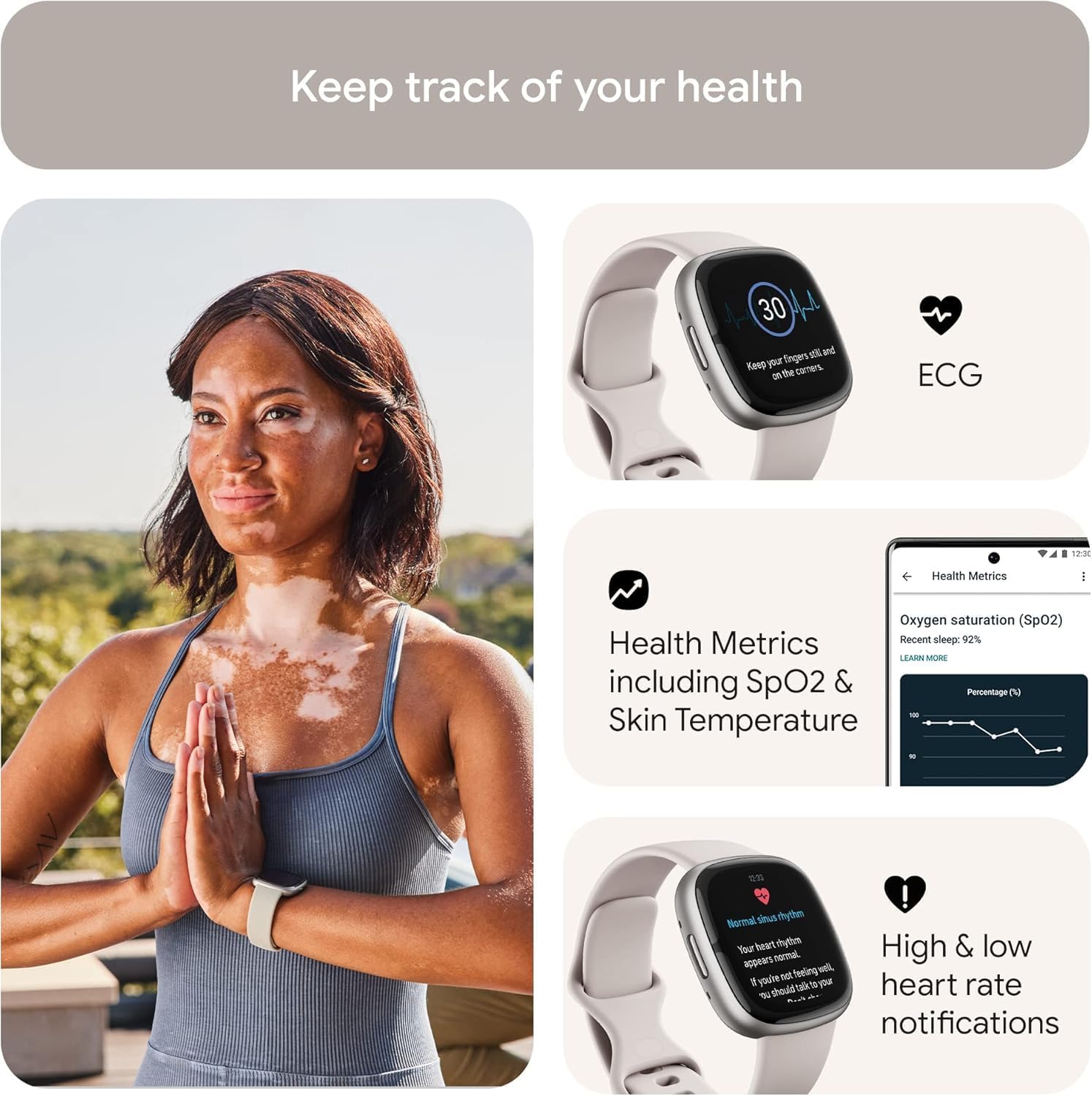
Best for: Health-focused users wanting real-time stress detection, ECG, and a smartwatch feel
The Sense 2 is Fitbit’s most advanced health tracker. Its EDA stress sensor, ECG, and GPS make it a genuine health monitoring device — not just an activity tracker.
- Key features: EDA stress sensor, ECG, GPS, SpO2, skin temp, Google Pay
- Pros: Only mainstream tracker with real-time EDA stress detection; ECG; full smartwatch features
- Cons: Premium required for full insights; battery life could be better; higher price
- Why we recommend it: Best Fitbit for anyone prioritizing heart health monitoring and stress management
- Avg. rating: ⭐ 4.1/5
- Approx. price: ~$200–250 on Amazon
4. Fitbit Inspire 3 Fitness & Health Tracker
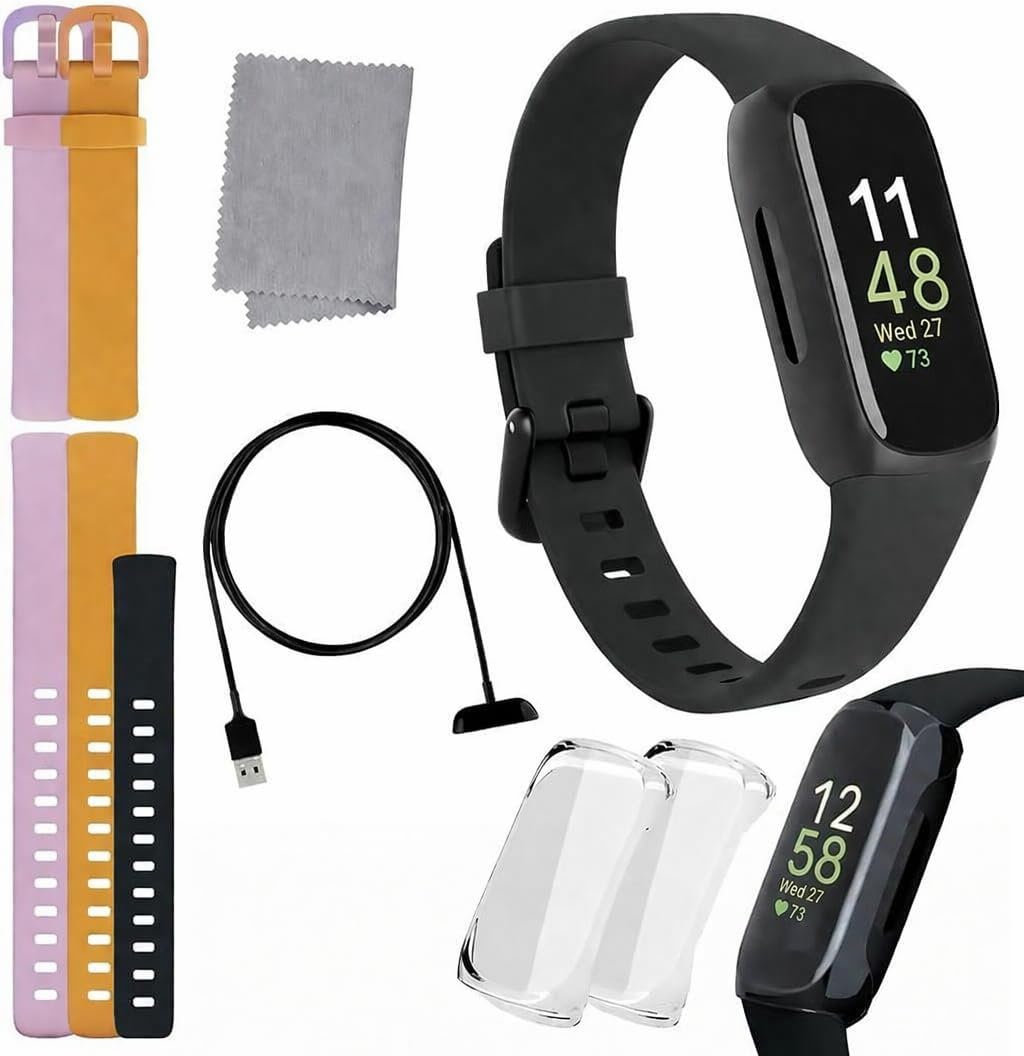
Fitbit Inspire 3 Health & Fitness Tracker Bundle – with Stress Management, Workout Intensity, Sleep Tracking
Best for: Budget-conscious beginners who want reliable health tracking without overspending
The Inspire 3 is Fitbit’s entry-level band. It handles the essentials cleanly at a price point that leaves room to decide if wearables are for you.
- Key features: Sleep tracking, continuous HR, SpO2, stress tracking, Stress Management Score, 10-day battery
- Pros: Most affordable Fitbit; longest battery life; simple and comfortable; no mandatory subscription
- Cons: No GPS; smaller screen; limited smart features
- Why we recommend it: The most accessible starting point in any whoop fitness tracker vs fitbit comparison for beginners
- Avg. rating: ⭐ 4.3/5
- Approx. price: ~$80–100 on Amazon
5. Apple Watch SE (2nd Generation)
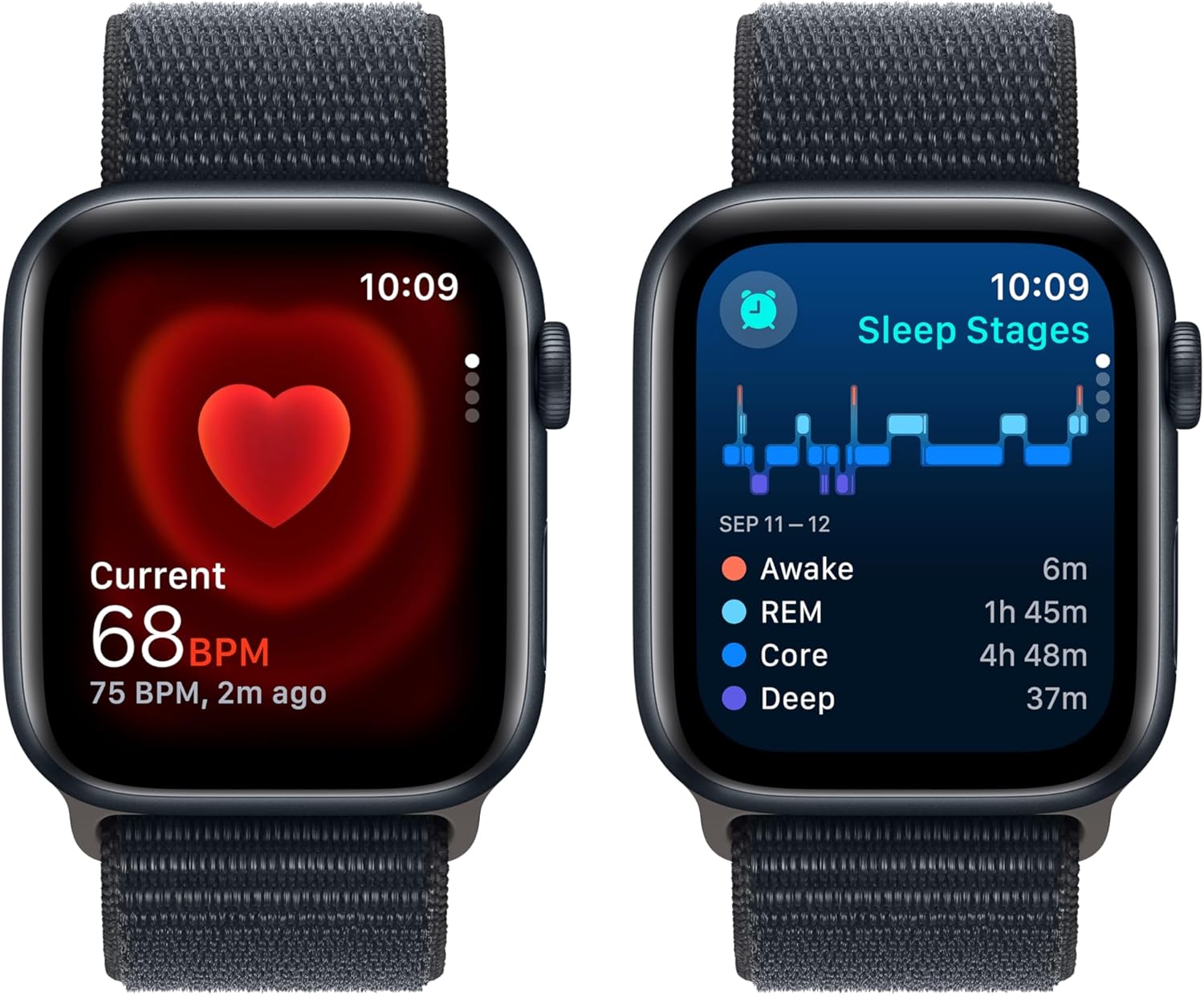
Best for: iPhone users who want a capable smartwatch with genuine fitness tracking built in
The Apple Watch SE is the most affordable Apple Watch entry point. GPS, crash detection, activity rings, Apple Health integration, and a large app ecosystem make it a compelling alternative in the fitbit vs whoop vs apple watch comparison.
- Key features: GPS, fall/crash detection, activity rings, Apple Health, watchOS apps
- Pros: Full Apple ecosystem; excellent GPS; smartwatch features; crash detection; Family Setup
- Cons: ~18-hour battery (daily charging required); requires iPhone; less recovery depth
- Why we recommend it: Best all-around option for iPhone users who prioritize smartwatch functionality over recovery analytics
- Avg. rating: ⭐ 4.5/5
- Approx. price: ~$200–250 on Amazon
6. Garmin Forerunner 255 GPS Running Watch
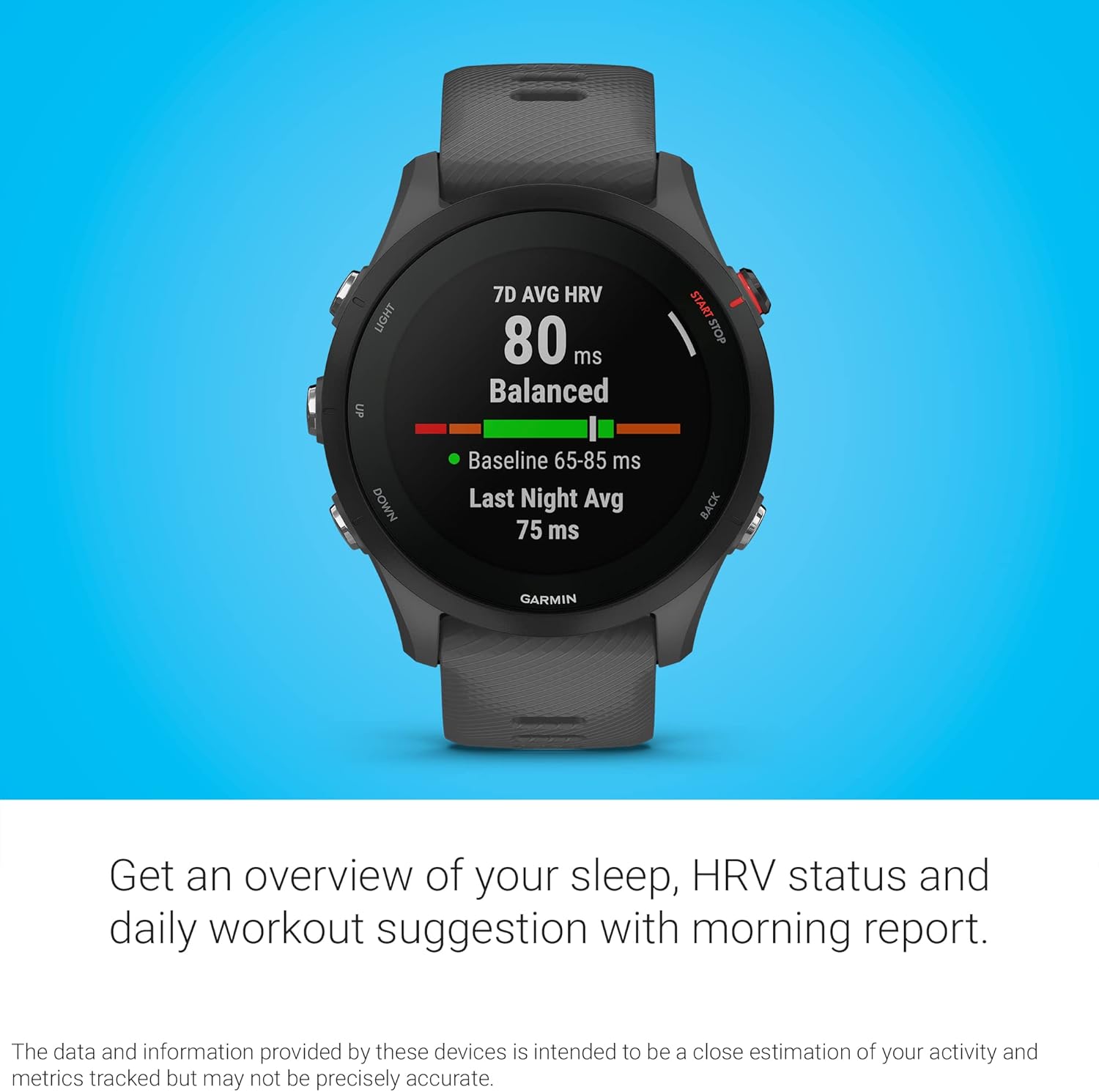
Best for: Serious runners and multisport athletes who need advanced GPS and recovery data
The Forerunner 255 is a strong choice for dedicated runners who need superior GPS, long battery life, running dynamics, and solid recovery insights via Garmin’s Body Battery.
- Key features: Built-in GPS, Body Battery, HRV Status, Advanced Running Dynamics, ~14-day battery
- Pros: Excellent battery; detailed running metrics; Body Battery recovery; multisport support
- Cons: Larger on the wrist; less beginner-friendly UI; fewer smart features
- Why we recommend it: Strongest choice in the whoop vs fitbit vs garmin comparison for serious runners
- Avg. rating: ⭐ 4.6/5
- Approx. price: ~$280–340 on Amazon
7. WHOOP Replacement Bands (4.0 Compatible)
Best for: WHOOP users wanting additional color options, comfort upgrades, or a backup band
WHOOP’s ecosystem of replacement bands gives you flexibility in style and function. Hydro sport bands are ideal for swimming and sweat-heavy workouts; knit options work for daily wear.
- Approx. price: ~$29–49 on Amazon
8. Fitbit Charge 6 Replacement Bands (Multi-Pack)
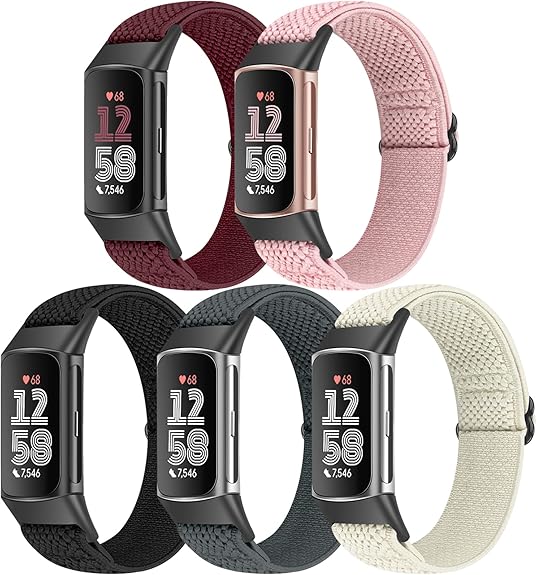
Best for: Charge 6 users wanting color variety or an affordable backup band
Third-party Fitbit Charge 6 bands are widely available on Amazon. Sport silicone bands work well for workouts; breathable mesh or metal options add polish for everyday wear.
- Approx. price: ~$10–25 for multi-packs on Amazon
9. Anker PowerCore Slim 10,000mAh Portable Charger
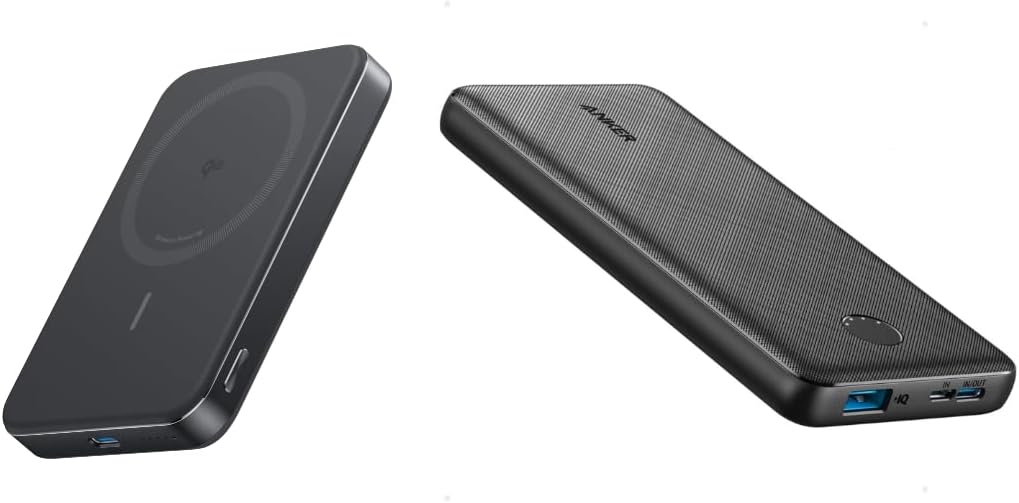
Best for: Any wearable user who travels, commutes, or spends long days away from an outlet
A compact power bank keeps your wearable and phone charged during travel and long event days. Particularly useful for Fitbit users who charge daily or every few days.
- Key features: 10,000mAh capacity, dual USB output, compact flat design, high-speed charging
- Avg. rating: ⭐ 4.6/5
- Approx. price: ~$20–35 on Amazon
10. Resistance Bands Complete Set (5 Levels)
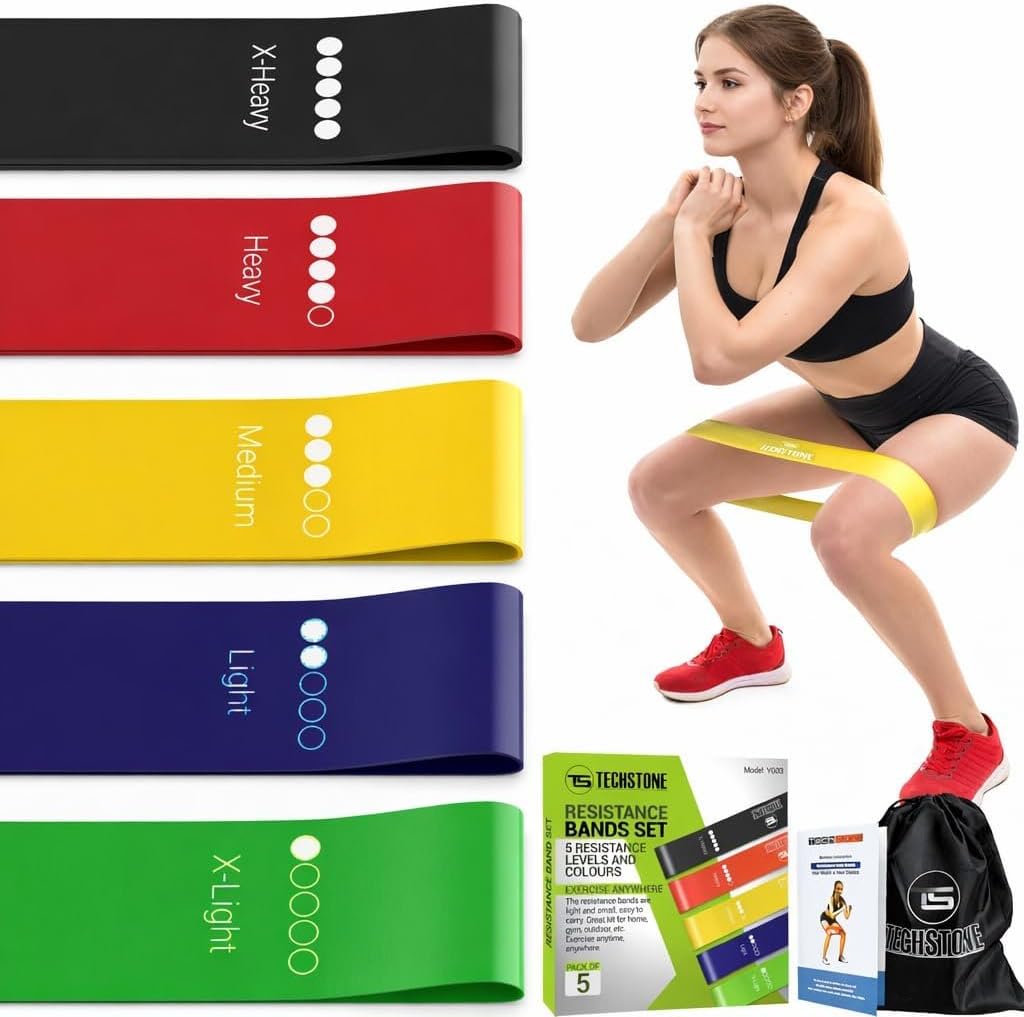
Best for: Home gym users tracking workouts with WHOOP or Fitbit
If you’re tracking strength training strain with WHOOP or Active Zone Minutes with Fitbit, a quality resistance band set extends your training options without a gym membership. Great for generating trackable workload on rest days.
- Avg. rating: ⭐ 4.5/5
- Approx. price: ~$20–35 on Amazon
Buying Guide: How to Choose Between WHOOP and Fitbit
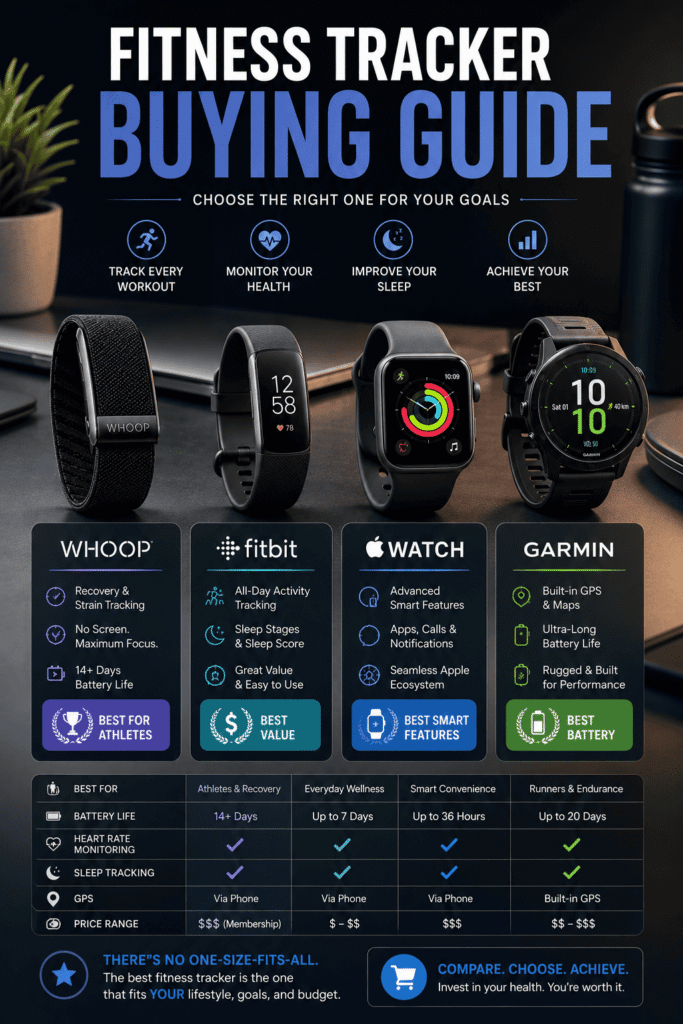
Use this guide to match your specific situation to the right device.
1: Define Your Primary Goal
| Your Goal | Best Choice |
|---|---|
| Optimize athletic recovery | WHOOP |
| Lose weight and track calories | Fitbit |
| Improve sleep quality | WHOOP (or Oura) |
| Track runs and outdoor workouts | Fitbit Charge 6 or Garmin |
| General everyday health | Fitbit |
| Manage stress | Fitbit Sense 2 |
| Monitor heart health (ECG) | Fitbit Sense 2 or Apple Watch |
2: Set Your Budget
- Under $100 one-time: Fitbit Inspire 3
- $100–$180 one-time: Fitbit Charge 6
- $200–$270 one-time: Fitbit Sense 2 or Versa 4 / Apple Watch SE
- $18–$30/month ongoing: WHOOP
3: Do You Need a Display?
If yes → Fitbit (or Apple Watch/Garmin) If not → WHOOP
4: Are You Okay With a Subscription?
If subscriptions bother you → Fitbit (no mandatory fee) If you’ll use the data daily → WHOOP is worth considering
5: Consider Long-Term Costs
Calculate your costs at 12, 24, and 36 months before deciding. WHOOP’s ongoing fee compounds significantly. Factor it in if you’re budget-conscious.
6: Which Phone Do You Use?
- iPhone → Apple Watch is a natural fit, but WHOOP and Fitbit both work
- Android → Fitbit integrates well with Google Health Connect; WHOOP works with both platforms
7: Are You a Beginner or Experienced Tracker?
- Beginner → Fitbit Inspire 3 or Charge 6
- Intermediate → Fitbit Charge 6 or Sense 2
- Serious athlete → WHOOP or Garmin
Pros & Cons Summary
WHOOP 4.0
| ✅ Pros | ❌ Cons |
|---|---|
| Best-in-class daily Recovery Score | Subscription mandatory and ongoing |
| Advanced HRV monitoring (gold standard) | No display — requires phone |
| AI-powered behavior journal and coaching | No built-in GPS |
| On-wrist charging — zero monitoring gaps | No smart features or notifications |
| Excellent sleep staging and Sleep Coach | 30+ days to personalize data |
| Tracks strain across every activity type | Higher long-term total cost |
| Comfortable for 24/7 wear | Less engaging for casual users |
| IP68 waterproof | Only valuable if you engage with data |
Fitbit Charge 6
| ✅ Pros | ❌ Cons |
|---|---|
| No mandatory subscription | Less advanced recovery metrics |
| Built-in GPS for outdoor activities | HRV tracking is more basic |
| Color touchscreen display | Daily Readiness Score requires Premium |
| Google Pay, Maps, Assistant | Less suited for serious athletes |
| ECG for heart rhythm monitoring | Google’s long-term Fitbit plans uncertain |
| Up to 7-day battery life | Small screen vs. smartwatch |
| Beginner-friendly app and setup | Some features Android-only |
| Good sleep stage tracking |
Apple Watch SE (2nd Gen)
| ✅ Pros | ❌ Cons |
|---|---|
| Full Apple smartwatch experience | ~18-hour battery; daily charging |
| Deep iPhone and iOS integration | iPhone required |
| GPS, crash detection, fall alerts | No advanced HRV recovery scoring |
| Massive third-party app ecosystem | Higher price vs. basic Fitbit |
| Family Setup for kids and seniors |
Garmin Forerunner 255
| ✅ Pros | ❌ Cons |
|---|---|
| 14-day battery life | Larger, less stylish form factor |
| Advanced GPS and running dynamics | Steeper learning curve |
| Body Battery recovery score | Fewer smart features |
| Multisport support | Google Maps integration less polished |
| HRV Status monitoring |
10 Common Mistakes Buyers Make
1. Buying WHOOP without committing to the data
WHOOP is only worth the subscription if you check your Recovery Score daily and actually adjust your training or sleep based on it. If you’re likely to ignore the app, the fee is wasted.
2. Choosing based on upfront price alone
WHOOP can look “free” upfront. Fitbit’s one-time cost seems final. Calculate your actual 24-month total before comparing. The numbers shift significantly.
3. Expecting Fitbit to replicate WHOOP’s recovery depth
Fitbit is excellent for everyday health tracking. But athletes expecting WHOOP-level HRV analysis and daily recovery scoring from Fitbit will be underwhelmed.
4. Ignoring the GPS requirement
If you run or cycle outdoors even occasionally, you want built-in GPS. WHOOP doesn’t have it. Make sure your Fitbit model does before you buy.
5. Overbuying features you won’t use
Purchasing a Fitbit Sense 2 for its EDA stress sensor when you primarily want step counting is overkill. Match the model to your actual daily habits.
6. Forgetting that WHOOP takes time to personalize
New WHOOP users sometimes feel underwhelmed in the first few weeks. The data becomes meaningful after 30–60 days of consistent wear. Don’t judge it too early.
7. Underestimating comfort for overnight wear
You wear these devices at night for sleep tracking. Test or research band comfort before buying. An uncomfortable tracker ends up on the nightstand, not your wrist.
8. Not checking phone compatibility
All major trackers work with both iPhone and Android, but some features are platform-specific. Apple Watch requires iPhone. Fitbit’s Google features work best on Android.
9. Comparing specs from marketing pages instead of real-world use
Listed accuracy figures and battery estimates are based on ideal conditions. User reviews, independent tests, and community forums tell you how these devices actually perform.
10. Treating wearable data as absolute truth
Consumer wearable data — especially calorie burn, sleep staging, and HRV — involves estimation. Both WHOOP and Fitbit give directional accuracy, not medical precision. Use trends, not individual numbers, to guide decisions.
Frequently Asked Questions
Is WHOOP more accurate than Fitbit?
For HRV monitoring and continuous resting heart rate, WHOOP is generally more accurate and more detailed. Both devices struggle equally during high-intensity workouts. For medical-grade precision, use a chest strap or consult a physician.
Does Fitbit require a subscription?
No. All core Fitbit features — step tracking, heart rate, sleep stages, SpO2 — work without Fitbit Premium. Premium ($9.99/month or $79.99/year) unlocks the Daily Readiness Score, deeper sleep insights, and guided health programs.
Is WHOOP worth the monthly fee?
It depends entirely on how you use it. Serious athletes and high performers who engage with WHOOP’s recovery data daily consistently report it’s worth the cost. Casual users who check the app sporadically get much less value from the subscription.
Can Fitbit replace WHOOP?
For most everyday users, yes — especially for step tracking, calorie counting, sleep monitoring, and general health awareness. For athletes needing advanced HRV monitoring and daily recovery scoring with AI-personalized insights, no.
Which lasts longer between charges?
Fitbit Inspire 3 lasts up to 10 days. Fitbit Charge 6 up to 7 days. WHOOP lasts about 4–5 days — but charges on-wrist without interrupting data collection.
Which tracks sleep better — WHOOP or Fitbit?
Both track sleep stages accurately for consumer-grade devices. WHOOP provides more actionable guidance with its Sleep Coach, which recommends bedtimes based on your recovery goals. Fitbit’s sleep scoring is good and beginner-friendly.
Which is best for beginners?
Fitbit is the better starting point. Its display, accessible app, step-goal features, and no required subscription make it much easier to start with than WHOOP.
Which is best for athletes?
WHOOP is the top choice for serious athletes. Its HRV-based recovery system, strain scoring, and AI coaching give performance-focused users information that changes how they train, sleep, and recover.
Can you lose weight using WHOOP?
WHOOP supports weight loss indirectly by improving sleep quality and helping you avoid overtraining — both of which support hormonal balance and metabolic health. But it lacks food logging, step gamification, and calorie targets. Fitbit is more directly useful for active weight management.
Can Fitbit detect stress?
Yes. Fitbit Sense 2 uses an EDA (electrodermal activity) sensor to detect real-time physiological stress responses. The Fitbit Charge 6 provides a Stress Management Score using HRV, sleep, and activity data. Both are useful stress monitoring tools.
Which has better heart rate monitoring?
WHOOP has a slight edge for continuous resting and sleeping HR monitoring. Both struggle during peak-intensity exercise. For accurate heart rate during high-intensity training, a chest strap is more reliable than either device.
How does WHOOP charging work?
WHOOP uses an external battery pack that slides over the sensor module while you’re wearing it. You charge the pack independently and clip it on when needed. This lets you top off WHOOP without ever removing it from your wrist — ensuring continuous data.
Is Fitbit owned by Google?
Yes. Google completed its acquisition of Fitbit in January 2021. Newer Fitbit models include Google Maps, Google Pay, and Google Wallet integration. Fitbit health data connects with Google Health Connect on Android.
Which is better — WHOOP, Fitbit, or Apple Watch?
It depends on your priorities. WHOOP wins for athletes focused on recovery. Fitbit wins for everyday health tracking without a subscription. Apple Watch wins for iPhone users who want the best smartwatch experience with solid fitness features.
Does WHOOP work for beginners?
WHOOP can work for beginners, but the learning curve is real. It takes 30+ days to start delivering truly personalized insights, and the absence of a display takes adjustment. Many beginners prefer Fitbit’s more immediate feedback.
Is there a cheaper alternative to WHOOP?
Yes — several devices offer recovery insights at lower ongoing costs. See our full guide to the best WHOOP alternatives for in-depth comparisons.
Can I swim with WHOOP or Fitbit? Yes to both. WHOOP is rated IP68 waterproof. Most Fitbit models are rated 5ATM (safe for swimming and showering). Neither is rated for scuba diving or deep-water activities.
Which wearable is best for sleep if I don’t want to wear something on my wrist? The Oura Ring offers excellent sleep and recovery tracking in a ring form factor. Our full WHOOP vs Oura comparison helps you decide which one fits your goals.
Final Verdict
After comparing WHOOP and Fitbit across every major category, the answer isn’t one-size-fits-all. It comes down to who you are and how you want to use your data.
Best overall (athletes and serious users):
WHOOP 4.0 For anyone serious about performance optimization — recovery tracking, HRV monitoring, sleep coaching, and strain management — WHOOP is the best consumer wearable available. If you use the data, you’ll feel the difference.
Best for beginners: Fitbit Inspire 3 Affordable, easy, motivating. The Inspire 3 gets you tracking without overwhelming you or draining your budget.
Best for everyday users:
Fitbit Charge 6 The Charge 6 is the best all-around fitness tracker for most people — GPS, ECG, Google Pay, 7-day battery, and no mandatory subscription. Exceptional value at its price point.
Best for weight loss:
Fitbit (any model) Fitbit’s calorie tracking, food log integration, step goals, and motivational features make it the stronger weight-loss companion by a wide margin.
Best for sleep tracking:
WHOOP The Sleep Coach feature and tight integration with recovery scoring make WHOOP the stronger sleep optimization tool. For pure sleep analytics without athlete focus, also consider Oura Ring.
Best for runners:
Fitbit Charge 6 (GPS) or Garmin Forerunner 255 Fitbit for budget-friendly GPS running. Garmin for serious runners who need advanced pace data, running dynamics, and 14-day battery life.
Best for heart health monitoring:
Fitbit Sense 2 The EDA stress sensor, ECG, GPS, and Google ecosystem make the Sense 2 Fitbit’s strongest health-focused device.
Best value overall:
Fitbit Charge 6 Powerful, feature-rich, one-time cost. No required subscription. GPS and ECG included. Outstanding long-term value.
The WHOOP vs Fitbit decision comes down to one core question: Are you optimizing performance, or tracking wellness?
If you’re a serious athlete who lives by your Recovery Score and trains with purpose, WHOOP belongs on your wrist. If you want a reliable, versatile health companion that doesn’t cost you every month, Fitbit is the smarter buy for most people.
Not sure either one is the right fit? Browse our complete breakdown of the best fitness wearables and our detailed wearable fitness tracker comparison to explore every option in one place.