
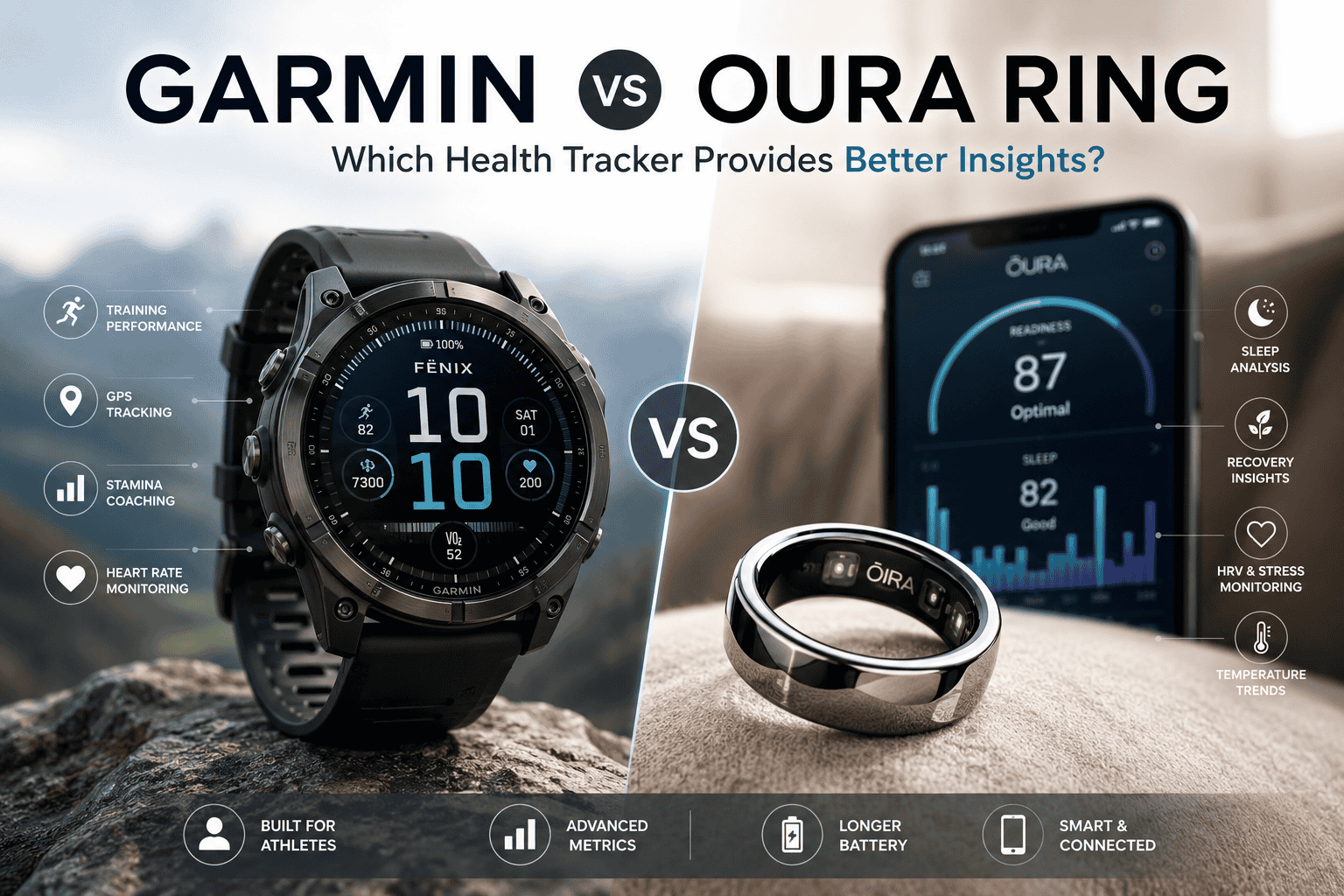
Here’s the honest truth: most people searching for Garmin vs Oura are asking the wrong question. They’re trying to pick between two devices that actually serve very different purposes — and buying the wrong one because they didn’t realize that before spending $300+.
The Garmin vs Oura comparison is one of the most misunderstood matchups in the wearable space. Garmin makes GPS sports watches. Oura makes a health-focused smart ring. At first glance, comparing them seems odd. But here’s the thing — both track recovery, sleep, HRV, and daily readiness. And if your priority is health optimization rather than GPS performance, the form factor conversation gets genuinely interesting.
In this guide, you’ll get a full breakdown of everything that matters: sleep accuracy, recovery scoring, fitness tracking, health metrics, subscription costs, and long-term value. You’ll also get expert tips, honest product recommendations, and clear answers to the questions that keep coming up in forums and Reddit threads alike.
By the end, you’ll know exactly which device fits your life — or whether you actually need both.
Quick Verdict
| Goal | Best Device |
|---|---|
| GPS and active sport tracking | Garmin |
| Deep sleep analysis | Oura Ring |
| Recovery score + daily readiness | Oura Ring (slight edge) |
| HRV monitoring | Tie |
| All-day wearability and comfort | Oura Ring |
| Long-term cost efficiency | Garmin |
| Smart features and notifications | Garmin |
| Women’s health and cycle tracking | Tie |
| Weight loss and calorie tracking | Garmin |
| Biohacking and data depth | Oura Ring |
| Beginners | Garmin |
| No subscription required | Garmin |
The quick answer: Oura Ring wins for sleep optimization, recovery, and discreet all-day health monitoring. Garmin wins for active sports tracking, GPS, smart features, and long-term value without recurring fees.
Full Feature Comparison Table
| Feature | Oura Ring Gen 4 | Garmin Forerunner 265 | Garmin Fenix 8 | Garmin Venu 3 |
|---|---|---|---|---|
| Form Factor | Finger ring | Wrist watch | Wrist watch | Wrist watch |
| Display | None | AMOLED color | AMOLED color | AMOLED color |
| GPS | ❌ | ✅ Multi-band | ✅ Multi-band | ✅ Built-in |
| Sleep Tracking | ✅ Excellent | ✅ Good | ✅ Good | ✅ Good |
| Recovery/Readiness | ✅ Readiness Score | ✅ Body Battery | ✅ Body Battery | ✅ Body Battery |
| HRV Monitoring | ✅ Nightly advanced | ✅ HRV Status | ✅ HRV Status | ✅ HRV Status |
| Heart Rate | ✅ 24/7 | ✅ 24/7 | ✅ 24/7 | ✅ 24/7 |
| SpO2 | ✅ | ✅ | ✅ | ✅ |
| Skin Temperature | ✅ | ✅ | ✅ | ✅ |
| Stress Tracking | ✅ (indirect) | ✅ Stress Level | ✅ Stress Level | ✅ Stress Level |
| Menstrual Cycle | ✅ | ✅ | ✅ | ✅ |
| VO2 Max | ❌ | ✅ | ✅ | ✅ |
| Running Metrics | Limited | ✅ Advanced | ✅ Advanced | Moderate |
| Swim Tracking | Limited | ✅ Open water + pool | ✅ Full + dive | ✅ Pool |
| Smart Notifications | ❌ | ✅ | ✅ | ✅ |
| Music Storage | ❌ | ✅ | ✅ | ✅ |
| NFC Payments | ❌ | ✅ Garmin Pay | ✅ Garmin Pay | ✅ Garmin Pay |
| Battery Life | 5–8 days | ~13 days | ~16 days | ~14 days |
| Charging Time | ~20–80 min | ~2 hours | ~2 hours | ~2 hours |
| Water Resistance | 100m | 10ATM | 10ATM/MIL-SPEC | 5ATM |
| Subscription | ~$6/month | None | None | None |
| Upfront Cost | ~$300–350 | ~$300–350 | ~$600–900 | ~$300–350 |
| AI Coaching | ✅ | ✅ Daily Workouts | ✅ Daily Workouts | ✅ |
| Best For | Sleep, recovery, wellness | Running, multisport | Elite multisport | Lifestyle + wellness |
Garmin vs Oura Overview
What Is the Oura Ring?
The Oura Ring launched in 2015, created by a Finnish company with a singular focus: make the most health-informative wearable possible in the smallest possible form factor.
The ring — worn on your finger — sits out of the way during workouts, sleeps comfortably on your hand at night, and doesn’t look like a fitness device at all. That invisibility is the point. The less you think about wearing it, the more consistent your biometric data becomes.
Oura Gen 4 features a fully redesigned sensor array with improved heart rate accuracy, temperature sensing, and SpO2 monitoring. The companion app delivers three core daily scores:
- Readiness Score (0–100): Your body’s overall capacity to take on the day
- Sleep Score (0–100): A composite of sleep duration, staging, efficiency, and timing
- Activity Score (0–100): Your daily movement and activity levels
Oura also introduced Oura Advisor — an AI-powered coaching feature that interprets your data and delivers personalized health recommendations in plain language.
The subscription model ($6/month or $70/year) is required to access full app features. It’s the lowest subscription price among the major recovery-focused wearables.
Who Oura is built for: Wellness-focused individuals, biohackers, women tracking cycle-related health, anyone prioritizing sleep quality, recovery optimization, and quiet all-day health monitoring.
What Is Garmin?
Garmin has been building GPS navigation systems since 1989. Its sports wearable line now spans from beginner-friendly wellness watches to rugged multisport devices that can guide you through a 100-mile trail race, open-water swim, and mountain navigation — all from the same device.
Garmin’s health monitoring tools have matured significantly in recent years. Body Battery, HRV Status, and Daily Suggested Workouts now give Garmin watches genuine health tracking depth alongside their sport-focused capabilities.
Garmin’s Current Lineup:
| Model | Best For | Approx. Price |
|---|---|---|
| Garmin Instinct 3 | Rugged outdoor athletes | ~$200–250 |
| Garmin Venu 3 | Lifestyle + wellness | ~$300–350 |
| Garmin Forerunner 265 | Serious runners and triathletes | ~$300–350 |
| Garmin Epix Pro | Premium multisport + maps | ~$500–600 |
| Garmin Forerunner 965 | Elite endurance athletes | ~$500–600 |
| Garmin Fenix 8 | Adventure, military, elite multisport | ~$600–900 |
Garmin Connect — the companion app — is completely free. No subscription required to access any core health or fitness feature.
Who Garmin is built for: Runners, cyclists, triathletes, hikers, outdoor adventurers, and athletes who want a full-featured GPS sports watch with robust health tracking.
Garmin vs Oura Design and Comfort
This is the most obvious difference — and arguably the most important for how consistently you’ll wear either device.
Oura Ring Design
The Gen 4 Oura Ring is available in four colors (Silver, Black, Gold, Stealth) and multiple sizes. It weighs between 4–6 grams depending on size. You literally forget it’s there.
That comfort matters for biometric accuracy. The more consistently you wear a health tracker — especially during sleep — the more accurate your data becomes. There’s a reason many users report better sleep compliance with Oura than with wristbands: a lightweight titanium ring doesn’t wake you up at 3am when you roll over.
One important note: ring sizing is permanent. Oura ships a free sizing kit before you order. Use it carefully — finger size fluctuates with temperature and hydration, particularly for athletes.
Materials: Titanium outer shell, scratch-resistant inner coating, IP68/100m water resistance.
Garmin Watch Design
Garmin’s design range is broad. The Venu 3 is polished and fashionable. The Forerunner 265 is sporty and relatively slim. The Fenix 8 is a substantial piece of hardware — MIL-SPEC tough with a chunky bezel and case.
For overnight sleep tracking, most Garmin users charge their watch during the night — which creates data gaps. Some users sleep with their Garmin, particularly lighter models like the Forerunner 265. But a fitness watch on your wrist during sleep is noticeably different from a thin ring.
Comfort verdict: Oura wins for 24/7 wear, especially sleep. Durability verdict: Tie — both are highly durable. Garmin Fenix 8 edges ahead under extreme conditions.
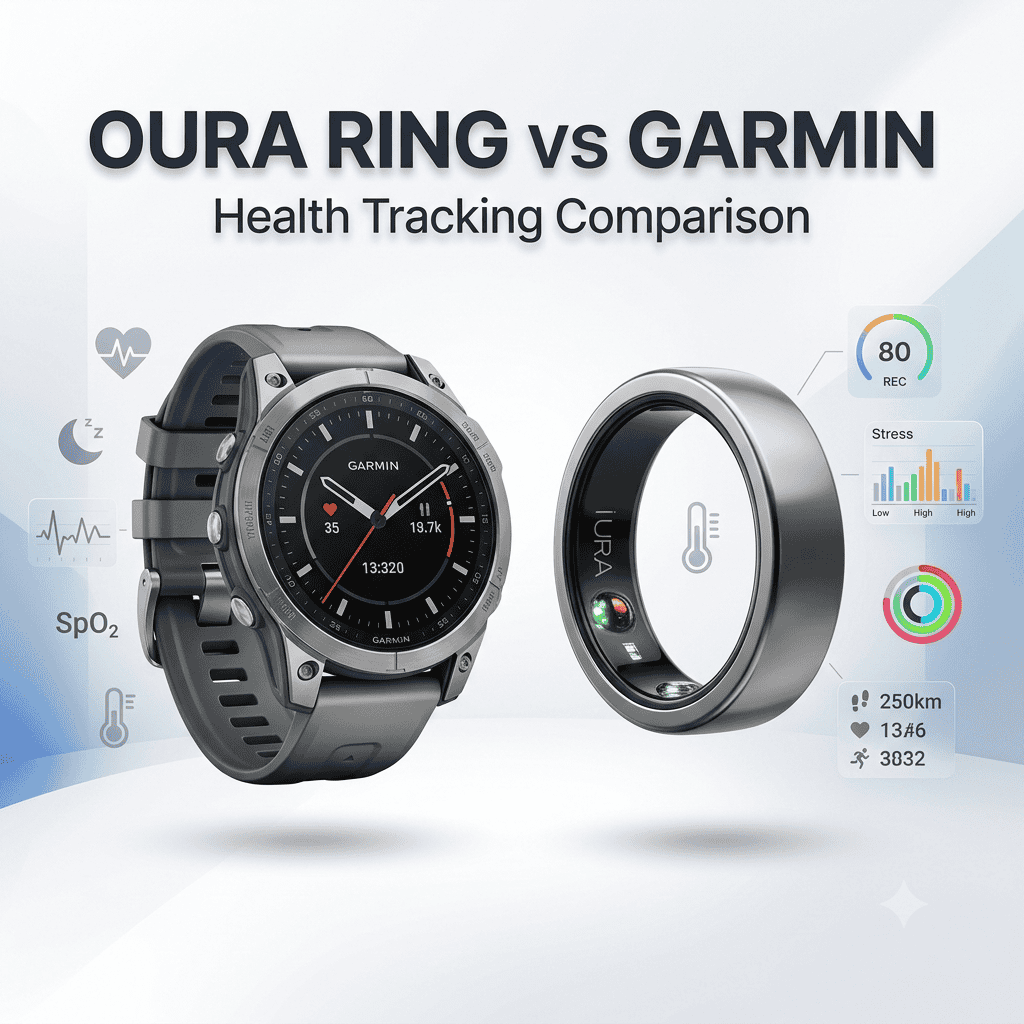
Garmin vs Oura Health Tracking
Heart Rate Monitoring
Both devices track heart rate continuously throughout the day and night. The location difference matters: Oura tracks from the finger, Garmin tracks from the wrist.
The finger is actually a better location for optical heart rate monitoring than the wrist. Blood vessels in the finger lie closer to the skin surface, have less motion artifact from tendon and bone movement, and provide a stronger photoplethysmography (PPG) signal.
That said, both devices are consumer-grade wearables — not medical instruments. Always consult a healthcare provider for heart health concerns. Neither device can diagnose arrhythmia or other heart conditions.
For resting and overnight heart rate, Oura’s finger-based readings are generally considered more accurate than wrist-based alternatives for continuous monitoring. Garmin performs well for workout-based heart rate tracking and is particularly strong when paired with its HRM-Pro chest strap.
Heart Rate Variability (HRV)
HRV is the variation in time between consecutive heartbeats — a well-established physiological marker of autonomic nervous system health and recovery readiness. According to established sports science principles, higher HRV generally indicates better parasympathetic recovery.
Oura: Measures HRV continuously throughout the night and delivers a morning average RMSSD reading. Gen 4 expanded the measurement window and improved algorithm precision.
Garmin: HRV Status tracks nightly HRV over a 5-week rolling window and categorizes your status as Balanced, Low, or Unbalanced relative to your personal baseline. It updates more slowly than Oura — designed for trend tracking rather than daily precision.
Both devices personalize their HRV assessments to your individual baseline — meaning your scores are always measured against your own history, not a generic population average.
Winner: Slight edge to Oura for HRV precision at the daily level. Garmin for trend visibility within a training-calendar context.
Stress Tracking
Oura: Tracks stress through HRV patterns and the relationship between your autonomic nervous system responses and your baseline. Stress appears in the Readiness Score as one of several contributors. A period of sustained low HRV, elevated resting HR, and poor sleep will flag as potential stress accumulation.
Garmin: Provides a real-time Stress Level metric (0–100) updated throughout the day based on continuous HRV monitoring. It also offers prompted Breathwork exercises when elevated stress is detected — a proactive intervention baked into the watch. Garmin Venu 3 has been particularly well-regarded for its stress monitoring and breathing guidance features.
Winner: Garmin for real-time stress monitoring. Oura for long-term stress pattern recognition and its impact on recovery.
Body Temperature and SpO2
Both devices include skin temperature sensors and SpO2 (blood oxygen saturation) monitors.
Oura: Temperature sensing has been one of Oura’s flagship features since Gen 2. The nightly temperature deviation readings are used to flag potential illness before symptoms appear, detect hormonal cycle changes, and monitor recovery status. This has been cited by users as one of Oura’s most practically valuable features — particularly during cold and flu seasons.
Garmin: Skin temperature monitoring is present on the Forerunner 265, Fenix 8, and Venu 3. Garmin uses temperature data as an input to its Body Battery and well-being tracking, but it’s less prominently displayed than in Oura’s system.
Both devices use SpO2 for overnight monitoring — a useful data point for flagging potential sleep apnea patterns (though neither can diagnose sleep apnea). Always work with a physician for any medical concerns.
Women’s Health
Both platforms have invested meaningfully in menstrual health tracking.
Oura: The cycle tracking feature uses temperature deviations to indicate potential ovulation windows, tracks period timing, and overlays cycle phase on your Readiness and Sleep scores. The practical implication: female athletes can see statistically how their cycle phase affects their biometric readiness and adjust training accordingly. For women who’ve experienced hormonal changes affecting sleep and recovery, this data is uniquely illuminating.
Garmin: Menstrual health tracking integrates with the training calendar to help users understand how cycle phases interact with performance, training load, and recovery time. The research-informed guidance — accessible through the app — explains the science behind training adaptations during different cycle phases.
For smart ring alternatives specifically designed for women’s wellness, check our guide to the best smart ring for women.
Winner: Near-tie. Oura has a slight edge for temperature-based cycle detection. Garmin wins for integration with structured training planning.
Garmin vs Oura Sleep Tracking
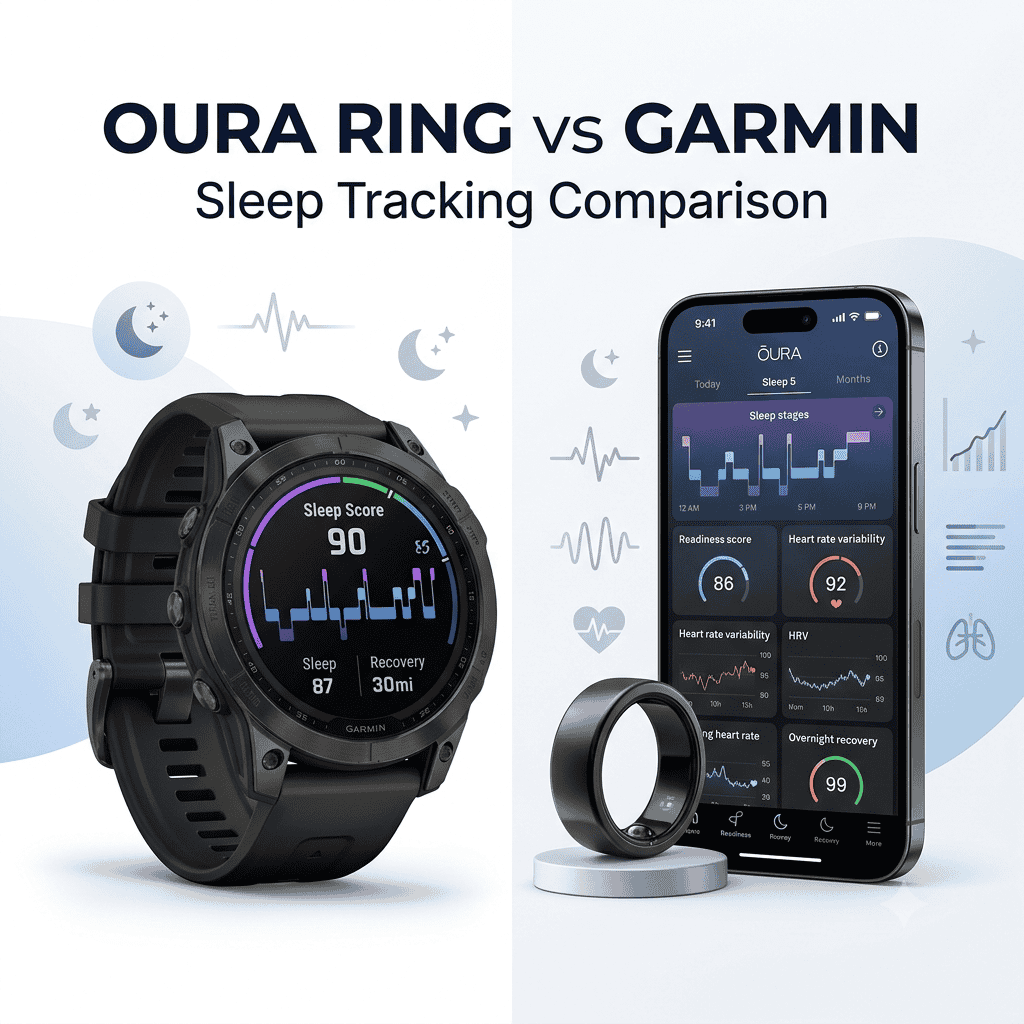
Sleep tracking is Oura’s strongest selling point. It’s the category where Oura most clearly differentiates itself from the competition — including Garmin.
Oura Sleep Tracking
Oura tracks:
- Sleep stages: Light, deep, REM, and awake time
- Sleep timing: When you went to bed, when you fell asleep, when you woke up
- Sleep efficiency: Time asleep as a percentage of time in bed
- Resting heart rate during sleep
- HRV patterns throughout the night
- Respiratory rate
- Body temperature deviations
- Latency: Time it took to fall asleep
All of these combine into a Sleep Score (0–100). The accompanying app breaks down each contributor, shows you which stages were high or low, and explains what drove your score.
What sets Oura apart is the insight layer. The app doesn’t just tell you that you got 6h 20m of sleep. It tells you that your deep sleep was 15% below your average, your REM peaked later than usual (likely from that late meal), and your resting HR was elevated — suggesting your body was still working during the night.
That contextual coaching is Oura’s real value proposition. It doesn’t just report sleep. It educates you about why your sleep looks the way it does — and what you can do about it.
Oura’s sleep accuracy has been evaluated favorably in published consumer wearable research. While no wrist or ring device matches polysomnography (clinical sleep study) precision, Oura consistently performs at the high end of consumer-grade sleep stage estimation.
Garmin Sleep Tracking
Garmin’s sleep tracking has improved significantly in recent years. Current generation devices — including the Forerunner 265, Venu 3, and Fenix 8 — track sleep stages, sleep score, respiratory rate, and overnight body battery recharge.
The Sleep Coach feature (available on select Garmin models) gives sleep goal recommendations and can suggest nap windows to help offset sleep debt.
What Garmin’s sleep data contributes particularly well is integration with training context. Seeing your Body Battery recharge curve overnight alongside your training load for the week tells a complete story about recovery — especially for athletes managing heavy training blocks.
The limitation: charging your Garmin overnight (which most users do for battery management) creates data gaps. If you want continuous overnight biometrics from your Garmin, you need to charge it during the day instead.
Garmin vs Oura Sleep Tracking Verdict
For pure sleep optimization, Oura is the stronger tool. The ring form factor makes it more comfortable to wear consistently through the night. The fingerprint-site biometric readings are more precise for overnight monitoring. And the Oura app’s sleep insight layer is more actionable than Garmin’s sleep summaries.
That said, Garmin’s sleep tracking is genuinely solid and well-integrated with athletic training context. If you already use Garmin for sport and you sleep with your watch, the sleep data you get is meaningful and useful.
Winner: Oura Ring — particularly for users whose primary goal is sleep improvement.
Garmin vs Oura Fitness Tracking
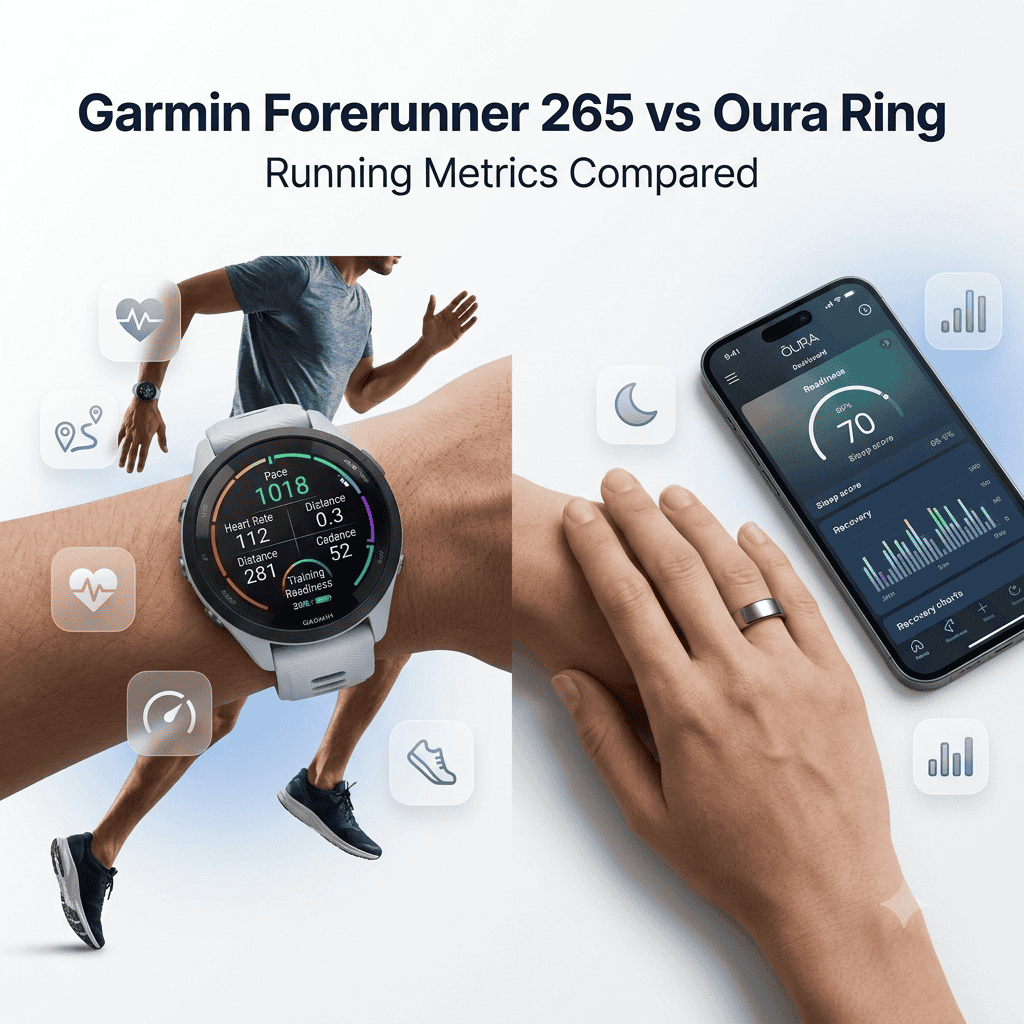
This is where Garmin’s advantage becomes pronounced.
Running
Garmin is the gold standard for consumer running watches. Advanced Running Dynamics (available with HRM chest strap accessory) deliver cadence, ground contact time, stride length, vertical oscillation, and running power. VO2 Max tracking, race predictors, pace coaching, and Daily Suggested Workouts make Garmin the complete platform for structured run training.
Oura tracks running as an activity and provides a post-run summary with heart rate data and estimated calorie burn. That’s useful context — but it’s a fraction of what Garmin provides for active run guidance.
Running winner: Garmin, decisively.
Cycling
Same story. Garmin supports ANT+ and Bluetooth power meter pairing, cycling dynamics on compatible sensors, smart trainer integration, and real-time data fields on the watch face. For cyclists tracking TSS (Training Stress Score) or doing structured Zwift sessions, Garmin is the professional-grade tool.
Oura tracks cycling as an activity and logs the session in the app — again, useful for recovery context but not for in-ride performance analytics.
Cycling winner: Garmin.
Swimming
Garmin: Forerunner 265 and above support both pool swimming (auto lap counting, stroke detection, SWOLF, pace) and open-water GPS swim tracking. Fenix 8 adds dive mode and advanced open-water metrics. For triathletes, Garmin’s swim tracking is a meaningful differentiator.
Oura: Rated to 100 meters water resistance — far beyond swimming depth requirements. But Oura doesn’t offer structured swim metrics. Wear it while you swim; just don’t expect stroke rate data.
Swimming winner: Garmin.
Strength Training and HIIT
Neither device excels at in-session strength tracking. Garmin offers auto-rep detection in strength mode (accuracy varies), heart rate zone tracking during sets, and post-session summaries. Oura detects elevated heart rate activity and logs it as active calories, then factors the training stress into the next morning’s Readiness Score.
For athletes managing recovery from heavy strength training, Oura’s readiness data the morning after a hard lifting session is genuinely informative. Knowing whether your body is still absorbing a heavy squat session — before you decide to load it again — is useful for athletes managing progressive overload.
Strength training winner: Garmin for in-session tracking. Oura for recovery context.
Yoga and Mindfulness
Garmin Venu 3 includes guided yoga workouts, Pilates sessions, and mindfulness and breathwork features — making it the most wellness-oriented Garmin model. Oura tracks yoga as an activity and contributes the session to your Activity Score.
Yoga and wellness winner: Garmin Venu 3.
VO2 Max and Training Load
VO2 Max estimation is Garmin’s territory. The Forerunner 265 and above provide a calculated VO2 Max that updates with every running session, along with Training Status (Productive, Peaking, Maintaining, Detraining, Overreaching) and Training Load Focus.
Oura doesn’t estimate VO2 Max. Its fitness insight comes through readiness and activity trends — a different angle on the same training picture.
VO2 Max winner: Garmin.
Garmin vs Oura GPS
Oura Ring has no GPS. None.
When you go for a run or bike ride with only your Oura Ring, you won’t get route data, distance, or pace tracking.
Garmin’s GPS — particularly the multi-band implementation on Forerunner 265 and above — is industry-leading for consumer devices. Multi-band GPS tracks your signal from multiple satellite constellations simultaneously, dramatically improving accuracy in challenging environments like dense forests, urban canyons, and mountain terrain.
If GPS matters to you for any outdoor activity, Garmin is the obvious choice.
Winner: Garmin — by an enormous margin.
Garmin vs Oura Smart Features
Oura is a health monitor. It’s not a smartwatch. There are no notifications, no music playback, no payments, no apps, no navigation.
Garmin — depending on the model — offers:
- Smart notifications (calls, texts, calendar, apps)
- Garmin Pay for contactless NFC payments
- Offline music from Spotify, Amazon Music, Deezer
- Garmin Connect IQ for third-party apps and watch faces
- Turn-by-turn navigation and offline topo maps (Fenix 8, Epix Pro)
- Incident detection and emergency assistance alerts
- LiveTrack for sharing real-time location with contacts
- Safety features including manual incident reporting
For users who want a device that functions as a smartwatch throughout their day, Garmin wins clearly. Oura’s “non-device” approach is a feature for users who prefer minimal digital intrusion — but it’s a limitation for users who want wrist-based convenience.
Winner: Garmin.
Garmin vs Oura Data Insights
How Garmin Interprets Your Data
Garmin Connect organizes your health data across Body Battery, HRV Status, Training Status, sleep, and fitness metrics. The app connects to Google Health Connect, Apple Health, and major third-party platforms like Strava, TrainingPeaks, and Zwift.
Garmin’s Daily Suggested Workouts feature uses your current Body Battery, Training Status, and fitness trends to recommend today’s workout — whether that’s a threshold run, an easy recovery jog, or a rest day. The recommendations adapt to your biometrics in real time, which means they’re meaningfully personalized rather than following a fixed schedule.
How Oura Interprets Your Data
Oura’s insight model is more behavioral and educational. The app explains why your scores look the way they do — and what specific factors contributed. It connects lifestyle dots over time: late alcohol consumption drops your REM by an average of X%, evening workouts push your resting HR 3–4 bpm higher overnight.
Oura Advisor (AI coaching) synthesizes your data patterns and delivers text-based recommendations. It’s more health-coaching than workout-coaching — which suits Oura’s wellness-focused user base well.
Over 3–6 months, both platforms develop a genuinely personal picture of your health patterns. Garmin’s picture is more athlete-centric; Oura’s is more holistic and wellness-oriented.
Winner: Garmin for athlete data integration. Oura for wellness insight and behavioral feedback.
Garmin vs Oura Accuracy
Heart Rate Accuracy
As discussed above, the finger is a physiologically superior site for optical heart rate measurement than the wrist. Oura’s Gen 4 improved its HR sensors meaningfully. For resting HR and overnight monitoring, Oura’s readings are generally considered more precise than wrist-based devices.
For workout heart rate tracking, neither device matches the precision of a chest strap. Both suffer from motion artifact during high-intensity activities. Garmin users training with precision should invest in the HRM-Pro Plus chest strap for workout sessions.
Calorie Accuracy
Here’s the honest truth about wearable calorie tracking: both Garmin and Oura overestimate total daily calorie burn to varying degrees, and neither is a reliable absolute number.
Consumer wearables calculate calorie burn from heart rate data, motion data, and demographic inputs (age, weight, height, sex). The algorithms are imprecise — particularly for strength training, interval training, and non-step-based activities.
Why are my calories so high on Garmin? Several reasons: Garmin’s algorithm may be using your age/weight inputs to calculate a higher basal metabolic rate than your actual metabolism. It may be over-counting calories during activities with elevated heart rate from stress or caffeine rather than exercise. Garmin also tends to count heart rate elevation during sedentary stress as “active” calorie burn, which inflates daily totals.
Are Garmin or Oura calories more accurate? Neither can claim clinical-grade calorie accuracy. Oura tends to produce lower, more conservative total calorie estimates than Garmin. Garmin’s estimates are higher — partly by design, partly due to algorithm assumptions. Use calorie data from both devices as directional guidance and trend tracking, not precise dietary math.
Sleep Accuracy
Oura has performed favorably in published consumer wearable sleep research. Finger-based biometric measurement reduces motion artifact compared to wrist-based devices, which improves sleep stage classification. Garmin’s sleep tracking is solid but generally considered slightly less precise than Oura’s for sleep stage accuracy.
HRV Accuracy
Both devices produce reliable overnight HRV readings based on continuous measurement. Oura’s finger position advantage applies here as well. For HRV precision, Oura has a modest but consistent edge.
Overall accuracy winner: Oura for resting biometrics and sleep. Garmin for GPS and sport-specific accuracy.
Garmin vs Oura Subscription Costs
Oura Membership
Oura Ring requires a monthly membership to access full app features:
- Monthly: ~$6/month
- Annual: ~$70/year
Without a membership, the Oura Ring displays limited data. The membership unlocks Readiness Score, Sleep Score, Activity Score, detailed insight reports, Oura Advisor, and cycle tracking.
At $6/month, Oura’s subscription is significantly cheaper than WHOOP’s (~$18–30/month) and substantially cheaper than many fitness app subscriptions.
Garmin Subscription
Garmin Connect is completely free. Every core feature — Body Battery, HRV Status, sleep tracking, GPS mapping, workout history, safety features, and third-party integrations — is accessible without a subscription.
Garmin does offer an optional Garmin Connect+ tier with additional training insights, but the free platform covers everything most users need.
Long-Term Cost Comparison
| Timeframe | Oura Ring Gen 4 (+ Annual Membership) | Garmin Forerunner 265 (Free App) | Garmin Fenix 8 (Free App) |
|---|---|---|---|
| Year 1 | ~$370 | ~$300–350 | ~$600–900 |
| Year 2 | ~$440 | Same device | Same device |
| Year 3 | ~$510 | Same device (~$350 total) | Same device |
| Year 4 | ~$580 | Potential upgrade (~$650 total) | Same device |
Oura’s ongoing subscription makes it more expensive than Garmin over time — though the gap is far smaller than WHOOP’s subscription accumulation. The Gen 4 ring also replaces itself across software updates without requiring hardware changes, which extends the device’s value window.
Winner: Garmin for long-term cost. Oura is the most affordable recovery-focused subscription wearable available.
Garmin vs Oura vs Apple Watch
| Feature | Oura Ring Gen 4 | Garmin Forerunner 265 | Apple Watch Series 10 |
|---|---|---|---|
| Form Factor | Ring | Wrist watch | Wrist smartwatch |
| Display | None | AMOLED | LTPO OLED |
| Battery | 5–8 days | ~13 days | ~18 hours |
| GPS | ❌ | ✅ Multi-band | ✅ |
| Sleep Tracking | ✅ Excellent | ✅ Good | ✅ Moderate |
| Recovery Score | ✅ Readiness | ✅ Body Battery | Limited (third-party) |
| HRV | ✅ Advanced | ✅ HRV Status | ✅ Basic |
| ECG | ❌ | ❌ (some models) | ✅ |
| Smart Features | None | Moderate | ✅ Full (iPhone only) |
| Subscription | ~$6/mo | None | None (Fitness+ optional) |
| Price | ~$300–350 | ~$300–350 | ~$350–400 |
| Best For | Sleep, recovery | Running, multisport | iPhone smartwatch users |
Apple Watch Series 10 is the best choice for iPhone users who want an integrated smartwatch experience with solid fitness tracking. But its ~18-hour battery requires daily charging — creating overnight data gaps that hurt sleep and recovery monitoring. Apple Watch doesn’t match Garmin’s GPS depth or Oura’s biometric precision for health optimization.
For a comprehensive look at all the options, our full wearable fitness tracker comparison covers every major platform in one guide.
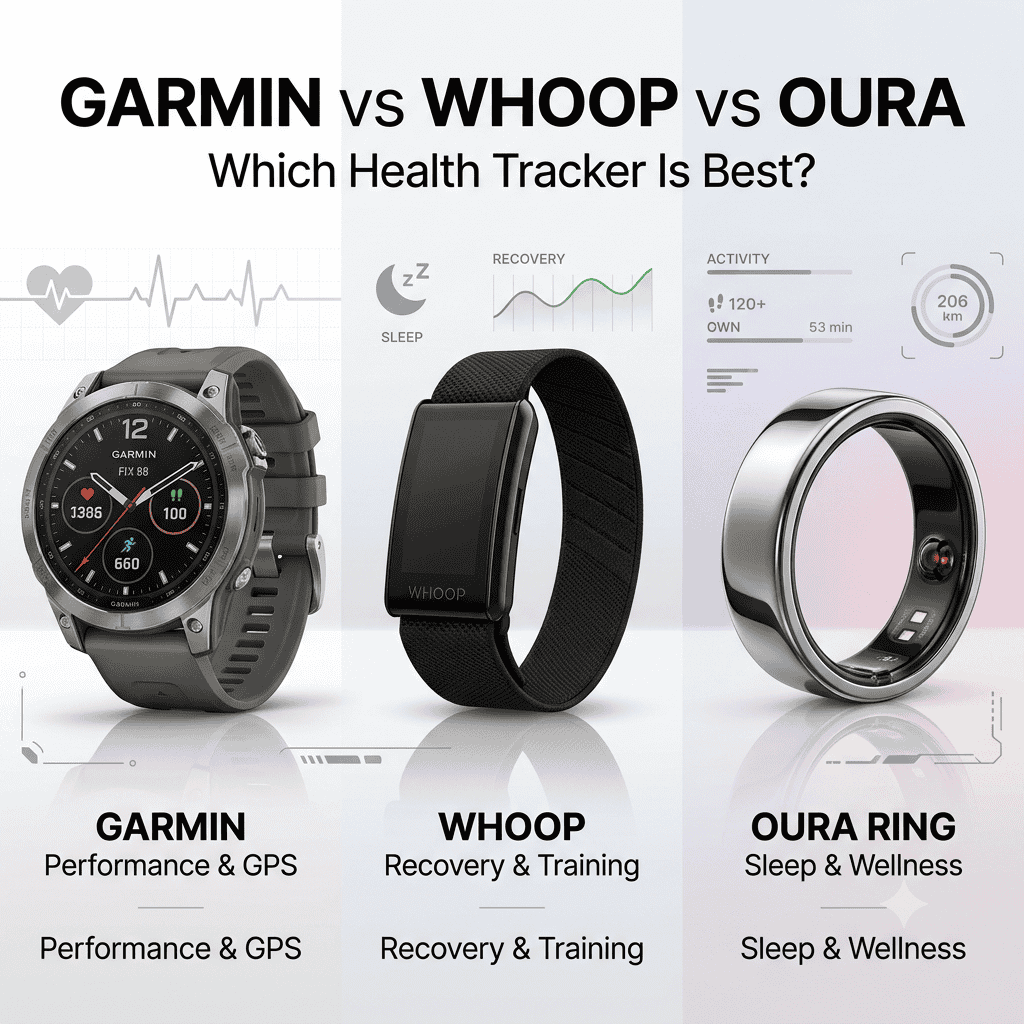
Garmin vs WHOOP vs Oura
The comparison between Garmin, WHOOP, and Oura is one of the most common three-way debates in the wearable world. Here’s how they split:
| Feature | Oura Ring Gen 4 | WHOOP 4.0/5.0 | Garmin Forerunner 265 |
|---|---|---|---|
| Recovery Score | ✅ Readiness Score | ✅ Daily Recovery Score | ✅ Body Battery |
| HRV Depth | ✅ Advanced | ✅ Advanced (best) | ✅ Moderate |
| Sleep Tracking | ✅ Excellent | ✅ Excellent + Coach | ✅ Good |
| Strain/Activity | Activity Score | ✅ Strain Score | ✅ Training Load |
| GPS | ❌ | ❌ | ✅ Multi-band |
| Display | None | None | ✅ AMOLED |
| Subscription | ~$6/mo | ~$18–30/mo | None |
| Smart Features | None | None | ✅ Full |
| Form Factor | Ring | Wrist band | Wrist watch |
| Best For | Sleep, recovery, biohackers | Athletes, training load | Runners, multisport, GPS |
The oura vs whoop vs garmin comparison comes down to what you want your primary device to do:
- WHOOP is the deepest recovery tool — especially for athletes managing training load who engage with data daily and can justify the high subscription
- Oura Ring is the most comfortable all-day health monitor with excellent sleep tracking at the lowest subscription cost
- Garmin is the most complete athletic tool with no recurring fees
For athletes who want the full picture, Garmin for training + Oura Ring for recovery/sleep is a popular combination — and far cheaper long-term than Garmin + WHOOP.
For a deeper look at WHOOP versus other options, see our guide to the best WHOOP alternatives and our full WHOOP vs Oura comparison.
Garmin Model Comparisons
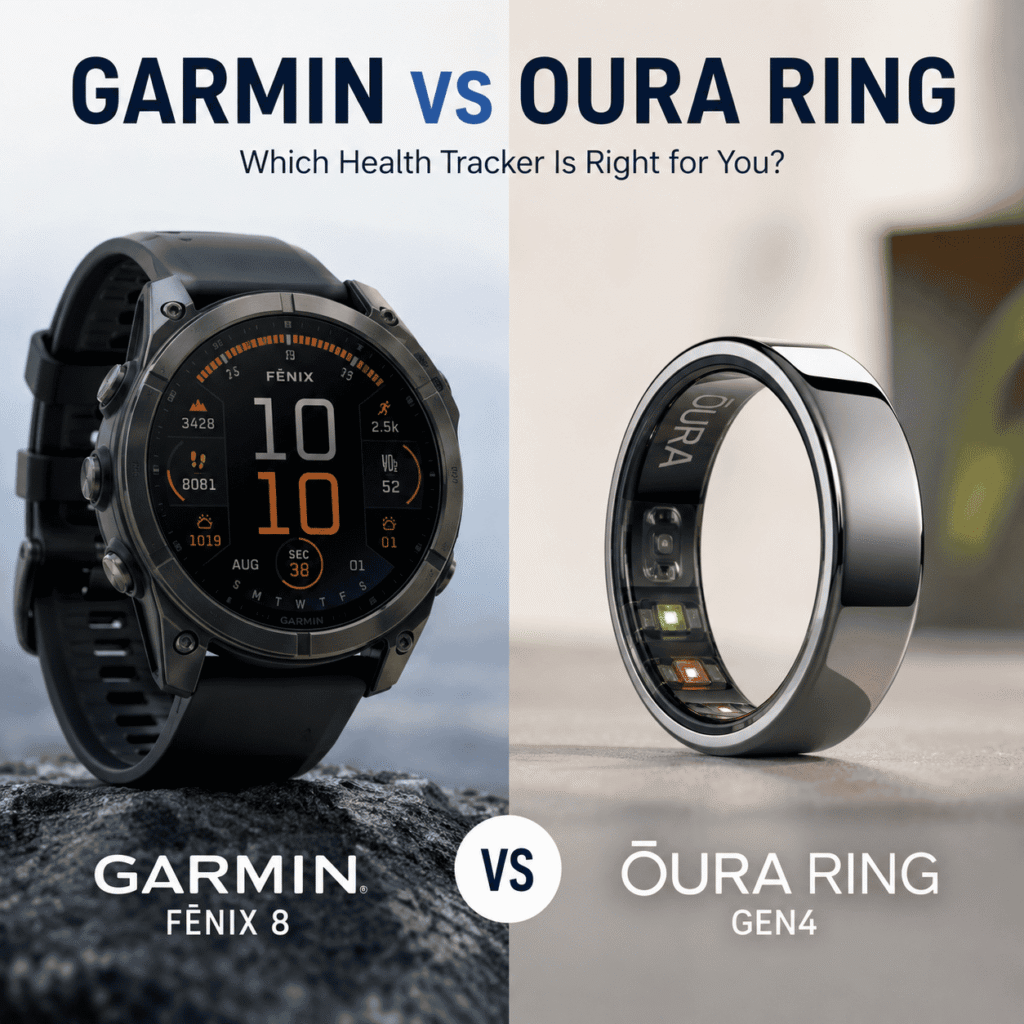
Oura Ring vs Garmin Fenix 8
The Garmin Fenix 8 is a premium multisport and outdoor adventure watch — MIL-SPEC tough, packed with offline topo maps, a dive computer, LED flashlight, and multi-band GPS with up to 57 hours of GPS battery life.
Comparing it to the Oura Ring is almost an apples-to-oranges exercise. The Fenix 8 is built for athletes who need the most capable GPS watch available. The Oura Ring is built for health monitoring. They don’t compete for the same user.
Who should choose the Fenix 8: Trail ultrarunners, mountaineers, military personnel, adventure athletes, and serious triathletes who need the most capable GPS watch available — and are willing to pay a premium for it.
Who should choose Oura over Fenix 8: Anyone whose priorities are sleep quality, daily readiness, and invisible health monitoring — who isn’t actively using GPS-intensive features.
Oura Ring vs Garmin Venu 3
The Garmin Venu 3 is the most wellness-oriented watch in Garmin’s lineup. It’s the model most comparable to Oura’s user base — focused on everyday health, sleep, stress, and balanced fitness tracking rather than peak performance.
The Venu 3 wins on smart features, daily activity tracking, GPS, and structured wellness programs (guided yoga, breathwork, Pilates). Oura Ring wins on biometric precision, sleep quality, overnight comfort, and Readiness Score depth.
Who should choose the Venu 3: Health-conscious everyday users who want a polished lifestyle smartwatch with Garmin’s health ecosystem — and GPS.
Who should choose Oura: Users who want the deepest sleep and recovery tracking in the most discreet form factor — and don’t need GPS or smart features.
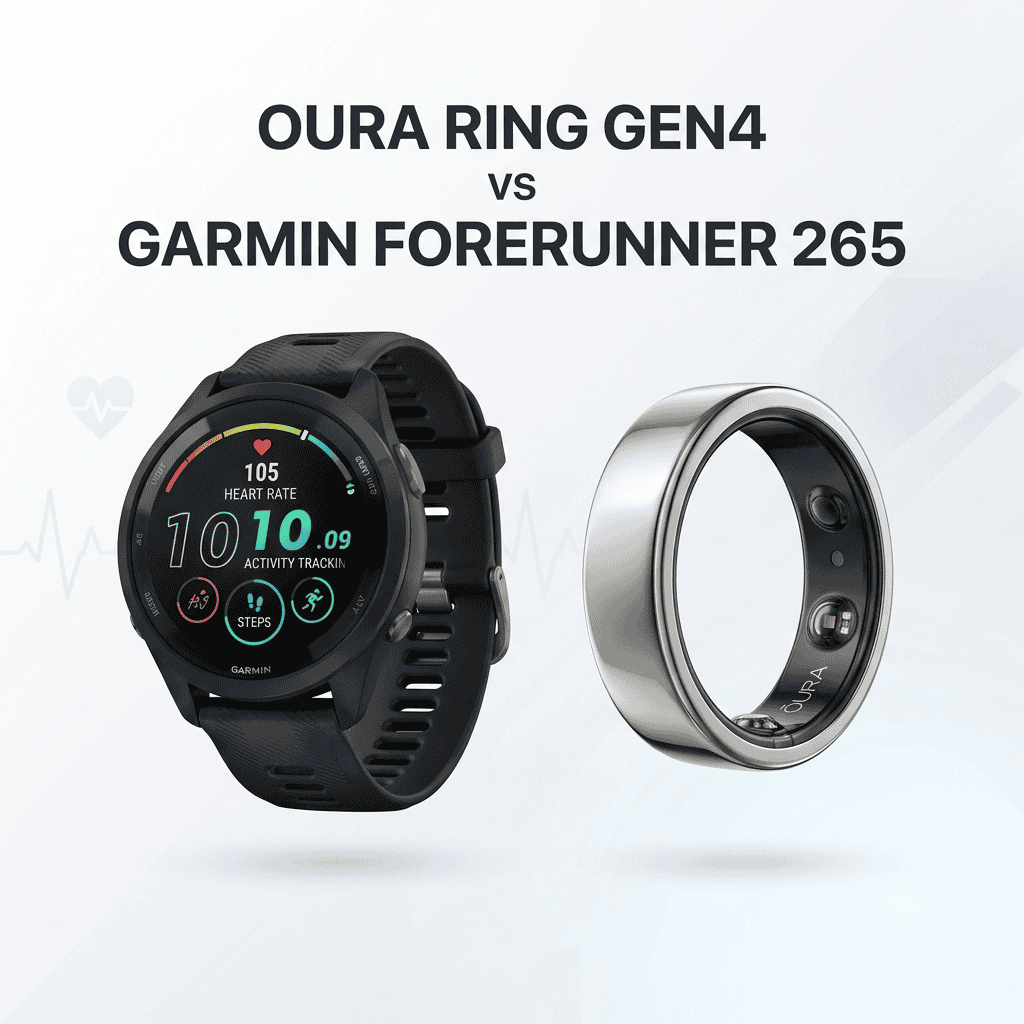
Oura Ring vs Garmin Forerunner 265
The Forerunner 265 is Garmin’s best all-around running watch. Multi-band GPS, 13-day battery, AMOLED display, VO2 Max, and Daily Suggested Workouts make it the go-to for serious runners.
For runners comparing garmin vs oura ring: use Garmin for training sessions, use Oura for overnight recovery monitoring. The two devices are more complementary than competitive.
Who should choose the Forerunner 265: Any runner or triathlete who wants the best mid-range GPS running watch.
Who should choose Oura: Any athlete — including runners — who wants to add a sleep and recovery layer to their training data at minimal overnight discomfort.
Oura Ring vs Garmin Forerunner 965
The Forerunner 965 is the premium step above the 265 — adding offline color topo maps, longer battery, more advanced training metrics, and a titanium bezel. Built for elite endurance athletes and multi-distance competitors.
For the Oura Ring vs Garmin Forerunner comparison at this level: the 965 provides everything a serious runner or triathlete needs for performance data. Oura provides what no GPS watch fully replaces: biometric precision during the 16+ hours you’re not actively training.
Amazon Product Recommendations
Verify current prices and availability before purchasing. Prices fluctuate regularly.
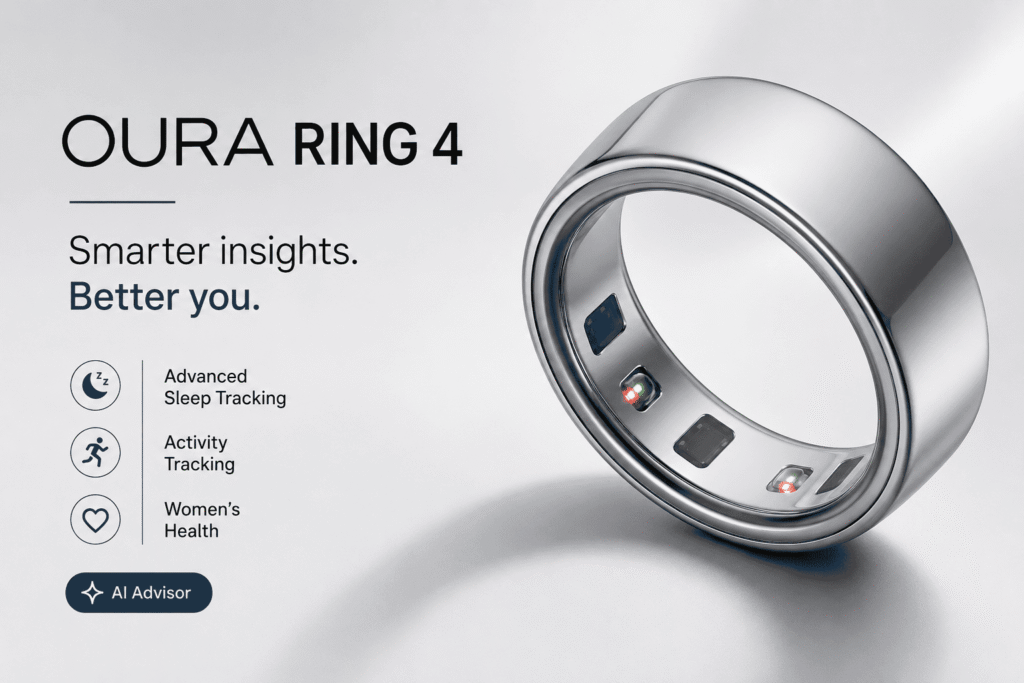
1. Oura Ring Gen 4
Best for: Sleep optimization, recovery tracking, biohackers, wellness-focused users, and anyone who finds wristbands uncomfortable
Oura Gen 4 is the most refined smart ring available. Its improved sensor array, titanium build, and expanded biometric capabilities make it the best non-watch health tracker for daily readiness and sleep.
- Key features: Readiness Score, Sleep Score, nightly HRV, skin temperature, SpO2, menstrual health tracking, Oura Advisor AI, 100m water resistance
- Pros: Best sleep tracking in a ring form factor; lightest wearable available; low $6/month subscription; excellent overnight comfort; precise biometrics from the finger
- Cons: No GPS; no display; limited workout tracking; sizing is permanent; subscription required for full app access
- Who it’s for: Wellness enthusiasts, biohackers, women tracking cycle health, athletes who want a recovery layer without a second wristband
- Avg. rating: ⭐ 4.4/5
- Approx. price: ~$300–350 on Amazon + ~$6/month
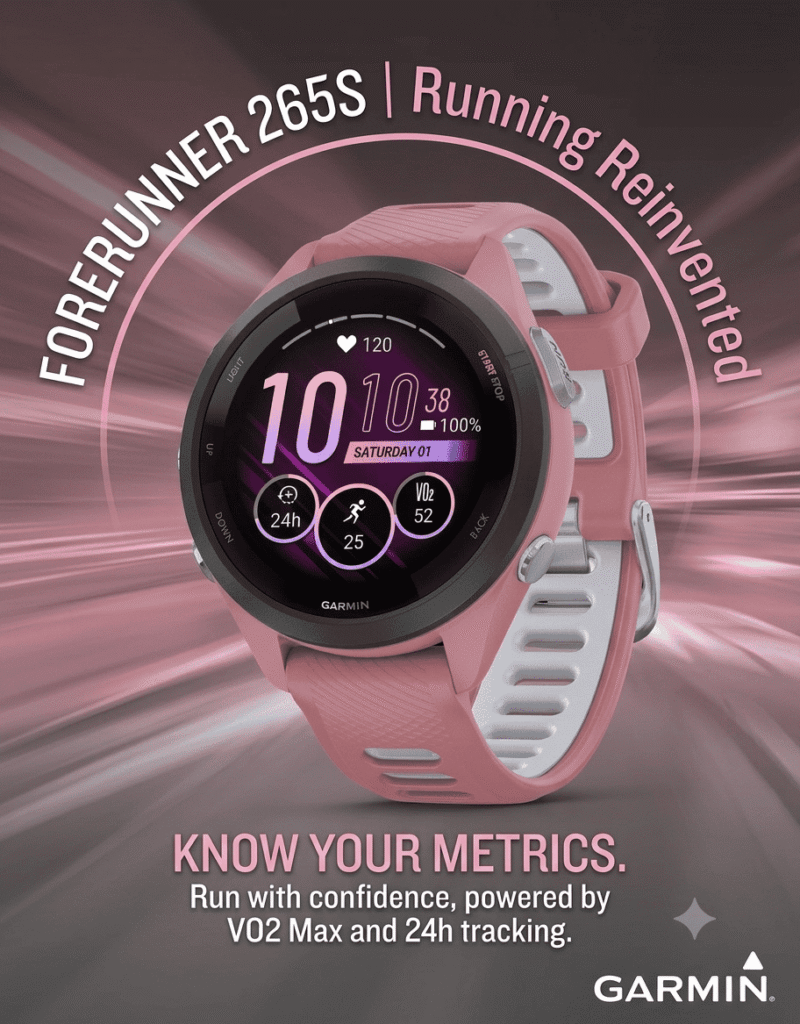
2. Garmin Forerunner 265 GPS Running Watch
Best for: Dedicated runners, triathletes, and all-around athletes who want serious GPS performance and zero subscription fees
The Forerunner 265 is the sweet spot in Garmin’s lineup — premium features at a mid-range price, with multi-band GPS, AMOLED display, 13-day battery, and Daily Suggested Workouts.
- Key features: Multi-band GPS, Body Battery, HRV Status, VO2 Max, race predictor, music storage, Garmin Pay, AMOLED display
- Pros: Multi-band GPS accuracy; 13-day battery; no subscription; AI-suggested daily workouts; strong running metrics; compatible with Strava, TrainingPeaks
- Cons: Less sleep precision than Oura; overnight charging creates data gaps; less health depth for non-running activities
- Who it’s for: Runners, cyclists, and multisport athletes who want the best GPS tracking without monthly fees
- Avg. rating: ⭐ 4.7/5
- Approx. price: ~$300–350 on Amazon
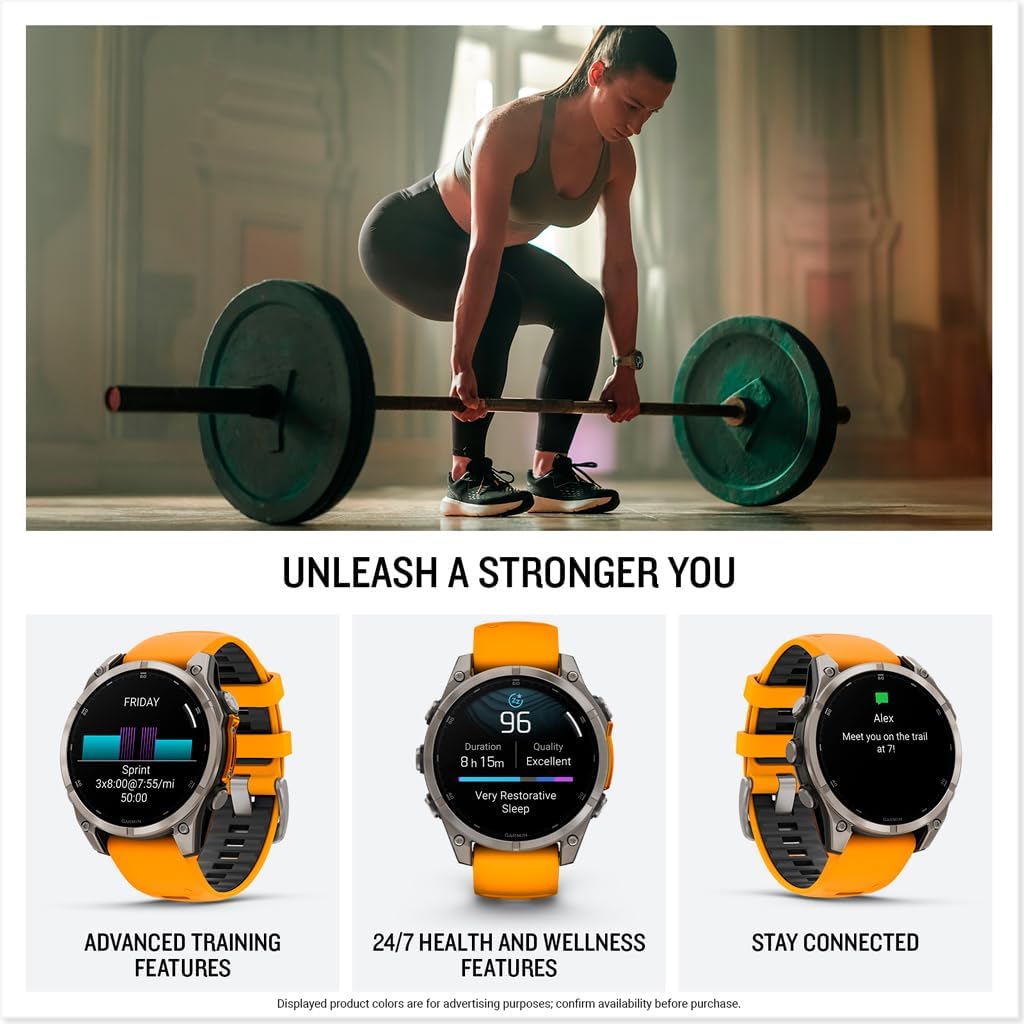
3. Garmin Fenix 8 Multisport GPS Watch
Best for: Elite adventure athletes, military, expeditions, and serious multisport competitors who need the absolute best GPS watch
The Fenix 8 is Garmin’s flagship — built for athletes who demand zero compromises. MIL-SPEC durability, offline topo maps, LED flashlight, dive computer, and 57-hour GPS battery life.
- Key features: MIL-STD-810 rated, multi-band GPS, offline topo maps, Fenix LED flashlight, dive mode, up to 16-day smartwatch battery, voice control
- Pros: Unmatched durability; offline navigation; excellent multisport capabilities; no subscription; 57-hour GPS battery
- Cons: Significant upfront investment; heavy and bulky for everyday wear; overkill for most runners
- Who it’s for: Trail ultrarunners, mountaineers, adventure athletes, military, and serious triathletes
- Avg. rating: ⭐ 4.6/5
- Approx. price: ~$600–900 on Amazon
4. Garmin Venu 3 Fitness & Health Smartwatch
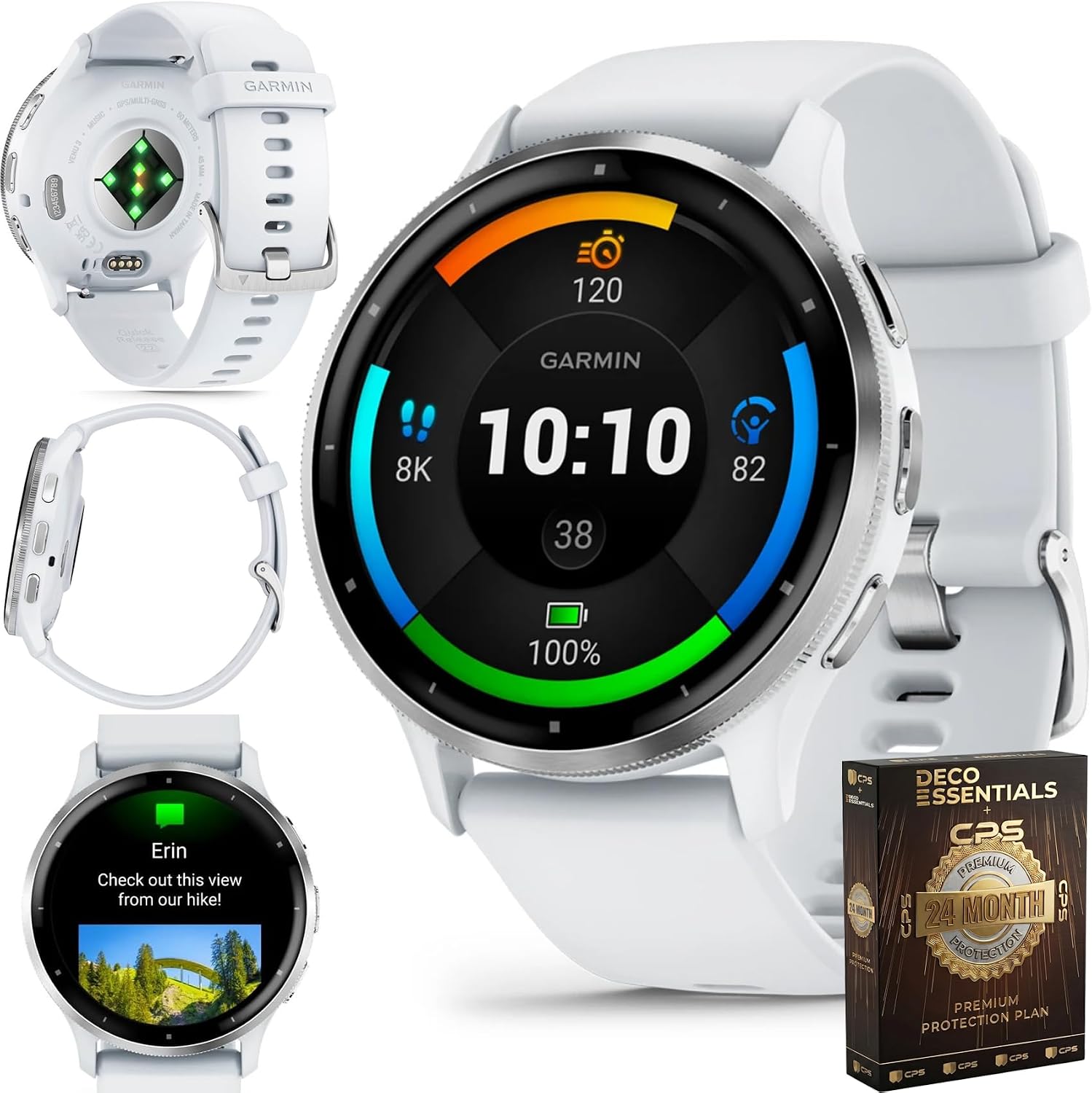
Best for: Lifestyle-focused users who want Garmin’s health ecosystem in a polished, everyday design with wellness-first features
The Venu 3 is the most health-oriented everyday Garmin. Guided workouts, nap detection, breathwork, wheelchair mode, and a stylish AMOLED display — balanced for wellness over pure performance.
- Key features: AMOLED display, Body Battery, nap detection, guided yoga and Pilates, sleep coaching, Garmin Pay, GPS, 14-day battery
- Pros: Wellness-first design; longest battery in lifestyle Garmin range; excellent guided workout library; smart features; no subscription
- Cons: Less advanced running metrics than Forerunner; smaller user community than Fenix/Forerunner; premium price vs. 265
- Who it’s for: Health-conscious everyday users, yoga and mindfulness enthusiasts, fitness beginners upgrading from basic trackers
- Avg. rating: ⭐ 4.5/5
- Approx. price: ~$300–350 on Amazon
5. Garmin Forerunner 965 GPS Running Watch
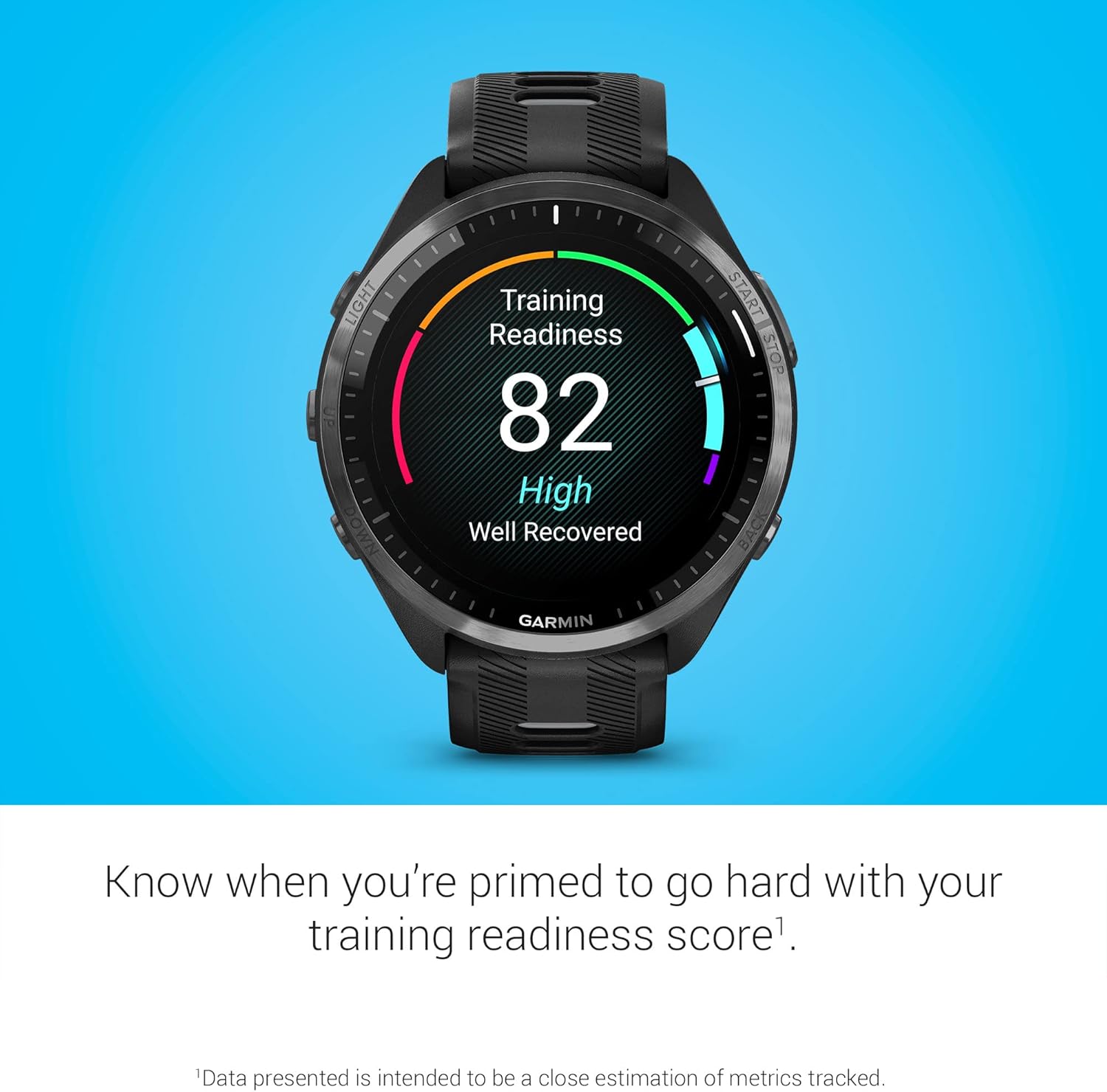
Best for: Elite runners and triathletes who need the most complete Forerunner experience including offline maps
The 965 adds offline color topographic maps, titanium hardware, and longer battery over the 265 — the obvious choice for ultra-distance runners and long-course triathletes.
- Key features: Offline color topo maps, multi-band GPS, 23-day battery, advanced training analytics, titanium bezel, full multisport profiles
- Pros: Best Forerunner for map-dependent activities; longest Forerunner battery; advanced training analytics; no subscription
- Cons: Larger and heavier than 265; high price vs. 265; overkill for road-only runners
- Who it’s for: Elite marathon runners, Ironman athletes, ultrarunners who need maps and extended sessions
- Avg. rating: ⭐ 4.7/5
- Approx. price: ~$500–600 on Amazon
6. Garmin Instinct 3 Rugged GPS Smartwatch
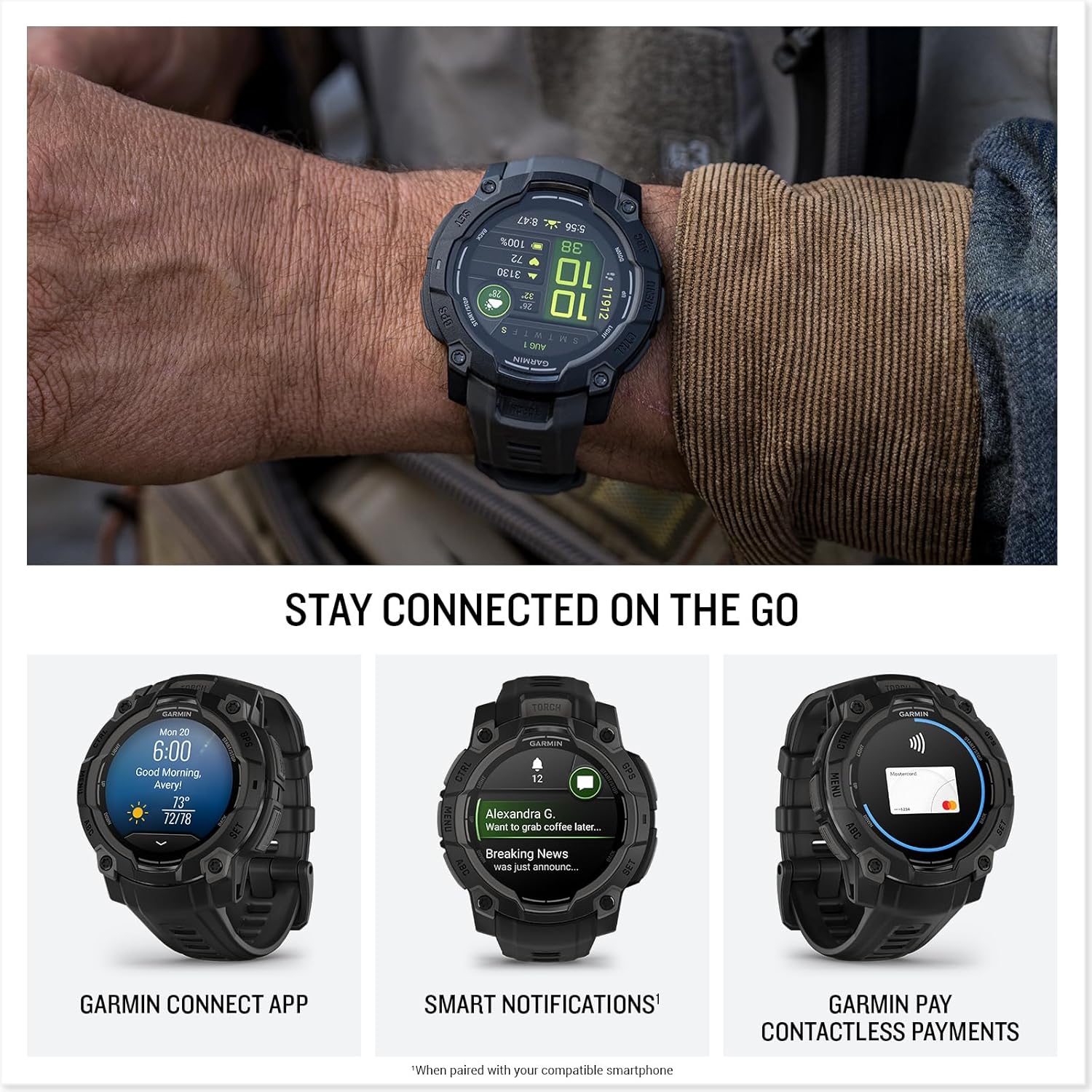
Garmin Instinct® 3 45mm, AMOLED Display, Rugged Outdoor GPS Smartwatch
Best for: Outdoor enthusiasts and budget-conscious athletes who need durability and a 30-day battery without the Fenix price tag
The Instinct 3 brings Garmin’s signature ruggedness at a significantly lower price than the Fenix. With up to 30 days of battery life, it’s the endurance battery champion.
- Key features: MIL-STD-810G rated, up to 30-day battery, Body Battery, GPS, Garmin Pay (select models), thermal and shock resistance
- Pros: Incredible battery life; military-grade durability; affordable entry into Garmin’s outdoor ecosystem
- Cons: Less refined UI than Fenix/Forerunner; smaller display; fewer wellness features than Venu 3
- Who it’s for: Hikers, mountaineers, military, and outdoor athletes who need maximum battery and durability on a budget
- Avg. rating: ⭐ 4.6/5
- Approx. price: ~$200–250 on Amazon
7. Garmin Epix Pro GPS Smartwatch
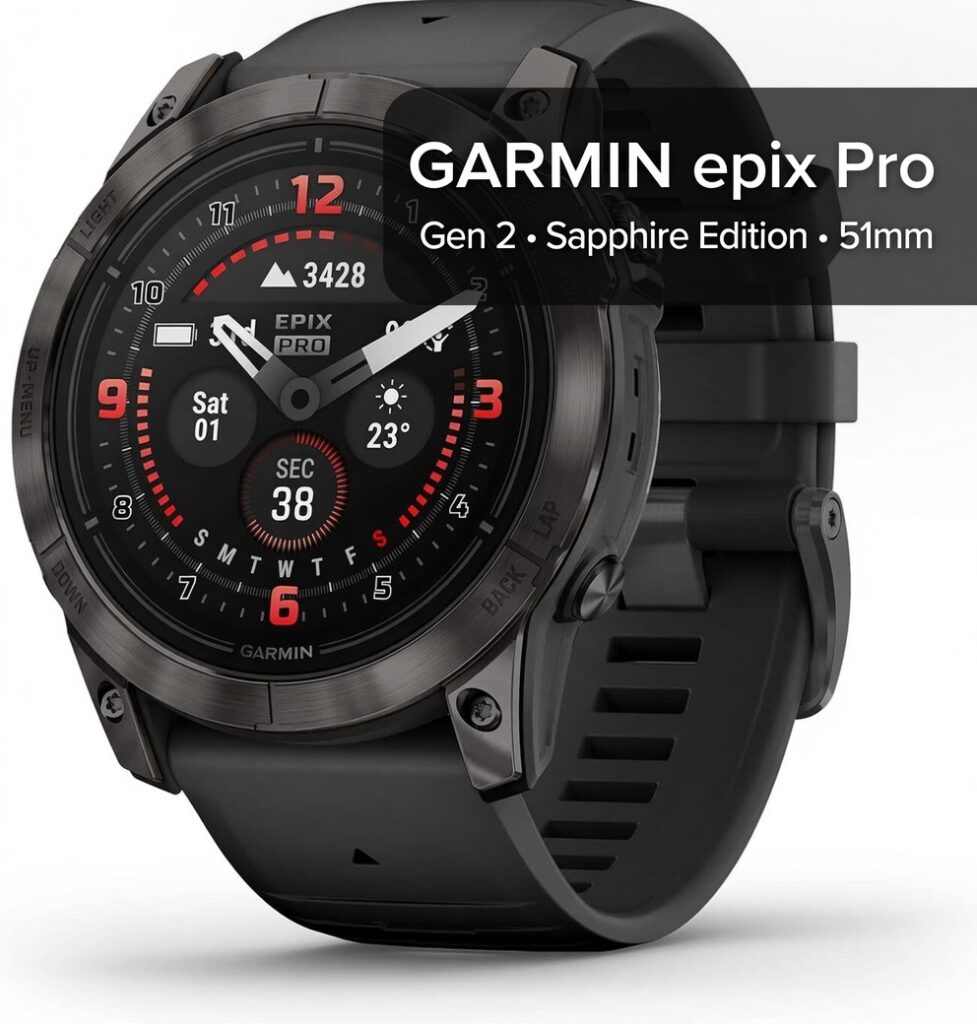
Best for: Athletes who want Fenix-level capabilities in a more refined, everyday-wearable form factor
The Epix Pro bridges the gap between the Forerunner and Fenix — with offline topo maps, premium materials, and AMOLED display in a design that works in the office as much as on the trail.
- Key features: AMOLED display, offline topo maps, multi-band GPS, LED flashlight, Body Battery, HRV Status, no subscription
- Pros: Balanced between performance and everyday style; excellent training analytics; offline maps without full Fenix bulk
- Cons: Significant price step above Forerunner 265; heavy vs. Forerunner; less durable than Fenix under extreme conditions
- Who it’s for: Serious athletes who want premium performance + polished daily aesthetics
- Avg. rating: ⭐ 4.6/5
- Approx. price: ~$500–700 on Amazon
8. WHOOP 5.0 Fitness Tracker
Best for: Performance athletes who want the deepest HRV-based recovery tracking and are willing to pay a subscription for daily coaching
WHOOP occupies a unique position — offering deeper HRV precision and behavioral coaching than either Oura or Garmin, at a higher ongoing cost.
- Key features: Recovery Score (HRV-based), Strain Score, Sleep Coach, Journal behavior correlation, AI coaching, on-wrist charging
- Pros: Deepest daily HRV recovery scoring; on-wrist charging (no data gaps); personalized behavioral insights after 60+ days; excellent for athletes managing training load
- Cons: Highest subscription cost (~$18–30/mo); no display; no GPS; 30+ days to personalize
- Who it’s for: Serious athletes, performance coaches, and biohackers who engage daily with recovery data
- Avg. rating: ⭐ 4.3/5
- Approx. price: Check Amazon + subscription required at whoop.com
9. Apple Watch Ultra 2
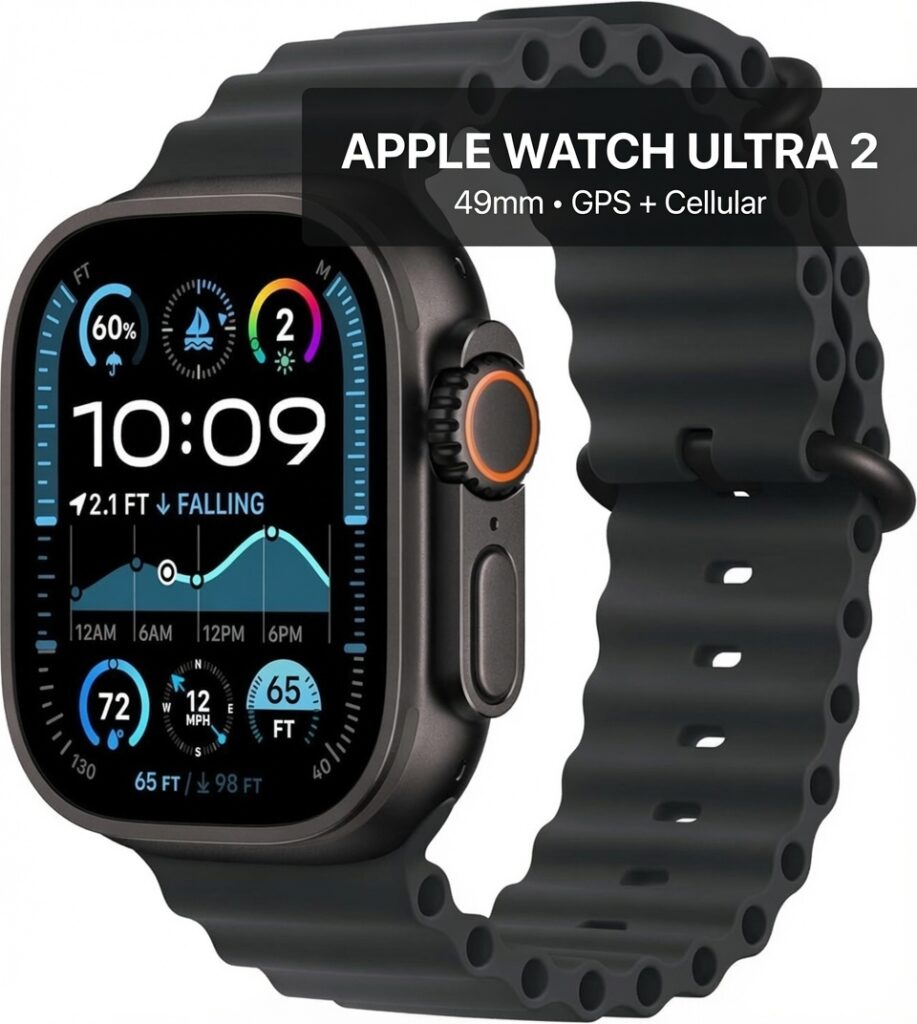
Best for: iPhone users who want the most capable, rugged Apple Watch with serious endurance sport credentials
Apple Watch Ultra 2 is Apple’s premium sport watch — dual-frequency GPS, titanium case, 60-hour battery, and cellular. For iPhone users who train seriously, it’s a compelling option in the Oura Ring vs Garmin vs Apple Watch debate.
- Key features: Dual-frequency GPS, 60-hour battery, titanium case, cellular, ECG, crash detection, Action Button, Apple Health integration
- Pros: Best Apple Watch battery; military-grade case; excellent GPS; ECG; large fitness app ecosystem
- Cons: iPhone required; expensive; less HRV depth than Oura or Garmin; Apple Health ecosystem closed vs. Garmin Connect
- Who it’s for: iPhone power users who train seriously and want the full Apple Watch ecosystem
- Avg. rating: ⭐ 4.5/5
- Approx. price: ~$700–800 on Amazon
Expert Tips by User Type
For Serious Athletes
Use Garmin for all active training sessions — GPS routes, pace data, VO2 Max tracking, and Daily Suggested Workouts. Add Oura Ring for overnight recovery monitoring. The combination gives you a full picture of training load and biometric recovery — at a lower combined cost than Garmin + WHOOP.
Pair your Garmin with the HRM-Pro Plus chest strap for clinical-grade heart rate accuracy during high-intensity intervals and threshold sessions.
For Beginners
Start with the Garmin Venu 3 or Forerunner 265. Garmin’s free app platform means no ongoing fees, and the learning curve is manageable. If sleep and recovery become important to you after several months of tracking, add an Oura Ring to the mix.
For Biohackers
Oura Ring is the biohacker’s wearable of choice. Temperature deviation tracking, nightly HRV patterns, cycle phase correlation, and Oura Advisor’s behavioral insights give you more self-experimentation data than almost any other consumer device at the $6/month price point.
For Busy Professionals
The Oura Ring — worn invisibly throughout the day — is ideal for professionals who want health insights without wrist-device visibility in meetings. The Garmin Venu 3 is the better choice if you want notifications, calendar reminders, and Garmin Pay alongside your health data.
For Weight Loss
Garmin edges out Oura for active weight loss support. Its calorie tracking, Active Minutes goal, step counting, structured workouts, and GPS activity logging give you more tangible daily feedback. Both devices track calorie estimates — and neither is clinically precise. Use both as trend guides, not dietary calculators.
For Sleep Improvement
Oura Ring is purpose-built for this goal. If improving sleep quality is your primary reason for buying a wearable, Oura’s combination of comfortable overnight wear, detailed sleep stage analysis, temperature-based insights, and behavioral education makes it the strongest tool available in consumer wearables.
Also check our guide to the best Oura Ring alternatives for additional sleep-focused options.
For Women
Both platforms have invested meaningfully in women’s health. Oura’s temperature-based cycle detection gives it a slight edge for cycle phase correlation with health metrics. Garmin’s menstrual health tracking integrates with the training calendar — particularly useful for athletic women managing cycle-aware training periodization.
For women specifically interested in ring-form health tracking, our guide to the best smart ring for women covers all the best options.
For Older Adults
Both Garmin and Oura are approachable for older adults. The Garmin Venu 3 is particularly well-suited — it includes wheelchair mode, senior-friendly health reports, and guided activities. Oura Ring is comfortable, low-maintenance, and requires no button-pressing or screen checking.
Pros and Cons Summary
Oura Ring Gen 4
| ✅ Pros | ❌ Cons |
|---|---|
| Most comfortable 24/7 wear | Subscription required ($6/month) |
| Finger-based biometrics more precise | No GPS |
| Best sleep tracking in ring form | No display |
| Temperature-based cycle detection | Limited workout tracking |
| Lowest subscription among recovery wearables | Ring sizing is permanent |
| Excellent readiness and recovery scoring | No smart features |
| Minimal distraction — no notifications | Battery 5–8 days (depends on size) |
| 100m water resistance | Takes weeks to personalize baseline |
| Stylish — looks like a regular ring | Less useful for active sport sessions |
Garmin Forerunner 265
| ✅ Pros | ❌ Cons |
|---|---|
| Multi-band GPS — industry leading | Sleep data gaps if charged overnight |
| 13-day battery life | Less biometric precision than Oura |
| No mandatory subscription | Body Battery less granular than Readiness |
| Daily Suggested Workouts AI adaptation | More complex UI for beginners |
| VO2 Max, race predictor, Training Status | Display adds bulk |
| Music storage and Garmin Pay | |
| Strong third-party integration (Strava, TrainingPeaks) | |
| HRV Status and Body Battery |
Garmin Fenix 8
| ✅ Pros | ❌ Cons |
|---|---|
| MIL-SPEC durability | Heaviest, most expensive Garmin |
| Offline topo maps + navigation | Overkill for road-only athletes |
| 57-hour GPS battery | Takes time to master features |
| LED flashlight and dive computer | |
| Exceptional multisport depth | |
| No subscription |
Common Mistakes Buyers Make
1. Buying a Garmin watch when you mainly want sleep tracking
Garmin watches work well for sleep — but you need to wear them to bed and charge them somewhere other than overnight. If sleep is your primary goal, Oura is the cleaner choice.
2. Buying Oura expecting GPS and workout guidance
Oura tracks your activity and gives you credit for it in your scores. But it’s not a workout coaching device. If you want GPS routes, pace coaching, and real-time workout metrics, add a Garmin.
3. Sizing your Oura Ring without using the sizing kit
Oura ships a free sizing kit. Use it at different times of day — fingers swell in heat and shrink in cold. Getting the wrong size is a frustrating, avoidable mistake.
4. Comparing calorie numbers from Garmin and Oura expecting them to match
They won’t. They use different algorithms, different sensor positions, and different baseline calculations. Both are estimates. Use them for directional trend tracking only.
5. Ignoring the overnight charging problem on Garmin
If you buy a Garmin thinking you’ll get full overnight sleep and recovery data, you need a charging strategy. Many users charge during a morning shower, desk work, or an evening TV session.
6. Choosing the Garmin Fenix 8 when the Forerunner 265 is enough
The Fenix 8 is exceptional. It’s also expensive and heavy relative to the Forerunner 265. For road runners and gym athletes, the 265 delivers 90% of the experience at 40% of the price.
7. Treating Oura Ring or Garmin data as medical diagnoses
Wearable devices provide health estimates — not medical diagnoses. If a Garmin or Oura data trend concerns you, consult a healthcare professional. Neither device replaces clinical evaluation.
8. Dismissing Garmin if you’re not a runner
The Venu 3 is built for lifestyle and wellness users who have never run a race. Garmin’s platform is much broader than its racing-watch reputation suggests.
9. Expecting immediate Oura personalization
Oura takes 2–4 weeks to establish a reliable personal baseline. Early scores may feel inaccurate. Give it time before judging the platform.
10. Forgetting subscription costs in the 3-year budget
Oura at $6/month adds ~$216 over 3 years on top of the hardware cost. Factor it in when comparing to Garmin’s zero subscription model.
Frequently Asked Questions
Why are people ditching Oura rings?
The main complaints cluster around a few issues: the mandatory subscription (added in 2022 after originally being free), concerns about Oura’s long-term data accuracy versus clinical standards, sizing issues, and the feeling that some users pay monthly without engaging deeply with the data. Some users also find the limited workout tracking frustrating if they want a single device for both sport and health monitoring.
That said, Oura’s user retention is generally strong among health-focused users who actively engage with their Sleep and Readiness scores.
What does Oura track that Garmin doesn’t?
Oura provides more granular temperature-based cycle tracking with overnight temperature deviations used to flag potential ovulation windows and hormonal shifts. Its behavioral insight layer — connecting specific habits to Readiness Score changes over time — is also more developed than Garmin’s. The finger-based biometric position also gives Oura a precision advantage for resting HR and overnight HRV measurement.
Is there a better option than Oura Ring?
Depends on what you mean by “better.” For sleep coaching depth, WHOOP’s Sleep Coach arguably provides more actionable forward-looking guidance. Also For form factor, Oura Gen 4 is still the leader in the ring category. For athletes who want recovery tracking plus GPS, Garmin covers both. Our guide to the best Oura Ring alternatives covers every alternative worth considering.
Are Garmin or Oura calories more accurate?
Neither is highly precise for calorie tracking. Both use HR, movement, and demographic inputs to estimate calorie burn — and both can be meaningfully off from your actual metabolism. Oura tends to produce slightly more conservative estimates. Garmin’s calorie numbers often run high, especially for activities that elevate heart rate without proportional physical exertion (stress, caffeine, illness). Use both as trend guides, not dietary targets.
Is a Garmin or Oura Ring better?
It depends on your primary use case. Garmin is better for GPS, active sport tracking, VO2 Max, running metrics, smart features, and long-term cost. Oura Ring is better for sleep tracking, daily readiness, biometric precision, and discreet all-day health monitoring. Many serious athletes use both.
Why are my calories so high on Garmin?
Several factors can inflate Garmin calorie estimates: your demographic inputs (weight, age, height) directly affect your calculated resting metabolic rate; elevated heart rate from stress, caffeine, or illness gets counted as active calorie burn; and Garmin’s algorithms can over-attribute non-exercise heart rate elevation to activity calories. Try reviewing your profile settings and comparing a low-activity day estimate to a known baseline to calibrate your expectations.
Why should I not get an Oura Ring?
Don’t buy an Oura Ring if: you want GPS and real-time workout coaching; you need smart notifications and payments; you want to run or cycle without your phone for route data; you don’t want a monthly subscription; or your finger size fluctuates significantly and you can’t get a reliable fit.
What do doctors think of Oura Ring?
Healthcare professionals’ opinions on consumer health wearables — including Oura — are generally cautious but increasingly interested. Some clinicians have used Oura’s temperature data in studies tracking early illness detection, menstrual cycle patterns, and COVID-19 symptom prediction. However, physicians consistently emphasize that consumer wearables provide estimates, not diagnoses. If something in your Oura data concerns you medically, a physician’s assessment is irreplaceable. The American Heart Association has noted that wearables can be useful tools for health awareness — but they should never replace clinical care.
Why are people mad at Oura Ring?
The most common frustrations relate to the subscription model — Oura originally offered lifetime access but moved to a mandatory subscription model in 2022, which disappointed early adopters. Sizing issues (permanent ring sizing that doesn’t account for natural finger size fluctuation), occasional accuracy questions, and customer service experiences also appear in negative reviews.
Is Garmin better for marathon training?
Yes — significantly. Garmin’s GPS accuracy, Advanced Running Dynamics, VO2 Max, race predictor, Training Status, Training Load Focus, and Daily Suggested Workouts make it the best mainstream GPS platform for marathon runners. Oura complements marathon training as a recovery monitor — but it can’t replace a Garmin for active training sessions.
Can I wear Oura Ring and Garmin at the same time?
Yes. Many athletes do exactly this — Oura Ring on their finger for passive health monitoring and overnight recovery, Garmin watch on their wrist for GPS, workouts, and smart features. It’s the most complete health and performance data setup available below $700 combined.
Does Garmin require a subscription?
No. Garmin Connect — including Body Battery, HRV Status, sleep tracking, GPS mapping, and training analytics — is completely free for all Garmin device owners.
Which is better for biohackers — Garmin or Oura?
Oura Ring is consistently more popular among biohackers. The temperature deviation tracking, nightly HRV, cycle correlation, and Oura Advisor behavioral insights make it a strong self-experimentation tool. While Garmin is excellent for structured training quantification.
Garmin vs Oura vs Apple Watch — which is best?
Garmin wins for GPS and athletic performance. Oura wins for biometric precision and sleep. Apple Watch wins for iPhone-centric smartwatch functionality and iOS ecosystem depth. Apple Watch’s short battery life (~18 hours) is its biggest limitation for health tracking continuity.
Which wearable is best for sleep apnea screening?
Neither Garmin nor Oura can diagnose sleep apnea — and they shouldn’t be used for that purpose. Both track SpO2 overnight, and consistent low readings may warrant a conversation with a doctor. If you have concerns about sleep apnea, talk to your physician and pursue a proper sleep study.
For a comprehensive view of all the top wearables, see our full breakdown on WHOOP vs Fitbit, WHOOP vs Garmin, and the best fitness wearable for every goal.
Final Verdict
The garmin vs oura debate is ultimately a question of what health tracking means to you day-to-day.
Best for sleep optimization: Oura Ring Gen 4 — nothing in the ring category matches it, and few watches beat it either. If improving your sleep is the primary reason you want a wearable, start here.
Best for runners: Garmin Forerunner 265 — multi-band GPS, 13-day battery, Daily Suggested Workouts, and race prediction with zero subscription. The best running watch at its price point.
Best for multisport and adventure athletes: Garmin Fenix 8 — for athletes who push every boundary, the Fenix 8 is the benchmark.
The Best for lifestyle and wellness: Garmin Venu 3 — smart features, guided workouts, breathwork, nap detection, and health monitoring in a polished everyday watch.
Best for biohackers: Oura Ring Gen 4 — temperature tracking, nightly HRV, cycle correlation, and behavioral insights at $6/month.
The Best for athletes who want both recovery and performance data: Garmin Forerunner 265 + Oura Ring Gen 4 — this combination covers every angle at a lower combined subscription cost than Garmin + WHOOP.
Best value overall: Garmin Forerunner 265 — one upfront cost, free app forever, and comprehensive health and performance tracking for years.
The garmin vs oura comparison doesn’t produce a universal winner because the devices genuinely excel at different things. If you still feel unsure, our full wearable fitness tracker comparison maps every major option across every goal — so you can see exactly where each device stands.
Check current pricing on Amazon, read verified user reviews for the specific model you’re considering, and choose the device that matches what you’ll actually use every day. The best health tracker is the one you wear consistently.