
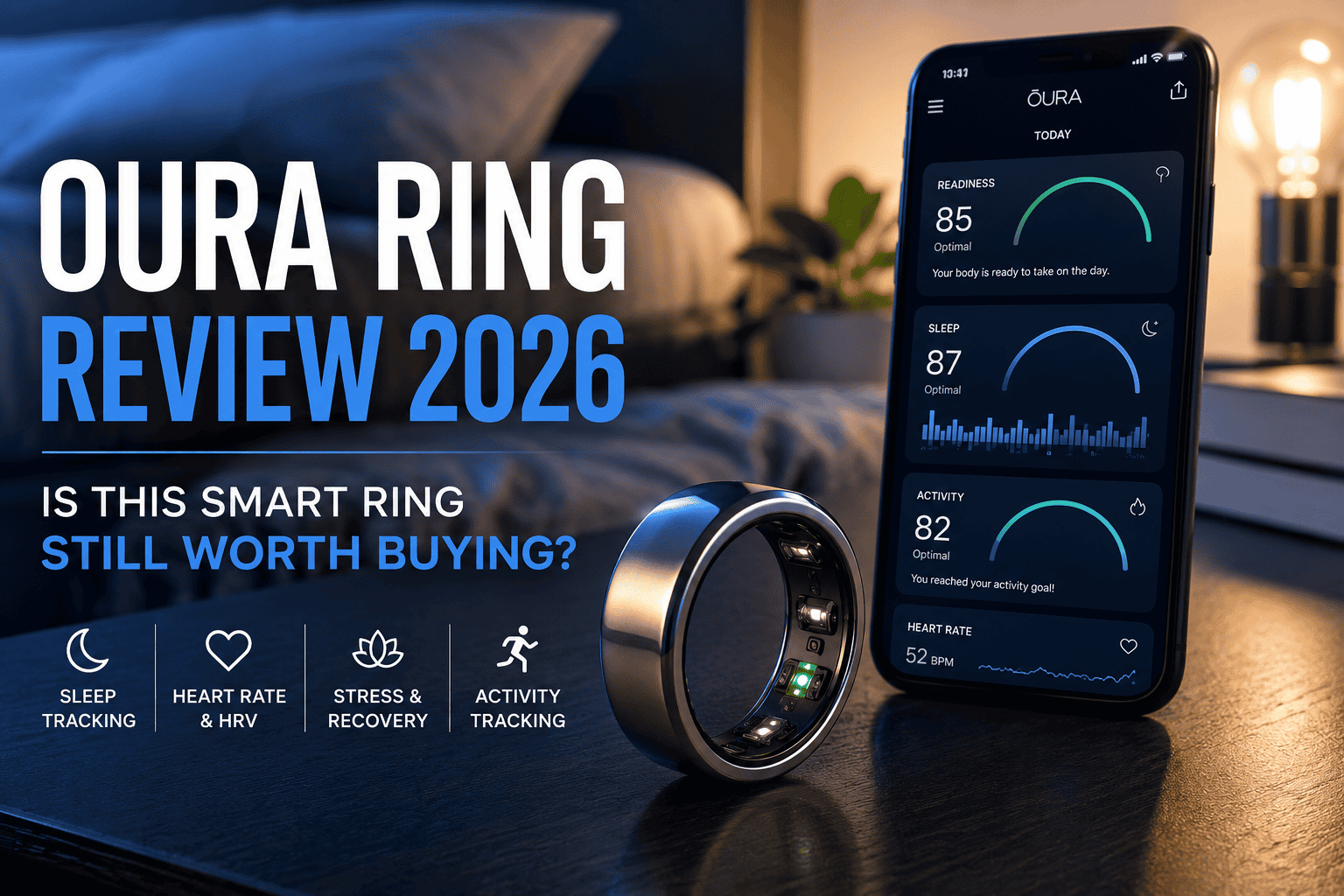
A few years ago, the smart ring category basically meant one brand. That’s no longer true. WHOOP, Samsung, Garmin, Ultrahuman, RingConn, and even Fitbit-adjacent startups are all fighting for the same finger, and Oura itself just complicated the question further by launching the Oura Ring 5 in June 2026 — pushing the once-flagship Ring 4 into permanent-discount territory. So this Oura Ring Review exists to answer one question honestly: with this much competition and Oura’s own lineup now split across two generations, is buying an Oura Ring still the right call?
We’ll get into specs, sensors, and subscription math below, but the short version is this: Oura hasn’t lost its edge in sleep tracking, and the data backs that up. What’s changed is the calculus around price, and which generation actually makes sense for your budget. This review breaks down both the current Ring 5 flagship and the discounted Ring 4, compares Oura against WHOOP, Garmin, Fitbit, and Apple Watch, and tells you plainly who should buy in and who should look elsewhere.
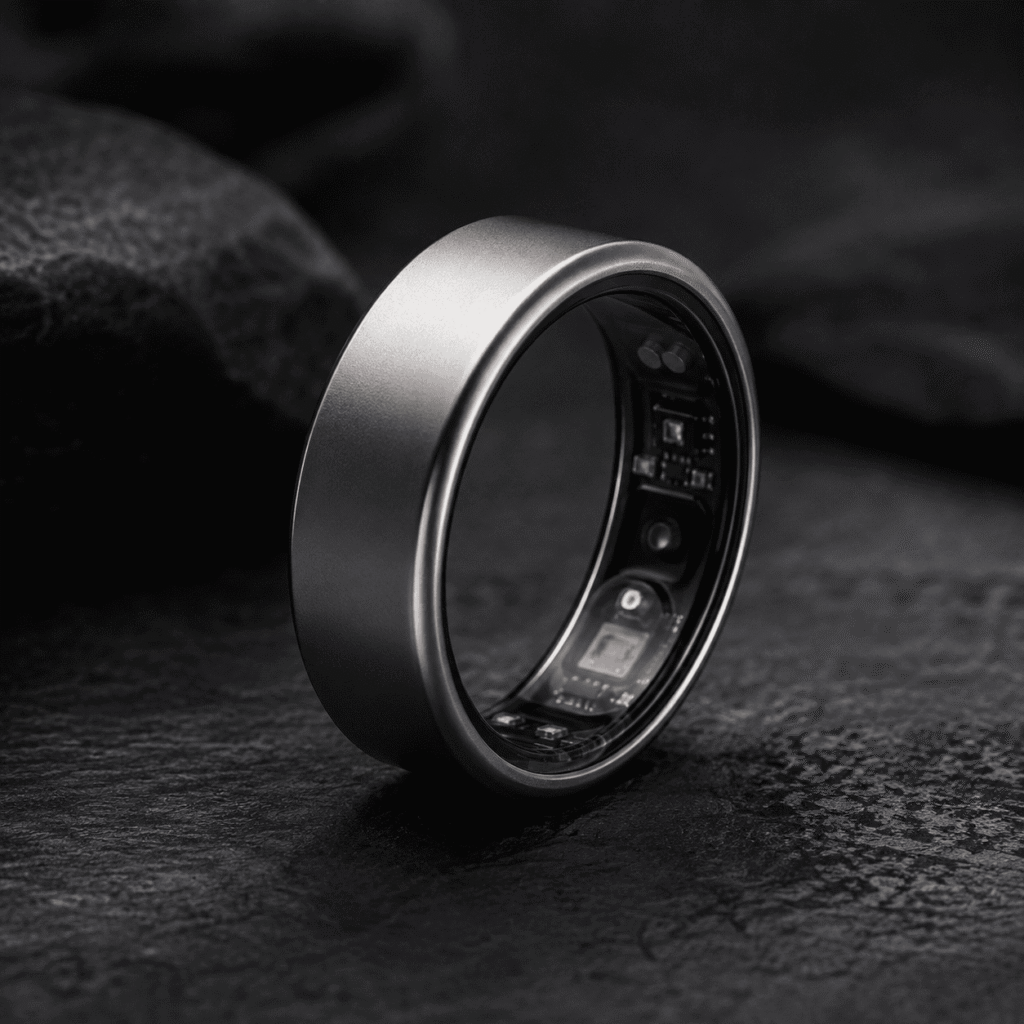
Oura Ring Review: Quick Verdict
| Category | Verdict |
|---|---|
| Overall | Still the most refined smart ring for sleep and recovery, though no longer the only serious option |
| Sleep Tracking | Excellent — among the most validated consumer devices for sleep-stage accuracy |
| Fitness Tracking | Good for daily activity and passive recovery; not built for GPS-based sports training |
| Recovery | A genuine strength, with Readiness scores that account for sleep, HRV, and activity together |
| Comfort | Very comfortable for most hands, especially the smaller, thinner Ring 5 |
| Battery | Strong — 5 to 8 days on Ring 4, up to a full week on Ring 5 |
| App | Clean and easy to read, though some features feel locked behind paywalls |
| Health Insights | Deep and genuinely useful once you understand how to read the trends |
| Subscription | Required for full functionality — this is the biggest ongoing cost to plan for |
| Value | Strong for Ring 4 at current discounted pricing; harder to justify for Ring 5 at full price unless sleep tracking is a priority |
| Best For | People who care most about sleep, recovery, and a screen-free wearable |
| Not Ideal For | Athletes who need GPS, live stats, or a screen mid-workout |
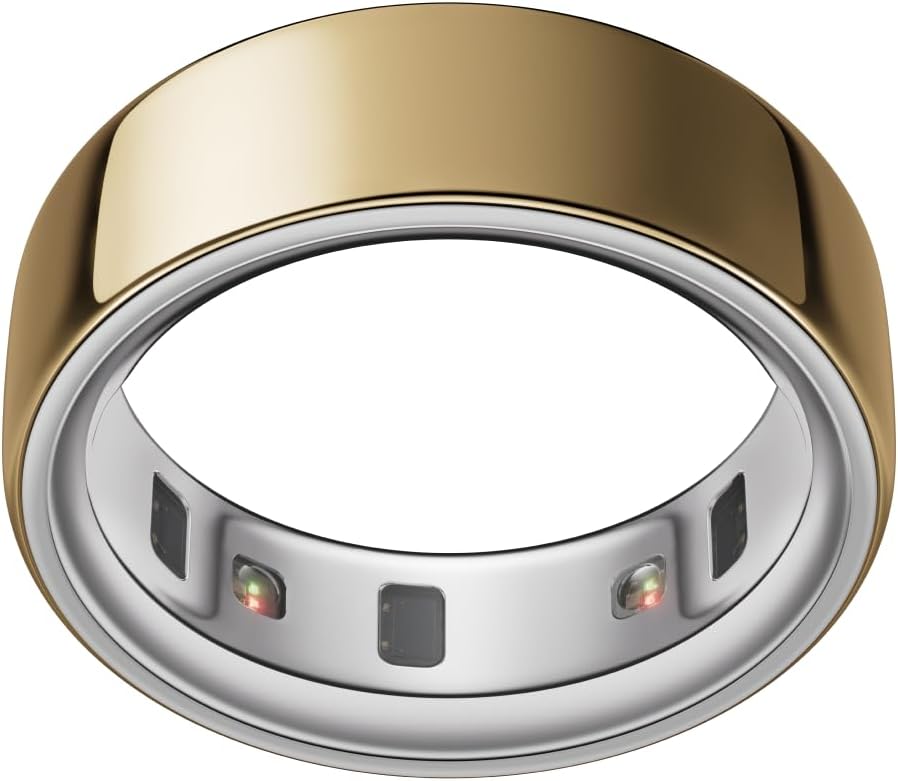
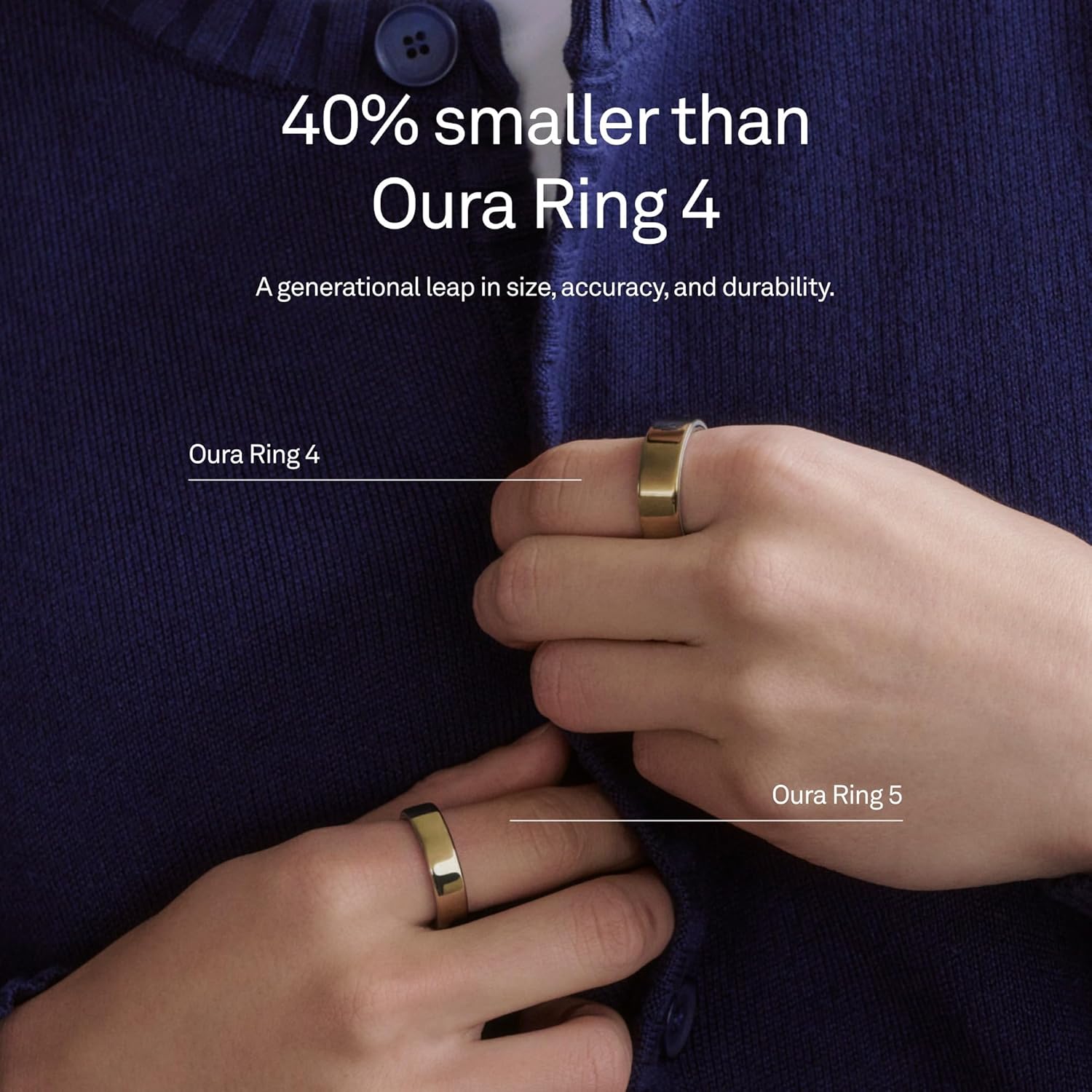
For most buyers, the honest answer is that the Oura Ring is still worth buying in 2026 — but which ring you buy matters more than it used to. The Oura Ring 5, released this June, is smaller, more comfortable, and has a longer battery life, but it starts at $399 and keeps the same $5.99-a-month membership requirement.
The Oura Ring 4, now regularly discounted since the Ring 5 launched, delivers nearly the same sleep and recovery experience for meaningfully less money. If your priority is sleep tracking, recovery insight, and a device you can forget you’re wearing, either ring earns its place.
Oura Ring at a Glance: Ring 4 vs. Ring 5
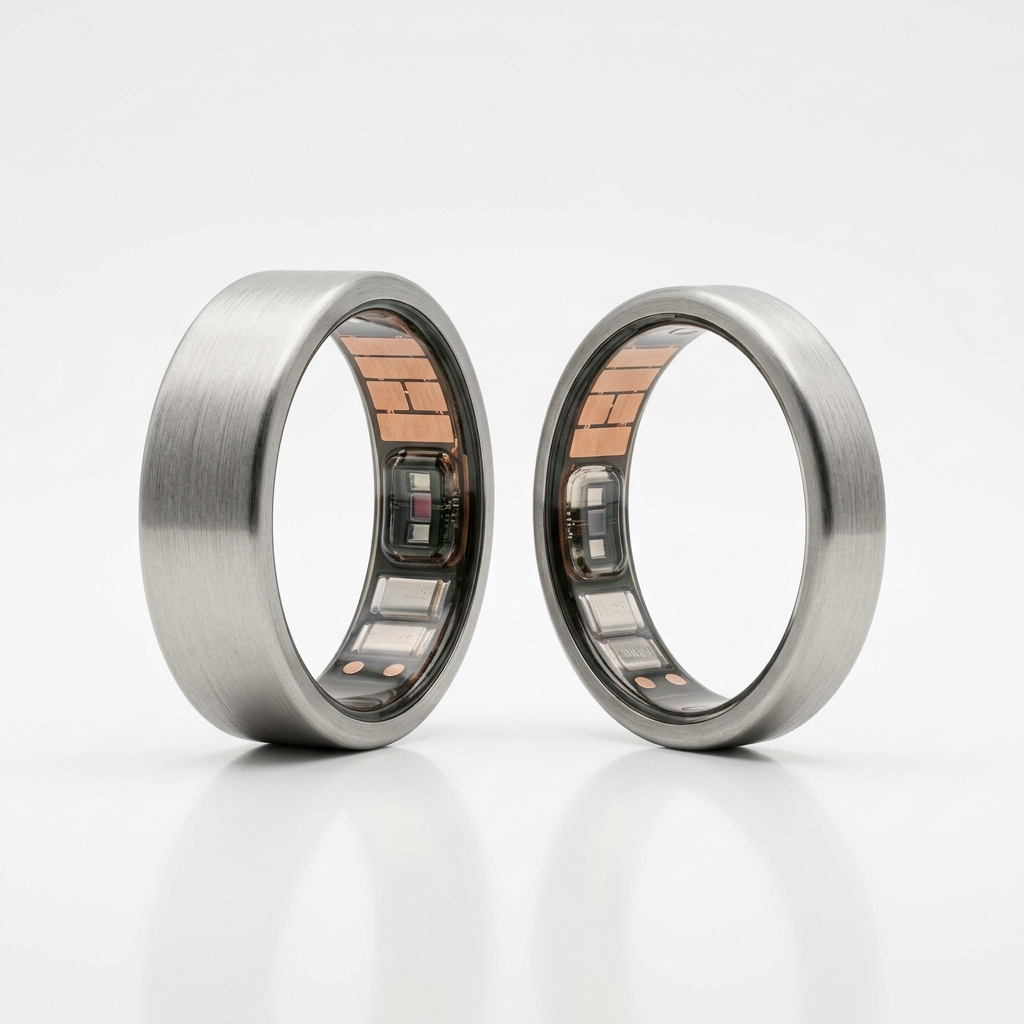
Before comparing Oura to outside competitors, it’s worth understanding what separates Oura’s own two current models, since “Oura Ring Review” searches in 2026 increasingly mean comparing generations, not just brands.
| Spec | Oura Ring 4 | Oura Ring 5 |
|---|---|---|
| Release | October 2024 | June 2026 |
| Starting price | $349 (Silver/Black); up to $499 for premium finishes and Ceramic | $399 (Silver/Black); $499 for premium finishes |
| Material | Titanium, fully round interior | Titanium, redesigned lower-profile sensors |
| Thickness | 2.88mm | Roughly 40% thinner and smaller than Ring 4 |
| Sizes | 4–15 | 6–13 |
| Battery life | 5–8 days (Oura’s testing); typically 5–6 days with all features active | Up to a full week per charge |
| Charging | 20–80 minutes via charger | Charging stand included; optional travel charging case holds several extra charges |
| Sensors | Red and infrared LEDs, temperature sensor, PPG heart-rate sensors across 18 signal pathways | Redesigned sensing array with 12 stronger signal pathways for more consistent reads |
| Water resistance | Up to 100 meters | Up to 100 meters |
| Subscription | $5.99/month or $69.99/year | $5.99/month or $69.99/year |
| New software features | Core sleep, activity, readiness, stress, and women’s health tracking | Everything in Ring 4, plus Health Radar (blood pressure signals, nighttime breathing), Live Activity Tracking, GLP-1 Insights, and Lab Uploads — many of which are also rolling out to Ring 4 and Ring 3 |
Two things are worth flagging here for buyers. First, Oura pushed most of its 2026 software upgrades — including the new AI-powered Oura Advisor coaching tool — out to older rings too, not just the Ring 5. Second, some of the newer proactive health features, like blood pressure signals, are currently limited to members in the United States, India, and the United Arab Emirates, so availability depends on where you live. As always, check the current Amazon price and availability before buying, since Oura’s pricing has moved around noticeably since the Ring 5 launch.
What Does Oura Ring Actually Track?
Sleep Tracking
Sleep is where Oura built its reputation, and the ring still leans into it. It measures total sleep duration, when you fell asleep and woke up, time spent in light, deep, and REM sleep, sleep latency (how long it took you to fall asleep), sleep efficiency, and restfulness (how much you tossed and turned). Alongside that, it tracks nighttime heart rate, HRV, respiratory rate, and skin-temperature trends, then rolls all of it into a nightly Sleep Score.
It’s worth being upfront about what this isn’t. Oura doesn’t perform polysomnography — the multi-sensor, lab-based test that measures brain waves, eye movement, and muscle activity to diagnose sleep disorders. What Oura does is estimate sleep stages from heart rate, HRV, movement, and temperature patterns, which is a fundamentally different (and less invasive) approach. Independent testing and user experiences suggest that estimate is unusually good for a consumer device, but it’s still an estimate, and night-to-night swings shouldn’t be treated as clinical fact.
Activity Tracking
Oura tracks steps, calories burned, general daily movement, and periods of inactivity, and it automatically detects a range of workouts including walking, running, and cycling. If you’re specifically searching for a “ring step tracker,” Oura covers that use case fine, but it’s not trying to be a dedicated fitness computer. There’s no on-ring display, no live pace data, and workout auto-detection — while improved over earlier generations — still occasionally misses lower-impact activities like yoga or strength training unless you log them manually in the app.
Recovery and Readiness
This is arguably Oura’s most distinctive feature. Each morning, the app generates a Readiness score that combines your sleep quality, HRV balance, resting heart rate, body temperature deviation, and recent activity load into a single number meant to indicate how prepared your body is for the day. It’s a genuinely useful way to catch early signs of overtraining, illness, or accumulated fatigue — several reviewers have noted elevated overnight heart rate showing up a day or two before they started feeling sick.
Stress Tracking
Oura also estimates daytime stress by monitoring heart rate patterns and movement, distinguishing between what it calls “restored” and “stressful” periods throughout the day — a key feature highlighted in any comprehensive Oura Ring Review. This is a wellness estimate, not a clinical stress or anxiety assessment, and Oura is careful not to frame it as one; treat it as a nudge to notice patterns, not a diagnosis.
Is Oura Ring Good for Sleep Tracking?
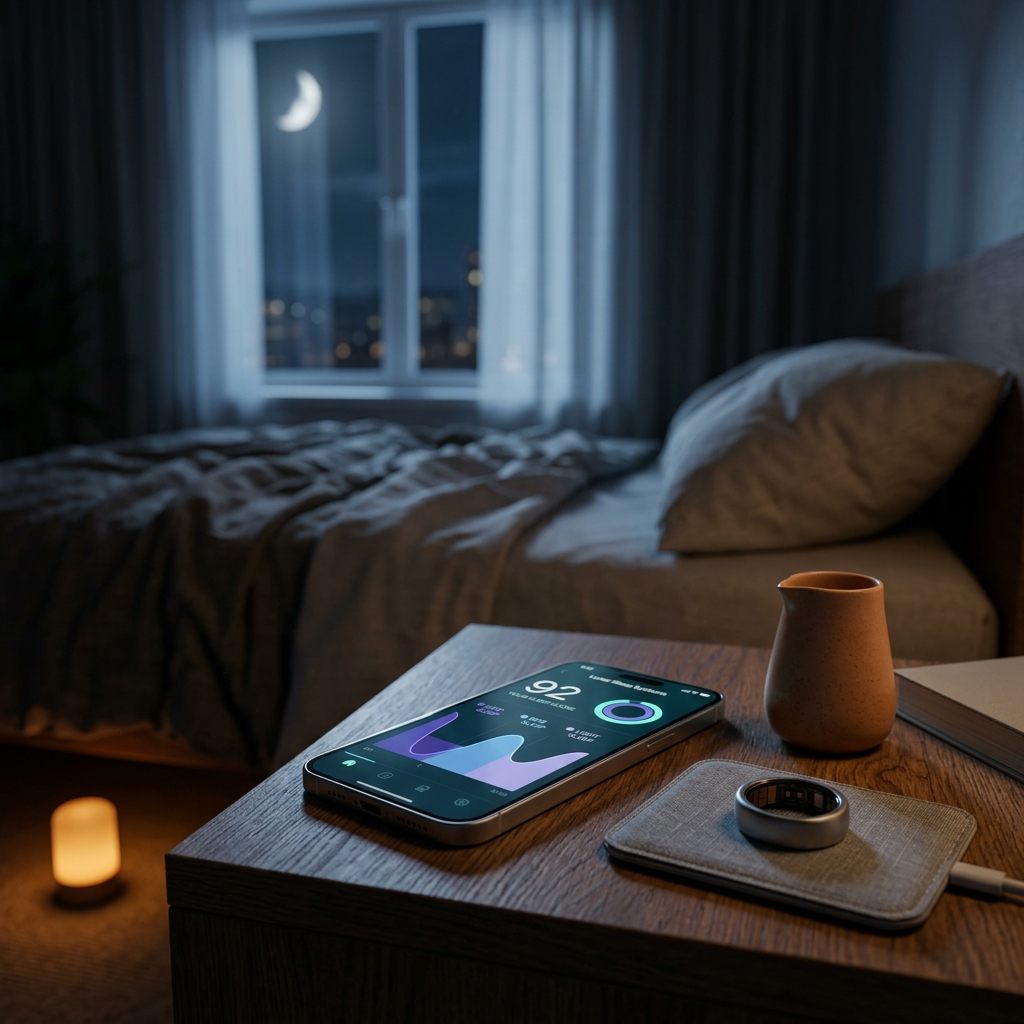
For anyone comparing a ring that monitors sleep against wrist-based alternatives, this is the section that matters most — and it’s genuinely one of Oura’s strongest arguments.
A ring has real structural advantages for overnight tracking. There’s no backlit screen to disturb you, no notifications buzzing against your wrist at 2 a.m., and the arteries in your finger sit closer to the skin than at your wrist, which tends to give the optical sensors a cleaner heart-rate signal with less motion noise. The form factor is light enough — a few grams depending on size — that most people stop noticing it’s there within a week or two.
The research backs this up. A study out of Brigham and Women’s Hospital compared an earlier-generation Oura Ring against an Apple Watch and a Fitbit, all tested against polysomnography, and found Oura detected deep sleep with meaningfully higher sensitivity than either wrist device, without significantly over- or under-estimating any individual sleep stage — something the Apple Watch in that study didn’t manage. A separate validation study published in Sensors found roughly 79% accuracy on four-stage sleep classification, ahead of the wrist-worn devices it was tested against. None of this makes Oura a diagnostic tool, but among consumer wearables, it’s about as strong as sleep tracking currently gets.
So is Oura the best ring that monitors sleep? Based on the available evidence, yes — for now. Competitors like the Samsung Galaxy Ring and Ultrahuman Ring Air are closing the gap, and if you already own a Galaxy Watch, pairing it with Samsung’s ring reportedly improves its accuracy further.
Oura Fitness Ring Review: Is It Good for Fitness Tracking?
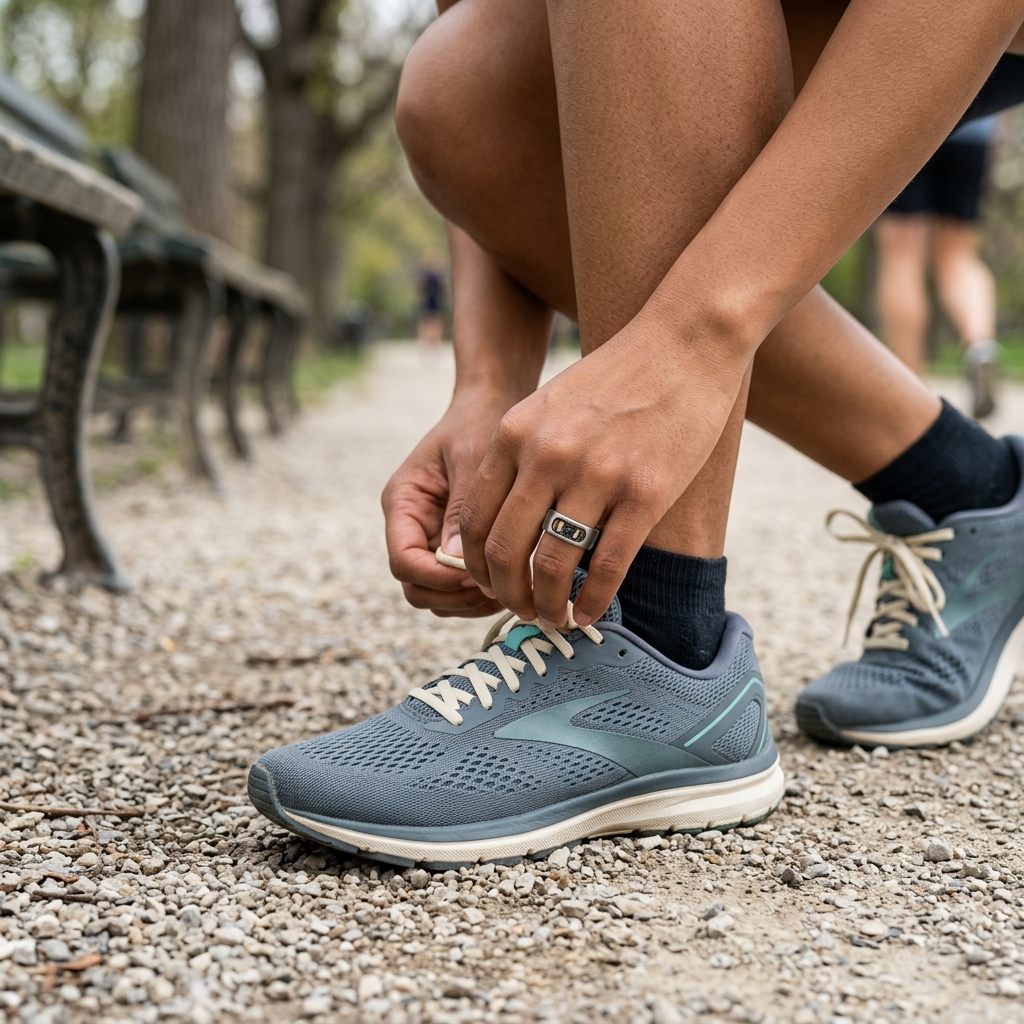
Here’s where honesty matters more than marketing. Oura tracks daily activity, step counts, heart rate, and gives you Readiness-informed training guidance — and it does all of that reliably. It is not, however, a substitute for a dedicated sports watch, and Oura doesn’t market it as one anymore.
There’s no GPS on the ring itself, so distance and pace during outdoor runs or rides rely on your phone or connected app rather than the ring directly. There’s no screen to check your heart-rate zone mid-set. And while auto workout detection has improved with each generation, it’s still more reliable for steady-state cardio like running than for strength training, yoga, or interval work, where manual logging gets you more accurate numbers.
For someone who wants a training partner — structured workout programs, real-time pace feedback, sport-specific metrics — a Garmin watch or the WHOOP 5.0 is going to serve you better. For our full breakdown of devices built specifically around training load and recovery, see our best recovery trackers guide. Oura’s fitness tracking shines in a narrower lane: understanding how your training affects your recovery over time, rather than coaching you through the workout itself.
Does Oura Ring Require a Subscription?
Yes, and this is the single most important thing to understand before buying — because the subscription changes the real cost of ownership significantly.
Buying either the Ring 4 or Ring 5 outright gets you the hardware and a free first month of Oura Membership. After that, membership runs $5.99 a month or $69.99 a year if you pay annually. Without an active membership, the ring still functions and will show you basic daily scores, but the detailed insights, long-term trend analysis, and most of the AI-powered Oura Advisor coaching features sit behind that subscription wall.
Run the math over a few years and the picture gets clearer. A Ring 4 at its current discounted price plus a year of annual membership lands well under $400 for year one, with roughly $70 a year after that for as long as you keep the ring. A Ring 5 at full price plus the same annual membership pushes closer to $470 in year one. Compare that to WHOOP, where there’s no separate hardware purchase at all — the tracker is bundled into a membership that runs $199 to $359 a year depending on tier — and Oura’s total cost over two to three years is typically the cheaper path, assuming you don’t upgrade rings every generation.
The trade-off is psychological as much as financial: you’re paying for a physical ring and then paying again, indefinitely, to unlock what it can actually tell you. If that structure bothers you on principle, it’s worth knowing upfront rather than discovering it at checkout.
Oura Ring 2026 Pros and Cons
Pros
- Consistently validated as one of the more accurate consumer devices for sleep-stage tracking
- Genuinely comfortable 24/7 wear, especially the newer, thinner Ring 5
- No screen or notifications to interrupt sleep or daily focus
- Strong multi-day battery life on both current generations
- Readiness scoring does a good job of connecting sleep, HRV, and activity into one usable signal
- Women’s health tracking, including cycle insights, is a genuine strength versus most competitors
- HSA/FSA eligible in the US, which softens the upfront cost for some buyers
- Software improvements roll out across older and newer rings alike, not just the newest model
- Discreet enough to wear with gym clothes, work outfits, or evening wear without looking like a fitness tracker
Cons
- Ongoing membership is required to unlock the full feature set — this isn’t optional if you want the deep insights
- No GPS and no screen, so it’s a poor fit for structured athletic training
- Ring 5’s smaller size range (6–13) excludes some buyers who fit comfortably in Ring 4’s wider 4–15 range
- Titanium finishes, especially polished silver, can show scratches faster than expected
- Sizing is proprietary to Oura, so you’ll need their sizing kit rather than a standard ring size
- Auto workout detection still misses some activity types, particularly strength training and yoga
- Two current generations on the market can make it confusing to know which one to actually buy
- Premium finishes and the Ceramic line push the price closer to $500 before subscription costs
- Newer proactive health features like blood pressure signals aren’t available everywhere yet
Oura Ring for Different Users

Oura Ring for Men
Searches for an “oura mens ring” usually come down to sizing and styling rather than anything functionally different — Oura doesn’t make a separate men’s or women’s hardware version. Sizes run 4 to 15 on the Ring 4 and 6 to 13 on the Ring 5, and finishes range from understated Black and Silver to Gold and Rose Gold. For daily comfort during workouts, at the gym, or through a full workday, the ring’s low profile means it rarely gets in the way, though anyone who lifts weights regularly should expect to feel the ring against a barbell occasionally — a plain wedding band has the same issue.
Oura Ring for Women
Oura’s women’s health tracking is a genuine differentiator, including cycle tracking, ovulation predictions, and pregnancy-related insights through its Natural Cycles partnership. For a closer look at how ring-style trackers compare specifically for these use cases, our guide to the best smart ring options for women breaks down sizing, comfort, and feature differences across brands in more depth.
Oura Ring for Athletes
Oura works well as a recovery layer for athletes who already have a training plan, but it isn’t built to replace a sports watch. If you’re structuring workouts around heart-rate zones, pace targets, or GPS-tracked routes, Garmin or WHOOP will generally serve that need more directly — we cover that trade-off in detail in the comparison sections below.
Oura Ring for Sleep Improvement
The ring’s real value for sleep improvement isn’t the nightly score — it’s the trend data over weeks and months. Watching how late caffeine, alcohol, or a stressful week shows up in your HRV and Sleep Score the next few nights is where most people find the “aha” moments. Pair that with consistent bed and wake times, and the ring becomes less of a gadget and more of an accountability tool.
Oura Ring for Everyday Wellness
For people who just want a passive, low-effort health snapshot without becoming a “quantified self” project, as highlighted in this Oura Ring Review, Oura’s set-it-and-forget-it design is well suited. You don’t need to open the app daily for it to be useful — checking in weekly to spot trends is often enough.
How Accurate Is Oura Ring?
Accuracy claims deserve real scrutiny, so it’s worth separating what’s actually been measured from what’s marketing.
Consumer wearables like Oura estimate physiological states using indirect signals — light absorption for heart rate, movement patterns for sleep stages — rather than the direct, multi-channel measurements used in clinical settings. That means there’s an inherent gap between any ring or watch and true polysomnography, no matter how good the algorithm is.
Within that context, Oura has more independent validation behind it than most competitors. A 2022 study published in the journal Sensors compared an earlier Oura generation against polysomnography and found around 89% agreement for basic sleep/wake detection and roughly 61% agreement for detailed multi-stage classification — solid figures for a wrist- or finger-worn device. A separate validation study found high correlation between Oura’s nighttime heart rate and HRV readings and medical-grade ECG. And the Brigham and Women’s Hospital comparison referenced earlier found Oura outperformed both an Apple Watch and a Fitbit for sleep-stage differentiation in the same test.
Accuracy varies by metric, though. Heart rate and HRV tend to be quite reliable overnight, when you’re still. Daytime heart-rate accuracy during high-intensity movement is typically less consistent across all optical wearables, Oura included. And individual factors — skin tone, finger circulation, ring fit — can all shift results somewhat from person to person, which is part of why Oura recommends using its own sizing kit rather than guessing based on jewelry size.
Oura Ring vs. Competitors
Oura Ring vs. WHOOP
These are the two most direct rivals in recovery-focused wearables, and they solve the problem differently. Oura is a screen-free ring you buy once and optionally subscribe to. WHOOP is a subscription-first band where the hardware is bundled into your membership — there’s no way to just buy a WHOOP outright. WHOOP’s newest 5.0 generation adds stronger training-load guidance and, on higher tiers, ECG, plus the ability to keep wearing the device while it charges via a wireless battery pack — something Oura’s ring can’t do.
Sleep tracking is strong on both, though most testing still gives Oura a slight edge for pure sleep-stage accuracy. WHOOP tends to pull ahead for athletes who want detailed strain scoring and structured training guidance. Cost-wise, Oura is typically the cheaper option over two to three years if you’re not upgrading hardware every cycle, while WHOOP has a lower day-one cost since there’s no separate device purchase. We go much deeper on this specific matchup, including which subscription tier makes sense, in our full WHOOP vs. Oura comparison.
Oura Ring vs. Garmin
Garmin plays a different game entirely. Its watches come with GPS, a screen, and sport-specific profiles for everything from trail running to swimming — features Oura simply doesn’t offer. Independent sleep-tracking research has generally placed Garmin in the middle of the pack, behind Oura and WHOOP, particularly for REM-stage consistency, but Garmin’s strength was never really sleep tracking to begin with; it’s built for people actively training for events. If GPS-based training data matters more to you than sleep-stage precision, Garmin is the stronger pick, and we break the full comparison down in our Garmin vs. Oura guide.
Oura Ring vs. Fitbit
Fitbit remains the budget-friendly entry point in this category, typically priced well under Oura’s hardware cost, with a screen and a lower barrier to entry for people newer to wearables. Testing has generally shown Fitbit performing reasonably well for REM sleep detection specifically, though overall sleep-stage accuracy has trailed both Oura and WHOOP in head-to-head studies. For a broader look at how Fitbit stacks up against other recovery-focused wearables, our WHOOP vs. Fitbit comparison covers that specific matchup in more detail, and our Garmin vs. WHOOP guide is useful if you’re weighing a sports-first device against a recovery-first one.
Oura Ring vs. Apple Watch
For iPhone owners already inside the Apple ecosystem, this comparison usually comes down to whether you want one device that does everything reasonably well, or a specialized ring that does sleep and recovery better but nothing else. Testing has generally shown the Apple Watch performing well for detecting when you’re awake, but less consistently for differentiating deep and light sleep stages — and it requires nightly charging, which works against consistent overnight tracking for people who forget. If you’re weighing a smartwatch against a subscription-based recovery band rather than a ring specifically, our Apple Watch vs. WHOOP comparison is a useful adjacent read, even though it isn’t a direct Oura matchup.
Oura Ring vs. the Competition: Comparison Table
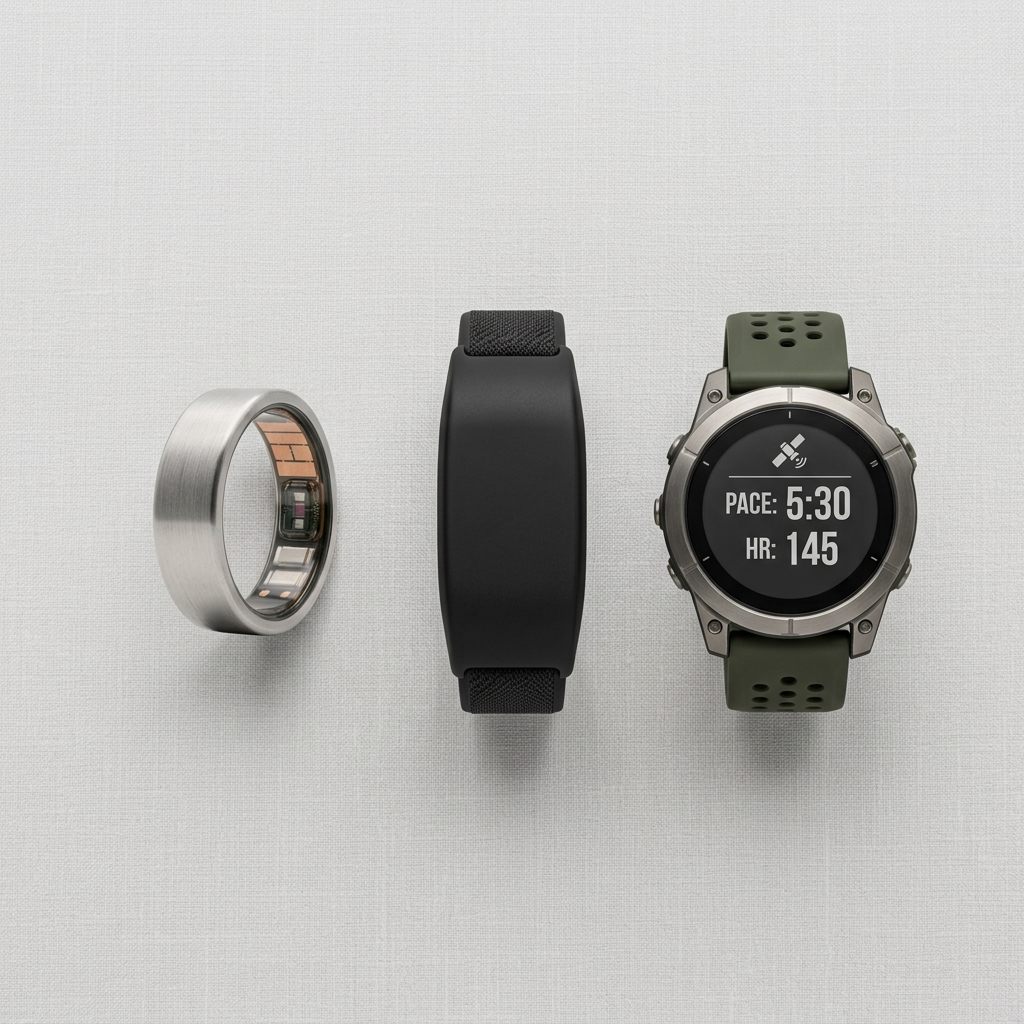
| Feature | Oura Ring | WHOOP | Garmin | Fitbit | Apple Watch |
|---|---|---|---|---|---|
| Sleep Tracking | Excellent; among the most validated for sleep-stage accuracy | Strong; close behind Oura in recent testing | Mid-tier; less consistent with REM | Decent, especially for REM | Good for awake-time; weaker on deep sleep |
| Recovery | Core strength; combines sleep, HRV, and activity into Readiness | Core strength; detailed strain and recovery scoring | Available but secondary to training features | Basic recovery insights | Basic, via Vitals app |
| Fitness | Passive daily activity tracking; limited structured training | Strong strain-based training guidance | Best-in-class for GPS sports tracking | Good for casual daily activity | Strong all-around fitness app ecosystem |
| Heart Rate | Continuous overnight, sampled during day | Continuous, plus optional ECG | Continuous, wrist-based | Continuous, wrist-based | Continuous, wrist-based |
| HRV | Tracked continuously overnight | Tracked continuously | Tracked, less emphasized | Tracked, basic | Tracked via Vitals app |
| Battery | 5–8 days (Ring 4); up to a week (Ring 5) | Multi-day, wearable while charging | Multi-day to multi-week depending on model | Several days | About 18 hours; daily charging required |
| Screen | None | None | Yes | Yes | Yes |
| Subscription | Required for full insights ($5.99/mo or $69.99/yr) | Required to use device at all ($199–$359/yr) | Optional (Garmin Connect+) | Optional (Fitbit Premium) | Not required for core features |
| Best For | Sleep and recovery-focused users who want a screen-free device | Athletes who want structured training and recovery coaching | Athletes and outdoor sports enthusiasts needing GPS | Budget-conscious users new to wearables | iPhone users who want one all-purpose device |
For a wider, side-by-side look across even more wearable categories, our wearable fitness trackers comparison covers additional devices beyond this shortlist.
Is Oura Ring Still Worth Buying in 2026?
This is the question that actually matters, so let’s answer it directly rather than hedging.
Oura Ring is worth it if…
- Sleep and recovery data are your primary reason for buying a wearable
- You want a device you genuinely forget you’re wearing, without notifications or a screen
- You’re comfortable paying an ongoing membership for the full feature set
- You value long-term trend data over live, in-workout stats
Oura Ring may not be worth it if…
- You need GPS tracking for running, cycling, or hiking
- A subscription on top of hardware you already own is a dealbreaker
- You want a screen to check stats without opening your phone
- You’re training for a specific sport and need structured workout guidance
Buy Oura if you prioritize…
Discreet, accurate overnight tracking, long-term recovery trends, and a wearable that fades into the background of daily life rather than demanding attention.
Consider another device if you prioritize…
Live training feedback, GPS-based route and pace tracking, or a one-time purchase with no recurring cost.
Our honest recommendation: for most people specifically searching “Oura Ring worth it,” the answer is yes, provided sleep and recovery are genuinely your priority and you’ve budgeted for the membership. Not everyone should buy it, though — if a screen, GPS, or an outright purchase with zero subscription matters more to you, one of the alternatives below is likely the better fit.
Best Oura Ring Alternatives
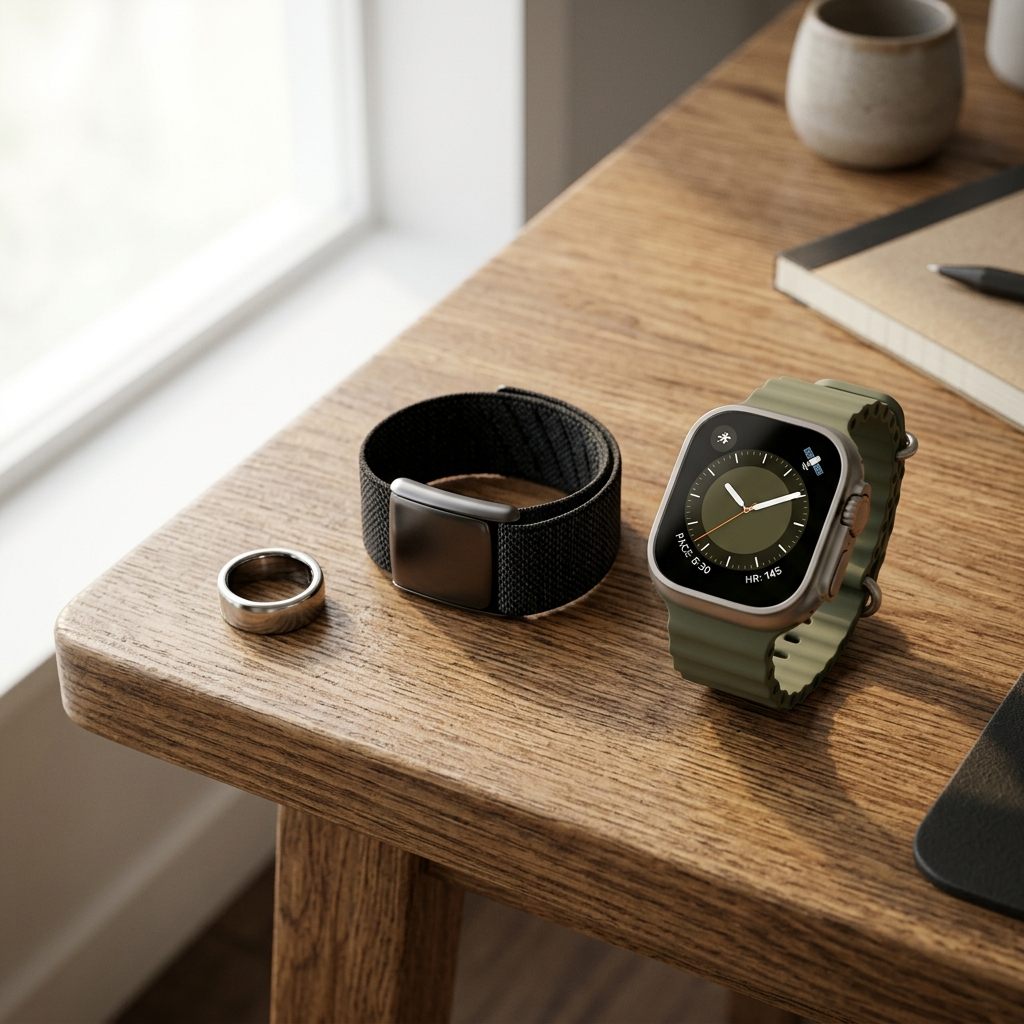
No single wearable wins every category, so here’s where to look depending on what you actually need.
If a subscription-based recovery band with deeper training guidance appeals to you more than a ring, WHOOP is the closest direct competitor, and our full WHOOP alternatives guide rounds up options across price points. If you specifically want to stay in ring form but skip Oura, our dedicated Oura Ring alternatives guide covers subscription-free options like the Samsung Galaxy Ring, Ultrahuman Ring Air, and RingConn Gen 2 in more depth, including how each handles sleep, recovery, and wellness tracking without Oura’s recurring fee.
For readers who haven’t settled on a form factor at all yet, our broader best fitness wearable roundup is a good starting point before narrowing down to a ring specifically. And if better overnight tracking is genuinely your goal rather than any one brand, our best sleep trackers guide compares devices purely on that basis, rings included.
How We Evaluated the Oura Ring
Our assessment draws on Oura’s published specifications and support documentation, independent testing and reviews from established wearable-tech outlets, peer-reviewed sleep-tracking validation research, and verified Amazon customer feedback patterns. We evaluated the ring across sleep tracking accuracy, comfort for continuous wear, fitness and activity tracking depth, recovery insight quality, battery performance, app usability, subscription value, and how it holds up against direct competitors at similar price points. We have not personally tested or worn the Oura Ring 4 or Ring 5 ourselves; this review is built from the best publicly available specifications, independent testing data, and verified user feedback rather than firsthand use, and we’ve flagged that distinction throughout rather than implying otherwise.
Oura Ring Privacy and Data Considerations
Any wearable that tracks heart rate, sleep, and reproductive health data is collecting sensitive personal information, and as noted in any thorough Oura Ring Review, Oura is no exception. Before buying, it’s worth reviewing what data the app collects, how it’s stored, what third-party integrations you’re enabling (Oura connects with 40-plus apps), and what Oura’s current privacy policy says about data sharing and retention.
Oura has also begun rolling out an in-app data deletion feature as part of its 2026 software updates, which is worth checking if account and data control matter to you. We’re not raising any specific concern about how Oura handles data here — just encouraging anyone considering the purchase to read the current privacy policy directly on Oura’s site before committing, since policies can change between when this article was written and when you’re reading it.
Who Should Buy the Oura Ring?
Buy Oura if you:
- Care primarily about sleep quality and recovery insight
- Want a discreet, screen-free wearable you can forget about
- Value long-term health trend data over live workout stats
- Don’t mind paying an ongoing membership for full functionality
- Prefer a ring over a bulkier watch on your wrist
Skip or reconsider Oura if you:
- Refuse to pay a subscription on top of hardware you already bought
- Need GPS tracking for outdoor training
- Want a screen to check your stats without your phone
- Are training seriously for a specific sport with structured programming needs
- Prefer a traditional smartwatch with app support, calls, and notifications
Oura Ring Review: Frequently Asked Questions
Is Oura Ring worth buying in 2026?
For most people focused on sleep and recovery tracking, yes. The Ring 4 in particular offers strong value now that it’s regularly discounted following the Ring 5 launch. It’s less worth it if you need GPS or refuse ongoing subscriptions.
Is Oura Ring accurate for sleep?
Independent validation studies have consistently placed Oura among the more accurate consumer devices for sleep-stage classification, though it’s an estimate based on heart rate, movement, and temperature — not a clinical diagnostic tool.
Does Oura Ring require a subscription?
Yes, for full functionality. The ring works without one and shows basic scores, but detailed insights, trends, and most AI coaching features require Oura Membership at $5.99 a month or $69.99 a year.
Can Oura Ring track steps?
Yes. It tracks steps, daily movement, and general activity levels alongside its core sleep and recovery metrics.
Does Oura Ring monitor heart rate?
Yes, continuously overnight and periodically throughout the day, along with heart rate variability (HRV).
Can Oura Ring track workouts?
As highlighted in our Oura Ring Review, it automatically detects several activity types, including walking, running, and cycling, though manual logging is more accurate for strength training and other less-predictable workouts.
Is Oura better than WHOOP?
It depends on your priority. Oura generally edges out WHOOP for pure sleep-stage tracking and offers a one-time hardware purchase, while WHOOP tends to offer stronger structured training guidance for athletes. Neither is universally “better.”
Is Oura better than Garmin?
For sleep and recovery specifically, most independent testing favors Oura. For GPS-based sports training, Garmin is the stronger choice by a wide margin, since that’s what it’s built for.
Is Oura Ring good for men?
Yes — there’s no functional difference by gender. Sizing runs 4–15 on Ring 4 and 6–13 on Ring 5, with finishes ranging from understated to more premium options.
Is Oura Ring good for women?
Yes, and it’s a particular strength for women specifically, thanks to cycle tracking, ovulation insights, and pregnancy-related features built into the app.
Can Oura Ring detect sleep apnea?
No. Oura is a wellness tracker, not a diagnostic medical device, and it cannot diagnose sleep apnea or any other sleep disorder. If you suspect a sleep disorder, talk to a doctor about a proper clinical sleep study.
How long does Oura Ring battery last?
In any comprehensive Oura Ring Review, battery longevity stands out: the Ring 4 typically lasts 5 to 8 days per charge depending on features enabled and ring size, with real-world use closer to 5–6 days if you have continuous blood oxygen monitoring on, while the newer Ring 5 is rated for up to a full week.
If sleep and recovery insight matter more to you than a screen or GPS, check the current Amazon price on both the Ring 4 and Ring 5 before deciding — given how much pricing has shifted since the Ring 5 launched, the better value between the two can change from week to week.